ABOUT US
Your Expert Manufacturer of Wedge Wire Screens;
Your Reliable Partner and Source of Innovation
GET A FREE QUOTE
-
Home

-
Products
-
Sintered Mesh Filter Elements
- Sintered Mesh Plate and Disc

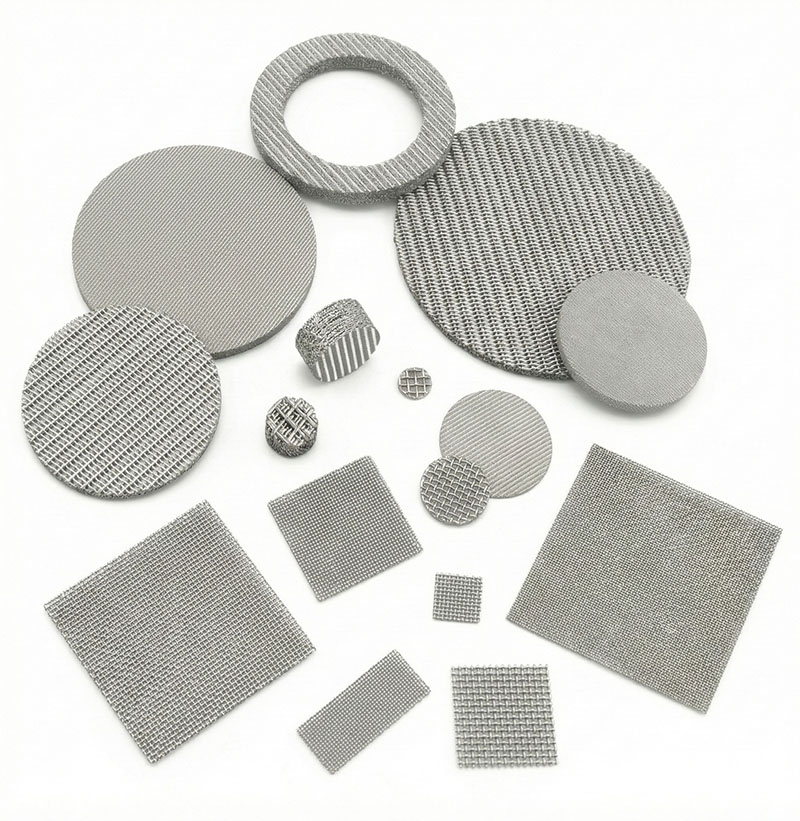
Sintered Mesh Plate and Disc
Sintered Mesh Plates and Discs are high-precision filtration components fabricated by bonding multiple layers of stainless steel wire mesh through a specialized vacuum sintering process. Unlike traditional mesh that relies on mechanical weaving alone, these plates are fused at every contact point, transforming individual wires into a rigid, integrated porous metal sheet.
These plates can be customized into various shapes, most commonly circular discs, to fit specific industrial equipment. They offer an ideal balance of high permeability, extreme structural integrity, and precise filtration ratings. Because they are made entirely of metal (typically 304 or 316L), they provide a "permanent" filtration solution that can withstand high temperatures and corrosive chemicals while remaining fully cleanable and reusable.
These plates can be customized into various shapes, most commonly circular discs, to fit specific industrial equipment. They offer an ideal balance of high permeability, extreme structural integrity, and precise filtration ratings. Because they are made entirely of metal (typically 304 or 316L), they provide a "permanent" filtration solution that can withstand high temperatures and corrosive chemicals while remaining fully cleanable and reusable.
Product Features and Advantages
High Rigidity and Stability:The sintering process eliminates the need for internal supports. Even under high-pressure flow, the pore geometry remains fixed, preventing “media migration” or changes in filtration accuracy.
Precise Filtration Ratings:Available in ratings from 1 micron to 200 microns, ensuring consistent performance for fine particle separation.
Extreme Thermal & Chemical Resistance:Operates effectively in temperatures ranging from -200°C to 600°C. It is highly resistant to oxidation and corrosion from acids and alkalis.
Excellent Cleanability:The surface-loading characteristic allows for easy cleaning via back-flushing, ultrasonic vibration, or chemical soaking, significantly extending the service life compared to disposable felt or paper filters.
Ease of Fabrication:Despite its strength, the sintered plate can be easily cut, welded, and formed into various shapes (discs, squares, cones) to suit specific housing designs.
Product Parameters
| Parameter | Standard Specifications |
| Material | SUS 304, 316, 316L, Hastelloy, Monel |
| Standard Structure | 5-layer or 7-layer (Custom multi-layer available) |
| Filtration Accuracy | 1, 2, 5, 10, 20, 50, 100, 150, 200 μm |
| Standard Size | 500x1000mm, 600x1200mm, 1000x1000mm, 1200x1500mm |
| Disc Diameter | 10mm to 3000mm (Customized based on drawings) |
| Standard Thickness | 1.7mm (for 5-layer), can be customized from 0.5mm to 10mm |
| Porosity | 35% – 60% |
Application Areas/Scenarios
Fluidized Beds:Used as air distribution plates for powder transport in the chemical and pharmaceutical industries.
Gas Purification:Removal of oil and dust from compressed air, nitrogen, and steam.
Petrochemicals:Filtration of polymer melts, catalyst recovery, and aggressive chemical processing.
Pharmaceuticals:Nutsche filter plates for solid-liquid separation and drying in sterile environments.
Aerospace:High-precision hydraulic oil filtration and cooling systems.
Frequently Asked Questions
Q: What is the difference between 5-layer and 2-layer sintered mesh?
A:The 5-layer mesh is the standard industrial structure, consisting of a protective layer, filter layer, dispersion layer, and two reinforcement layers. It offers much higher mechanical strength and a longer lifespan than 2-layer mesh.
Q: Can the mesh be used in food contact applications?
A:Yes, when manufactured using high-quality 304 or 316L stainless steel, it meets food-grade hygiene standards.
Q: How do I choose between a mesh disc and a metal powder disc?
A:Mesh discs have higher flow rates and are easier to backwash. Powder discs (porous metal) are better for “deep” filtration but are harder to clean.
Instructions for Use
1.Installation:When installing a sintered mesh disc, ensure the Fine Mesh Side (Filter Layer) is facing the incoming flow. Most discs are directional.
2.Sealing:Use appropriate gaskets (PTFE, Viton, or Metal) to prevent fluid bypass around the edges of the disc.
3.Pressure Monitoring:Install pressure gauges upstream and downstream. When the pressure differential ($\Delta P$) exceeds 2 MPa, it is time for a cleaning cycle.
4.Cleaning:* For physical particles: Use ultrasonic cleaning for 30–60 minutes.
For chemical contaminants: Use a 3%–5% Nitric Acid or Caustic Soda solution, followed by a thorough rinse with deionized water.
OUR PRODUCTS
Best-selling Products
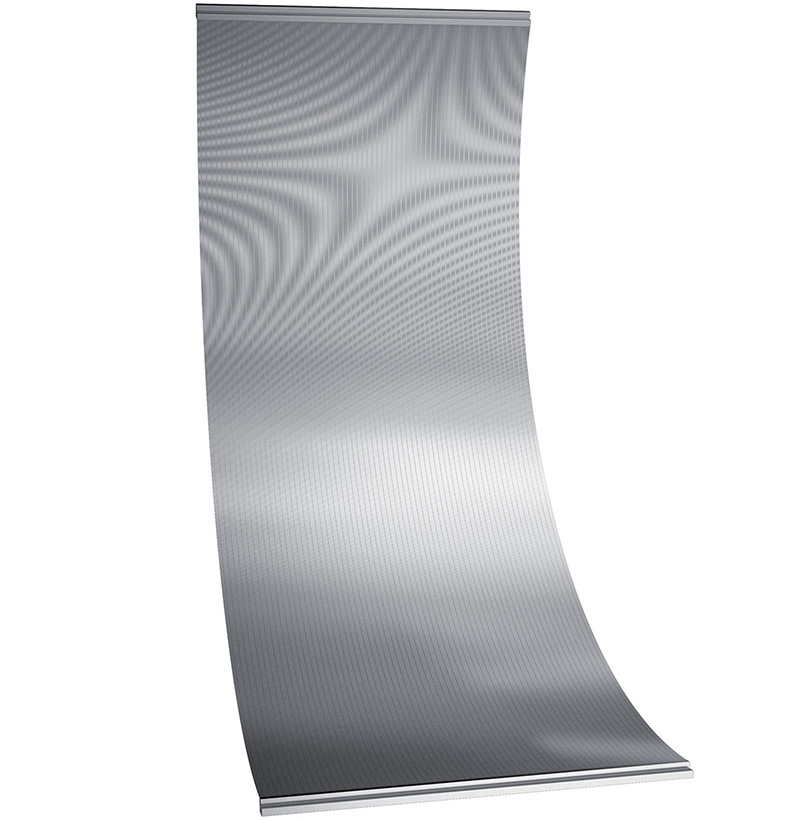
Starch Screen
The Wedge Wire Starch Curved Screen is a curved screening device specifically designed for the starch industry. It features an arc-shaped screen surface made of precisely welded V-profile stainless steel wires, utilizing centrifugal force or gravity to achieve rapid dewatering and classification of starch slurry. Its curved structure prolongs slurry retention time, improving solid-liquid separation efficiency. It is suitable for starch extraction, refining, and byproduct recovery processes for starches such as potato, corn, and cassava. Characterized by efficient screening, wear and clogging resistance, and easy maintenance, this equipment is a key solid-liquid separation device in modern starch processing.
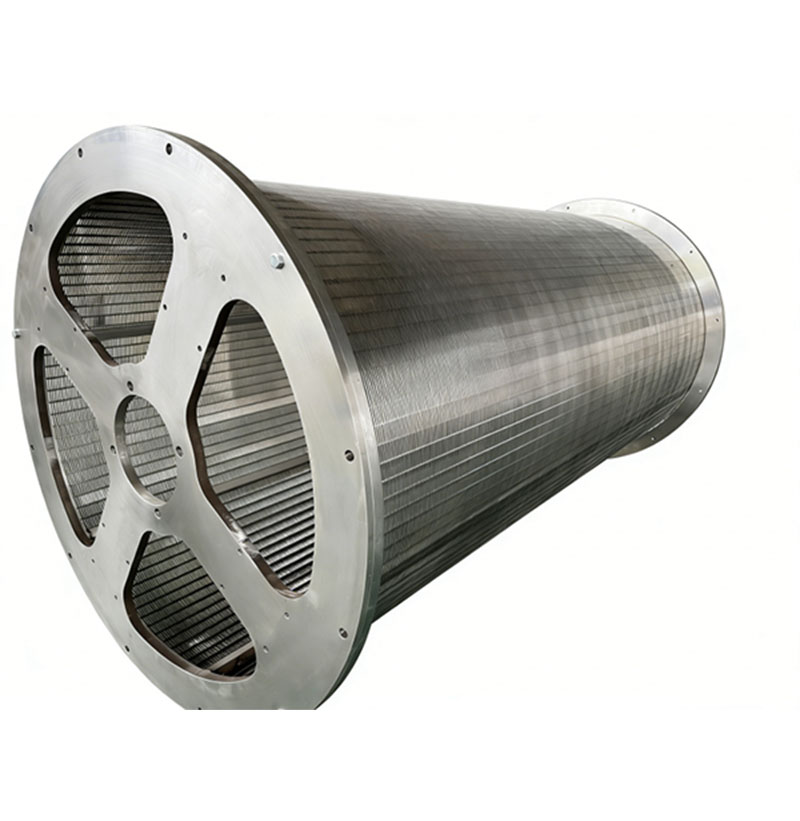
Rotary Drum
The Stainless Steel Wedge Wire Rotary Drum Screen (also known as a Rotary Drum Strainer or Micro-Screen) is a continuously and automatically operating front-end solid-liquid separation device. Its core component is a large cylindrical drum installed horizontally or at a slight incline. The entire circumferential surface of the drum is covered with a stainless steel wedge wire screen (Johnson screen). The wastewater to be treated flows into one end of the drum. Under gravity, the filtrate passes through the wedge wire slots, while solid suspended matter (such as fibers, hair, plastic pieces, and fine particles) is retained on the inner surface of the drum. As the drum rotates slowly, the retained debris is lifted to the top, where it is flushed by spray water into a collection trough, achieving a continuous process of automatic screening, filtration, and residue removal
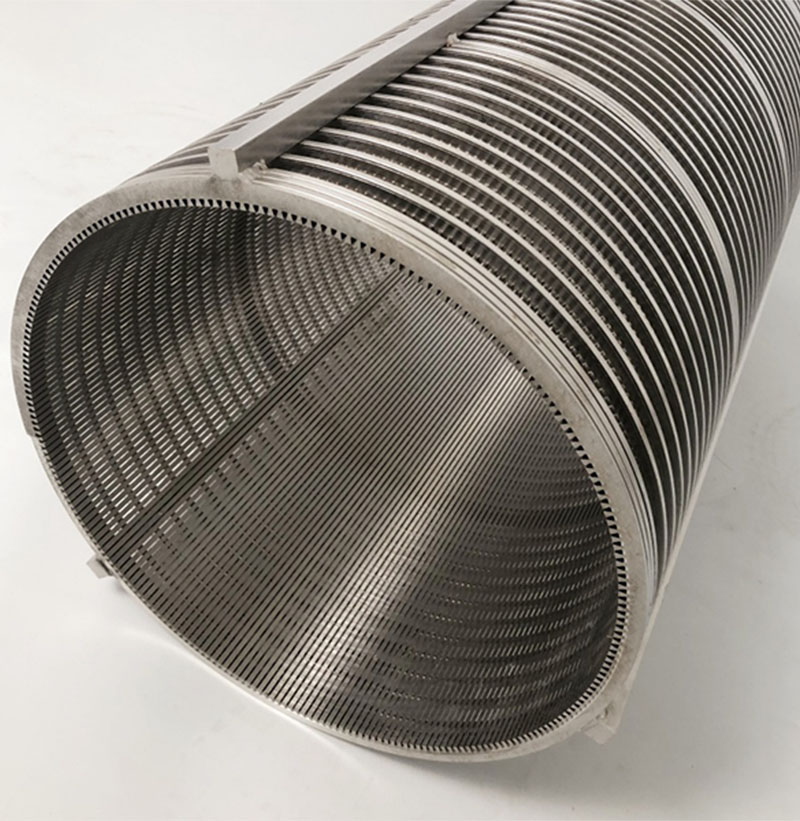
Screen Basket for Screw Press Separator
The stainless steel wedge wire screen basket, commonly known as the "V-wire screen," "press screen basket," or "screen cylinder," is a core component of screw press solid-liquid separators. It is installed inside the spiral press, enclosing the rotating screw shaft. The working principle is as follows: raw slurry with high moisture content is pushed into the screen basket by the screw shaft. Under the squeezing and conveying action of the spiral flights, the liquid (filtrate) is forced out through the precise, continuous slots of the screen basket, while the solid material (manure cake) is retained inside and continues to be compressed and dewatered as it moves forward. Finally, the dewatered solids are discharged from the outlet, achieving solid-liquid separation.
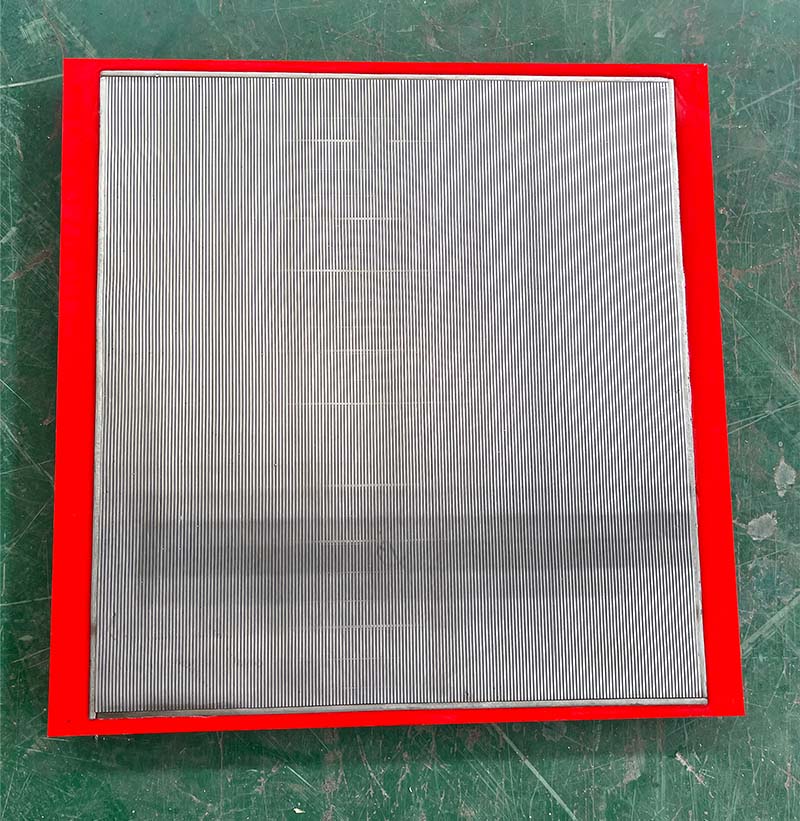
Wedge Wire Vibrating Screen
A stainless steel wedge wire vibrating screen is a solid-liquid separation device featuring a screen surface made by precisely welding V-shaped stainless steel wires, integrated with a high-frequency vibration system. With uniform slots, wear resistance, and corrosion resistance, it is suitable for wet screening and dewatering operations. The vibration mechanism enables rapid material dispersion and efficient sieving while effectively preventing screen clogging. Widely used in industries such as mining, metallurgy, food processing, and environmental protection, it is particularly suitable for handling fine particles, high-viscosity, or easily agglomerated materials, offering advantages such as high screening accuracy, large processing capacity, and long service life.
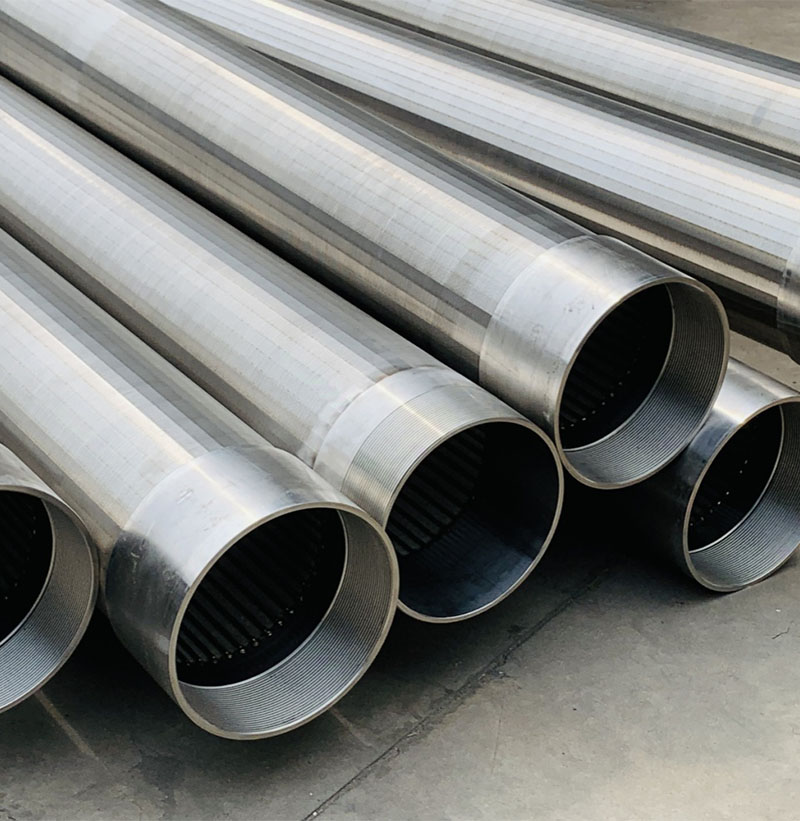
Wedge Wire Water Well Screen
Johnson Deep Water Well Screens, also referred to as continuous slot screens or wire wrap screens, were originally developed to solve sand control challenges in fine-grained and uniform sand formations. These geological conditions are commonly encountered in deep groundwater aquifers, where conventional perforated pipes often suffer from clogging, excessive sand production, and reduced well efficiency.
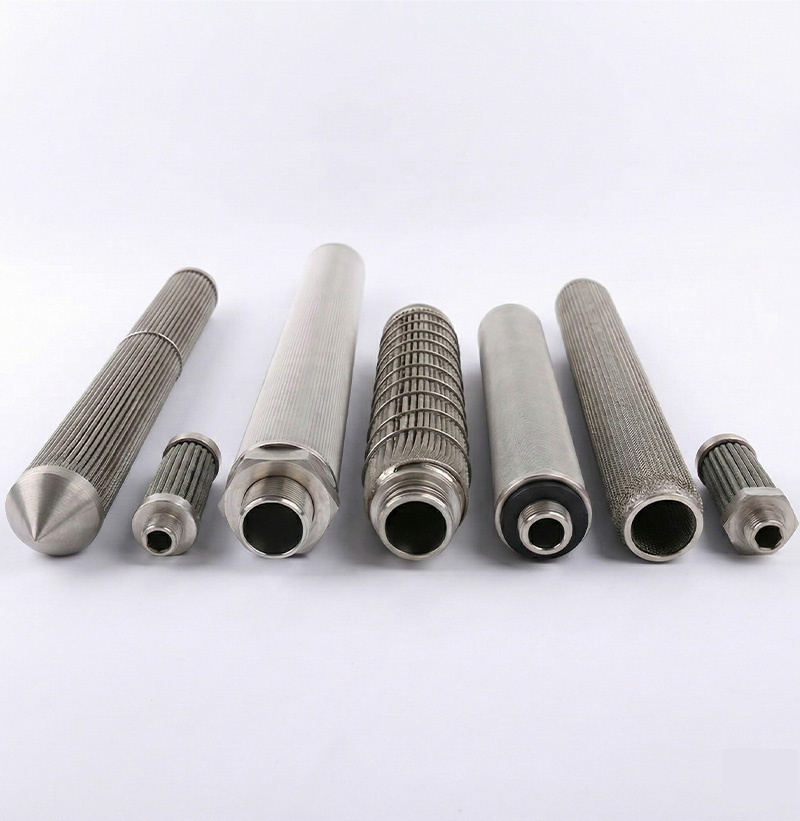
Sintered Mesh Filter Cartidge
The Sintered Mesh Filter Cartridge is a high-performance, precision filtration component manufactured by bonding multiple layers of woven wire mesh (typically stainless steel 316L or 304) through a specialized vacuum sintering process. Unlike traditional fiber-based or single-layer mesh filters, this process creates a permanent molecular bond between every wire intersection, resulting in a porous metal structure with exceptional mechanical strength and structural integrity.
This cartridge is designed for demanding industrial environments where high pressure, extreme temperatures, and corrosive fluids are present. Its defining characteristic is the ability to provide precise, consistent filtration ratings while remaining fully cleanable and reusable, making it an eco-friendly and cost-effective alternative to disposable filter elements.
OUR LATEST
Our Latest Blog & News
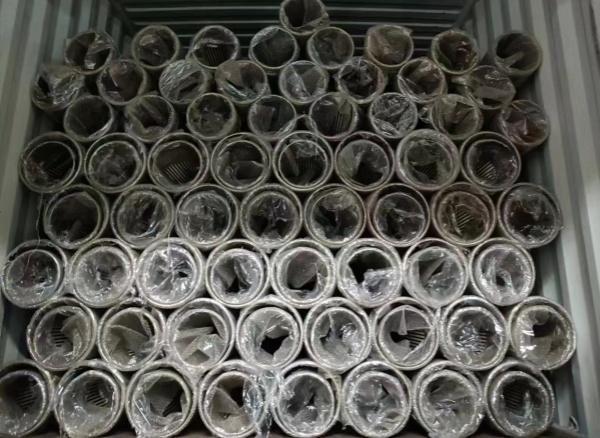
Johnson Screen Tubes in Water Well Projects: Practical Experience from the Field
Johnson Screen Tubes, also known as continuous slot wire-wrapped screens, are widely used in groundwater and water well projects where sand control and long-term flow stability are critical. While the basic structure of these screens is well known, their actual performance in the field is often determined by how well they are selected, manufactured, and installed.
This article shares practical observations from water well projects where Johnson Screen Tubes have been applied in real operating conditions.
Why Screen Selection Matters in Deep and Medium-Depth Wells
In many groundwater projects, especially wells deeper than 30 meters, the surrounding formation is often composed of fine to medium sand with relatively uniform particle distribution. In such conditions, improper screen selection can lead to sand production, pump damage, and declining water output.
Johnson Screen Tubes are designed with continuous V-shaped wire slots that widen inward. This structure allows fine particles to bridge at the outer surface while maintaining open flow paths inside the screen. Compared with perforated pipes or slotted casings, continuous slot screens provide a more uniform opening and higher effective open area, which helps reduce entrance velocity and head loss.
Field experience shows that when slot size is matched correctly to formation grain size, well development time is reduced and sand pumping issues are minimized.
Manufacturing Quality and Its Impact on Performance
Although Johnson Screen Tubes follow a standard design concept, manufacturing quality plays a major role in their service life. Each V-shaped wire is resistance welded to longitudinal support rods, forming a rigid and stable structure.
In practice, inconsistencies in slot width, weak welds, or poor material quality can cause early failure, especially in deep wells where collapse strength is critical. Stainless steel grades such as SS304 and SS316 are commonly used to improve corrosion resistance in groundwater environments with varying chemical compositions.
From field feedback, screens with consistent slot spacing and well-controlled welding quality show better resistance to deformation during installation and maintain stable performance over long operating periods.
Installation and Well Development Considerations
Proper installation is as important as the screen itself. During lowering of the screen into the borehole, alignment and handling must be controlled to avoid mechanical damage. After installation, well development is carried out to remove fine particles from the formation around the screen.
Continuous slot screens respond well to development methods such as air lifting and surging, allowing fines to be removed efficiently without damaging the screen structure. Wells developed correctly tend to achieve higher yield and show more stable water quality during operation.
Typical Applications and Operating Conditions
Johnson Screen Tubes are commonly used in:
Municipal and rural water supply wells
Agricultural irrigation wells
Industrial groundwater extraction
Environmental monitoring wells
Dewatering and remediation projects
In these applications, screen durability and flow efficiency are key factors affecting long-term operating costs.
Long-Term Performance in Service
Well operators often focus on initial flow rate, but long-term stability is equally important. Projects using properly selected Johnson Screen Tubes typically report lower maintenance requirements and fewer sand-related issues over time.
In many cases, wells equipped with continuous slot screens remain in service for decades with minimal intervention, provided that material selection and installation practices are appropriate.
Final Thoughts
Johnson Screen Tubes are not a one-size-fits-all solution. Their real value comes from correct engineering selection, consistent manufacturing quality, and proper installation. When these factors are aligned, continuous slot screens offer reliable sand control, efficient water production, and long service life in demanding groundwater applications.