
ABOUT US
Your Expert Manufacturer of Wedge Wire Screens;
Your Reliable Partner and Source of Innovation
GET A FREE QUOTE
-
Home

-
Blog
-
Industry Blog
- How Does a Wedge Wire Interstage Screen Improve Intake?

How Does a Wedge Wire Interstage Screen Improve Intake?
-
 author
 - 9,julio
 author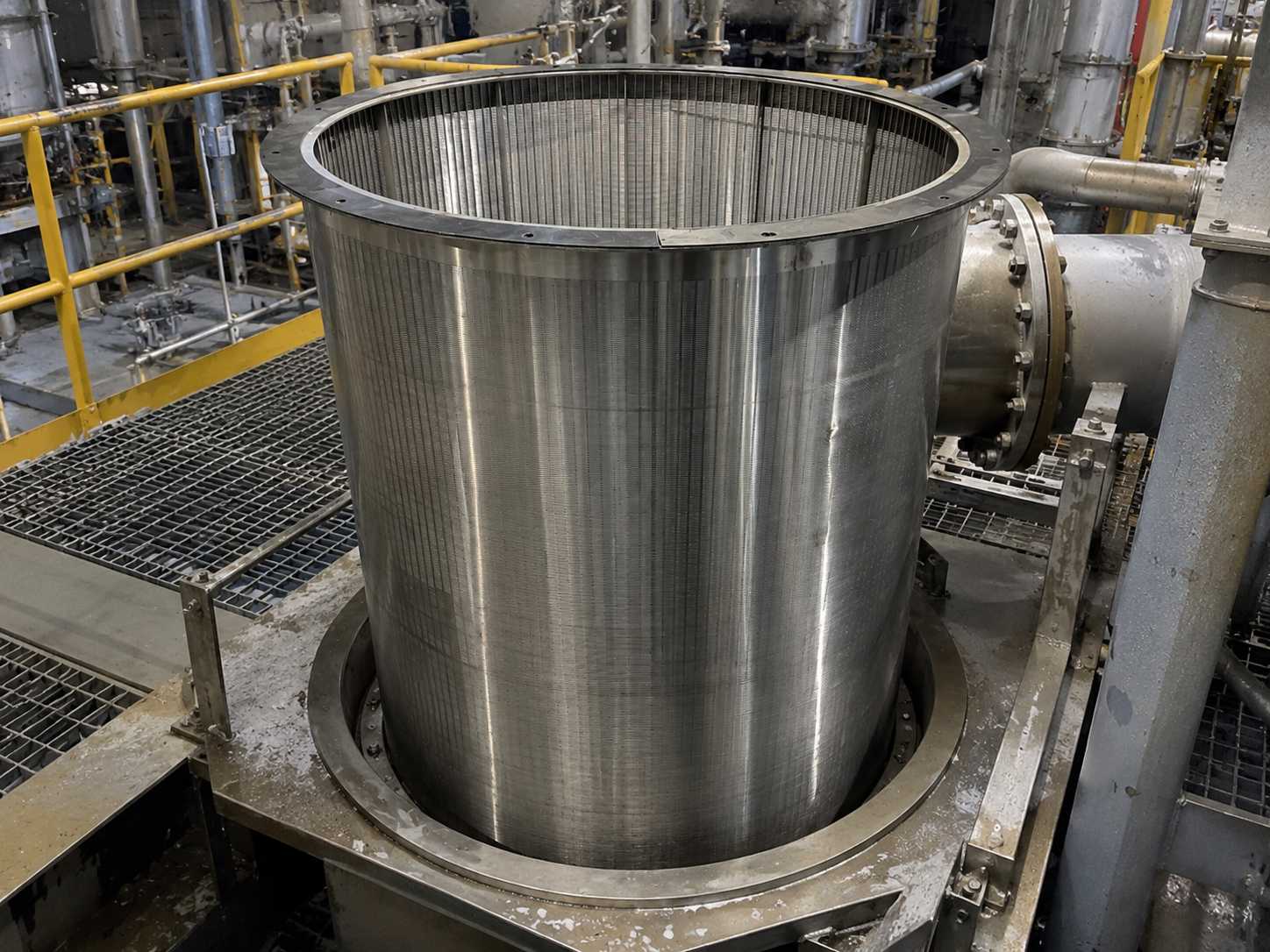
Slurry intake and interstage transfer design are becoming serious production topics in gold processing because modern CIL and CIP plants need stable slurry movement, controlled carbon transfer, and lower maintenance risk.
At BTOSLOT, we view the wedge wire interstage screen as a critical intake and separation component rather than a simple screen cylinder. In gold extraction, this product is also known as a carbon transfer screen or CIL/CIP Cylinder Screen. It is installed between leaching or adsorption tanks, where it separates activated carbon from slurry during countercurrent adsorption. A well-designed wedge wire interstage screen allows loaded carbon to move forward while slurry containing fine tailings returns to the previous tank, supporting continuous gold adsorption and concentration.
What Is a Wedge Wire Interstage Screen in Gold Processing?
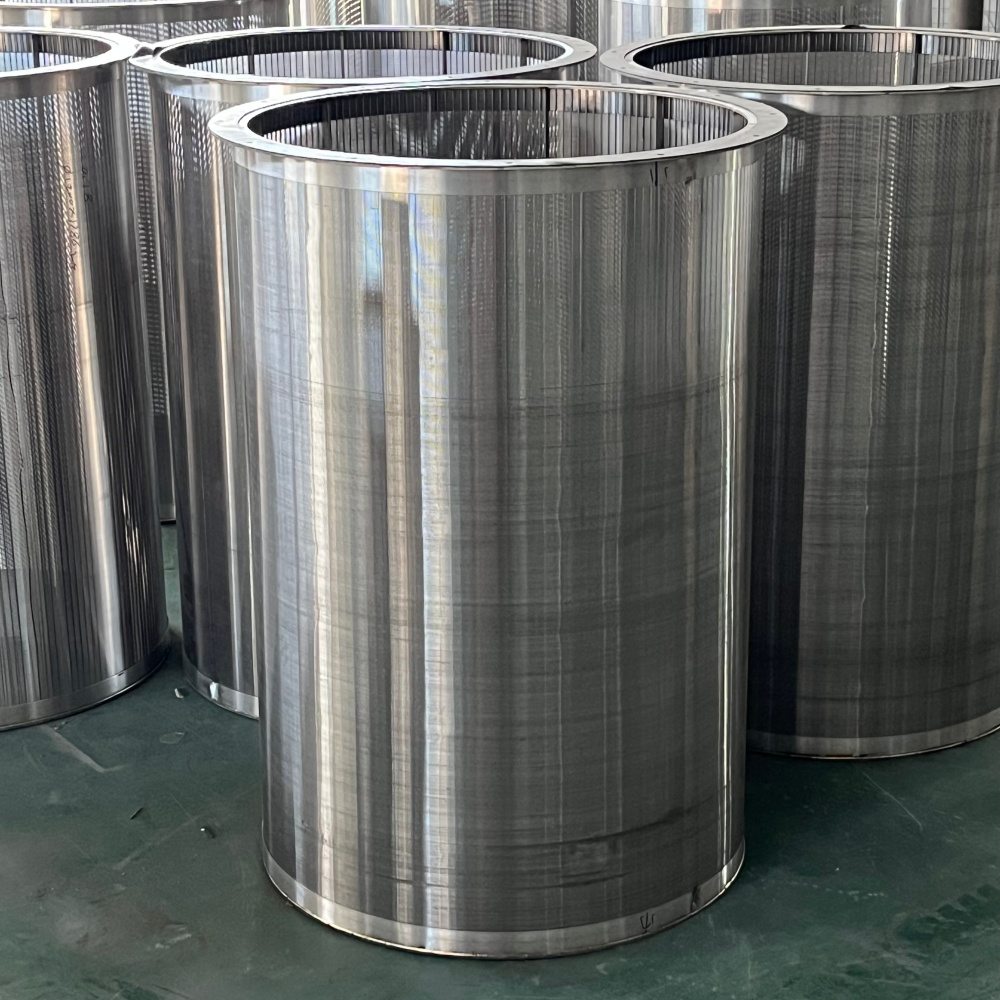
A wedge wire interstage screen is a large horizontal cylindrical screen made with high-precision stainless steel wedge wire. Its surface is formed by continuous V-shaped slots, which are designed to separate solid carbon particles from slurry while maintaining flow capacity. In CIL and CIP gold extraction systems, the wedge wire interstage screen sits between tanks and acts as the control point for carbon movement.
In a practical mining operation, activated carbon carries adsorbed gold through the adsorption circuit. The slurry should not move with the carbon in an uncontrolled way, and carbon should not be broken into fines during transfer. This is why the smooth V-shaped wire surface matters. It helps prevent cutting or excessive abrasion of carbon particles during separation, which reduces the risk of gold loss linked to carbon fines.
Why Does Intake Design Affect Carbon Transfer Stability?
In a CIL or CIP circuit, intake design affects how slurry enters, passes through, and exits the wedge wire interstage screen. The system handles a carbon-slurry mixture rather than clean water, so every design choice has a direct impact on plant stability. Fine tailings, fibers, wood chips, and abrasive particles can all challenge the screen surface.
The wedge wire interstage screen uses an inside-out flow design. Slurry flows inside the cylinder and passes through the wedge wire slots, while carbon is discharged from one end. This structure helps the screen maintain separation while reducing the chance that impurities stay trapped inside the slots.
How Do Key Specifications Shape Screen Performance?
| Performance factor | specification | Design value in CIL/CIP operation |
| Separation accuracy | Slot size commonly 0.6–1.2 mm, often 0.8 mm or 0.9 mm | Matches activated carbon particle size and reduces carbon-slurry cross-contamination |
| Flow capacity | Open area typically 25%–35% | Supports high processing capacity with lower pressure drop |
| Structural durability | 304/316L stainless steel; wear-resistant steel may be considered for high-abrasion conditions | Resists corrosion, slurry scouring, and mechanical action from internal rotors |
| Cylinder sizing | Diameter commonly φ800–φ2000 mm or larger; length usually 1.5–2.5 times the diameter | Matches plant capacity, carbon retention time, and transfer requirements |
How Does Slot Size Control Carbon Loss and Clogging?
Slot size is one of the most important decisions in wedge wire interstage screen design. In many CIL/CIP systems, the standard slot range is 0.6–1.2 mm, with 0.8 mm and 0.9 mm commonly selected according to activated carbon particle size. This range is designed to retain activated carbon particles while allowing slurry to pass through the screen surface.
If the slot size is too wide, fine carbon may escape with the slurry. This creates two problems. The plant loses valuable activated carbon, and gold attached to carbon fines may also be lost. If the slot size is too narrow, slurry resistance increases, and the screen is more likely to suffer from blockage caused by fine tailings, wood chips, or fibers.
The wedge wire interstage screen solves this challenge through precise V-shaped slots. The smooth surface and controlled opening reduce carbon damage during contact. The fully welded structure also helps prevent dead zones where carbon particles could become trapped. In daily production, this translates into smoother carbon movement and more stable adsorption performance.
Why Does Open Area Matter for High-Throughput Intake?
The open area determines how effective flow surface the wedge wire interstage screen provides. A higher open area allows more slurry to pass through the screen surface without forcing the system to operate under unnecessary resistance. This is important in large-scale CIL/CIP lines where multi-ton carbon-slurry mixtures move continuously. Low pressure drop helps the intake section remain stable, while the large effective filtration area supports continuous operation.
However, the open area cannot be increased without considering the strength. The wedge wire interstage screen still needs to resist scouring, mechanical action, and long operating cycles. This is why the welded wedge wire surface, reinforcing ribs, and cylindrical design must work together. A good carbon transfer screen does not simply maximize open area. It balances open area with strength and separation accuracy.
What Material Should Be Used for Long-Term Operation?
Material selection affects how long a wedge wire interstage screen can survive in abrasive and corrosive slurry conditions. For many standard gold processing conditions, 304 stainless steel provides practical strength and corrosion resistance. When the slurry environment is more corrosive, 316L stainless steel offers stronger resistance and better long-term stability. In harsher working conditions, wear-resistant steel may be considered to improve service life under continuous scouring.
How Does Welded Construction Improve Reliability?
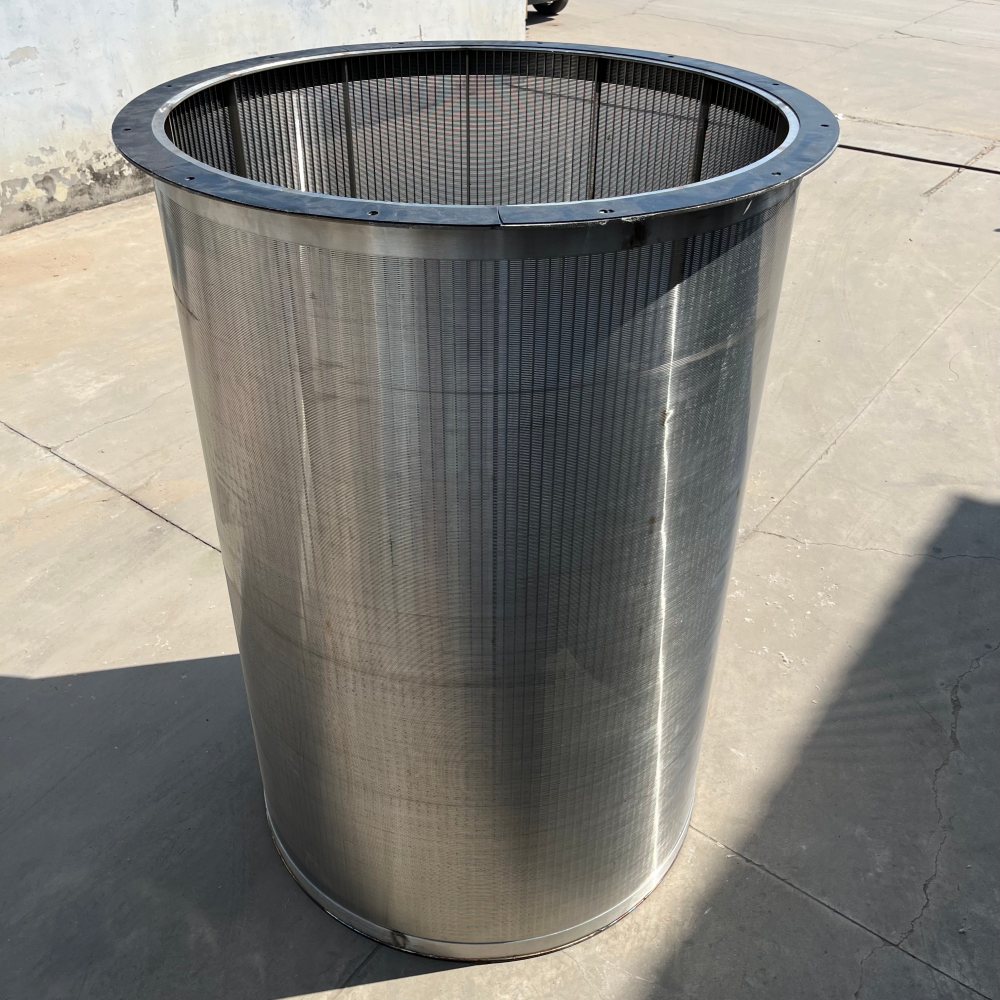
The wedge wire interstage screen uses a fully welded cylindrical structure. This matters because the screen works in a demanding location between tanks, where it must withstand slurry impact, carbon movement, and mechanical action from internal rotors. A weak screen structure may deform, loosen, or wear quickly under continuous operation.
The welded wedge wire and reinforcing ribs improve mechanical strength. They help the screen resist long-term scouring from carbon-slurry mixtures while keeping the slot structure stable. Stable slots are essential because even small deformations may affect carbon retention and flow performance.
What Should Buyers Confirm Before Custom Production?
Before ordering a wedge wire interstage screen, buyers should confirm the actual CIL or CIP process conditions. The most important data includes activated carbon particle size, slurry flow rate, tank connection method, expected cylinder diameter, cylinder length, material requirement, and maintenance space.
For mining buyers, the goal is not only to purchase a carbon transfer screen. The goal is to receive a screen that fits the plant’s carbon transfer logic. When the wedge wire interstage screen is designed correctly, it supports carbon movement, slurry return, stable adsorption, and lower maintenance pressure.
Conclusion
A wedge wire interstage screen is one of the most important control points in CIL/CIP gold processing. It determines how efficiently carbon separates from slurry, how smoothly tank-to-tank transfer works, and how much maintenance pressure the plant may face during continuous operation.
For project communication, BTOSLOT can support custom wedge wire interstage screen requirements based on carbon size, flow rate, cylinder diameter, length, material, and flange connection details. Sharing accurate operating data at the beginning allows us to design a CIL/CIP Cylinder Screen that fits the process instead of forcing the process to adapt to the screen.
FAQ
How much does a wedge wire interstage screen cost?
The price of a wedge wire interstage screen depends on cylinder diameter, length, slot size, material, flange design, and order quantity. A larger CIL/CIP Cylinder Screen with 316L stainless steel and customized flange connections will cost more than a smaller standard unit. For accurate pricing, buyers should provide carbon particle size, tank layout, slurry flow rate, and required material.
How long is the service life of a wedge wire interstage screen?
The service life of a wedge wire interstage screen depends on slurry abrasiveness, material selection, operating time, and maintenance conditions. A fully welded stainless steel structure with stable wedge wire slots is designed for long-term use in carbon-slurry separation. In harsh slurry conditions, proper material selection and regular inspection help extend service life.
What slot size is suitable for a wedge wire interstage screen?
A wedge wire interstage screen commonly uses a slot size of 0.6–1.2 mm, with 0.8 mm or 0.9 mm often selected according to activated carbon particle size. The correct slot size should retain carbon while allowing slurry to pass smoothly. If the slot is too wide, carbon loss may occur. If it is too narrow, clogging risk may increase.
Recent Post
Related Products
Best-selling Products
Starch Screen
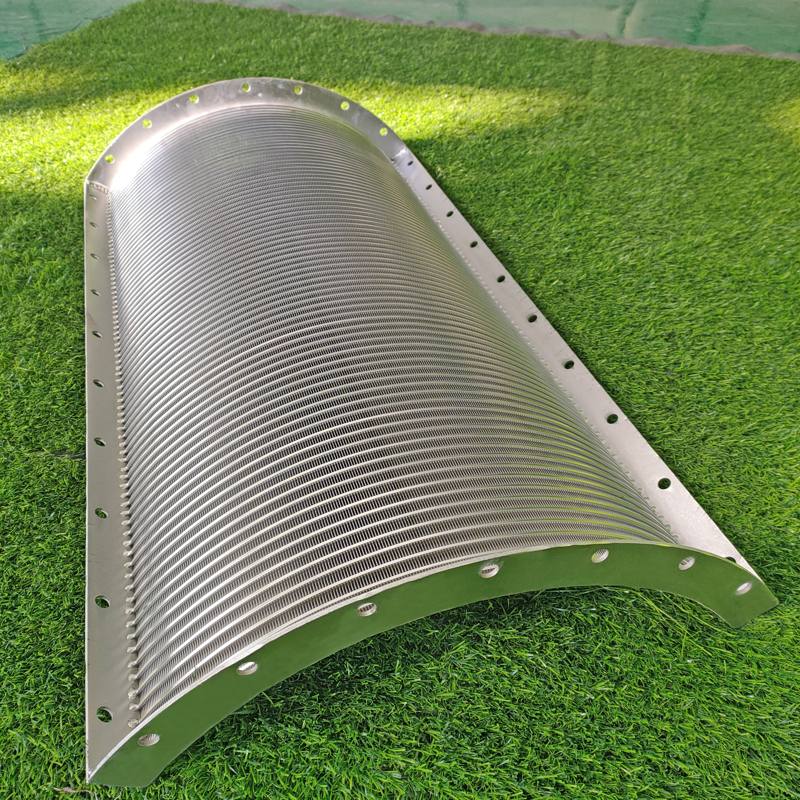
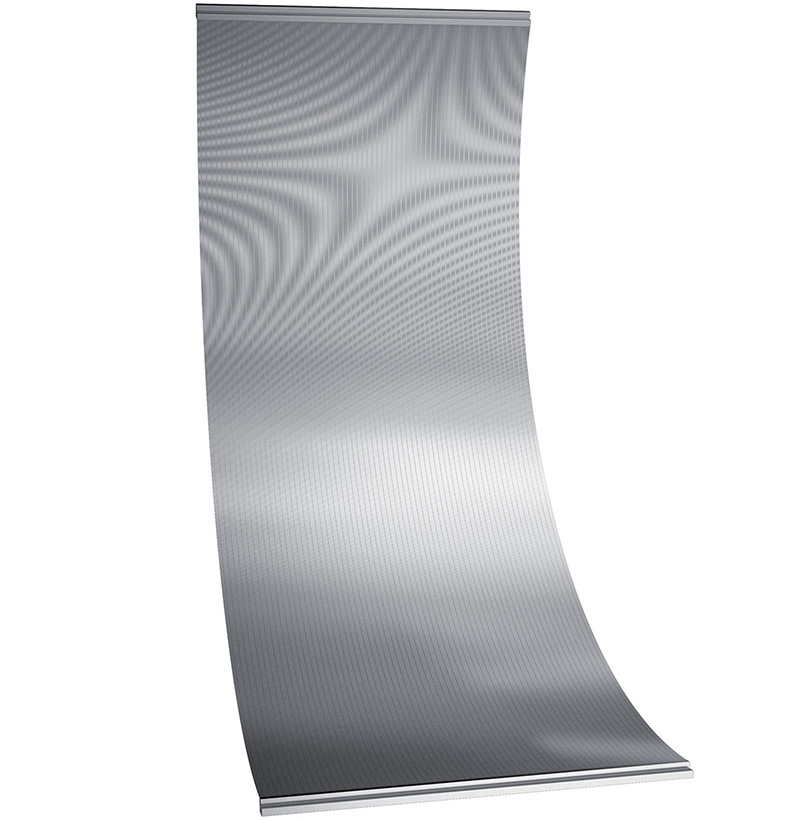
The Wedge Wire Starch Curved Screen is a curved screening device specifically designed for the starch industry. It features an arc-shaped screen surface made of precisely welded V-profile stainless steel wires, utilizing centrifugal force or gravity to achieve rapid dewatering and classification of starch slurry. Its curved structure prolongs slurry retention time, improving solid-liquid separation efficiency. It is suitable for starch extraction, refining, and byproduct recovery processes for starches such as potato, corn, and cassava. Characterized by efficient screening, wear and clogging resistance, and easy maintenance, this equipment is a key solid-liquid separation device in modern starch processing.
Rotary Drum
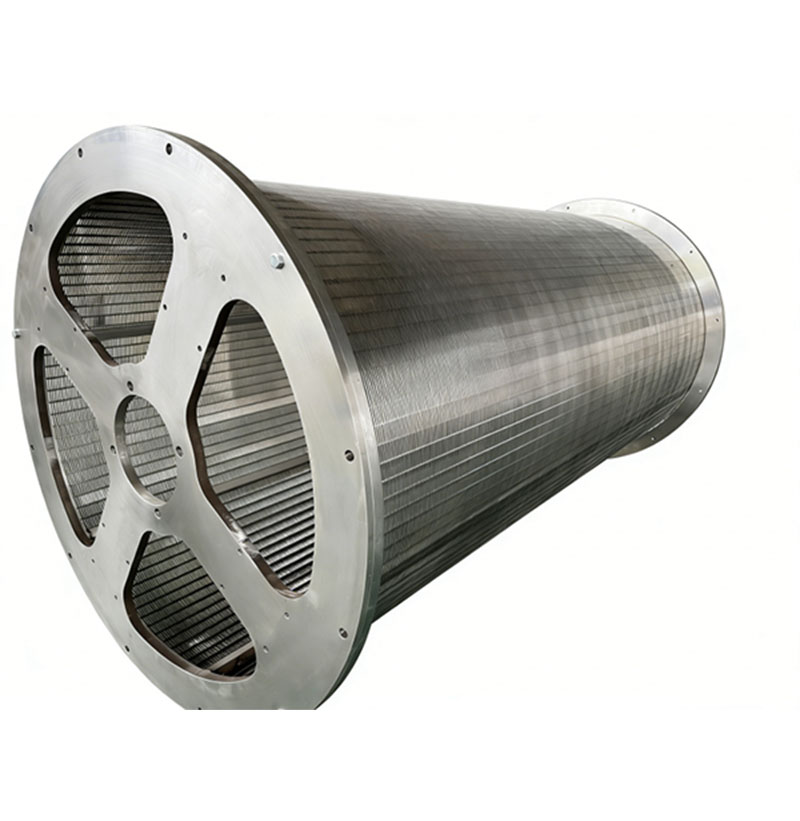
The Stainless Steel Wedge Wire Rotary Drum Screen (also known as a Rotary Drum Strainer or Micro-Screen) is a continuously and automatically operating front-end solid-liquid separation device. Its core component is a large cylindrical drum installed horizontally or at a slight incline. The entire circumferential surface of the drum is covered with a stainless steel wedge wire screen (Johnson screen). The wastewater to be treated flows into one end of the drum. Under gravity, the filtrate passes through the wedge wire slots, while solid suspended matter (such as fibers, hair, plastic pieces, and fine particles) is retained on the inner surface of the drum. As the drum rotates slowly, the retained debris is lifted to the top, where it is flushed by spray water into a collection trough, achieving a continuous process of automatic screening, filtration, and residue removal
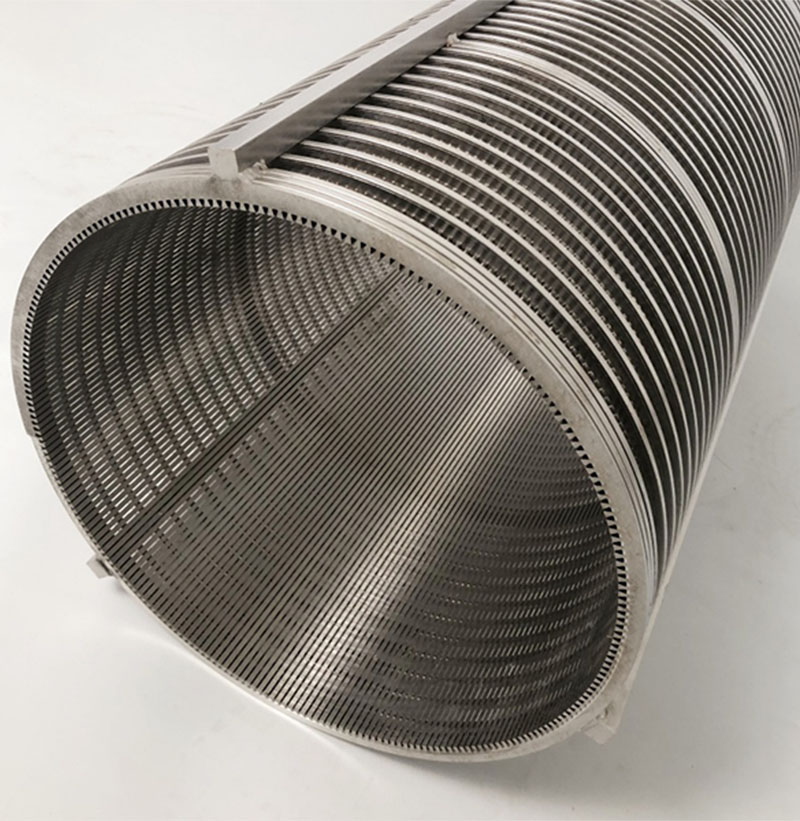
Screen Basket for Screw Press Separator
The stainless steel wedge wire screen basket, commonly known as the "V-wire screen," "press screen basket," or "screen cylinder," is a core component of screw press solid-liquid separators. It is installed inside the spiral press, enclosing the rotating screw shaft. The working principle is as follows: raw slurry with high moisture content is pushed into the screen basket by the screw shaft. Under the squeezing and conveying action of the spiral flights, the liquid (filtrate) is forced out through the precise, continuous slots of the screen basket, while the solid material (manure cake) is retained inside and continues to be compressed and dewatered as it moves forward. Finally, the dewatered solids are discharged from the outlet, achieving solid-liquid separation.
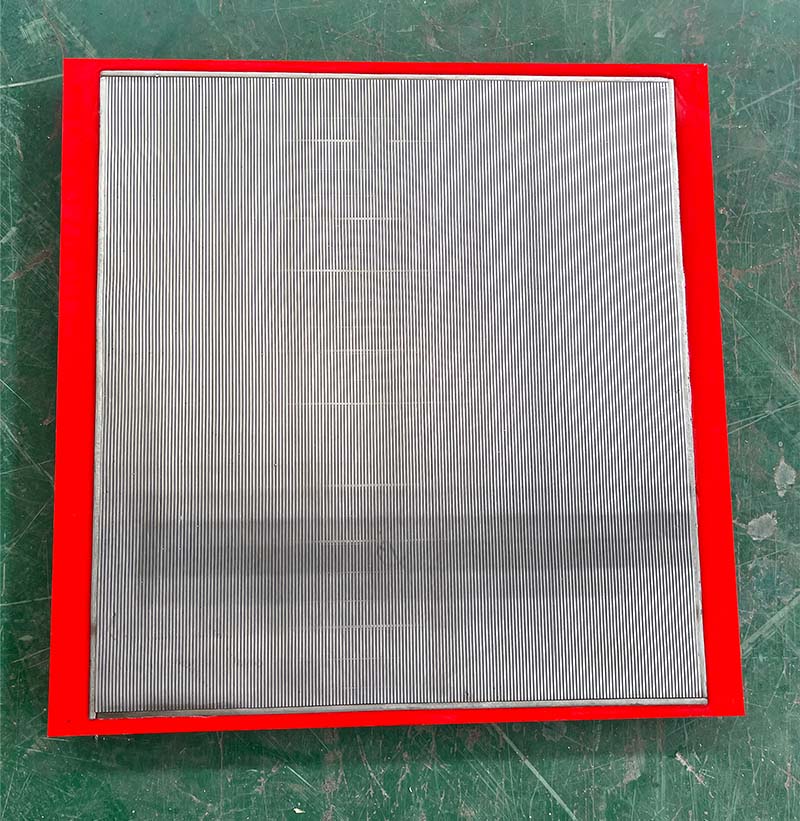
Wedge Wire Vibrating Screen
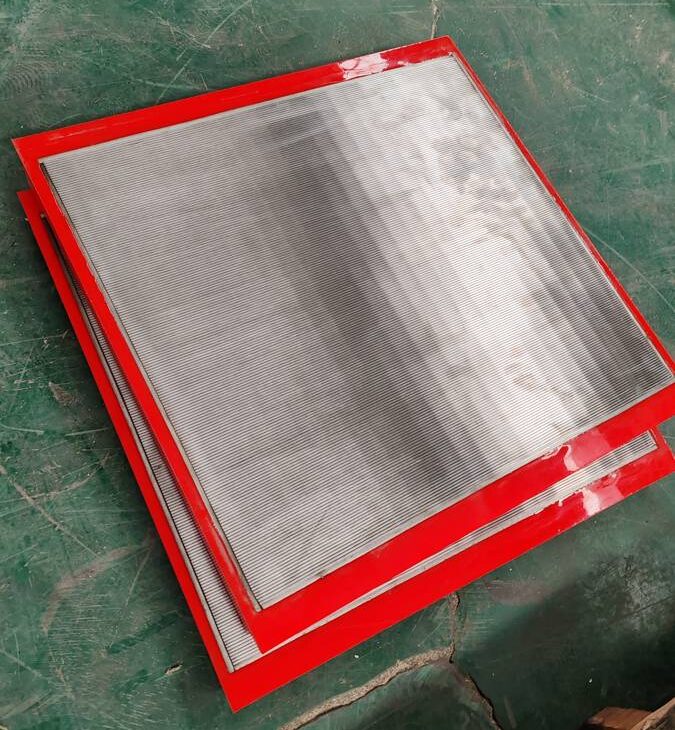
A stainless steel wedge wire vibrating screen is a solid-liquid separation device featuring a screen surface made by precisely welding V-shaped stainless steel wires, integrated with a high-frequency vibration system. With uniform slots, wear resistance, and corrosion resistance, it is suitable for wet screening and dewatering operations. The vibration mechanism enables rapid material dispersion and efficient sieving while effectively preventing screen clogging. Widely used in industries such as mining, metallurgy, food processing, and environmental protection, it is particularly suitable for handling fine particles, high-viscosity, or easily agglomerated materials, offering advantages such as high screening accuracy, large processing capacity, and long service life.
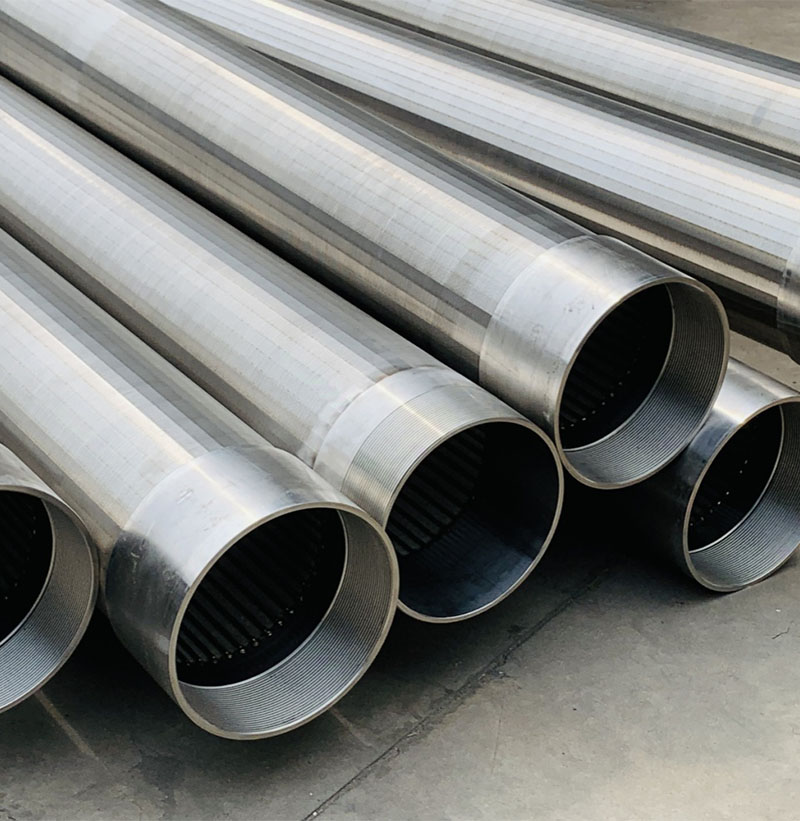
Wedge Wire Water Well Screen
Johnson Deep Water Well Screens, also referred to as continuous slot screens or wire wrap screens, were originally developed to solve sand control challenges in fine-grained and uniform sand formations. These geological conditions are commonly encountered in deep groundwater aquifers, where conventional perforated pipes often suffer from clogging, excessive sand production, and reduced well efficiency.
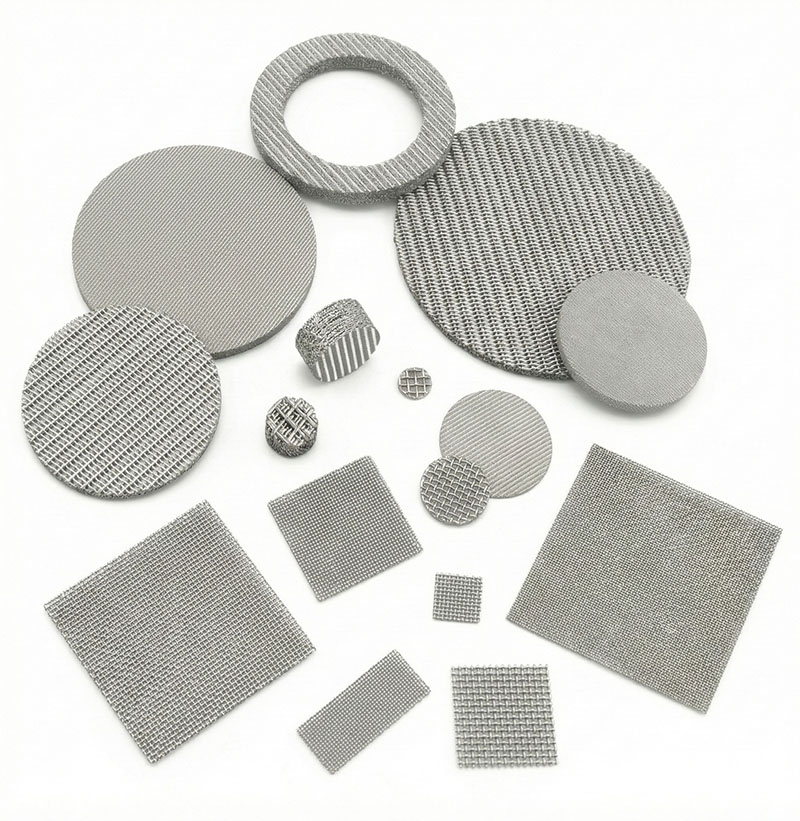
Sintered Mesh Plate and Disc
Sintered Mesh Plates and Discs are high-precision filtration components fabricated by bonding multiple layers of stainless steel wire mesh through a specialized vacuum sintering process. Unlike traditional mesh that relies on mechanical weaving alone, these plates are fused at every contact point, transforming individual wires into a rigid, integrated porous metal sheet.
These plates can be customized into various shapes, most commonly circular discs, to fit specific industrial equipment. They offer an ideal balance of high permeability, extreme structural integrity, and precise filtration ratings. Because they are made entirely of metal (typically 304 or 316L), they provide a "permanent" filtration solution that can withstand high temperatures and corrosive chemicals while remaining fully cleanable and reusable.