
ABOUT US
Your Expert Manufacturer of Wedge Wire Screens;
Your Reliable Partner and Source of Innovation
GET A FREE QUOTE
-
Home

-
Blog
-
Industry Blog
- Heavy-Media Recovery With Wedge Wire Vibrating Screens
Heavy-Media Recovery With Wedge Wire Vibrating Screens
-
 author
- 14,octubre
A drain-and-rinse screen is a small part of a dense-medium circuit, but it can decide how much magnetite or ferrosilicon returns to the loop with usable density. The screen has to shed liquid promptly while moving solids predictably, even when the feed is abrasive, wet, and uneven. That is why screen media deserves attention as an operating surface, not merely as a replaceable panel.
What a drain-and-rinse deck has to do
Heavy-media recovery begins by separating valuable dense medium from the sized mineral stream so it can be cleaned, reconditioned, and reused. On a vibrating screen deck, the drain portion removes the bulk of the medium that travels with the solids. The rinse portion then displaces residual medium with water, helping keep the product stream and the returned medium circuit from contaminating one another.
Drain and rinse are separate jobs
The drain zone needs fast liquid passage without losing the particle fraction that the process intends to retain. The rinse zone needs a stable bed so wash water can contact entrained medium instead of simply short-circuiting through bare patches. When those duties blur together, extra water often masks the real issue: uneven feed spread, a poor deck angle, or media that no longer drains at the expected rate.
Why the sieve screen surface changes the result
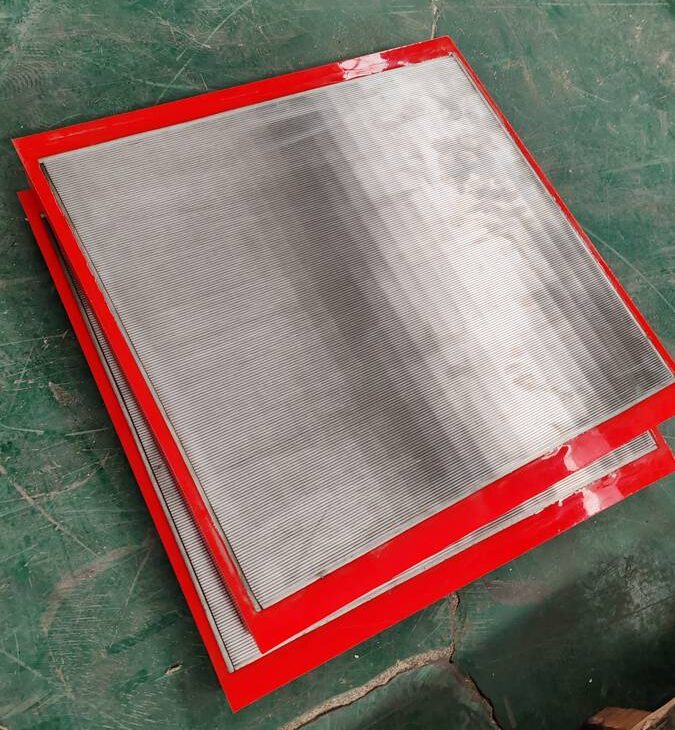
A stainless steel vibrating screen mesh must keep its opening geometry under vibration and slurry abrasion. BTOSLOT lists 304, 316L, and 321 stainless steel, with 0.1–5 mm slots and 25–45% open area. Those values are a starting point, not a universal setting for every circuit.
The V-profile releases liquid while reducing deep particle lodging. In heavy-media service, the benefit still depends on profile wire, support spacing, slot direction, and frame stiffness matching the motion and feed. A screen can drain poorly when material piles up in one lane or fines coat the screen surface.
Open area is useful only when the wedge wire screen bed stays controlled
The phrase wedge wire screen open area is not a shortcut for throughput. It is one part of a balance among drainage, retention, support, and wear life. More flow path can help drainage, yet a sieve screen with poor support or an unstable bed creates a different recovery problem.
Open area has a trade-off
Plant teams should compare clean-water drainage, operating drainage, retained-medium loss, and wire condition at the same duty. This makes panel choice testable: does the sieve screen move solids and liquid as the circuit needs?
| Operating signal | What it can mean | Useful response |
| Medium appears in the solids discharge | Slot is too open for the actual particle size, or the bed is too thin to present particles to the deck. | Check particle-size distribution, bed depth, and slot choice before changing the screen motion. |
| Drain water remains visibly dense | The sieve screen is draining slowly, often because the effective open area is reduced by wear, blinding, or a poor feed spread. | Inspect the feed box and screen surface; compare clean and operating drainage rather than judging by nominal aperture alone. |
| Wash stage consumes more water but recovery does not improve | The issue may be carryover or uneven material travel, not simply insufficient rinse flow. | Stabilize feed distribution and discharge pattern, then tune the wash-water addition against a measured recovery result. |

The operating details that deserve attention
The screen cannot correct every upstream fluctuation, but it should give operators a repeatable response when feed changes. A rise in clay, fine particles, or slurry density can alter sieve screen behavior before sampling reveals the impact. Inspect feed spread, screen blinding, discharge pattern, and rinse distribution before changing several variables.
For teams comparing slurry screen manufacturer options, focus on material, slot orientation, support-rod layout, panel dimensions, and vibration duty. Those details match the surface to the machine and mineral stream better than a generic non-blinding claim.
The same discipline applies to a Johnson screen filter element for mineral processing filtration. It should be discussed in the context of a specific duty, not as a catch-all answer for every slurry. Heavy-media recovery needs a robust vibrating screen; other points may need another geometry screen.
- Feed spread across the full deck width.
- Bed depth and any visible blinding during the shift.
- Medium loss measured with the same sampling method each time.
A practical reading of performance changes
Performance changes are easier to diagnose when the circuit has a baseline. Record medium density before and after the screen, retained-medium losses, rinse-water rate, feed distribution, and how the panel looks after a defined operating interval. When results move together, the operating team can distinguish a media-quality issue from a drainage or deck-surface issue.
The term vibrating wire screens covers many layouts, so replacement decisions should not be made from aperture alone. A compatible replacement must fit the screen frame and preserve the intended flow direction, support pattern, and panel restraint. In an abrasive service, wear should be checked for its effect on cut behavior as well as for visible breakage.
Summary: recovery depends on a stable separation surface
A wedge wire vibrating deck can support heavy-media recovery when it drains promptly, retains the intended solids, and remains stable under the actual feed and vibration duty. The sensible next step is to measure where medium is leaving the circuit, inspect how the screen bed behaves across the sieve screen, and define the slot, support, and panel details around that evidence.
FAQ
What is the purpose of the rinse stage in heavy-media recovery?
The rinse stage removes dense medium that remains with the solids after the drain section. It helps return medium to the recovery circuit while limiting contamination in the product stream. The right rinse rate depends on bed behavior and recovery measurement, not on a fixed water setting.
Can one wedge wire vibrating screen panel suit every mineral slurry?
No. Particle size, medium type, solids loading, abrasion, vibration motion, and the target separation all affect the suitable panel design. A panel that works well for one drain-and-rinse duty may not be appropriate for a fine dewatering or classification task.
Why can a screen deck drain slowly even when the slot is not blocked?
Uneven feed distribution, a thick material bed, poor rinse placement, or a change in slurry characteristics can restrict effective drainage. Inspecting the working screen deck is important because a clean, static panel does not fully represent operating flow.
Does a wider slot always improve heavy-medium drainage?
A wider slot can increase liquid passage, but it can also change what reports to the undersize stream. Slot selection needs to protect the process cut while supporting drainage, so it should be evaluated against particle-size data and recovery results.
What should be supplied when specifying a replacement vibrating panel?
Provide the screen model or clear frame dimensions, feed material and particle-size range, medium used, desired separation duty, slot direction, operating hours, and the failure or recovery issue being observed. This gives the screen designer enough context to propose a compatible surface.
Recent Post
Related Products
Best-selling Products
Starch Screen
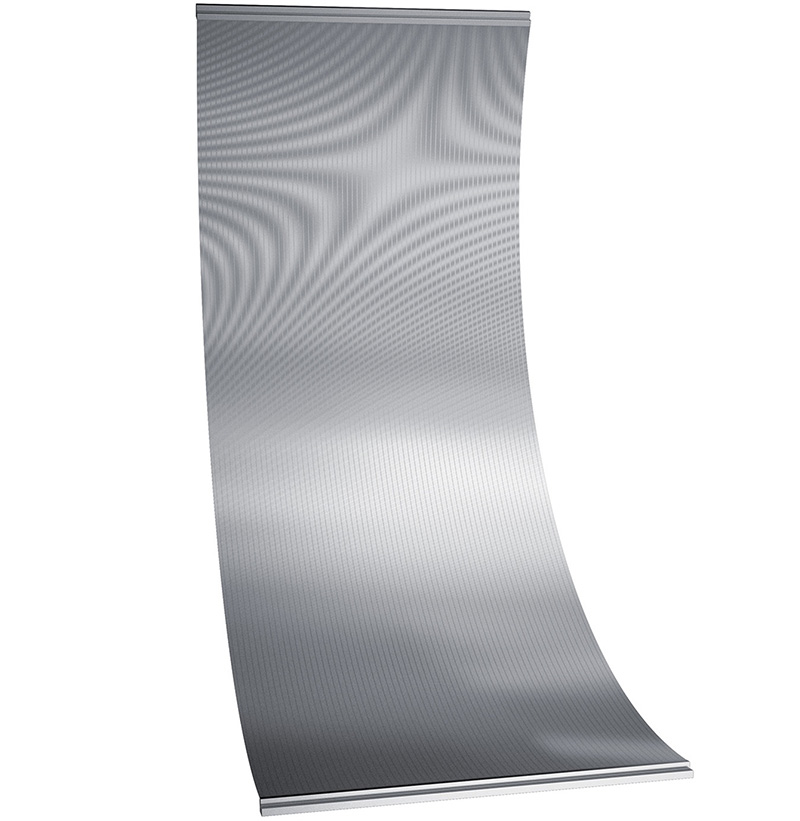
The Wedge Wire Starch Curved Screen is a curved screening device specifically designed for the starch industry. It features an arc-shaped screen surface made of precisely welded V-profile stainless steel wires, utilizing centrifugal force or gravity to achieve rapid dewatering and classification of starch slurry. Its curved structure prolongs slurry retention time, improving solid-liquid separation efficiency. It is suitable for starch extraction, refining, and byproduct recovery processes for starches such as potato, corn, and cassava. Characterized by efficient screening, wear and clogging resistance, and easy maintenance, this equipment is a key solid-liquid separation device in modern starch processing.
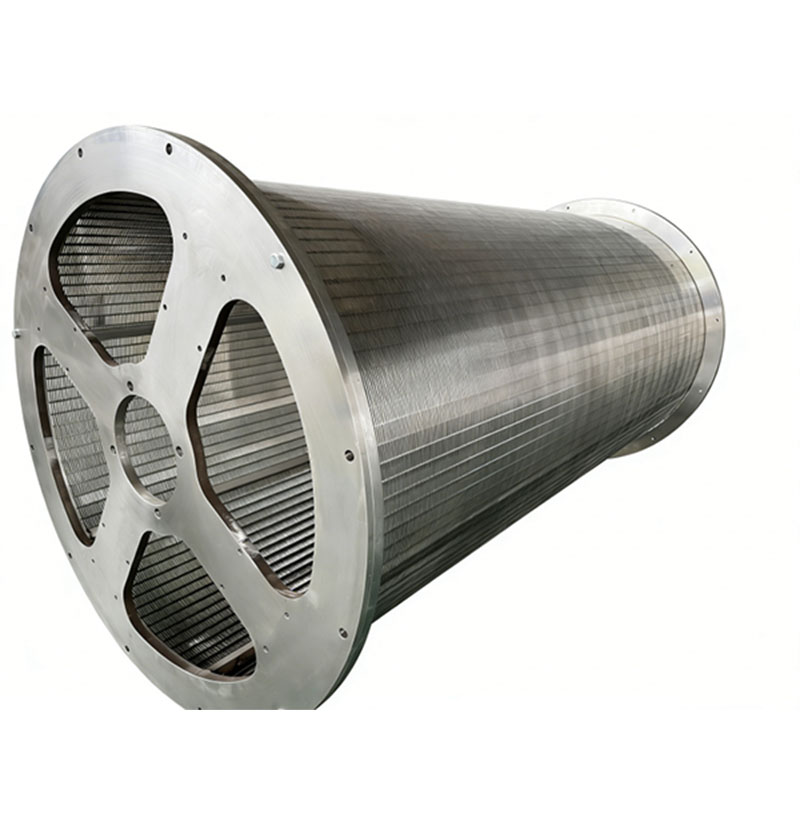
Rotary Drum
The Stainless Steel Wedge Wire Rotary Drum Screen (also known as a Rotary Drum Strainer or Micro-Screen) is a continuously and automatically operating front-end solid-liquid separation device. Its core component is a large cylindrical drum installed horizontally or at a slight incline. The entire circumferential surface of the drum is covered with a stainless steel wedge wire screen (Johnson screen). The wastewater to be treated flows into one end of the drum. Under gravity, the filtrate passes through the wedge wire slots, while solid suspended matter (such as fibers, hair, plastic pieces, and fine particles) is retained on the inner surface of the drum. As the drum rotates slowly, the retained debris is lifted to the top, where it is flushed by spray water into a collection trough, achieving a continuous process of automatic screening, filtration, and residue removal
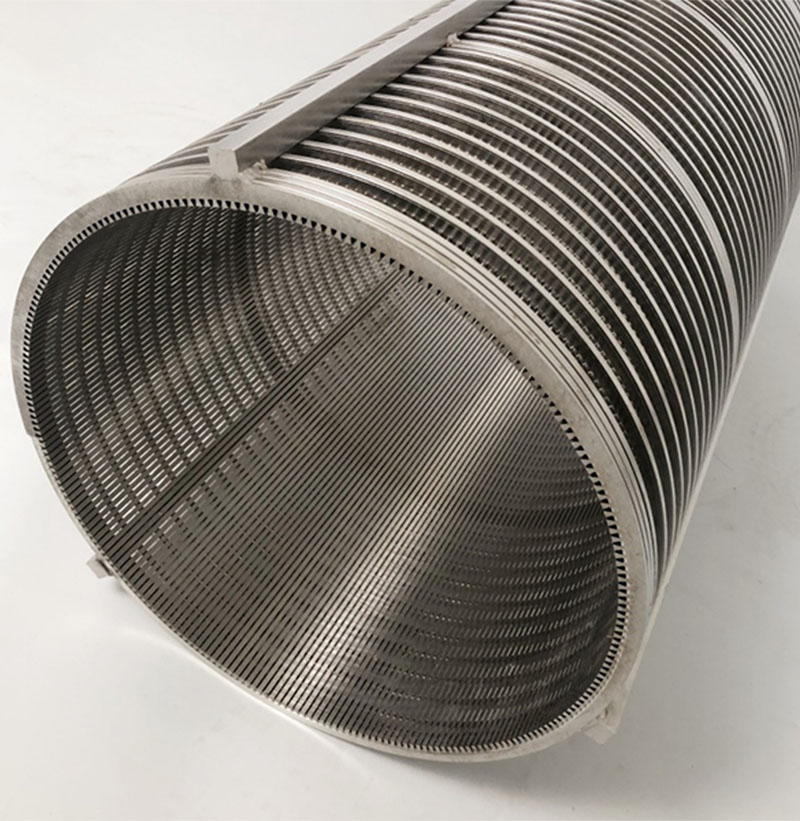
Screen Basket for Screw Press Separator
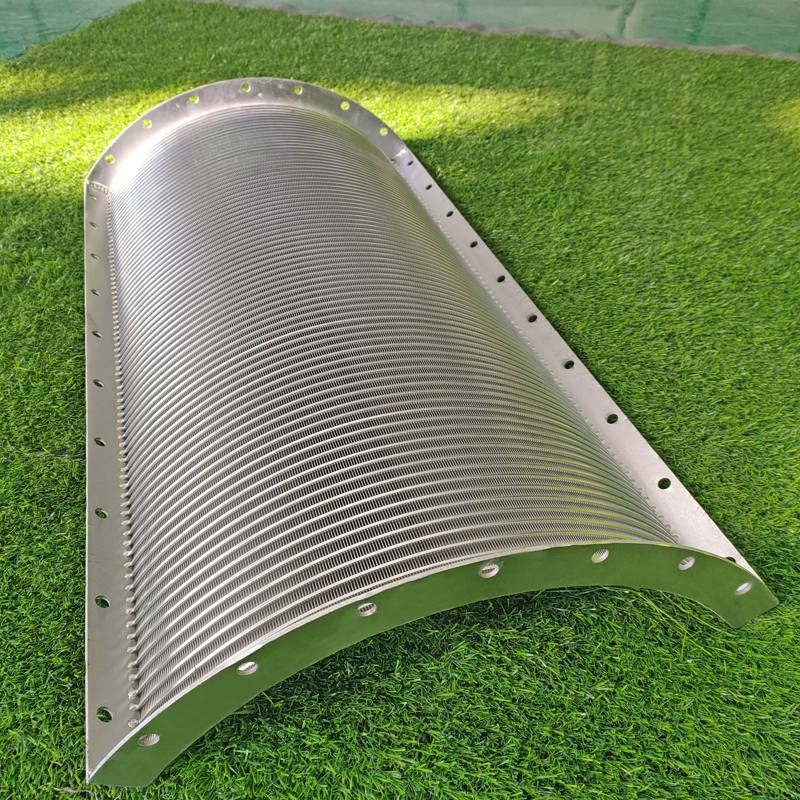
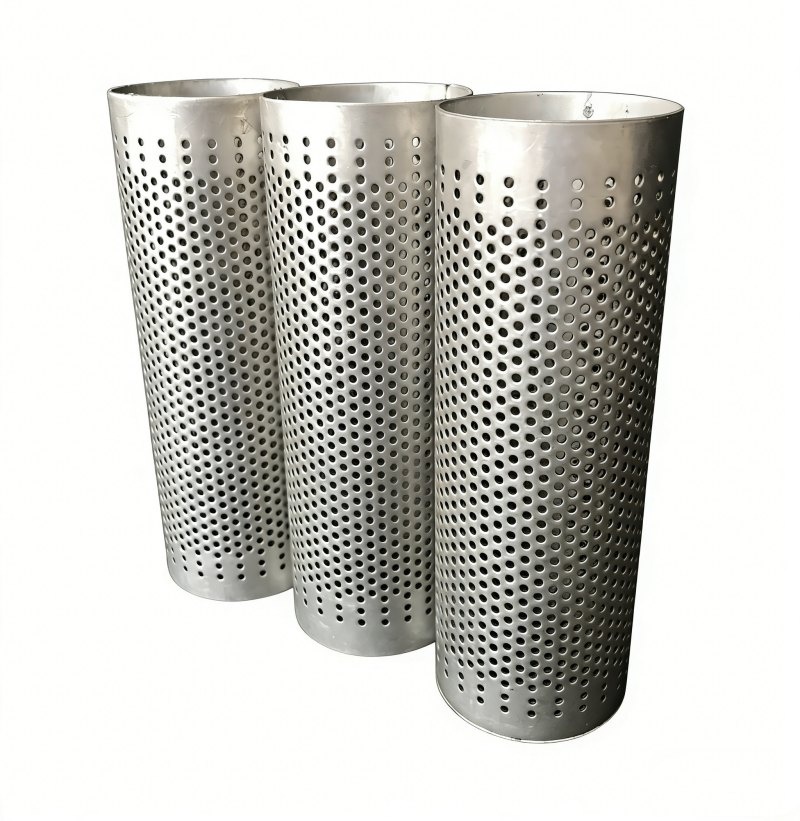
The stainless steel wedge wire screen basket, commonly known as the "V-wire screen," "press screen basket," or "screen cylinder," is a core component of screw press solid-liquid separators. It is installed inside the spiral press, enclosing the rotating screw shaft. The working principle is as follows: raw slurry with high moisture content is pushed into the screen basket by the screw shaft. Under the squeezing and conveying action of the spiral flights, the liquid (filtrate) is forced out through the precise, continuous slots of the screen basket, while the solid material (manure cake) is retained inside and continues to be compressed and dewatered as it moves forward. Finally, the dewatered solids are discharged from the outlet, achieving solid-liquid separation.
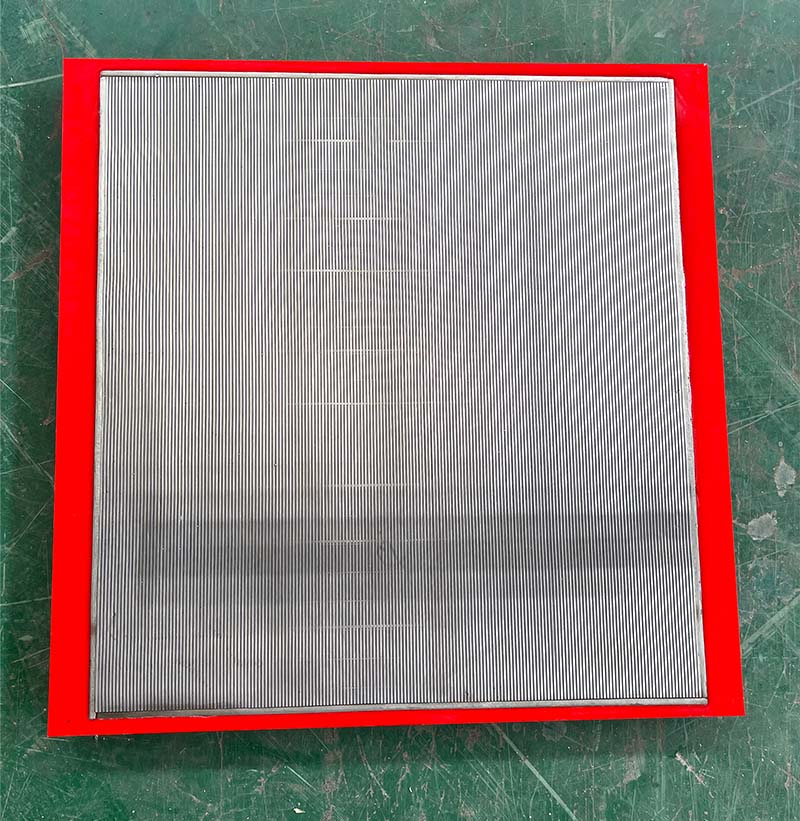
Wedge Wire Vibrating Screen
A stainless steel wedge wire vibrating screen is a solid-liquid separation device featuring a screen surface made by precisely welding V-shaped stainless steel wires, integrated with a high-frequency vibration system. With uniform slots, wear resistance, and corrosion resistance, it is suitable for wet screening and dewatering operations. The vibration mechanism enables rapid material dispersion and efficient sieving while effectively preventing screen clogging. Widely used in industries such as mining, metallurgy, food processing, and environmental protection, it is particularly suitable for handling fine particles, high-viscosity, or easily agglomerated materials, offering advantages such as high screening accuracy, large processing capacity, and long service life.
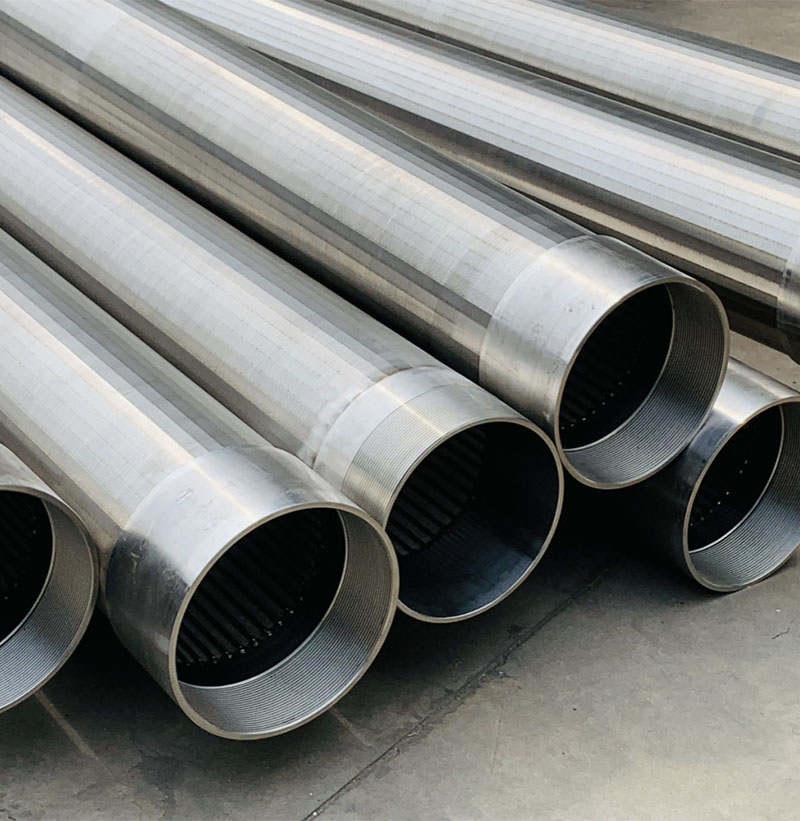
Wedge Wire Water Well Screen
Johnson Deep Water Well Screens, also referred to as continuous slot screens or wire wrap screens, were originally developed to solve sand control challenges in fine-grained and uniform sand formations. These geological conditions are commonly encountered in deep groundwater aquifers, where conventional perforated pipes often suffer from clogging, excessive sand production, and reduced well efficiency.
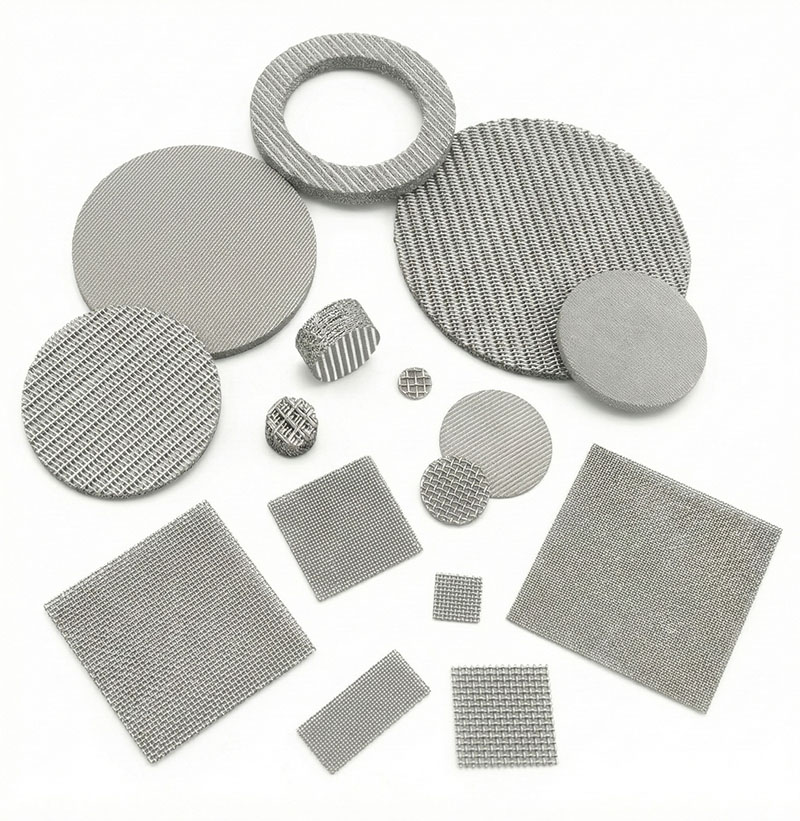
Sintered Mesh Plate and Disc
Sintered Mesh Plates and Discs are high-precision filtration components fabricated by bonding multiple layers of stainless steel wire mesh through a specialized vacuum sintering process. Unlike traditional mesh that relies on mechanical weaving alone, these plates are fused at every contact point, transforming individual wires into a rigid, integrated porous metal sheet.
These plates can be customized into various shapes, most commonly circular discs, to fit specific industrial equipment. They offer an ideal balance of high permeability, extreme structural integrity, and precise filtration ratings. Because they are made entirely of metal (typically 304 or 316L), they provide a "permanent" filtration solution that can withstand high temperatures and corrosive chemicals while remaining fully cleanable and reusable.