
ABOUT US
Your Expert Manufacturer of Wedge Wire Screens;
Your Reliable Partner and Source of Innovation
GET A FREE QUOTE
-
Home

-
Blog
-
Industry Blog
- What Defines a Reliable 5 MPa Wedge Wire Screen?
What Defines a Reliable 5 MPa Wedge Wire Screen?
-
 author
 - 20,agosto

Introduction
A 5 MPa wedge wire screen is not defined by the pressure number stamped on a drawing. At 5 MPa, or 50 bar, the screen has to manage pressure, flow, particle retention, vibration, cleaning cycles, and corrosion at the same time. For us, reliability starts with the relationship between the V-shaped profile wire, support rods, welds, slot opening, screen diameter, and operating conditions.
This is where wedge wire screen technology has a clear advantage. The profile wires form the filtration surface while the support rods provide the structural framework. The result is a rigid, fully welded screen with continuous slots, precise separation, strong mechanical support, and good flow capacity. Our manufacturing experience covers stainless steel wedge wire screens, cylinders, baskets, filter elements, support grids, and other custom screening components for water treatment, mining, petrochemical, food, pharmaceutical, and environmental applications.
What Makes a 5 MPa Wedge Wire Screen Reliable
The first point is load direction. Internal pressure pushes outward on a cylindrical screen, while external pressure creates a risk of ovalization or collapse. A reliable design therefore cannot be selected from pressure alone. Screen diameter, unsupported length, support-rod spacing, profile-wire size, end connections, and reinforcement all influence how the load travels through the structure.
Wedge wire screen technology distributes this load through a welded framework rather than relying on the filtration wire alone. The support rods carry much of the mechanical load, while the profile wires maintain the slot geometry. This separation of functions is one reason wedge wire screens can combine high strength with a large effective filtration area. Support rods serve as the pressure-bearing structure, and wedge wire construction can provide an open area as high as 60%–70% in suitable designs.
The welds are equally important. If the connection between profile wire and support rod moves under pressure, the nominal slot size is no longer the actual slot size. We therefore treat weld consistency, wire spacing, and dimensional stability as part of pressure-screen performance rather than separate manufacturing details.
Slot Geometry Controls Both Flow and Separation
The V-shaped slot is one of the defining features of wedge wire screen technology. Its opening is narrow at the filtration surface and becomes wider toward the flow channel. This geometry gives particles fewer contact points and reduces the tendency of solids to lodge inside the opening. It also creates a smooth, continuous flow path that is easier to clean by backwashing or other methods.
Slot precision is just as important as the V profile itself. Stainless steel wedge wire screens in our product range can be manufactured with openings from about 0.05 mm to 10 mm, depending on the application, with fine screening applications reaching approximately 50 microns. Profile wire and support-rod dimensions can also be selected according to screen diameter and mechanical load.
The following examples show how construction changes with the application:
| Screen type | Typical slot range | Open area / pressure reference | Main structural focus |
| Industrial wedge wire screen | 0.05–10 mm | Up to about 60%–70% in suitable designs | Support rods, weld strength, screen geometry |
| Wedge wire candle filter | 25–2,000 μm | Differential pressure typically up to 6–10 bar | Compact triangular support structure |
| Wedge wire support grid | 0.2–3.0 mm | About 30%–50% open area | Heavy media and catalyst load |
| Wedge wire oil extraction screen | 0.1–3.0 mm | About 30%–50% open area; high-pressure versions customizable | Corrosion, pressure, and wear resistance |
| Radial internal-wire screen cylinder | 30 μm–3.0 mm | Application-dependent | Smooth inner surface and radial support |
The comparison also explains why a 5 MPa design cannot simply copy the dimensions of a lower-pressure screen. The same slot size may require a different profile wire, support arrangement, wall geometry, or reinforcement when pressure and diameter increase.

Wedge Wire Screen Open Area Must Match the Load
Wedge wire screen open area directly affects fluid velocity and pressure loss. A larger effective opening gives the process more flow space, but increasing the opening by reducing wire pitch or structural material is not automatically the right choice for a high-pressure application.
Our approach is to balance the wedge wire screen open area with slot retention, profile-wire strength, support spacing, and pressure requirements. Many wedge wire designs operate around 30%–50% open area, while certain optimized structures can reach considerably higher values.
This balance becomes particularly important when solids loading is high. A screen with a generous wedge wire screen open area can maintain a useful flow path, while the continuous V-shaped slots help reduce blinding. However, if particles are close to the slot size, surface wedging can still occur. The practical answer is not simply to make the slot smaller; slot size, particle distribution, backwash conditions, and flow rate must be considered together.
Material Selection Protects Pressure Performance
A mechanically strong screen can still lose reliability if the operating medium attacks its material. We commonly work with 304 and 316L stainless steel, while duplex 2205 or 2507 and special alloys can be selected for more demanding chloride or chemical environments.
For example, 316L is suited to applications with greater chloride exposure, while duplex grades provide higher strength and stronger resistance to chloride-related corrosion in harsher environments.
Surface condition also matters. Smooth wedge wire surfaces reduce residue retention and make cleaning easier. For food, pharmaceutical, and other hygiene-sensitive applications, polishing or electropolishing can be specified. This is particularly useful where the screen must withstand repeated cleaning cycles without creating unnecessary surface buildup.
Different Structures Suit Different Pressure Duties
A cylindrical screen, flat support grid, candle filter, and internal-wire screen may all use wedge wire screen technology, but they do not carry loads in the same way.
Our candle filter elements, for instance, use a triangular welded support structure and are designed for filtration pressure differentials typically reaching 6–10 bar. Their slot range can extend from 25 μm to 2,000 μm, with candle diameters of approximately 25–80 mm and lengths of 500–2,500 mm.
For much higher pressure requirements, the complete screen assembly must be engineered around the actual pressure differential rather than assuming that a standard filter element can simply be upgraded. A 5 MPa wedge wire screen may require a heavier profile, closer support spacing, stronger end construction, or additional reinforcement depending on diameter and service conditions.
Quality Control Starts Before the Screen Is Finished
We treat dimensional consistency as a production requirement, not an appearance check. Raw material selection, profile-wire dimensions, support-rod geometry, welding, fabrication, and final inspection all influence the finished screen.
Our quality system follows ISO9001 procedures from raw-material arrival through finished-product delivery. We also maintain ISO45001 and ISO14001 certifications. The manufacturing process focuses on uniform wedge wire spacing, strong welds, smooth surfaces, high precision, and resistance to clogging.
That matters especially for a 5 MPa wedge wire screen because small dimensional inconsistencies can become more significant when pressure cycles, vibration, or differential pressure repeatedly act on the screen.

Conclusion
A reliable 5 MPa wedge wire screen is the result of coordinated design rather than a single pressure rating. The profile wire must maintain the required slot, the support rods must carry the structural load, the welds must preserve the geometry, and the material must withstand the process environment.
At the same time, the wedge wire screen open area must be high enough to support efficient flow without compromising pressure resistance. When these elements are designed together, wedge wire screen technology provides a practical combination of precise separation, low clogging tendency, high mechanical strength, cleanability, and long service potential.
For a project requiring a 5 MPa wedge wire screen, BTOSLOT can review the pressure conditions, screen geometry, slot specification, material, support arrangement, and fabrication requirements together before production.
FAQ
How much does a 5 MPa wedge wire screen cost?
There is no meaningful fixed price for a 5 MPa wedge wire screen because the cost changes with diameter, length, slot size, profile wire, support rods, material grade, end connections, reinforcement, and quantity. A 316L cylinder with fine slots and heavy structural requirements will have a different cost from a simpler 304 screen. For an accurate quotation, we need the operating pressure, dimensions, medium, slot opening, material, and connection details.
Can a standard wedge wire screen be upgraded to 5 MPa?
Not simply by changing the material. A 5 MPa design may require changes to profile-wire dimensions, support-rod spacing, screen diameter, reinforcement, weld configuration, and end connections. The pressure direction and differential pressure also need to be confirmed before the structure is selected.
What wedge wire screen open area should I choose?
The appropriate wedge wire screen open area depends on flow rate, slot size, particle concentration, pressure loss, and mechanical load. Many wedge wire products use approximately 30%–50% open area, while specially optimized structures can achieve higher values. The correct target is the highest useful flow area that still provides the required structural and separation performance.
Recent Post
Related Products
Best-selling Products
Starch Screen
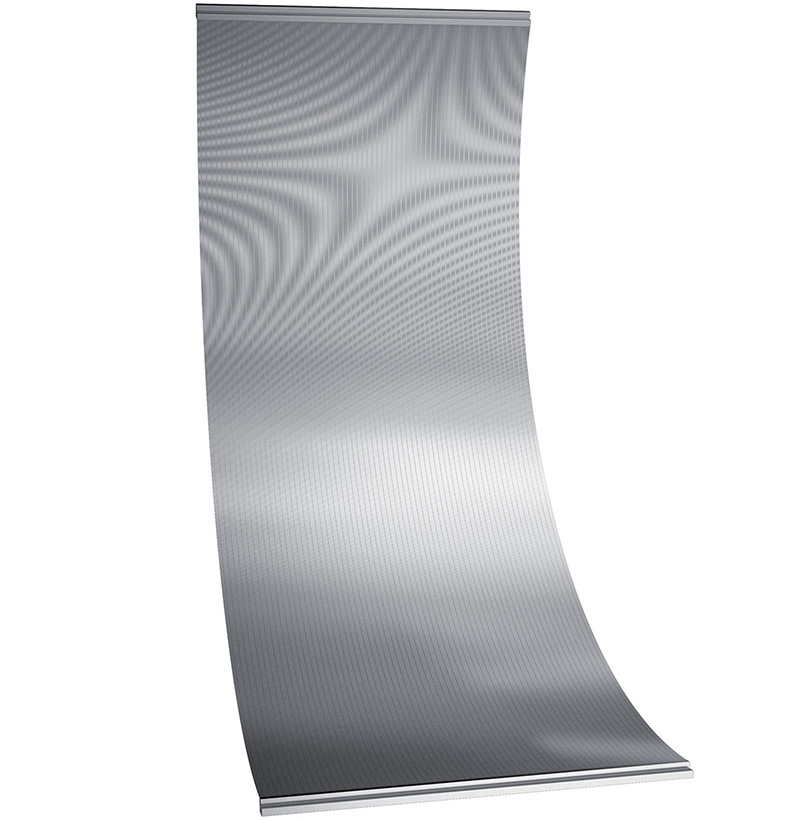
The Wedge Wire Starch Curved Screen is a curved screening device specifically designed for the starch industry. It features an arc-shaped screen surface made of precisely welded V-profile stainless steel wires, utilizing centrifugal force or gravity to achieve rapid dewatering and classification of starch slurry. Its curved structure prolongs slurry retention time, improving solid-liquid separation efficiency. It is suitable for starch extraction, refining, and byproduct recovery processes for starches such as potato, corn, and cassava. Characterized by efficient screening, wear and clogging resistance, and easy maintenance, this equipment is a key solid-liquid separation device in modern starch processing.
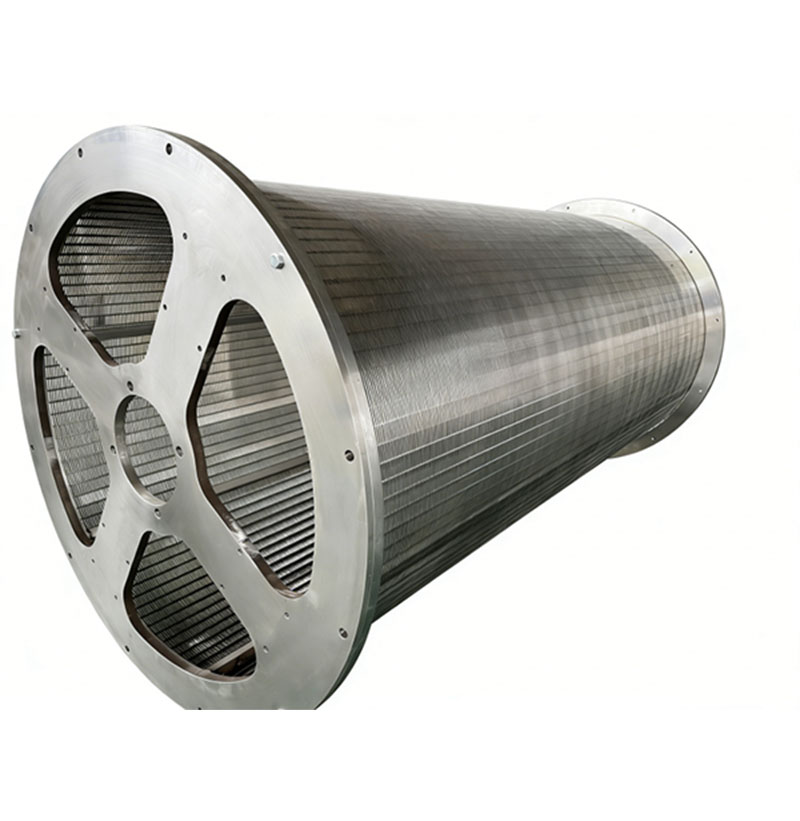
Rotary Drum
The Stainless Steel Wedge Wire Rotary Drum Screen (also known as a Rotary Drum Strainer or Micro-Screen) is a continuously and automatically operating front-end solid-liquid separation device. Its core component is a large cylindrical drum installed horizontally or at a slight incline. The entire circumferential surface of the drum is covered with a stainless steel wedge wire screen (Johnson screen). The wastewater to be treated flows into one end of the drum. Under gravity, the filtrate passes through the wedge wire slots, while solid suspended matter (such as fibers, hair, plastic pieces, and fine particles) is retained on the inner surface of the drum. As the drum rotates slowly, the retained debris is lifted to the top, where it is flushed by spray water into a collection trough, achieving a continuous process of automatic screening, filtration, and residue removal
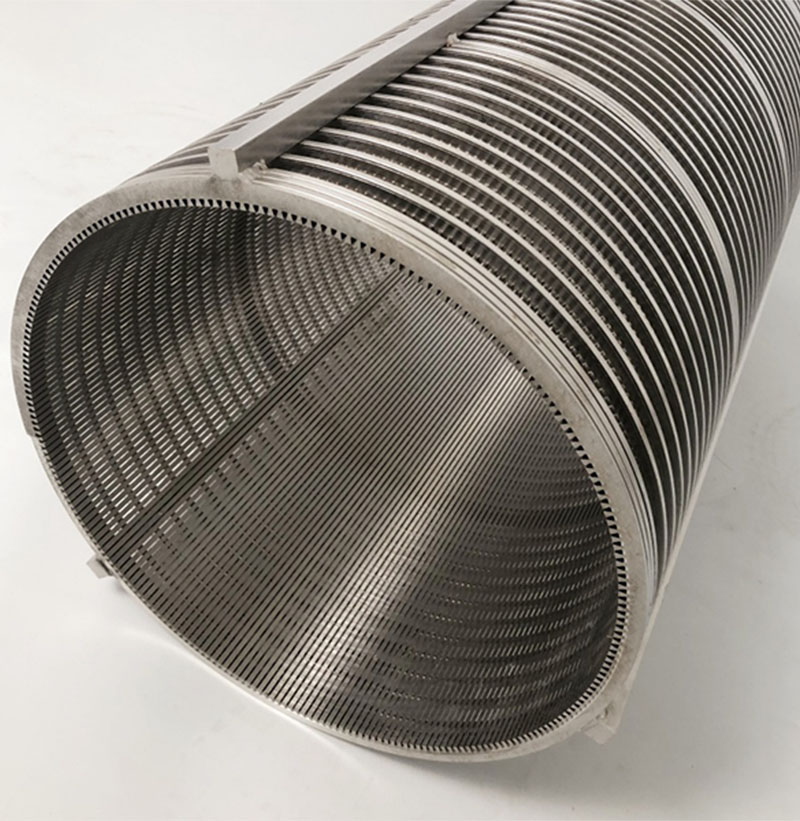
Screen Basket for Screw Press Separator
The stainless steel wedge wire screen basket, commonly known as the "V-wire screen," "press screen basket," or "screen cylinder," is a core component of screw press solid-liquid separators. It is installed inside the spiral press, enclosing the rotating screw shaft. The working principle is as follows: raw slurry with high moisture content is pushed into the screen basket by the screw shaft. Under the squeezing and conveying action of the spiral flights, the liquid (filtrate) is forced out through the precise, continuous slots of the screen basket, while the solid material (manure cake) is retained inside and continues to be compressed and dewatered as it moves forward. Finally, the dewatered solids are discharged from the outlet, achieving solid-liquid separation.
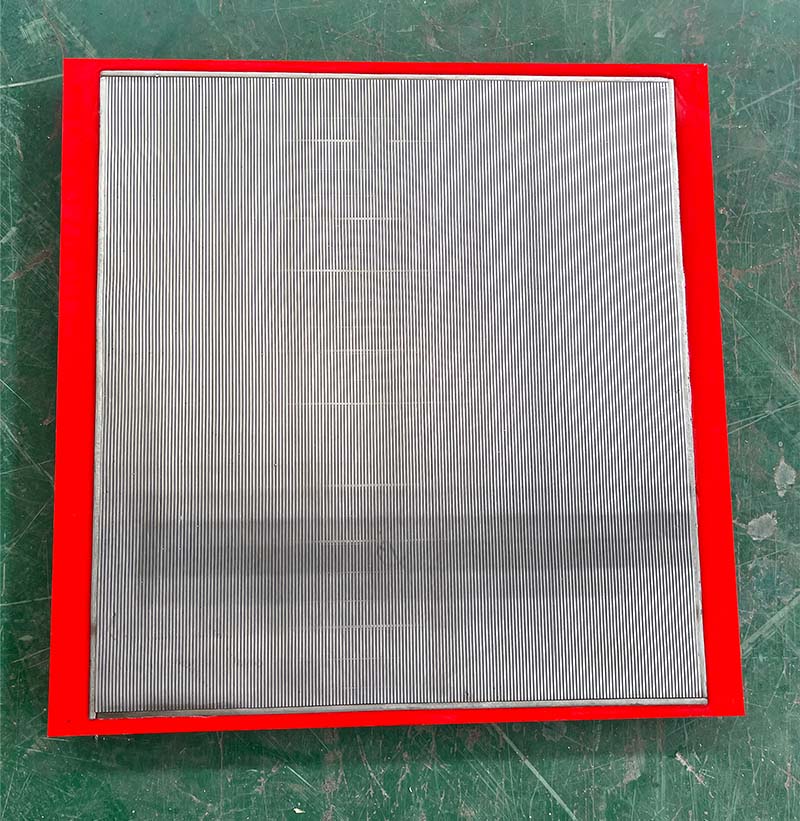
Wedge Wire Vibrating Screen
A stainless steel wedge wire vibrating screen is a solid-liquid separation device featuring a screen surface made by precisely welding V-shaped stainless steel wires, integrated with a high-frequency vibration system. With uniform slots, wear resistance, and corrosion resistance, it is suitable for wet screening and dewatering operations. The vibration mechanism enables rapid material dispersion and efficient sieving while effectively preventing screen clogging. Widely used in industries such as mining, metallurgy, food processing, and environmental protection, it is particularly suitable for handling fine particles, high-viscosity, or easily agglomerated materials, offering advantages such as high screening accuracy, large processing capacity, and long service life.
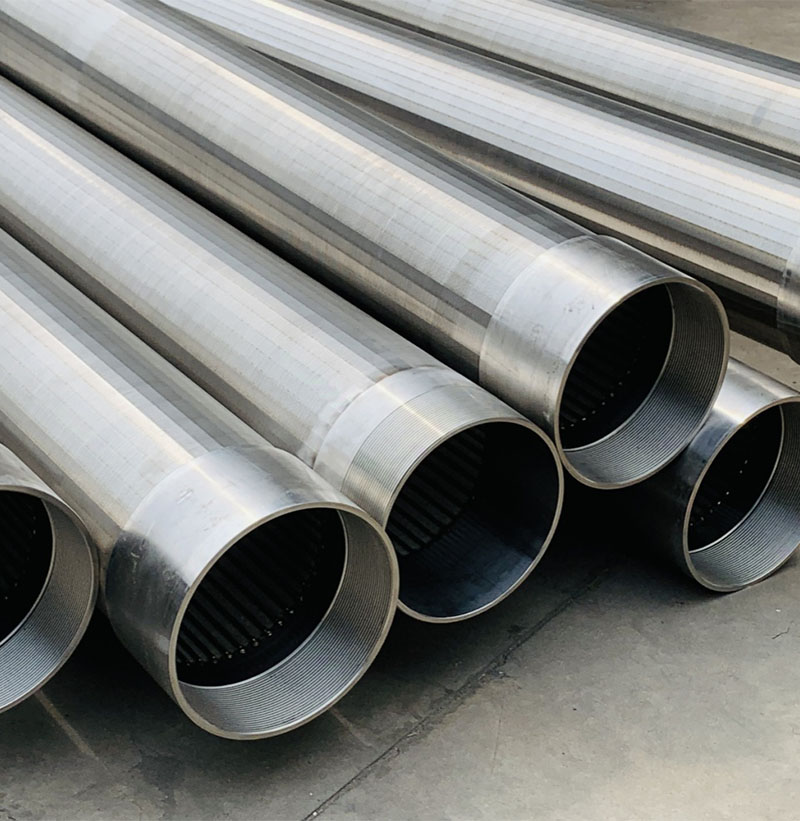
Wedge Wire Water Well Screen
Johnson Deep Water Well Screens, also referred to as continuous slot screens or wire wrap screens, were originally developed to solve sand control challenges in fine-grained and uniform sand formations. These geological conditions are commonly encountered in deep groundwater aquifers, where conventional perforated pipes often suffer from clogging, excessive sand production, and reduced well efficiency.
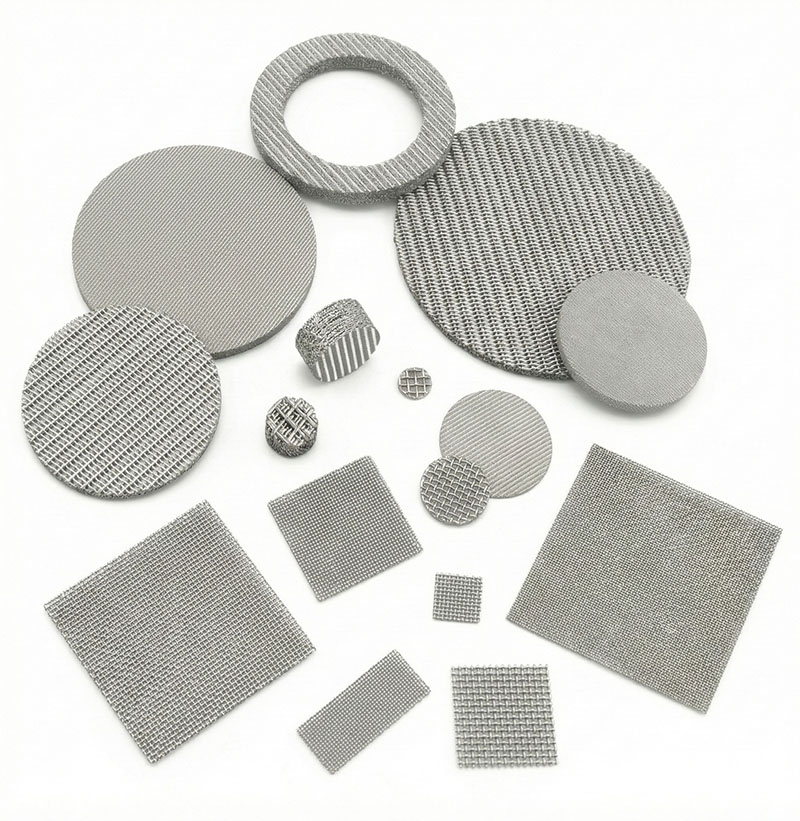
Sintered Mesh Plate and Disc
Sintered Mesh Plates and Discs are high-precision filtration components fabricated by bonding multiple layers of stainless steel wire mesh through a specialized vacuum sintering process. Unlike traditional mesh that relies on mechanical weaving alone, these plates are fused at every contact point, transforming individual wires into a rigid, integrated porous metal sheet.
These plates can be customized into various shapes, most commonly circular discs, to fit specific industrial equipment. They offer an ideal balance of high permeability, extreme structural integrity, and precise filtration ratings. Because they are made entirely of metal (typically 304 or 316L), they provide a "permanent" filtration solution that can withstand high temperatures and corrosive chemicals while remaining fully cleanable and reusable.