
Sobre nós
Seu fabricante especializado de telas Wedge Wire;
Seu parceiro confiável e fonte de inovação
Obter uma quota livre
-
Casa

-
Blog
-
Blog Industrial
- Heavy-Media Recovery With Wedge Wire Vibrating Screens
Heavy-Media Recovery With Wedge Wire Vibrating Screens
-
 autor
- 14,Outubro
A drain-and-rinse screen is a small part of a dense-medium circuit, but it can decide how much magnetite or ferrosilicon returns to the loop with usable density. The screen has to shed liquid promptly while moving solids predictably, even when the feed is abrasive, wet, and uneven. That is why screen media deserves attention as an operating surface, not merely as a replaceable panel.
What a drain-and-rinse deck has to do
Heavy-media recovery begins by separating valuable dense medium from the sized mineral stream so it can be cleaned, reconditioned, and reused. On a vibrating screen deck, the drain portion removes the bulk of the medium that travels with the solids. The rinse portion then displaces residual medium with water, helping keep the product stream and the returned medium circuit from contaminating one another.
Drain and rinse are separate jobs
The drain zone needs fast liquid passage without losing the particle fraction that the process intends to retain. The rinse zone needs a stable bed so wash water can contact entrained medium instead of simply short-circuiting through bare patches. When those duties blur together, extra water often masks the real issue: uneven feed spread, a poor deck angle, or media that no longer drains at the expected rate.
Why the sieve screen surface changes the result
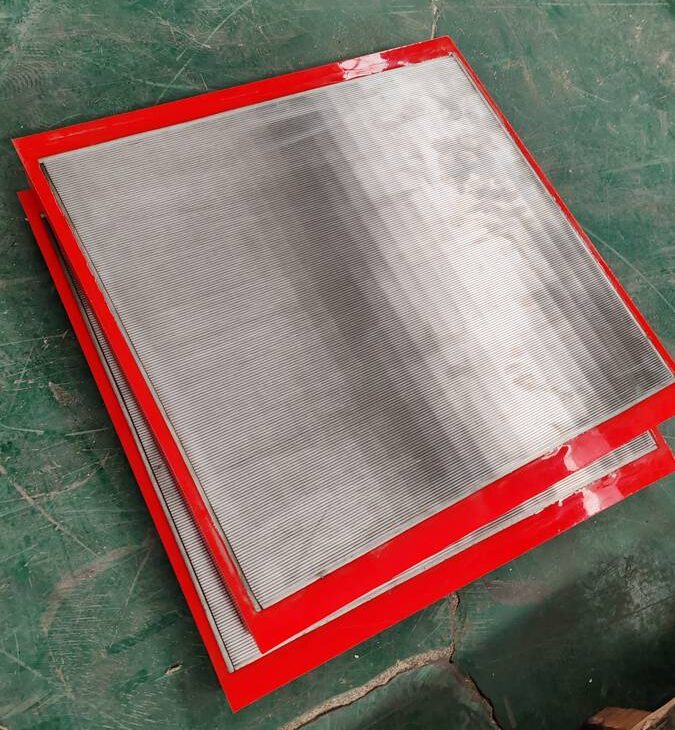
A stainless steel vibrating screen mesh must keep its opening geometry under vibration and slurry abrasion. BTOSLOT lists 304, 316L, and 321 stainless steel, with 0.1–5 mm slots and 25–45% open area. Those values are a starting point, not a universal setting for every circuit.
The V-profile releases liquid while reducing deep particle lodging. In heavy-media service, the benefit still depends on profile wire, support spacing, slot direction, and frame stiffness matching the motion and feed. A screen can drain poorly when material piles up in one lane or fines coat the screen surface.
Open area is useful only when the tela de arame em cunha bed stays controlled
The phrase tela de arame em cunha área aberta is not a shortcut for throughput. It is one part of a balance among drainage, retention, support, and wear life. More flow path can help drainage, yet a sieve screen with poor support or an unstable bed creates a different recovery problem.
Open area has a trade-off
Plant teams should compare clean-water drainage, operating drainage, retained-medium loss, and wire condition at the same duty. This makes panel choice testable: does the sieve screen move solids and liquid as the circuit needs?
| Operating signal | What it can mean | Useful response |
| Medium appears in the solids discharge | Slot is too open for the actual particle size, or the bed is too thin to present particles to the deck. | Check particle-size distribution, bed depth, and slot choice before changing the screen motion. |
| Drain water remains visibly dense | The sieve screen is draining slowly, often because the effective open area is reduced by wear, blinding, or a poor feed spread. | Inspect the feed box and screen surface; compare clean and operating drainage rather than judging by nominal aperture alone. |
| Wash stage consumes more water but recovery does not improve | The issue may be carryover or uneven material travel, not simply insufficient rinse flow. | Stabilize feed distribution and discharge pattern, then tune the wash-water addition against a measured recovery result. |

The operating details that deserve attention
The screen cannot correct every upstream fluctuation, but it should give operators a repeatable response when feed changes. A rise in clay, fine particles, or slurry density can alter sieve screen behavior before sampling reveals the impact. Inspect feed spread, screen blinding, discharge pattern, and rinse distribution before changing several variables.
For teams comparing slurry screen manufacturer options, focus on material, slot orientation, support-rod layout, panel dimensions, and vibration duty. Those details match the surface to the machine and mineral stream better than a generic non-blinding claim.
The same discipline applies to a Johnson screen filter element for mineral processing filtration. It should be discussed in the context of a specific duty, not as a catch-all answer for every slurry. Heavy-media recovery needs a robust vibrating screen; other points may need another geometry screen.
- Feed spread across the full deck width.
- Bed depth and any visible blinding during the shift.
- Medium loss measured with the same sampling method each time.
A practical reading of performance changes
Performance changes are easier to diagnose when the circuit has a baseline. Record medium density before and after the screen, retained-medium losses, rinse-water rate, feed distribution, and how the panel looks after a defined operating interval. When results move together, the operating team can distinguish a media-quality issue from a drainage or deck-surface issue.
The term vibrating wire screens covers many layouts, so replacement decisions should not be made from aperture alone. A compatible replacement must fit the screen frame and preserve the intended flow direction, support pattern, and panel restraint. In an abrasive service, wear should be checked for its effect on cut behavior as well as for visible breakage.
Summary: recovery depends on a stable separation surface
A wedge wire vibrating deck can support heavy-media recovery when it drains promptly, retains the intended solids, and remains stable under the actual feed and vibration duty. The sensible next step is to measure where medium is leaving the circuit, inspect how the screen bed behaves across the sieve screen, and define the slot, support, and panel details around that evidence.
Perguntas frequentes
What is the purpose of the rinse stage in heavy-media recovery?
The rinse stage removes dense medium that remains with the solids after the drain section. It helps return medium to the recovery circuit while limiting contamination in the product stream. The right rinse rate depends on bed behavior and recovery measurement, not on a fixed water setting.
Can one wedge wire vibrating screen panel suit every mineral slurry?
No. Particle size, medium type, solids loading, abrasion, vibration motion, and the target separation all affect the suitable panel design. A panel that works well for one drain-and-rinse duty may not be appropriate for a fine dewatering or classification task.
Why can a tela deck drain slowly even when the slot is not blocked?
Uneven feed distribution, a thick material bed, poor rinse placement, or a change in slurry characteristics can restrict effective drainage. Inspecting the working screen deck is important because a clean, static panel does not fully represent operating flow.
Does a wider slot always improve heavy-medium drainage?
A wider slot can increase liquid passage, but it can also change what reports to the undersize stream. Slot selection needs to protect the process cut while supporting drainage, so it should be evaluated against particle-size data and recovery results.
What should be supplied when specifying a replacement vibrating panel?
Provide the screen model or clear frame dimensions, feed material and particle-size range, medium used, desired separation duty, slot direction, operating hours, and the failure or recovery issue being observed. This gives the screen designer enough context to propose a compatible surface.
Recent Post
Produtos relacionados
Produtos de melhor venda
Pantalla Starch
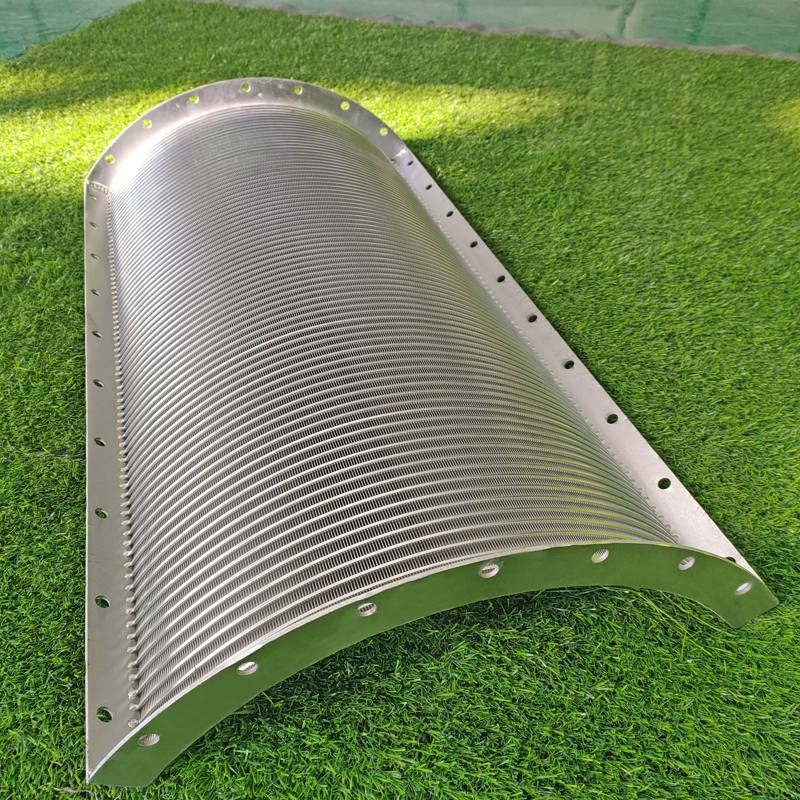
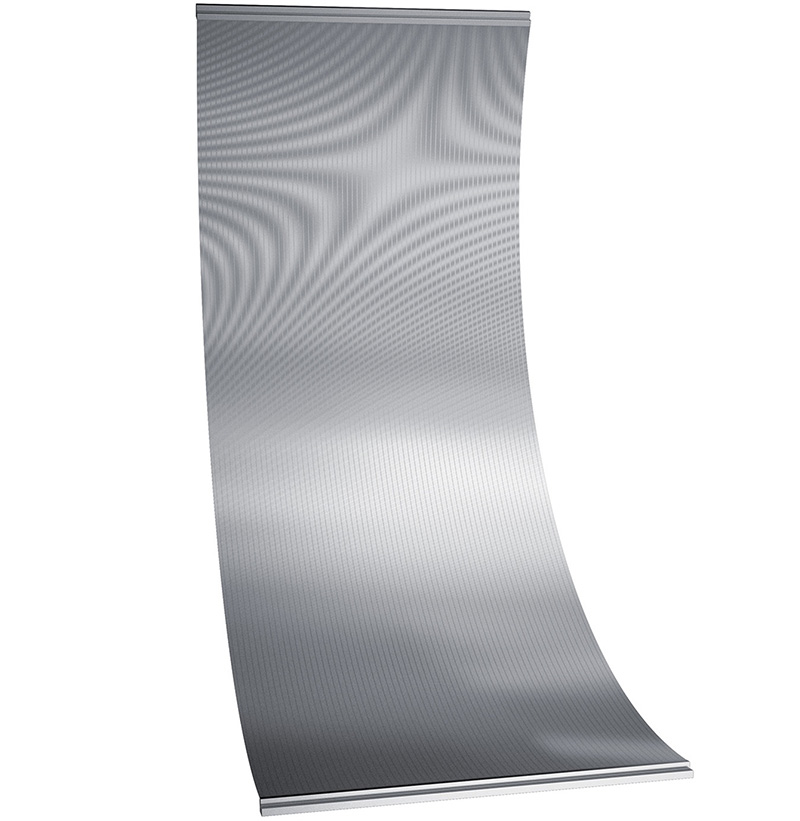
A Wedge Wire Starch Curved Screen é um dispositivo de rastreamento curvo especificamente projetado para a indústria do amido. Ela apresenta uma superfície de tela em forma de arco feita de fios de aço inoxidável de perfil V, bem suavizados, utilizando força centrífuga ou gravidade para alcançar deságua rápida e classificação de molho de amido. Sua estrutura curva prolonga o tempo de retenção de esgoto, melhorando a eficiência de separação sólida-líquida. É adequado para extração de amido, refinação e processos de recuperação de subprodutos para amidos como batata, milho e cassava. Caracterizado por um rastreio eficiente, resistência ao uso e bloqueio, e manutenção fácil, este equipamento é um dispositivo de separação sólido-líquido chave no processo moderno de amido.
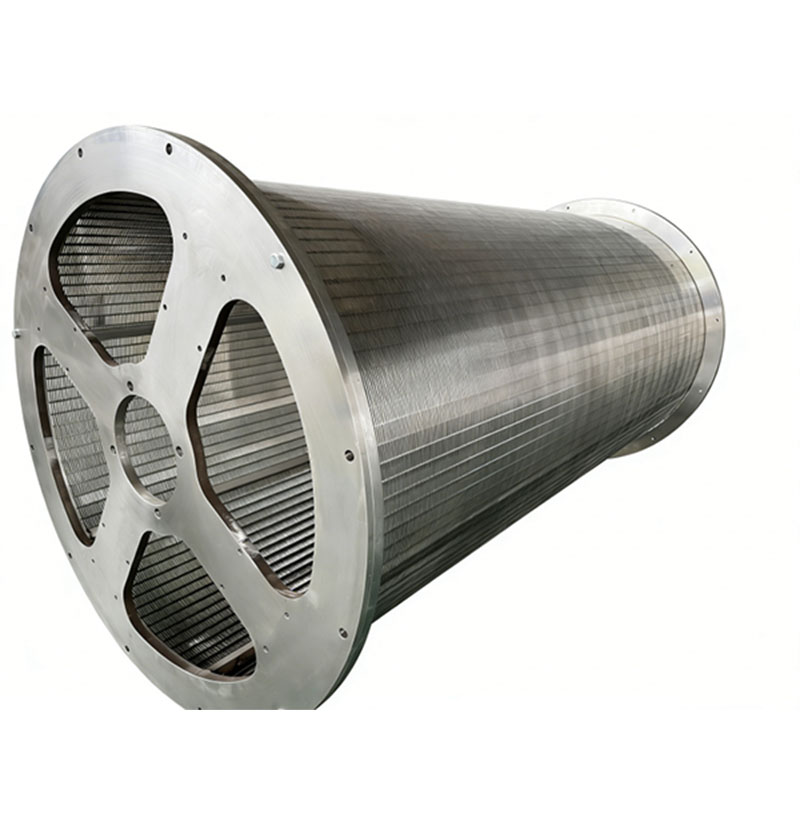
Drum Rotar
A tela rotatória de tubo de fio de ferro inoxidável Wedge Wire (também conhecida como um estrangeiro rotatório de tubo ou micro-tela) é um dispositivo de separação sólido-líquido de fronte que funciona continuamente e automaticamente. Seu componente central é um grande tambor cilindrico instalado horizontalmente ou em uma ligeira inclinação. A superfície circunferencial inteira do tambor está coberta com uma tela de fio de fio de a ço inoxidável (tela Johnson). A água residual a ser tratada flui para um extremo do tambor. Sob a gravidade, o filtrado passa através dos intervalos de fio de corda, enquanto matéria sólida suspensa (como fibras, cabelo, peças plásticas e partículas finas) é mantida na superfície interior do tambor. À medida que o tambor gira lentamente, os resíduos retirados são levantados para o topo, onde são lavados por água pulverizada em um tronco de coleta, atingindo um processo contínuo de rastreamento automático, filtração e remoção de resíduos
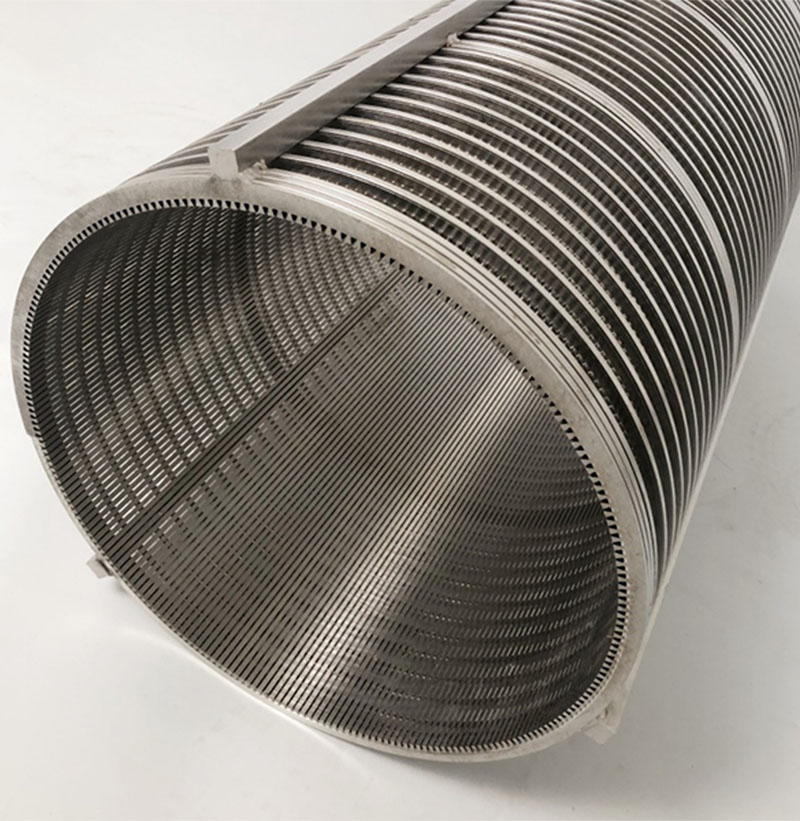
Basquete de Pantalla para Separador de Impressão de Pantalla
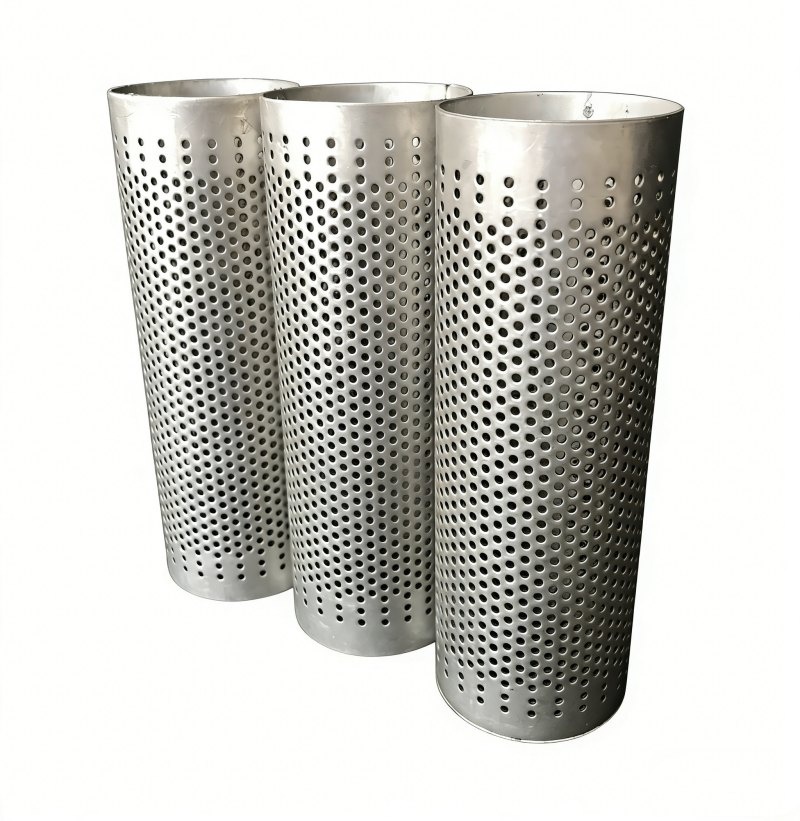
O cesto de tela de fio de a ço inoxidável, comumente conhecido como "tela de fio V", "cesto de tela de pulsação" ou "cilindro de tela", é um componente central de separadores de fio de pulsação sólido-líquido. - Está instalado dentro da imprensa espiral, encerrando o barro rotante. O princípio de funcionamento é o seguinte: a chuva bruta com alto conteúdo de umidade é empurrada no cesto da tela pelo barro de screw. Sob a ação de apertação e de transmissão dos voos espirais, o líquido (filtrado) é forçado a sair através dos slots precisos e contínuos do cesto da tela, enquanto o material sólido (bolo de manteiga) é mantido dentro e continua a ser comprimido e desmatado enquanto se move em frente. Finalmente, os sólidos deshidratados são descarregados da saída, atingindo separação sólida-líquida.
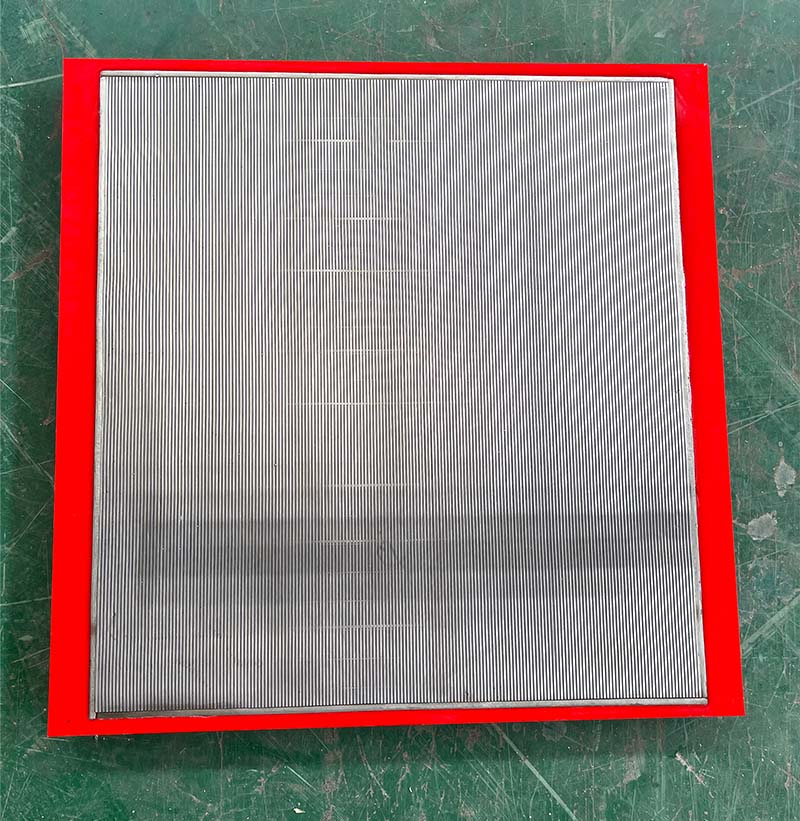
Wedge Wire Vibrating Screen
Uma tela de vibração de fios de a ço inoxidável é um dispositivo de separação sólido-líquido com uma superfície de tela feita precisamente soldando fios de aço inoxidável em forma V, integrado com um sistema de vibração de alta frequência. Com slots uniformes, resistência ao uso e resistência à corrosão, é adequado para operações de rastreamento húmido e desmatamento. O mecanismo de vibração permite uma rápida dispersão de materiais e uma assediação eficiente, evitando efetivamente o bloqueio da tela. Uma grande utilização em indústrias como mineração, metalurgia, processamento de alimentos e proteção ambiental, é particularmente adequada para manejar partículas finas, alta viscosidade ou materiais facilmente aglomerados, oferecendo vantagens como alta precisão de rastreamento, grande capacidade de processamento e longa vida de serviço.
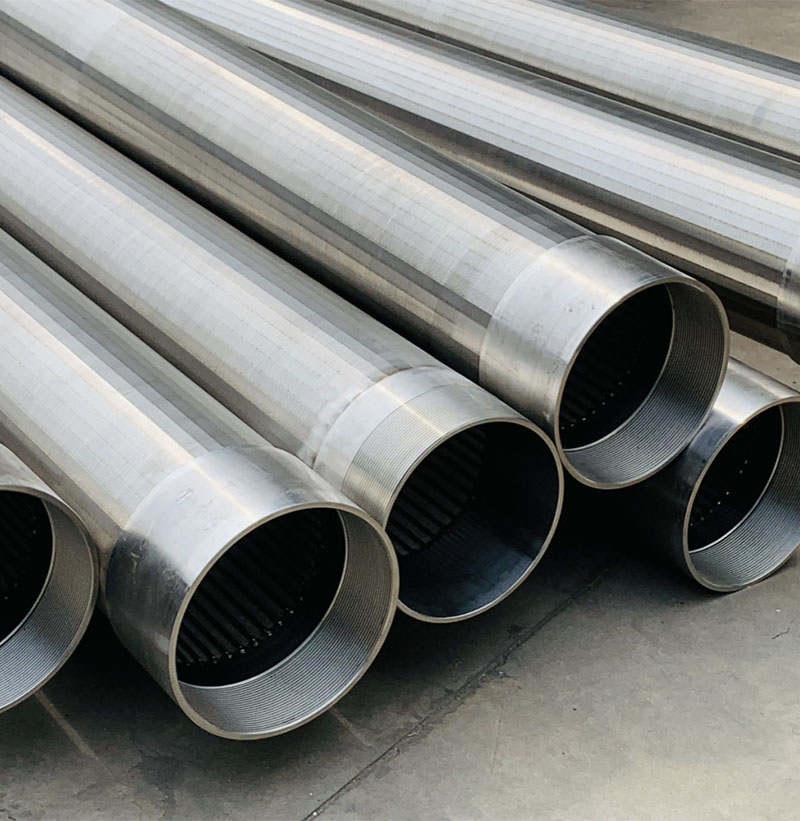
Wedge Wire Water Well Screen
Johnson Deep Water Well Screens, também chamadas de telas de slot contínuas ou telas de envolvimento de fios, foram originalmente desenvolvidos para resolver desafios de controle de areia em formações de areia finas e uniformes. Essas condições geológicas são comumente encontradas em aquíferos de água subterrânea profunda, onde tubos perforados convencionais frequentemente sofrem de obstruções, produção excessiva de areia e redução da eficiência do poço.
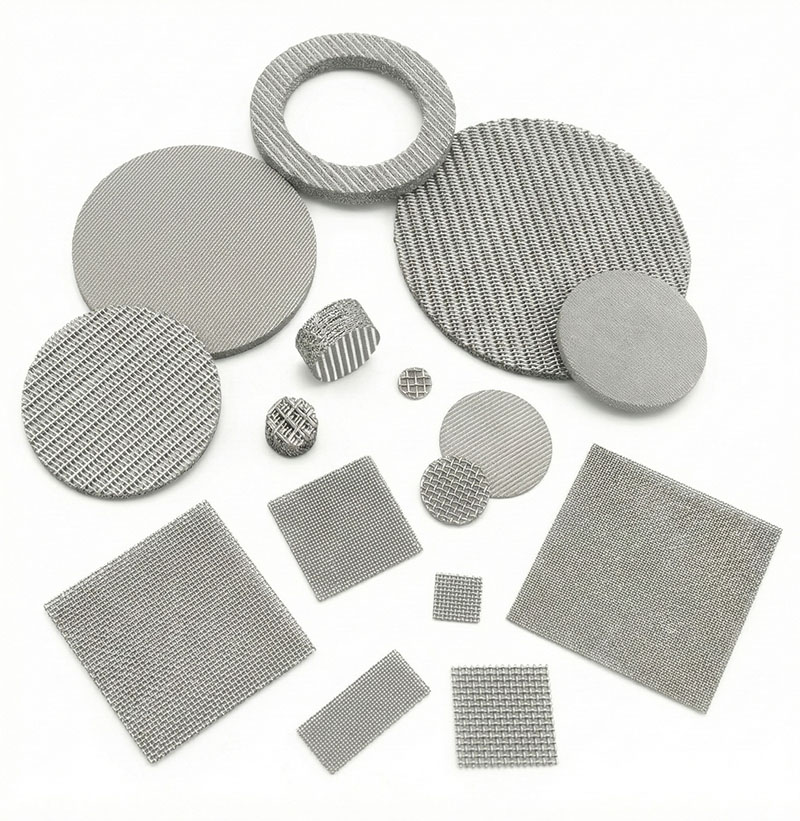
Plata e Disco de Malha Sintered
Platas e discos de malha sinteradas são componentes de filtração de alta precisão fabricados ligando múltiplas camadas de malha de fio de a ço inoxidável através de um processo de sinterização de vácuo especializado. Ao contrário das malhas tradicionais que dependem apenas de tecido mecânico, essas placas são fusionadas em todos os pontos de contato, transformando fios individuais em uma folha metal rígida e integrada porosa.Essas placas podem ser personalizadas em várias formas, mais comunmente discos circulares, para encaixar equipamentos industriais específicos. Eles oferecem um equilíbrio ideal de alta permeabilidade, integridade estrutural extrema e notações de filtração precisas. Porque são feitos inteiramente de metal (tipicamente 304 ou 316L), eles fornecem uma solução de filtração "permanente" que pode resistir a altas temperaturas e substâncias químicas corrosivas enquanto permanecem completamente limpas e reutilizables.