
ABOUT US
Your Expert Manufacturer of Wedge Wire Screens;
Your Reliable Partner and Source of Innovation
GET A FREE QUOTE
-
Home

-
Blog
-
Industry Blog
- How to Choose the Right Johnson V Wire Screen for Mining

How to Choose the Right Johnson V Wire Screen for Mining
-
 author
 - 28,mayo
 author
In the tough setting of ore handling, screening plays a vital role. It affects how much material passes through and how clean the output is. Choosing a Johnson V wire screen calls for careful planning. This choice weighs water flow rates against the solid build needed for rough mineral work. For site engineers and operations heads, the aim stays clear: raise extraction levels while keeping overall expenses low. They do this with targeted filtering tools.
What is the Purpose of a Johnson V Wire Screen in Mineral Processing?
The main job of a Johnson V wire screen in ore work is to sort particles accurately amid tough conditions. It differs from standard woven nets or hole-covered sheets. Instead, this method relies on a special build where the top wire takes a V form. This wedge wire screen design sets up a clear “two-point touch” between solid bits and the gap space.
With just two contact spots, any bit a bit under the gap width moves past without sticking. This shape matters a lot. It stops blocking and jamming, which causes most stops in liquid mixes. While rules for a johnson screen oil gas unit stress high-force gas-solid split or sand hold in deep shafts, the ore type builds to take the rough hit of raw rock loads.
Why is Wedge Wire Screen Design Superior to Traditional Mesh in Mining?
Ore sites need gear that holds up to steady wear and big amounts of water. The wedge wire screen design brings clear benefits over usual filter layers:
Large Open Space: The ongoing gap setup gives a much bigger share of open spots than whole sheets. As a result, it allows faster water speed and more handling power.
Solid Build: At every join of the V-wire and inside hold bar, welding fuses them. This forms a strong, one-part frame that fights shake wear.
- Easy-Clean Shape: The slots that widen inside make sure close-size bits flush out with water pressure. Thus, it keeps a steady pace.
- Wear Resistance: Using thick stainless steel shapes from a leading johnson screen manufacturer, these units manage the strong force of heavy mixes better than slim woven nets.
How to Determine the Correct Slot Size for Your Ore Grade?
Picking the gap size involves the study of particle spread (PSD). In typical ore uses, we follow the D85 guide. Here, the gap matches the size where 85% of bits are bigger than it. Yet, the ore’s traits need review:
- Sharp Solids: For firm, edged rocks, a gap at the PSD’s D85 works as usual. It holds back well without too much damage.
- Flexible Solids: When dealing with soft clumps or mild rocks, we suggest a tighter gap. Often, it runs 50% to 70% of the goal bit size. This covers a squeeze under force.
Exact build counts most. For a top Johnson v wire screen, make limits stay in ±25 to 50 microns. Small shifts in a precision wire screen can cause big loss of fine bits or dirt in the clean output.
| Ore Type | Recommended Slot Range (mm) | Typical Application |
| Iron Ore Slurry | 0.25 – 0.75 | Fine tailings recovery |
| Coal Processing | 0.50 – 2.00 | De-watering and media recovery |
| Gold/Precious Metals | 0.20 – 0.40 | Carbon-in-pulp (CIP) screening |
| Silica Sand | 0.05 – 0.20 | Precision grading |
What Material Grade Should You Select for Corrosive Mining Slurries?
Picking the metal type affects how long the filter lasts. While a Johnson screen water well often uses 304 stainless for simple rust hold in fresh water, ore sites face sour liquids or salty work water. These call for better metal mixes.
- Grade 304/304L: Fits basic jobs with even pH and low salt levels.
- Grade 316L: The common pick for ore work. It fights spot rust and crack wear well, mainly in spots with more salt.
Duplex Stainless Steel (e.g., 2205): Kept for the harshest setups. It gives twice the force strength of 316L and a strong hold against stress rust cracks.
We stress the need for after-build treatment. This wash brings back the guard chrome layer on the Johnson V wire screen. It makes sure the joined spots resist rust like the main wire.
How Does the Support Rod Configuration Affect Screen Longevity?
The hold bar acts as the main frame in the wedge wire screen design. It sets the crush strength and top load limit of the unit. In a shake-strong ore gear, the gap and form of these bars must fit the machine’s force and system push needs. For heavy ore boards, thicker square hold bars stop bending under thick rock layers. In contrast, a johnson screen oil gas setup may use round bars to aid flow in high-push tanks.
Why Should You Consider Custom Johnson V Wire Screen Specifications?
Ready-made options seldom match the water needs of current ore plants. Tailoring the Johnson v wire screen lets you fine-tune flow path—either from inside out (FITO) or outside in (FOTI). For spin dryers or curve sieves, the V-wire angle can shift to boost the “cut” on the liquid. This raises water removal by a good margin. At BTOSLOT, we see that a 5-degree wire shift can lift liquid gain by up to 12% in certain rock waste jobs.
How to Maintain Your Johnson Screen for Maximum Service Life?
Regular care keeps “gap wear” at bay. This is where the rough ore slowly widens the spaces.
- Sight Check: Look often for uneven damage signs. These may point to the wrong flow spread.
- Clean Steps: Apply strong water or air reverse wash to the Johnson Screen Tube. Skip hard tool scrapes on the stainless.Such actions can rough the wedge wire screen design edges and lead to jams.
- Acid Wash: For rock build-up like calcium, a light blocked acid clean works. Just ensure the metal type, such as 316L, fits.
Conclusion
Picking the best Johnson v wire screen for ore work is a detailed task. It blends metal knowledge, water engineering, and a solid grasp of rock types. By stressing an exact wedge wire screen design, site experts can match high output with lasting build strength. This holds whether you adjust a johnson screen water well for ground water pull or use high-push rules from a johnson screen oil gas job. The right details pay off by cutting stop times and raising mineral yield.
FAQ
Why is my BTOSLOT Johnson v wire screen wearing out faster than expected?
Quick damage often stems from a poor match between metal toughness and the mixed roughness. If the rock has much quartz or other hard parts, the usual 316L stainless may need a tougher mix or thicker wire shape. Also, look for “spot speed” problems. There, the mix strikes one screen area with too much push, leading to uneven gap wear.
Can a johnson screen water well screen be repurposed for mining silt removal?
The core of wedge wire screen design shares traits, but a johnson screen water well is built for lower force and milder wear. For ore mud clear, the unit needs extra strong hold bars. These handle the higher solid-water mix and added strain from work pumps.
How do I choose the correct slot opening for a Johnson V wire screen?
Start with a ore-sized study. For firm edged ore solids, a gap at your spread’s D85 serves as standard. But if the solids bend or come from living sources, pick a gap at 50–70% of the goal ore size. This Ensure particles do not pass through and are not easily clogged.
What is the maximum pressure a Johnson screen oil gas filter can handle compared to mining screens?
A johnson screen oil gas unit builds for top forces in deep shaft spots, at times over 5000 psi. It needs heavy inside pipe bases. Ore units, though sturdy, plan for lower run forces but face much more surface wear and shake levels.
Does the wedge wire screen design require frequent manual cleaning?
No, a key plus of the wedge wire screen design is its built-in clean power. The V shape makes a growing path for minerals, cutting the risk of close-size traps. In most ore tasks, auto reverse flush or machine shake keeps the gaps open.
Recent Post
Related Products
Best-selling Products
Starch Screen
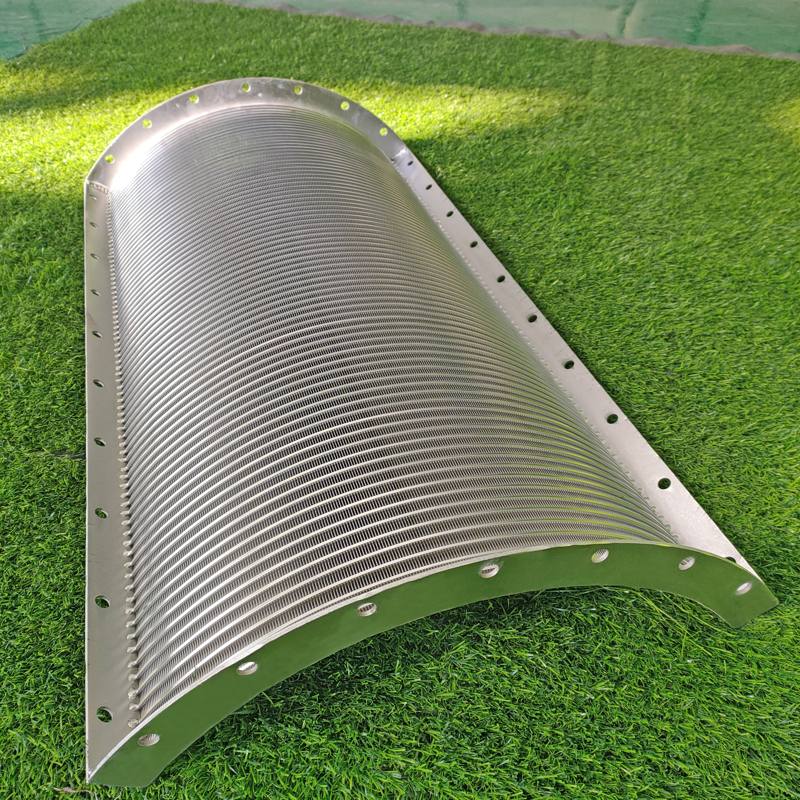
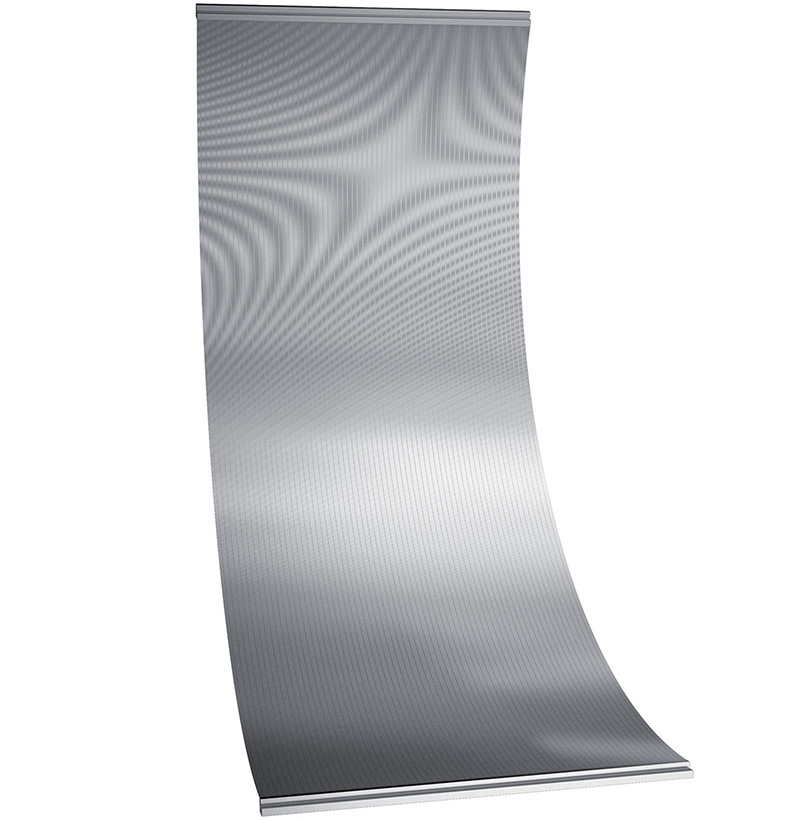
The Wedge Wire Starch Curved Screen is a curved screening device specifically designed for the starch industry. It features an arc-shaped screen surface made of precisely welded V-profile stainless steel wires, utilizing centrifugal force or gravity to achieve rapid dewatering and classification of starch slurry. Its curved structure prolongs slurry retention time, improving solid-liquid separation efficiency. It is suitable for starch extraction, refining, and byproduct recovery processes for starches such as potato, corn, and cassava. Characterized by efficient screening, wear and clogging resistance, and easy maintenance, this equipment is a key solid-liquid separation device in modern starch processing.
Rotary Drum
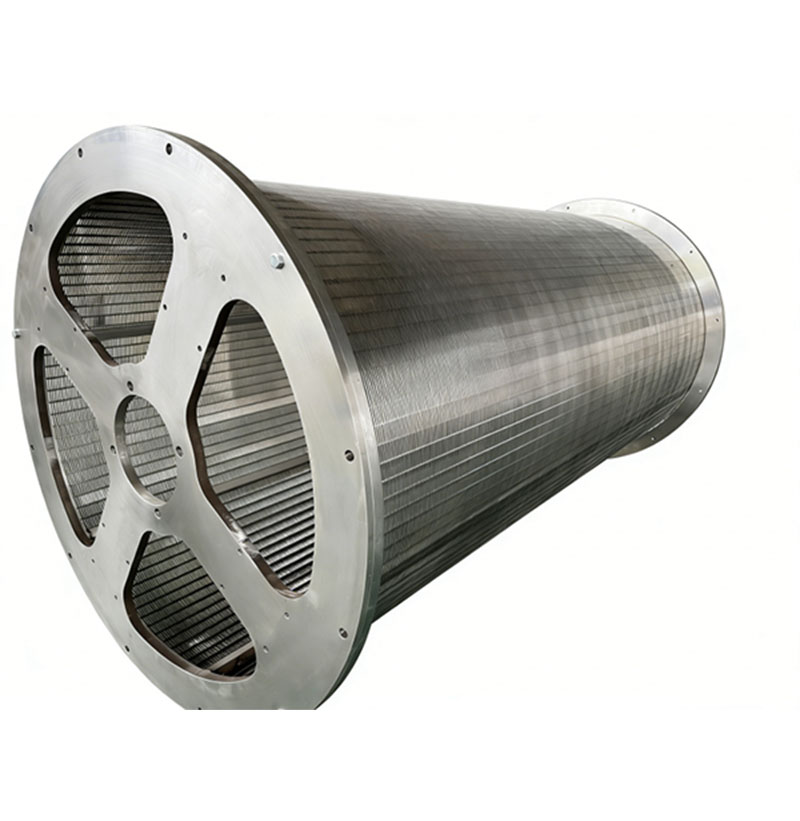
The Stainless Steel Wedge Wire Rotary Drum Screen (also known as a Rotary Drum Strainer or Micro-Screen) is a continuously and automatically operating front-end solid-liquid separation device. Its core component is a large cylindrical drum installed horizontally or at a slight incline. The entire circumferential surface of the drum is covered with a stainless steel wedge wire screen (Johnson screen). The wastewater to be treated flows into one end of the drum. Under gravity, the filtrate passes through the wedge wire slots, while solid suspended matter (such as fibers, hair, plastic pieces, and fine particles) is retained on the inner surface of the drum. As the drum rotates slowly, the retained debris is lifted to the top, where it is flushed by spray water into a collection trough, achieving a continuous process of automatic screening, filtration, and residue removal
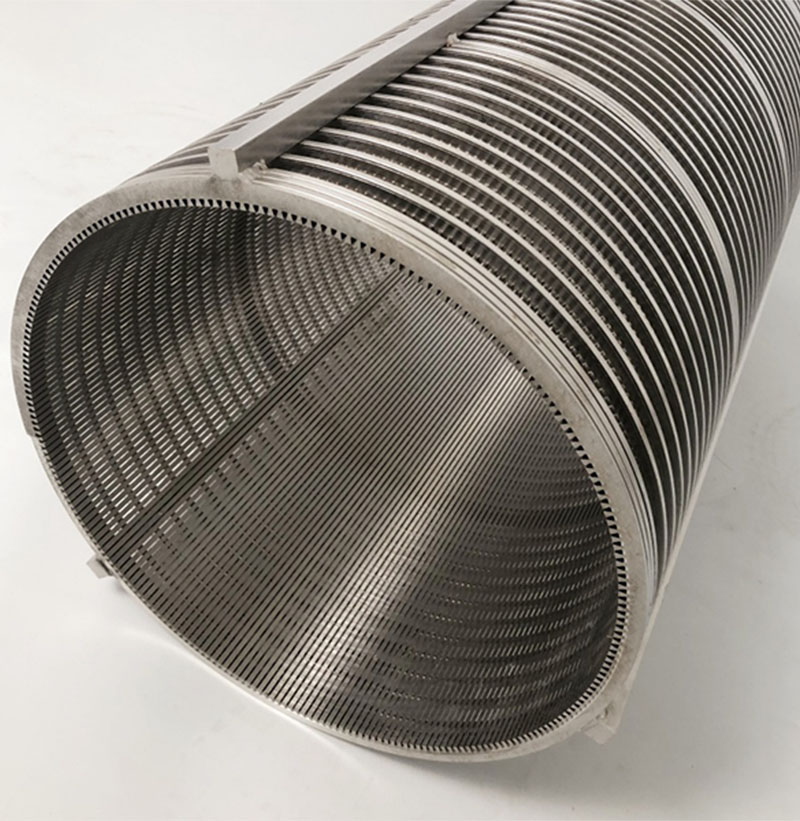
Screen Basket for Screw Press Separator
The stainless steel wedge wire screen basket, commonly known as the "V-wire screen," "press screen basket," or "screen cylinder," is a core component of screw press solid-liquid separators. It is installed inside the spiral press, enclosing the rotating screw shaft. The working principle is as follows: raw slurry with high moisture content is pushed into the screen basket by the screw shaft. Under the squeezing and conveying action of the spiral flights, the liquid (filtrate) is forced out through the precise, continuous slots of the screen basket, while the solid material (manure cake) is retained inside and continues to be compressed and dewatered as it moves forward. Finally, the dewatered solids are discharged from the outlet, achieving solid-liquid separation.
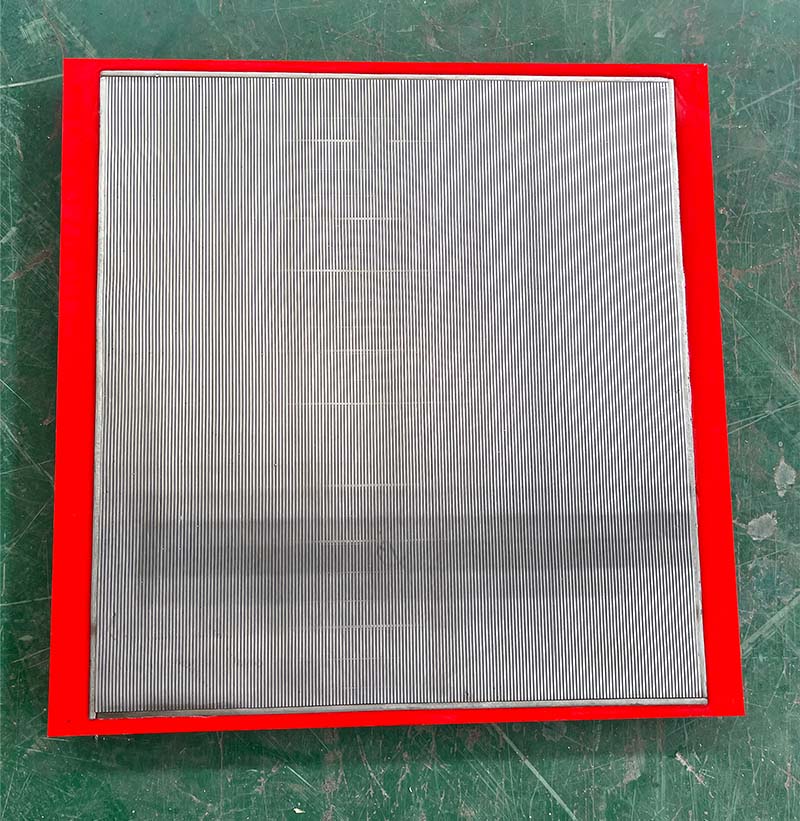
Wedge Wire Vibrating Screen
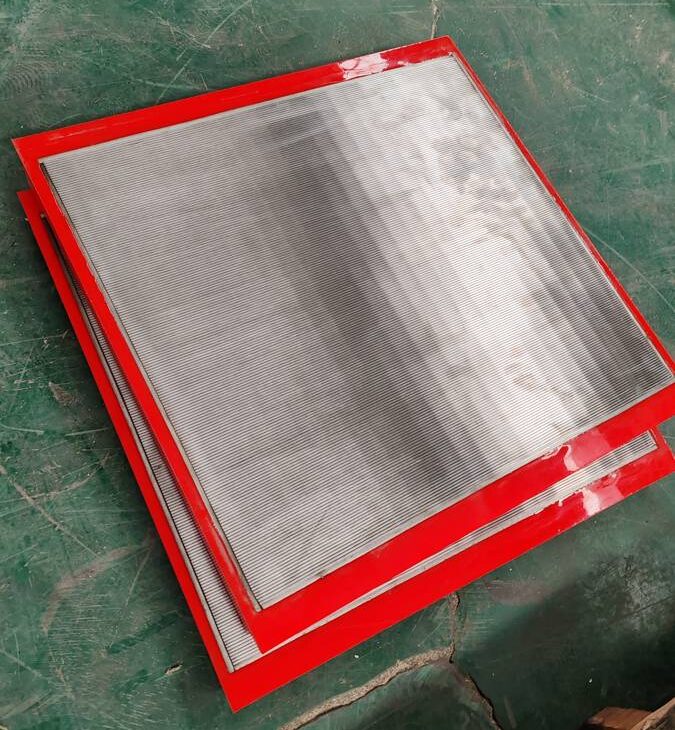
A stainless steel wedge wire vibrating screen is a solid-liquid separation device featuring a screen surface made by precisely welding V-shaped stainless steel wires, integrated with a high-frequency vibration system. With uniform slots, wear resistance, and corrosion resistance, it is suitable for wet screening and dewatering operations. The vibration mechanism enables rapid material dispersion and efficient sieving while effectively preventing screen clogging. Widely used in industries such as mining, metallurgy, food processing, and environmental protection, it is particularly suitable for handling fine particles, high-viscosity, or easily agglomerated materials, offering advantages such as high screening accuracy, large processing capacity, and long service life.
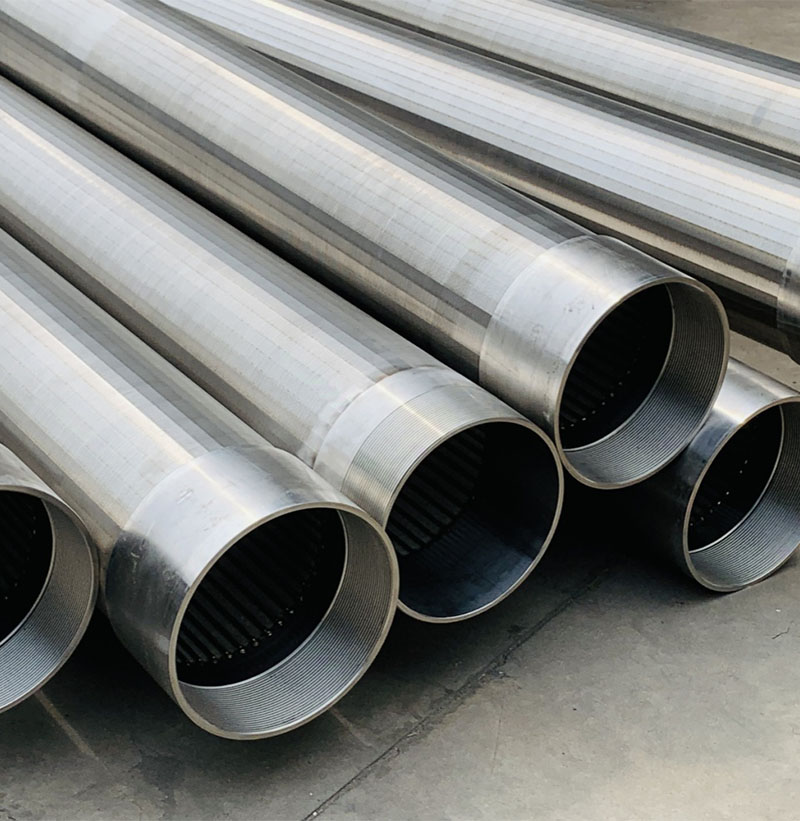
Wedge Wire Water Well Screen
Johnson Deep Water Well Screens, also referred to as continuous slot screens or wire wrap screens, were originally developed to solve sand control challenges in fine-grained and uniform sand formations. These geological conditions are commonly encountered in deep groundwater aquifers, where conventional perforated pipes often suffer from clogging, excessive sand production, and reduced well efficiency.
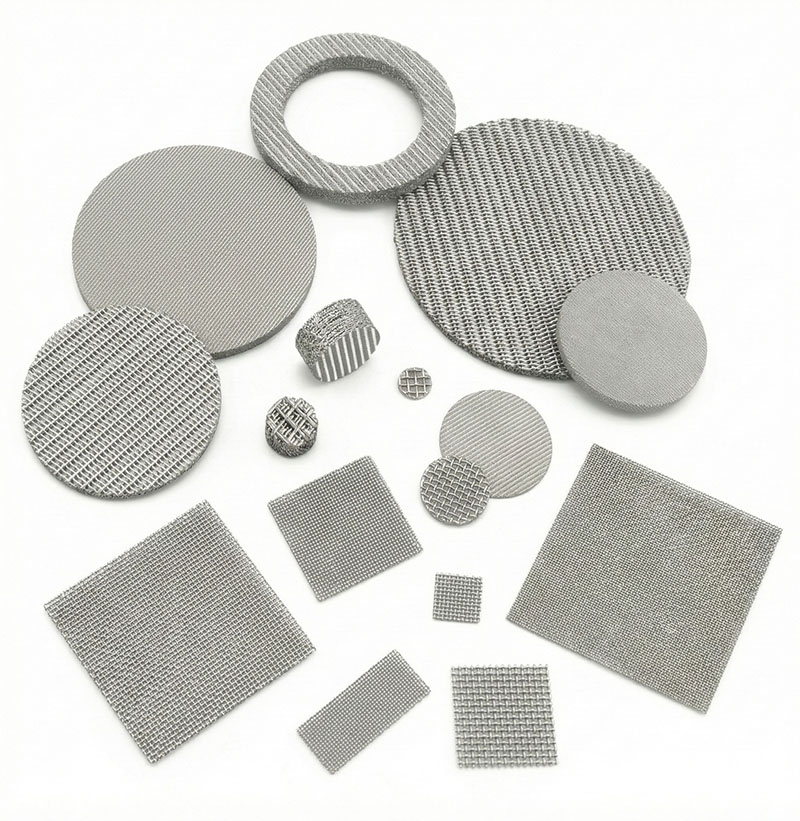
Sintered Mesh Plate and Disc
Sintered Mesh Plates and Discs are high-precision filtration components fabricated by bonding multiple layers of stainless steel wire mesh through a specialized vacuum sintering process. Unlike traditional mesh that relies on mechanical weaving alone, these plates are fused at every contact point, transforming individual wires into a rigid, integrated porous metal sheet.
These plates can be customized into various shapes, most commonly circular discs, to fit specific industrial equipment. They offer an ideal balance of high permeability, extreme structural integrity, and precise filtration ratings. Because they are made entirely of metal (typically 304 or 316L), they provide a "permanent" filtration solution that can withstand high temperatures and corrosive chemicals while remaining fully cleanable and reusable.