
ABOUT US
Your Expert Manufacturer of Wedge Wire Screens;
Your Reliable Partner and Source of Innovation
GET A FREE QUOTE
-
Home

-
Blog
-
Industry Blog
- Application of Interstage Screens in gold ore CIP & CIL production

Application of Interstage Screens in gold ore CIP & CIL production
-
 author
 - 4,junio
 author
Gold plants today need to pull the most metal from ore. They also need to limit stops in daily work. The Carbon-in-Pulp and Carbon-in-Leach steps often rely on exact separation tools. The wedge wire interstage screen serves as one key part in these lines. It keeps carbon and slurry apart in a steady way and lifts total gold recovery. BTOSLOT builds these screens with care in precision screen manufacturing, drawing inspiration from the high standards of a premier Johnson screen manufacturer. The units give both long life and strong results in heavy mine use.
What is a Wedge Wire Screen and why is it Essential?
A wedge wire screen is built by welding V-shaped wires to support rods. The V shape makes the slot tight on the inside and open on the outside. This layout stops particles from jamming the gaps and lets the screen clean itself during use.
Main points of the design are these. Slot widths usually run from 0.6 mm to 1.2 mm in gold work. That range gives a clean separation of carbon from slurry. The body uses 304 or 316L stainless steel, duplex steel, or Hastelloy. These metals fight rust, wear, and heat. Open area reaches 25 to 35 percent. Flow stays high while pressure loss stays low. The self-cleaning action cuts service time in round-the-clock plants.
In gold mining, teams must know what a wedge wire screen is. The part holds back activated carbon while the slurry moves on. This step limits gold loss and keeps carbon whole during the back-and-forth adsorption stages.
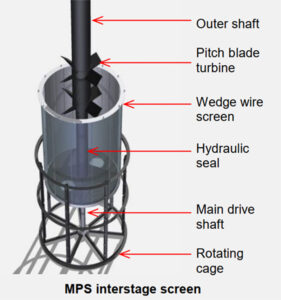
Core Function of Wedge Wire Interstage Screens
In CIL/CIP circuits, the interstage screen is installed between two adsorption tanks. Its core function is to achieve counter-current separation of loaded carbon and pulp. Specifically:
- Retain carbon, pass pulp– Allows pulp (containing dissolved gold-cyanide complex) to flow from the upstream tank to the downstream tank, while preventing larger loaded carbon particles from moving downstream, ensuring carbon moves counter-currently through the circuit.
- Control carbon residence time and distribution– Maintains proper carbon density per tank (typically 15–25 g/L) to ensure gold adsorption kinetics.
- Prevent short-circuiting– Avoids pulp bypassing the carbon bed and flowing directly to the next tank, which would cause dissolved gold loss without being adsorbed.
How Does Wedge Wire Interstage Screen Improve Gold Recovery?
Wedge wire screens improve overall recovery through the following mechanisms:
(1) Reducing Carbon Loss with Pulp (Carbon Fines Loss)
- Conventional screens (punch plate / woven mesh) : Prone to blinding. Once partially blinded, pulp flow can force gaps between the screen and tank wall, causing significant carbon fines loss. These fines (<0.5 mm) have already adsorbed gold – their loss directly reduces gold recovery.
- Wedge wire advantage : Self-cleaning properties prevent blinding over long-term operation, virtually eliminating carbon loss. Every carbon particle remains in the system, retaining the gold it has adsorbed.
(2) Improving Adsorption Kinetics
- Stable screening efficiency → consistent carbon concentration in each tank → maintained adsorption driving force (difference between solution gold concentration and carbon gold loading).
- Solution gold concentration in the final tank can be reduced to extremely low levels (<0.01 ppm), minimizing gold in tailings/tail solution.
(3) Minimizing Pulp Short-Circuiting
- Wedge wire screens have high rigidity, good flatness after installation, and reliable sealing against the tank wall – preventing pulp from bypassing the carbon bed.
- Short-circuiting is a common cause of recovery loss in CIL/CIP circuits, as some pulp exits without contacting carbon.
(4) Reducing Unscheduled Downtime
- Conventional screens blind frequently → require shutdown for washing/replacement → process interruption → carbon bed disturbance → fluctuating adsorption performance.
- Wedge wire screens can operate continuously for months or even over a year. Process stability improves average recovery.
Why Precision Screen Manufacturing Matters
How well a wedge wire interstage screen works depends on how exactly it is made as a precision wire screen. In precision screen manufacturing, every slot, weld, and rod line is held to tight limits. The result is even spacing across the whole surface.
The gains show up in daily runs. Separation stays steady even when slurry conditions shift. Wear drops, so crews replace screens less often. The units accept many metal grades and work in tough chemical settings.
BTOSLOT wedge wire interstage screens follow these high standards. They give steady runs for large gold recovery plants over many months of service.
Operational Advantages Over Conventional Screens
| Feature | Conventional Punch Plate / Woven Mesh | Wedge Wire Interstage Screen |
| Slot Precision | Deforms, causing
inconsistent slot width |
Uniform slot width
(e.g. 0.5-1.0mm) |
| Blinding Tendency | High, especially with wood fibers, coarse particles | Very low, V-wire profile is self-cleaning |
| Open Area | Low (~20-35%) | High (~40-60%) |
| Throughput Capacity | Low for same area | 30-50% higher, can use smaller screen area |
| Wear Resistance | Woven mesh wires break; Punch plate corners wear | Wedge wire made of hard material, uniform wear |
| Maintenance Frequency | Weekly or even daily cleaning/replacement | Quarterly or semi-annual inspection |
| Carbon Loss Risk | High (local breakage or enlarged gaps) | Very Low (robust integral structure) |
| Capital Cost | Low | Medium-high |
| Lifecycle Cost | High (Labor + downtime + carbon loss) | Low (payback 2-3 months) |
Wedge wire interstage screens, particularly a well-designed wedge wire interstage screen, beat older screen plates in several clear ways. The self-cleaning action lowers the number of stops. Carbon wear stays low, so gold loss drops. High-grade stainless steel stands up to thick slurry loads for longer periods. A large open area lets flow rise without extra pressure drop.
This mix of exact build and tough materials explains why BTOSLOT screens are now a common choice in gold recovery lines.
How to Select the Right Wedge Wire Interstage Screen
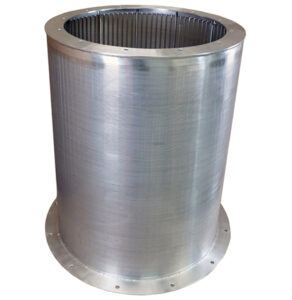
Choice of the right screen rests on a few site facts. Slot width must line up with carbon particle size so fines do not slip through. Cylinder diameter and length must fit the tank layout and carbon movement rate. Metal grade must suit the slurry chemistry, temperature, and wear level. Easy access for checks and back flush keeps performance high over time.
Close work with trusted wedge wire screen suppliers helps plants pick the best fit. They can supply a standard interstage wedge screen or a custom wedge wire build that matches the exact needs.
Conclusion
The BTOSLOT interstage wedge screen does more than filter slurry. It supports better gold recovery across the whole circuit. Precision screen manufacturing, wedge wire filtration, and the option for custom wedge wire all work together. Plants gain higher flow, fewer stops, and less gold lost to fines. Adding this screen to a CIP or CIL line brings direct savings in running costs and steady output day after day. Operators who want a proven unit can start by looking at a wedge wire screen for sale that has already shown strong results in the field.
FAQ
Q: How can I get a BTOSLOT interstage wedge screen for my gold plant?
A: Reach out to approved wedge wire screen suppliers. They can guide you on stock sizes or help set up a wedge wire screen for sale that fits your tanks and flow rates.
Q: What are the benefits of using custom wedge wire in gold recovery?
A: Custom wedge wire lets plants set slot width and metal type to match their carbon and slurry. The result is cleaner separation, less carbon damage, and higher gold capture in each CIP or CIL stage.
Q: How does BTOSLOT ensure high-precision screen manufacturing?
A: Each interstage wedge screen passes checks on slot weld quality, wire spacing, and material strength. These steps keep wedge wire filtration steady from the first day of use through many months of service.
Q: Can interstage wedge screens handle abrasive slurry?
A: Yes. BTOSLOT units come in 304 or 316L stainless steel and duplex alloys. These grades resist wear from high solids and keep slots open in tough gold recovery slurries.
Q: What maintenance is required for interstage wedge screens?
A: Back flush the screen on a set schedule and check the slot condition during planned stops. Wedge wire filtration supports self-cleaning, so most sites see low clog risk and steady flow with basic care.
Recent Post
Related Products
Best-selling Products
Starch Screen
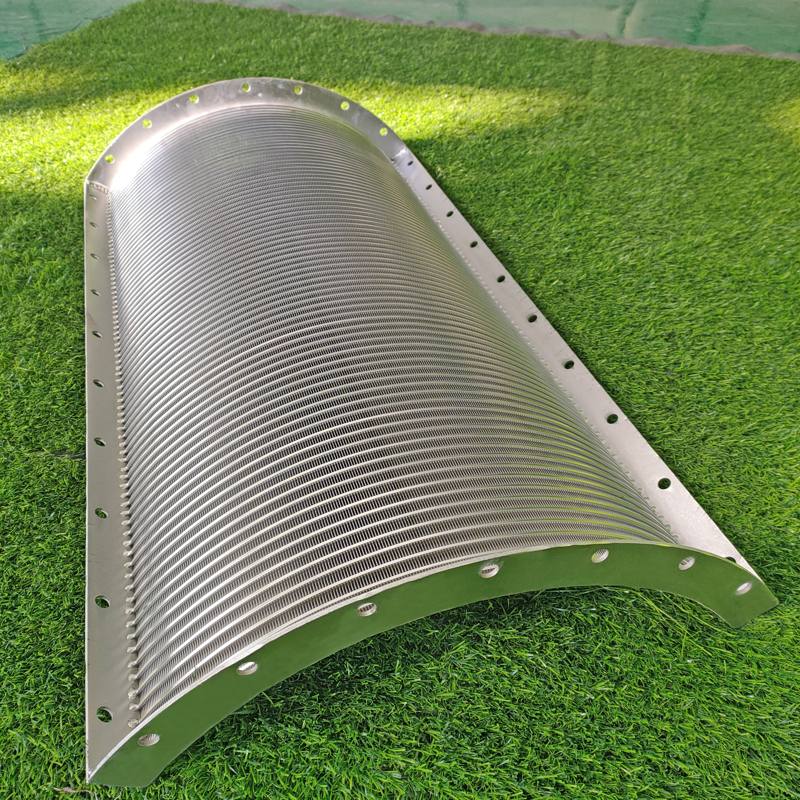
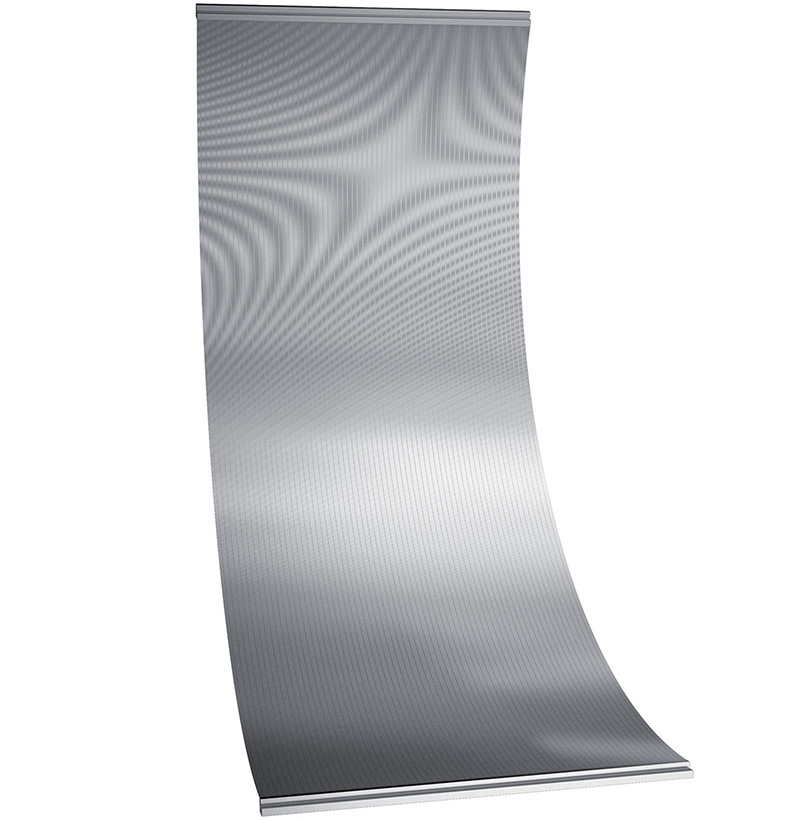
The Wedge Wire Starch Curved Screen is a curved screening device specifically designed for the starch industry. It features an arc-shaped screen surface made of precisely welded V-profile stainless steel wires, utilizing centrifugal force or gravity to achieve rapid dewatering and classification of starch slurry. Its curved structure prolongs slurry retention time, improving solid-liquid separation efficiency. It is suitable for starch extraction, refining, and byproduct recovery processes for starches such as potato, corn, and cassava. Characterized by efficient screening, wear and clogging resistance, and easy maintenance, this equipment is a key solid-liquid separation device in modern starch processing.
Rotary Drum
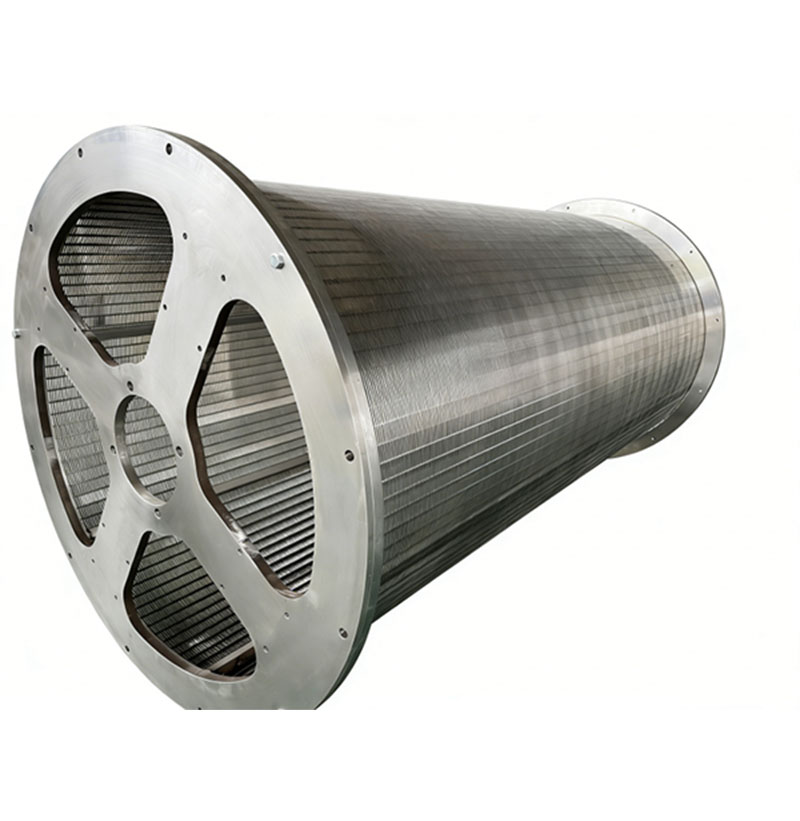
The Stainless Steel Wedge Wire Rotary Drum Screen (also known as a Rotary Drum Strainer or Micro-Screen) is a continuously and automatically operating front-end solid-liquid separation device. Its core component is a large cylindrical drum installed horizontally or at a slight incline. The entire circumferential surface of the drum is covered with a stainless steel wedge wire screen (Johnson screen). The wastewater to be treated flows into one end of the drum. Under gravity, the filtrate passes through the wedge wire slots, while solid suspended matter (such as fibers, hair, plastic pieces, and fine particles) is retained on the inner surface of the drum. As the drum rotates slowly, the retained debris is lifted to the top, where it is flushed by spray water into a collection trough, achieving a continuous process of automatic screening, filtration, and residue removal
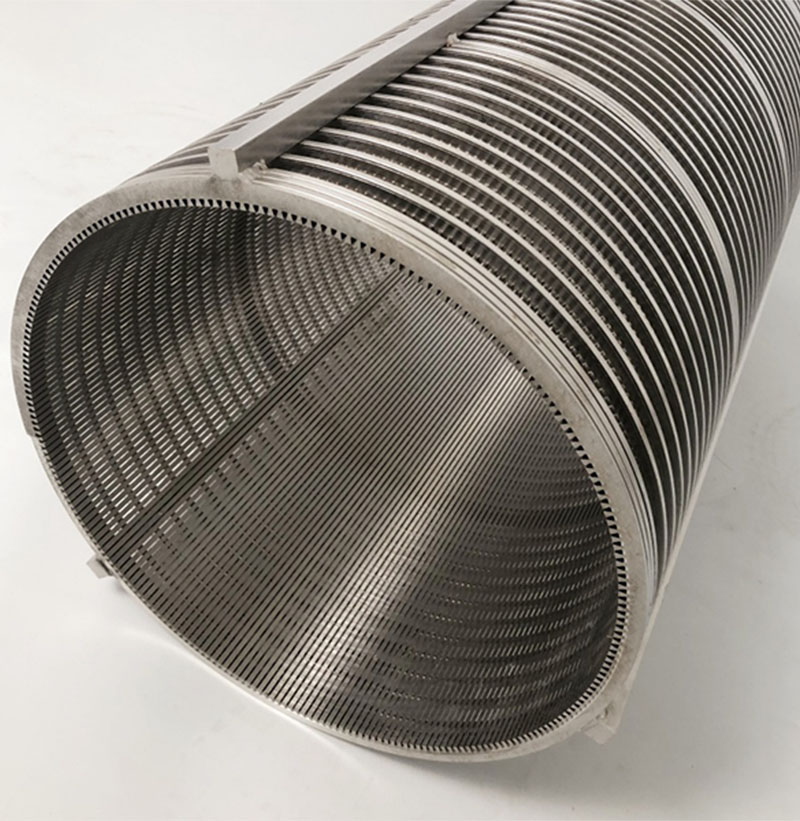
Screen Basket for Screw Press Separator
The stainless steel wedge wire screen basket, commonly known as the "V-wire screen," "press screen basket," or "screen cylinder," is a core component of screw press solid-liquid separators. It is installed inside the spiral press, enclosing the rotating screw shaft. The working principle is as follows: raw slurry with high moisture content is pushed into the screen basket by the screw shaft. Under the squeezing and conveying action of the spiral flights, the liquid (filtrate) is forced out through the precise, continuous slots of the screen basket, while the solid material (manure cake) is retained inside and continues to be compressed and dewatered as it moves forward. Finally, the dewatered solids are discharged from the outlet, achieving solid-liquid separation.
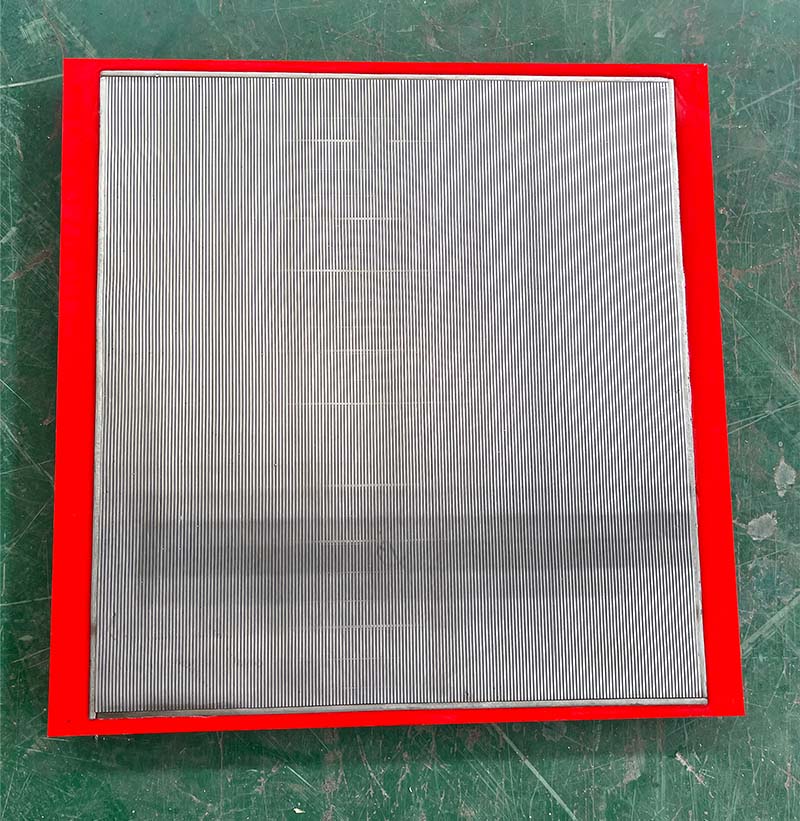
Wedge Wire Vibrating Screen
A stainless steel wedge wire vibrating screen is a solid-liquid separation device featuring a screen surface made by precisely welding V-shaped stainless steel wires, integrated with a high-frequency vibration system. With uniform slots, wear resistance, and corrosion resistance, it is suitable for wet screening and dewatering operations. The vibration mechanism enables rapid material dispersion and efficient sieving while effectively preventing screen clogging. Widely used in industries such as mining, metallurgy, food processing, and environmental protection, it is particularly suitable for handling fine particles, high-viscosity, or easily agglomerated materials, offering advantages such as high screening accuracy, large processing capacity, and long service life.
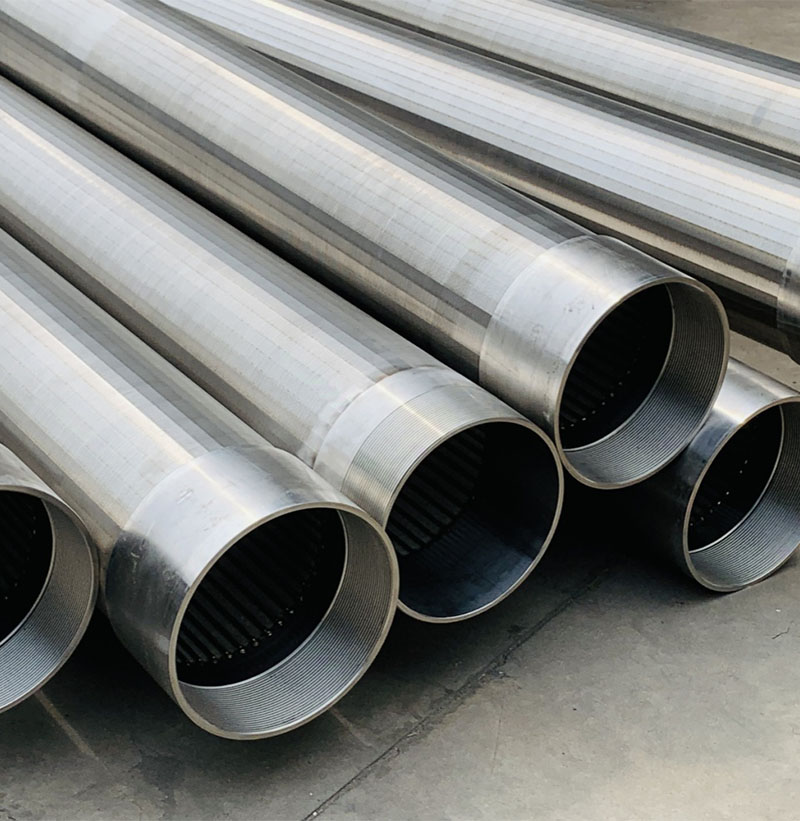
Wedge Wire Water Well Screen
Johnson Deep Water Well Screens, also referred to as continuous slot screens or wire wrap screens, were originally developed to solve sand control challenges in fine-grained and uniform sand formations. These geological conditions are commonly encountered in deep groundwater aquifers, where conventional perforated pipes often suffer from clogging, excessive sand production, and reduced well efficiency.
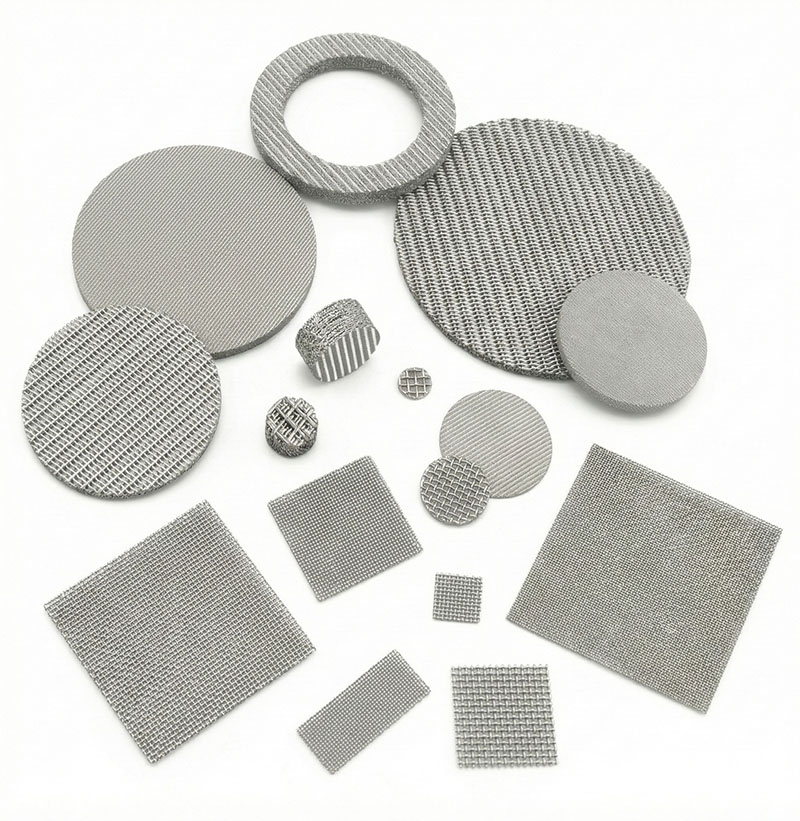
Sintered Mesh Plate and Disc
Sintered Mesh Plates and Discs are high-precision filtration components fabricated by bonding multiple layers of stainless steel wire mesh through a specialized vacuum sintering process. Unlike traditional mesh that relies on mechanical weaving alone, these plates are fused at every contact point, transforming individual wires into a rigid, integrated porous metal sheet.
These plates can be customized into various shapes, most commonly circular discs, to fit specific industrial equipment. They offer an ideal balance of high permeability, extreme structural integrity, and precise filtration ratings. Because they are made entirely of metal (typically 304 or 316L), they provide a "permanent" filtration solution that can withstand high temperatures and corrosive chemicals while remaining fully cleanable and reusable.