
ABOUT US
Your Expert Manufacturer of Wedge Wire Screens;
Your Reliable Partner and Source of Innovation
GET A FREE QUOTE
-
Home

-
Blog
-
Industry Blog
- Punched Mesh vs. Wedge Wire for Industrial Filtration
Punched Mesh vs. Wedge Wire for Industrial Filtration
-
 author
- 7,October
A filter that catches the right particles can still slow production if it blocks too quickly. For engineers and distributors comparing punched mesh with wedge wire, performance through the operating cycle matters. Punched mesh suits many coarse straining and support duties; wedge wire deserves consideration when slot geometry and particle release become critical.
The job of the punched surface
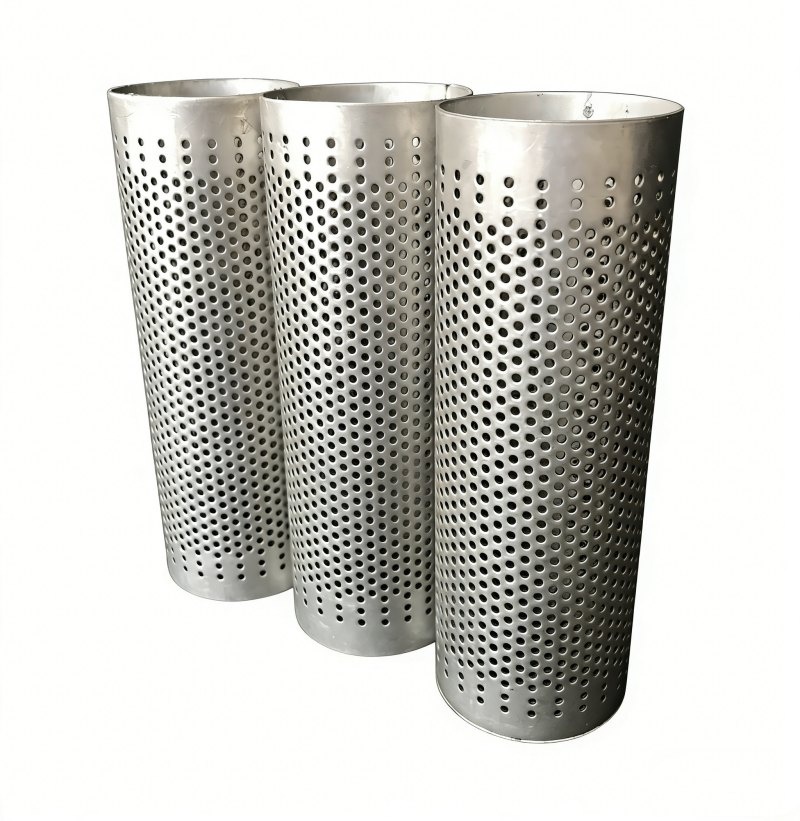
Punched mesh is a perforated metal sheet with discrete openings formed through the metal. Round holes are familiar, but square and slotted patterns are also available. A sheet can become a flat screen, a basket, or a cylindrical element, depending on the equipment it serves.
The first distinction is whether those holes perform the separation themselves. In a coarse strainer, the perforations retain debris directly. In a finer filter, the punched cylinder may support a separate mesh lining or other medium. The support holes then have a different job from the layer that captures particles.
That distinction changes the comparison with wedge wire. Replacing a support cylinder alone will not improve the retention rating of its lining. For a distributor evaluating replacement elements, identifying the active filtering layer prevents a seemingly equivalent metal component from being mistaken for an equivalent filter.
When a perforated element can do the work
A perforated metal filter is a practical candidate when the target debris is coarse enough for the available holes and the process allows effective cleaning. Cooling water strainers, for example, may need to intercept larger debris before it reaches vulnerable downstream equipment. The required retention size should come from that equipment’s needs.
The punched construction also provides a useful base for fabricated elements. Hole size, spacing, sheet thickness, and the finished cylinder or basket geometry can be adjusted together. A visibly thicker wall, however, does not establish an allowable differential pressure without considering the complete structure.
Coarse straining and support duties often require different versions of the same basic construction. At BTOSLOT, we offer perforated cartridges in 304, 316, and 316L stainless steel, with round, square, or slotted openings. This gives those applications a relevant starting point for matching material and hole geometry to the duty.
A perforated element remains attractive when its operating cycle is already satisfactory. If it retains the required debris and cleans reliably, changing to a different screen surface needs a specific process benefit. A different manufacturing method alone does not establish that benefit.

When continuous slots change the result
A wedge wire filter screen becomes relevant when particle release through the opening is a limiting factor. Profile wires welded onto support rods create continuous slots. In a correctly oriented arrangement, the opening widens behind its narrow screening face, giving passing particles clearance beyond the surface.
The widening passage can reduce the tendency of near-size particles to lodge within an opening. This is a useful distinction from a conventional punched hole through sheet thickness. It is especially relevant when repeated obstruction at the aperture, rather than the size of the basket alone, is shortening the run.
Slot geometry still needs to match the solids. An elongated or flexible particle can behave differently at a long slot than at a round hole of similar nominal width. For irregular debris, compare retained and escaped material in an application trial instead of treating the two dimensions as interchangeable ratings.
Wedge wire also offers a surface suited to compatible cleaning arrangements. Backwashing can help release retained material, while an appropriate scraper arrangement may suit certain cylinders. The screen orientation, flow direction, and cleaning mechanism must work together; the presence of V-shaped wire does not make every assembly automatically self-cleaning.

Flow and cleaning settle close comparisons
Open area helps explain why two elements with similar retention dimensions can carry flow differently. It describes the proportion of surface occupied by openings. Hole pitch affects punched sheet open area, while slot width and profile-wire width influence the corresponding proportion in wedge wire.
The useful flow area belongs to the finished assembly. Solid margins, support members, and a separate lining can restrict the area available to liquid. Comparing only the open-area percentage of two bare surfaces can therefore miss what happens inside the actual housing.
Operating evidence makes this comparison more useful than a general claim about higher flow. Review the following under comparable liquid, temperature, solids loading, and flow conditions:
- Clean-element pressure loss at the required flow rate.
- How quickly differential pressure rises as solids accumulate.
- How much performance returns after the intended cleaning cycle.
Cleaning recovery helps distinguish temporary fouling from a persistent mismatch. If a punched element returns to normal performance, its cleaning interval may be manageable. If deposits remain or blockage returns quickly, investigate the contaminant and cleaning method before deciding whether continuous slots address the cause.
A screen choice tied to the operating cycle
Punched mesh is a sensible option for coarse retention or support when its holes, structure, and cleaning cycle suit the process. Wedge wire merits evaluation when continuous slots offer a useful particle-release or cleaning advantage. The stronger choice is the element that maintains acceptable separation and flow between cleanings.
For an existing line, comparing the current element with the actual retained debris provides a practical next step. That evidence makes a discussion of punched or wedge wire construction much more specific.
FAQ
Is punched mesh the same as woven wire mesh?
No. Punched mesh is made by creating openings in sheet metal. Woven wire mesh is formed by interlacing wires. A perforated support can carry a woven lining, so both constructions may appear within one filter assembly.
Can punched mesh provide fine filtration?
It can support a finer filtering layer, but the support hole size does not define that layer’s retention. For direct straining, the perforations perform the separation. Identify which construction is being offered before comparing micron ratings.
Is wedge wire always less likely to clog?
Its widening slots can help passing particles clear the opening. Surface deposits and unsuitable solids can still obstruct flow, however. Cleaning performance depends on the contaminant, slot arrangement, and operating conditions as well as the wire profile.
Does a larger open area guarantee more throughput?
No. Available flow also depends on the finished element, liquid properties, fouling, and housing restrictions. Open area is a useful comparison parameter, but a flow and pressure-loss assessment is needed for the actual assembly.
Can a wedge wire element replace a punched basket directly?
Only after checking the complete fit and duty. Matching external dimensions is insufficient: retention behavior, sealing, flow direction, differential-pressure capability, and the cleaning arrangement must also be compatible with the existing equipment.
Recent Post
Related Products
Best-selling Products
Starch Screen
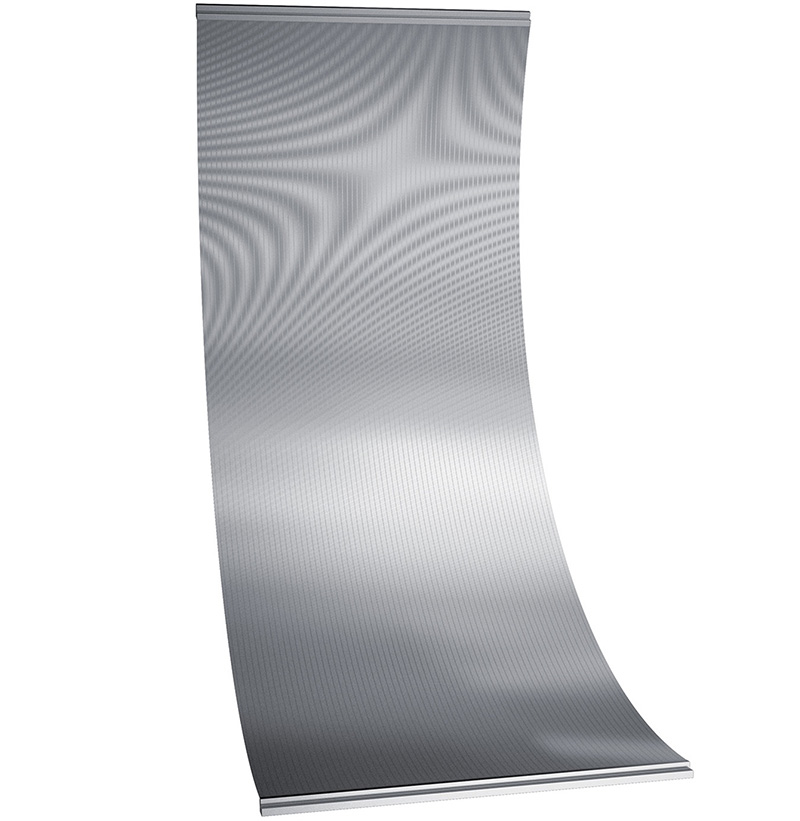
The Wedge Wire Starch Curved Screen is a curved screening device specifically designed for the starch industry. It features an arc-shaped screen surface made of precisely welded V-profile stainless steel wires, utilizing centrifugal force or gravity to achieve rapid dewatering and classification of starch slurry. Its curved structure prolongs slurry retention time, improving solid-liquid separation efficiency. It is suitable for starch extraction, refining, and byproduct recovery processes for starches such as potato, corn, and cassava. Characterized by efficient screening, wear and clogging resistance, and easy maintenance, this equipment is a key solid-liquid separation device in modern starch processing.
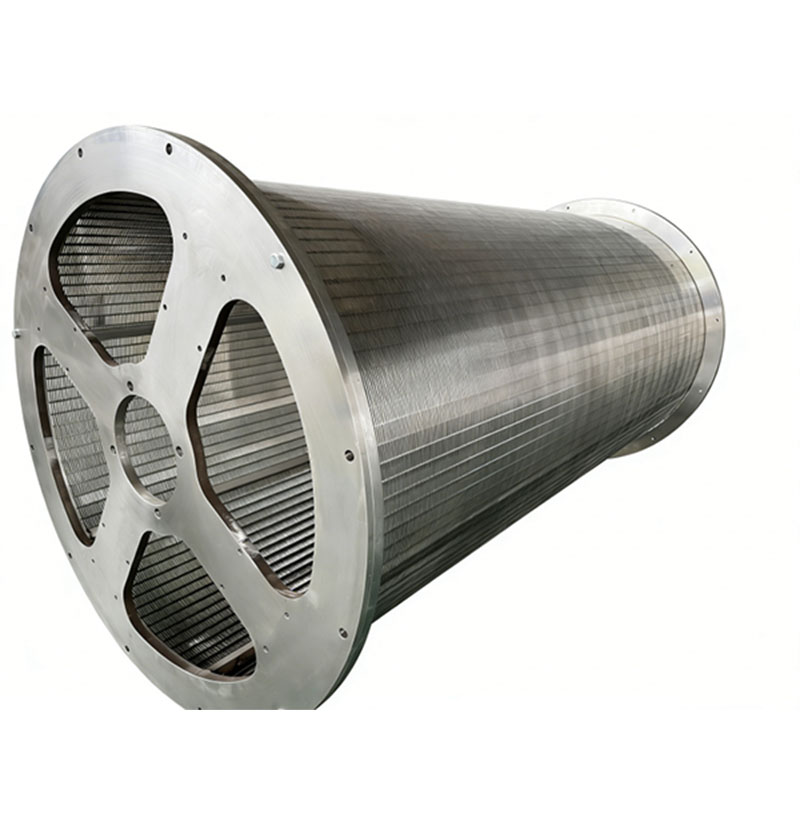
Rotary Drum
The Stainless Steel Wedge Wire Rotary Drum Screen (also known as a Rotary Drum Strainer or Micro-Screen) is a continuously and automatically operating front-end solid-liquid separation device. Its core component is a large cylindrical drum installed horizontally or at a slight incline. The entire circumferential surface of the drum is covered with a stainless steel wedge wire screen (Johnson screen). The wastewater to be treated flows into one end of the drum. Under gravity, the filtrate passes through the wedge wire slots, while solid suspended matter (such as fibers, hair, plastic pieces, and fine particles) is retained on the inner surface of the drum. As the drum rotates slowly, the retained debris is lifted to the top, where it is flushed by spray water into a collection trough, achieving a continuous process of automatic screening, filtration, and residue removal
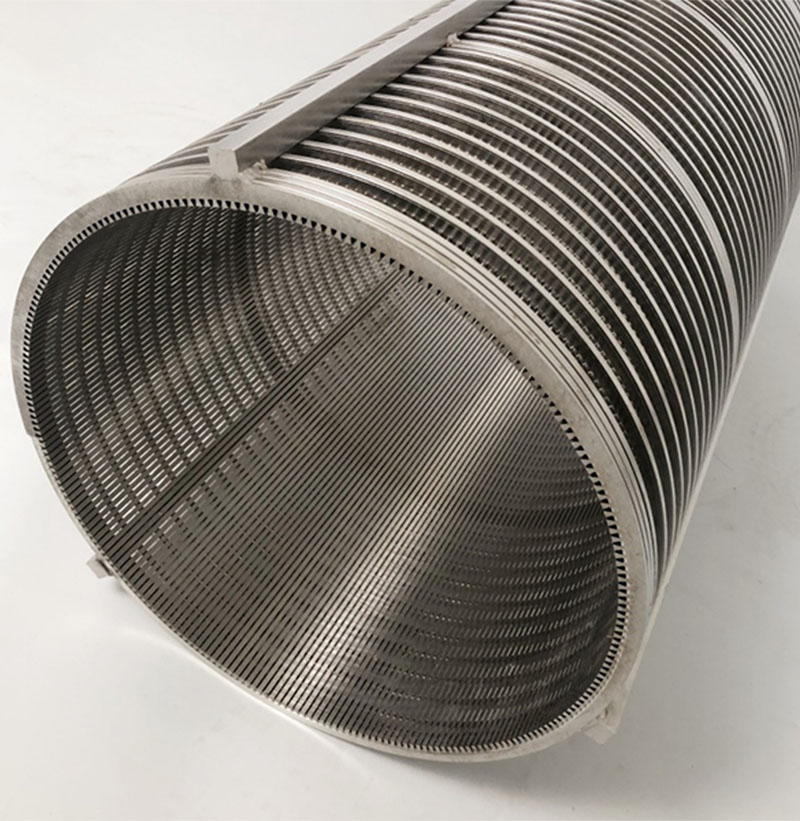
Screen Basket for Screw Press Separator
The stainless steel wedge wire screen basket, commonly known as the "V-wire screen," "press screen basket," or "screen cylinder," is a core component of screw press solid-liquid separators. It is installed inside the spiral press, enclosing the rotating screw shaft. The working principle is as follows: raw slurry with high moisture content is pushed into the screen basket by the screw shaft. Under the squeezing and conveying action of the spiral flights, the liquid (filtrate) is forced out through the precise, continuous slots of the screen basket, while the solid material (manure cake) is retained inside and continues to be compressed and dewatered as it moves forward. Finally, the dewatered solids are discharged from the outlet, achieving solid-liquid separation.
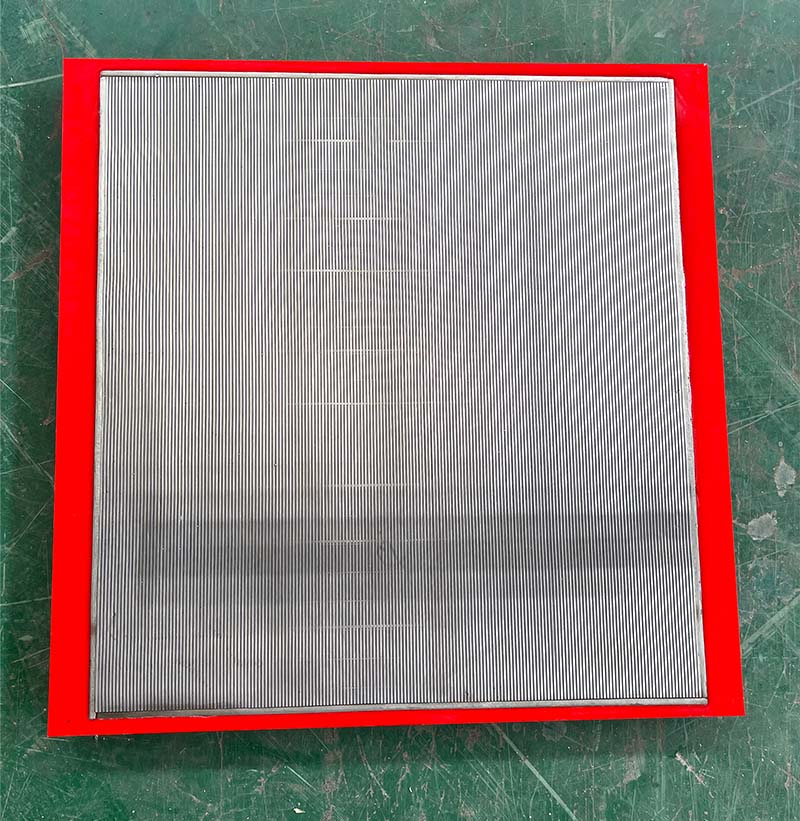
Wedge Wire Vibrating Screen
A stainless steel wedge wire vibrating screen is a solid-liquid separation device featuring a screen surface made by precisely welding V-shaped stainless steel wires, integrated with a high-frequency vibration system. With uniform slots, wear resistance, and corrosion resistance, it is suitable for wet screening and dewatering operations. The vibration mechanism enables rapid material dispersion and efficient sieving while effectively preventing screen clogging. Widely used in industries such as mining, metallurgy, food processing, and environmental protection, it is particularly suitable for handling fine particles, high-viscosity, or easily agglomerated materials, offering advantages such as high screening accuracy, large processing capacity, and long service life.
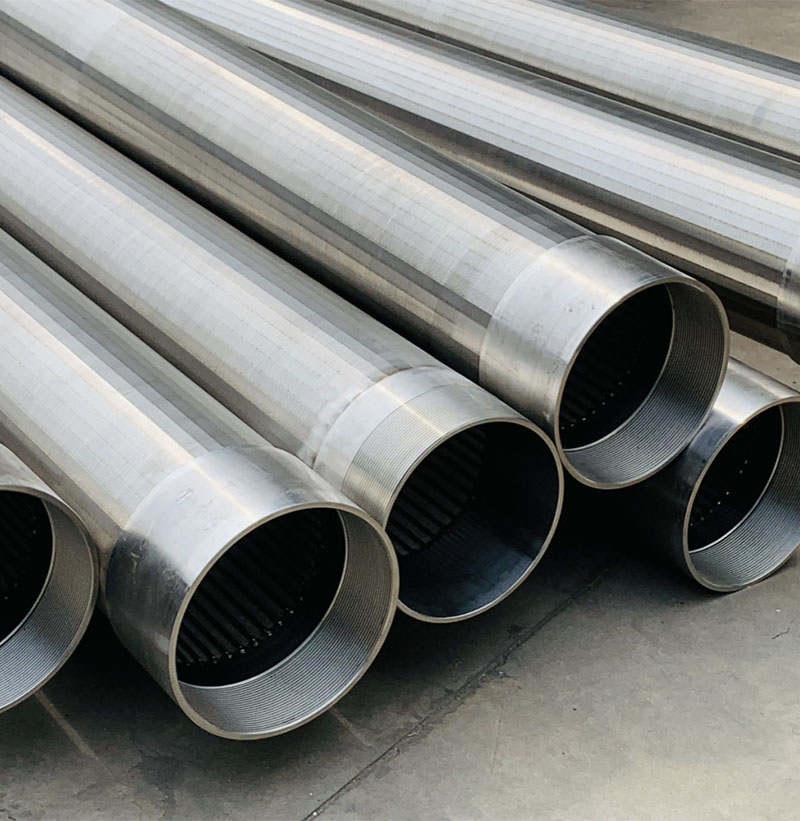
Wedge Wire Water Well Screen
Johnson Deep Water Well Screens, also referred to as continuous slot screens or wire wrap screens, were originally developed to solve sand control challenges in fine-grained and uniform sand formations. These geological conditions are commonly encountered in deep groundwater aquifers, where conventional perforated pipes often suffer from clogging, excessive sand production, and reduced well efficiency.
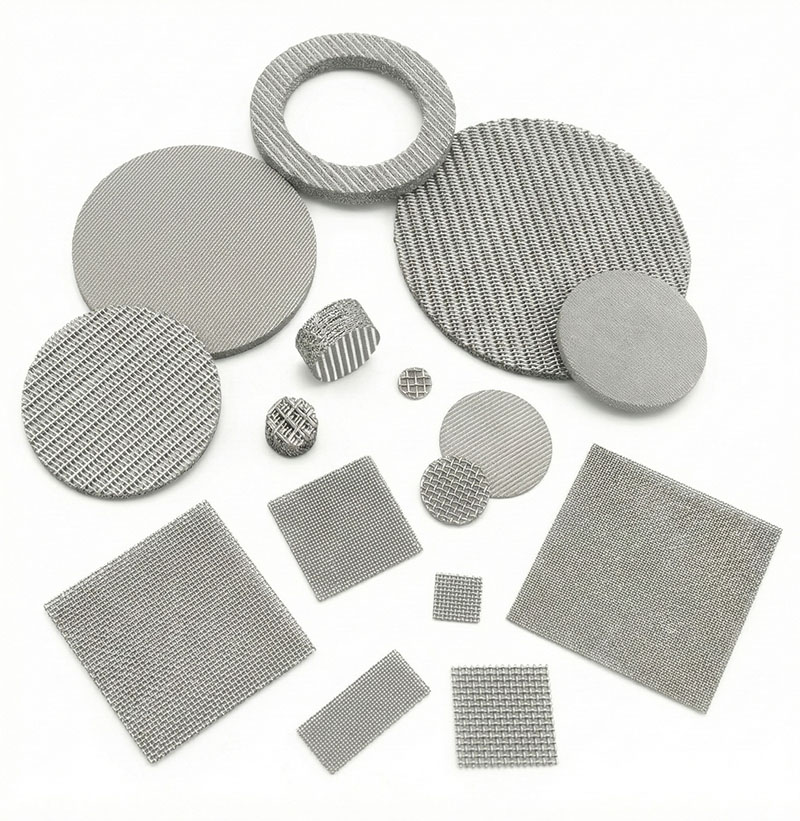
Sintered Mesh Plate and Disc
Sintered Mesh Plates and Discs are high-precision filtration components fabricated by bonding multiple layers of stainless steel wire mesh through a specialized vacuum sintering process. Unlike traditional mesh that relies on mechanical weaving alone, these plates are fused at every contact point, transforming individual wires into a rigid, integrated porous metal sheet.
These plates can be customized into various shapes, most commonly circular discs, to fit specific industrial equipment. They offer an ideal balance of high permeability, extreme structural integrity, and precise filtration ratings. Because they are made entirely of metal (typically 304 or 316L), they provide a "permanent" filtration solution that can withstand high temperatures and corrosive chemicals while remaining fully cleanable and reusable.