
À propos de nous
Votre fabricant expert d'écrans de fil de coin;
Votre partenaire fiable et source d’innovation
Obtenez un devis gratuit
-
Accueil

-
Blog
-
Blog de l'industrie
- Punched Mesh vs. Wedge Wire for Industrial Filtration
Punched Mesh vs. Wedge Wire for Industrial Filtration
-
 auteur
- 7,octobre
A filter that catches the right particles can still slow production if it blocks too quickly. For engineers and distributors comparing punched mesh with wedge wire, performance through the operating cycle matters. Punched mesh suits many coarse straining and support duties; wedge wire deserves consideration when slot geometry and particle release become critical.
The job of the punched surface
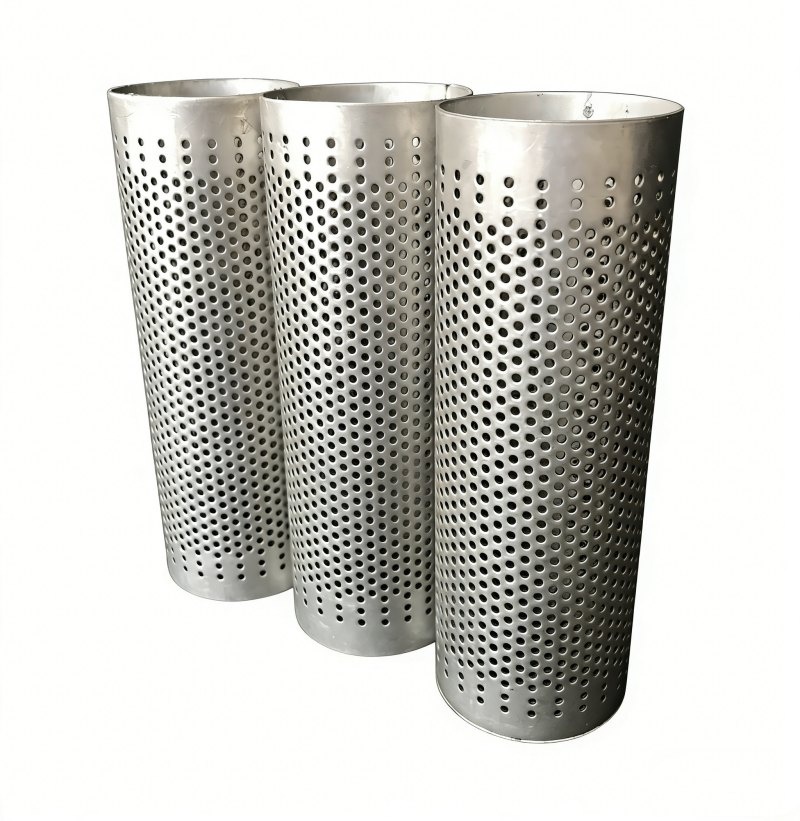
Punched mesh is a perforated metal sheet with discrete openings formed through the metal. Round holes are familiar, but square and slotted patterns are also available. A sheet can become a flat screen, a basket, or a cylindrical element, depending on the equipment it serves.
The first distinction is whether those holes perform the separation themselves. In a coarse strainer, the perforations retain debris directly. In a finer filter, the punched cylinder may support a separate mesh lining or other medium. The support holes then have a different job from the layer that captures particles.
That distinction changes the comparison with wedge wire. Replacing a support cylinder alone will not improve the retention rating of its lining. For a distributor evaluating replacement elements, identifying the active filtering layer prevents a seemingly equivalent metal component from being mistaken for an equivalent filter.
When a perforated element can do the work
A perforated metal filter is a practical candidate when the target debris is coarse enough for the available holes and the process allows effective cleaning. Cooling water strainers, for example, may need to intercept larger debris before it reaches vulnerable downstream equipment. The required retention size should come from that equipment’s needs.
The punched construction also provides a useful base for fabricated elements. Hole size, spacing, sheet thickness, and the finished cylinder or basket geometry can be adjusted together. A visibly thicker wall, however, does not establish an allowable differential pressure without considering the complete structure.
Coarse straining and support duties often require different versions of the same basic construction. At BTOSLOT, we offer perforated cartridges in 304, 316, and 316L stainless steel, with round, square, or slotted openings. This gives those applications a relevant starting point for matching material and hole geometry to the duty.
A perforated element remains attractive when its operating cycle is already satisfactory. If it retains the required debris and cleans reliably, changing to a different screen surface needs a specific process benefit. A different manufacturing method alone does not establish that benefit.

When continuous slots change the result
A wedge wire filter screen becomes relevant when particle release through the opening is a limiting factor. Profile wires welded onto support rods create continuous slots. In a correctly oriented arrangement, the opening widens behind its narrow screening face, giving passing particles clearance beyond the surface.
The widening passage can reduce the tendency of near-size particles to lodge within an opening. This is a useful distinction from a conventional punched hole through sheet thickness. It is especially relevant when repeated obstruction at the aperture, rather than the size of the basket alone, is shortening the run.
Slot geometry still needs to match the solids. An elongated or flexible particle can behave differently at a long slot than at a round hole of similar nominal width. For irregular debris, compare retained and escaped material in an application trial instead of treating the two dimensions as interchangeable ratings.
Wedge wire also offers a surface suited to compatible cleaning arrangements. Backwashing can help release retained material, while an appropriate scraper arrangement may suit certain cylinders. The screen orientation, flow direction, and cleaning mechanism must work together; the presence of V-shaped wire does not make every assembly automatically self-cleaning.

Flow and cleaning settle close comparisons
Open area helps explain why two elements with similar retention dimensions can carry flow differently. It describes the proportion of surface occupied by openings. Hole pitch affects punched sheet open area, while slot width and profile-wire width influence the corresponding proportion in wedge wire.
The useful flow area belongs to the finished assembly. Solid margins, support members, and a separate lining can restrict the area available to liquid. Comparing only the open-area percentage of two bare surfaces can therefore miss what happens inside the actual housing.
Operating evidence makes this comparison more useful than a general claim about higher flow. Review the following under comparable liquid, temperature, solids loading, and flow conditions:
- Clean-element pressure loss at the required flow rate.
- How quickly differential pressure rises as solids accumulate.
- How much performance returns after the intended cleaning cycle.
Cleaning recovery helps distinguish temporary fouling from a persistent mismatch. If a punched element returns to normal performance, its cleaning interval may be manageable. If deposits remain or blockage returns quickly, investigate the contaminant and cleaning method before deciding whether continuous slots address the cause.
A screen choice tied to the operating cycle
Punched mesh is a sensible option for coarse retention or support when its holes, structure, and cleaning cycle suit the process. Wedge wire merits evaluation when continuous slots offer a useful particle-release or cleaning advantage. The stronger choice is the element that maintains acceptable separation and flow between cleanings.
For an existing line, comparing the current element with the actual retained debris provides a practical next step. That evidence makes a discussion of punched or wedge wire construction much more specific.
FAQ
Is punched mesh the same as woven wire mesh?
No. Punched mesh is made by creating openings in sheet metal. Woven wire mesh is formed by interlacing wires. A perforated support can carry a woven lining, so both constructions may appear within one filter assembly.
Can punched mesh provide fine filtration?
It can support a finer filtering layer, but the support hole size does not define that layer’s retention. For direct straining, the perforations perform the separation. Identify which construction is being offered before comparing micron ratings.
Is wedge wire always less likely to clog?
Its widening slots can help passing particles clear the opening. Surface deposits and unsuitable solids can still obstruct flow, however. Cleaning performance depends on the contaminant, slot arrangement, and operating conditions as well as the wire profile.
Does a larger open area guarantee more throughput?
No. Available flow also depends on the finished element, liquid properties, fouling, and housing restrictions. Open area is a useful comparison parameter, but a flow and pressure-loss assessment is needed for the actual assembly.
Can a wedge wire element replace a punched basket directly?
Only after checking the complete fit and duty. Matching external dimensions is insufficient: retention behavior, sealing, flow direction, differential-pressure capability, and the cleaning arrangement must also be compatible with the existing equipment.
Article récent
Produits connexes
Produits les plus vendus
écran amidon
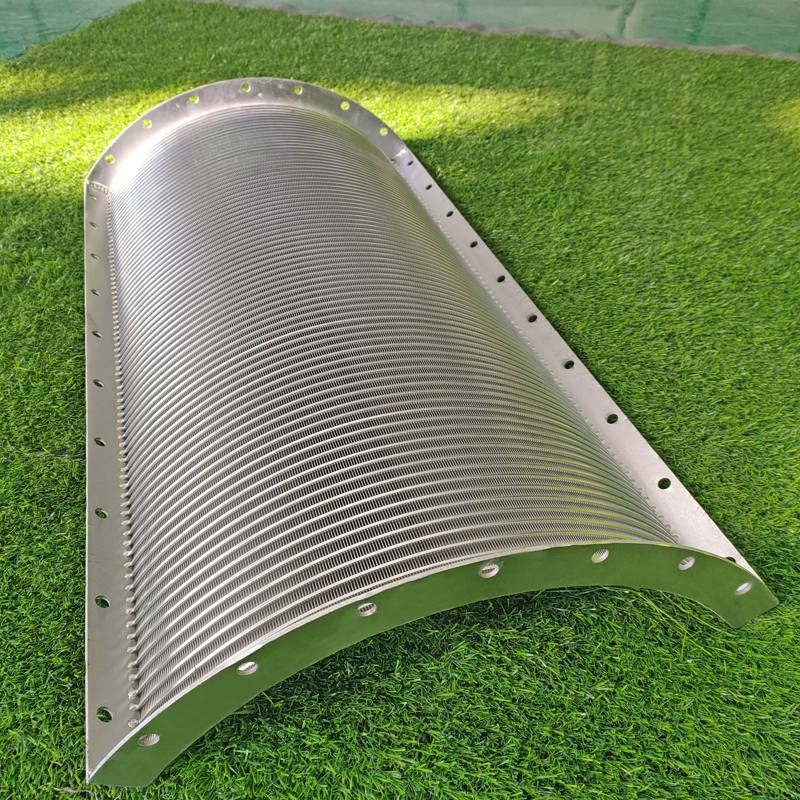
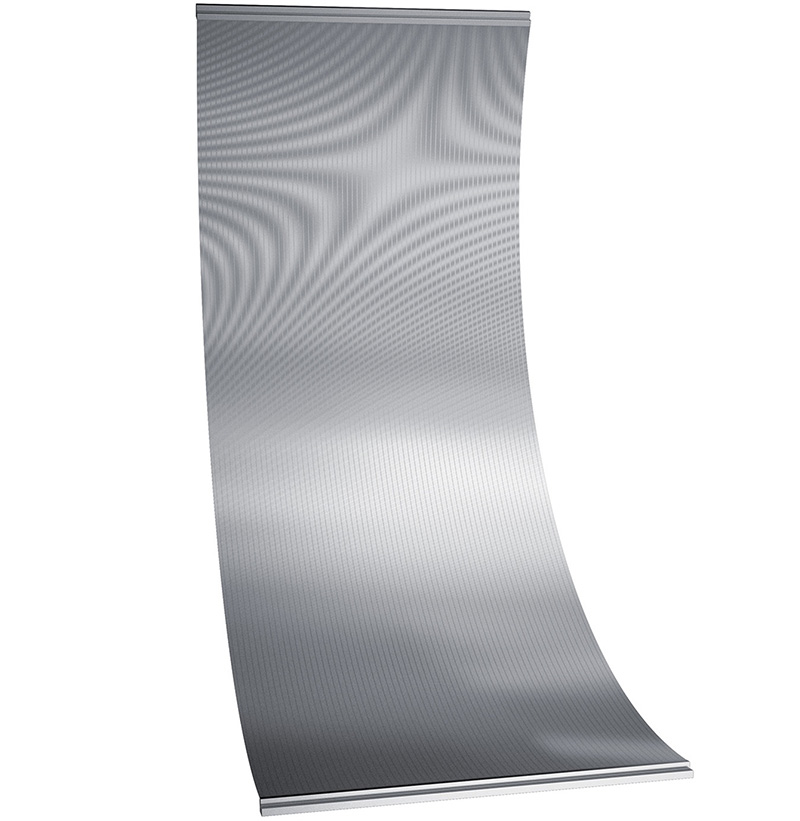
Le Wedge Wire Starch Curved Screen est un dispositif de criblage courbé spécialement conçu pour l'industrie de l'amidon. Il dispose d'une surface d'écran en forme d'arc faite de fils en acier inoxydable en profil V soudés avec précision, utilisant la force centrifuge ou la gravité pour réaliser une déshydratation rapide et la classification de la boue d'amidon. Sa structure courbe prolonge le temps de rétention des boues, améliorant l'efficacité de la séparation solide-liquide. Il convient pour l'extraction d'amidon, le raffinage et les processus de récupération de sous-produits pour les amidons tels que la pomme de terre, le maïs et le manioc. Caractérisé par un criblage efficace, une résistance à l'usure et à l'obstruction et une maintenance facile, cet équipement est un dispositif de séparation solide-liquide clé dans le traitement moderne de l'amidon.
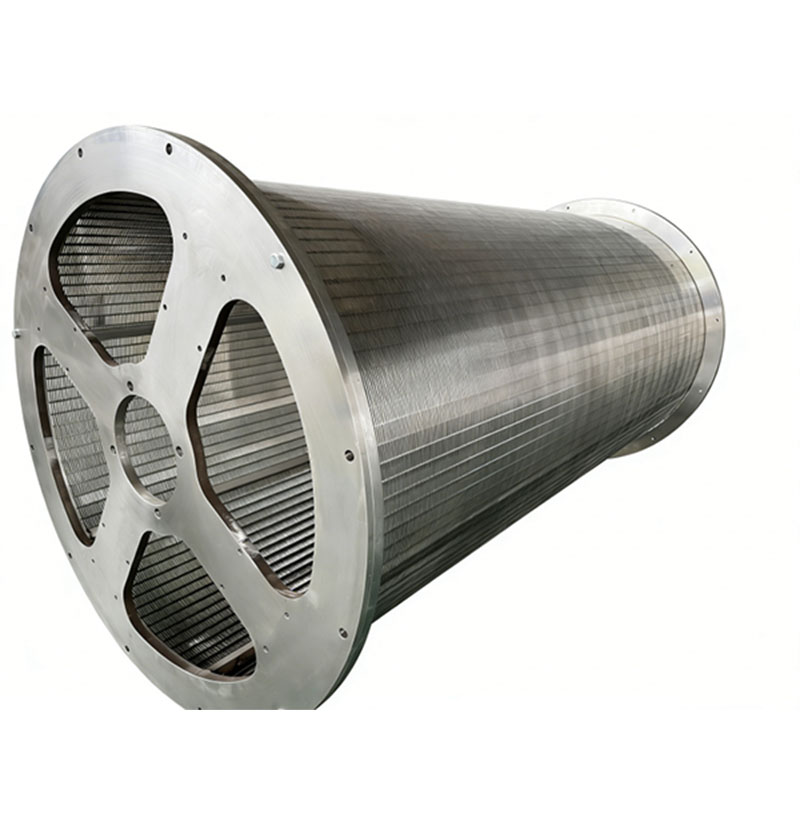
tambour rotatif
L'écran de tambour rotatif en acier inoxydable (également connu sous le nom de filtre de tambour rotatif ou micro-écran) est un dispositif de séparation solide-liquide frontal fonctionnant en continu et automatiquement. Son élément central est un grand tambour cylindrique installé horizontalement ou en légère inclinaison. Toute la surface circonférentielle du tambour est recouverte d'un écran en acier inoxydable (écran Johnson). Les eaux usées à traiter s'écoulent dans une extrémité du tambour. Sous la gravité, le filtrat passe à travers les fentes de fil de coin, tandis que la matière solide en suspension (telles que les fibres, les cheveux, les morceaux de plastique et les particules fines) est retenue sur la surface interne du tambour. Au fur et à mesure que le tambour tourne lentement, les débris retenus sont soulevés vers le haut, où ils sont rincés par l'eau pulvérisée dans un trou de collecte, permettant ainsi un processus continu de filtration automatique et d'élimination des résidus.
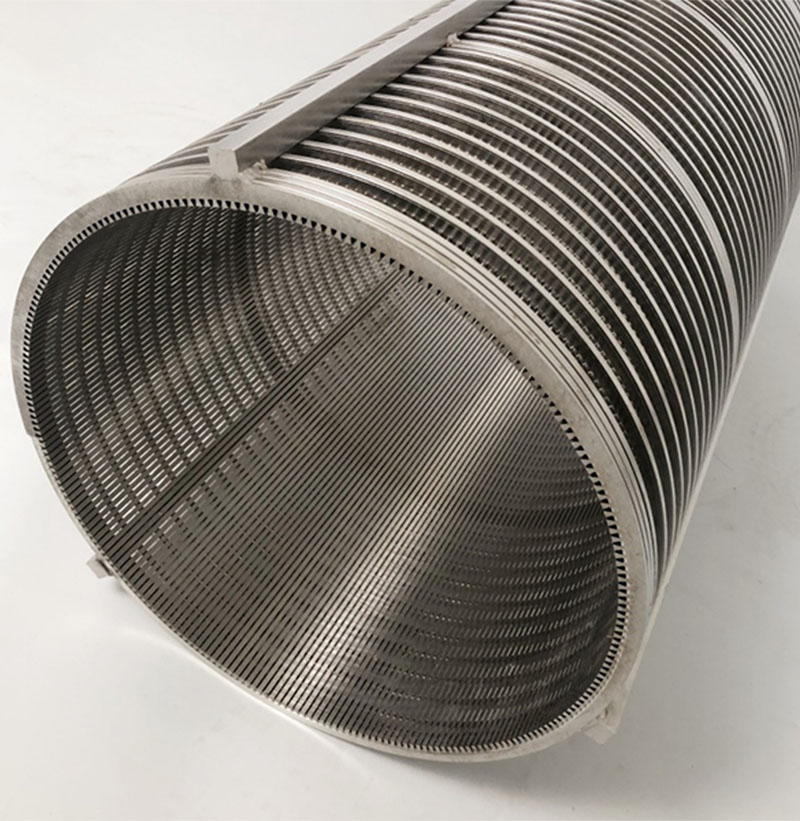
Panier d'écran pour séparateur de presse à vis
Le panier d'écran en fil de coin en acier inoxydable, communément connu sous le nom de "écran en V", "panier d'écran de presse" ou "cylindre d'écran", est un composant central des séparateurs solide-liquide de presse à vis. Il est installé à l'intérieur de la presse à spirale, encerclant l'arbre à vis rotatif. Le principe de fonctionnement est le suivant: la boue brute à forte teneur en humidité est poussée dans le panier d'écran par l'arbre à vis. Sous l'action de compression et de transport des vols en spirale, le liquide (filtrat) est forcé à travers les fentes précises et continues du panier d'écran, tandis que le matériau solide (gâteau de fumier) est retenu à l'intérieur et continue d'être comprimé et déshydraté au fur et à mesure qu'il avance. Enfin, les solides déshydratés sont déchargés de la sortie, permettant une séparation solide-liquide.
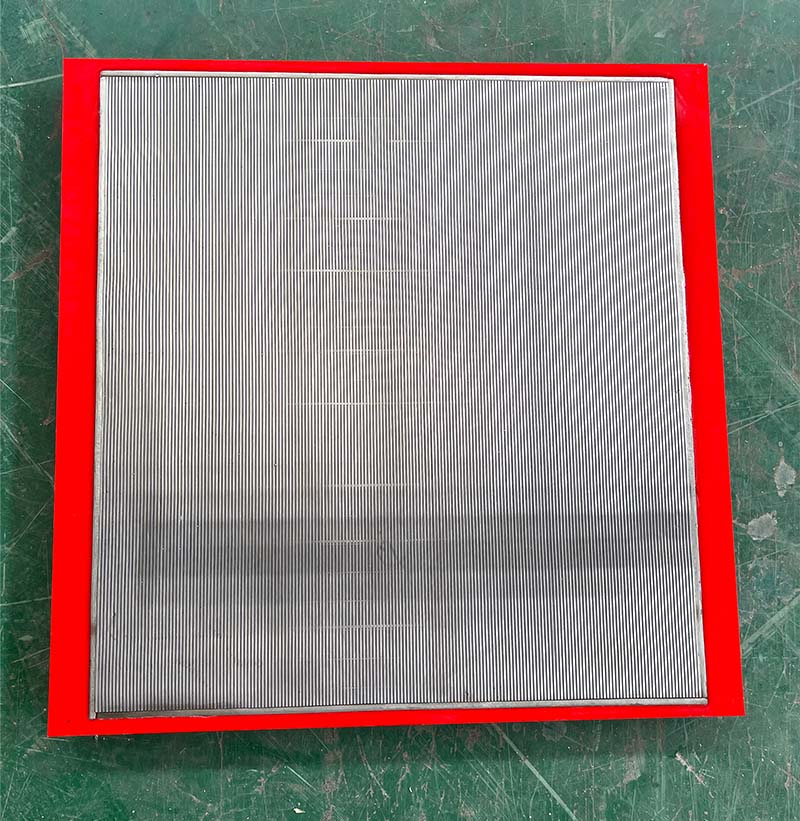
Ecran vibrant de fil de coin
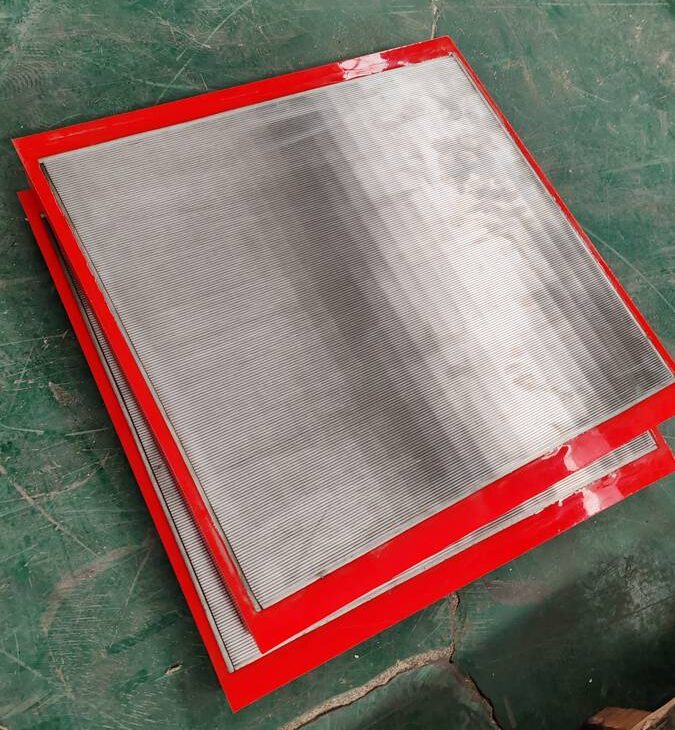
Un écran vibrant en fil de coin en acier inoxydable est un dispositif de séparation solide-liquide comportant une surface d'écran réalisée par soudage précis de fils en acier inoxydable en forme de V, intégré à un système de vibration haute fréquence. Avec des fentes uniformes, une résistance à l'usure et une résistance à la corrosion, il convient aux opérations de filtrage humide et de déshydratation. Le mécanisme de vibration permet une dispersion rapide du matériau et un tamissage efficace tout en empêchant efficacement l'obstruction de l'écran. Largement utilisé dans des industries telles que l'exploitation minière, la métallurgie, la transformation des aliments et la protection de l'environnement, il est particulièrement adapté pour manipuler des particules fines, des matériaux à haute viscosité ou facilement agglomérables, offrant des avantages tels que la précision de criblage élevée, une grande capacité de traitement et une longue durée de vie.
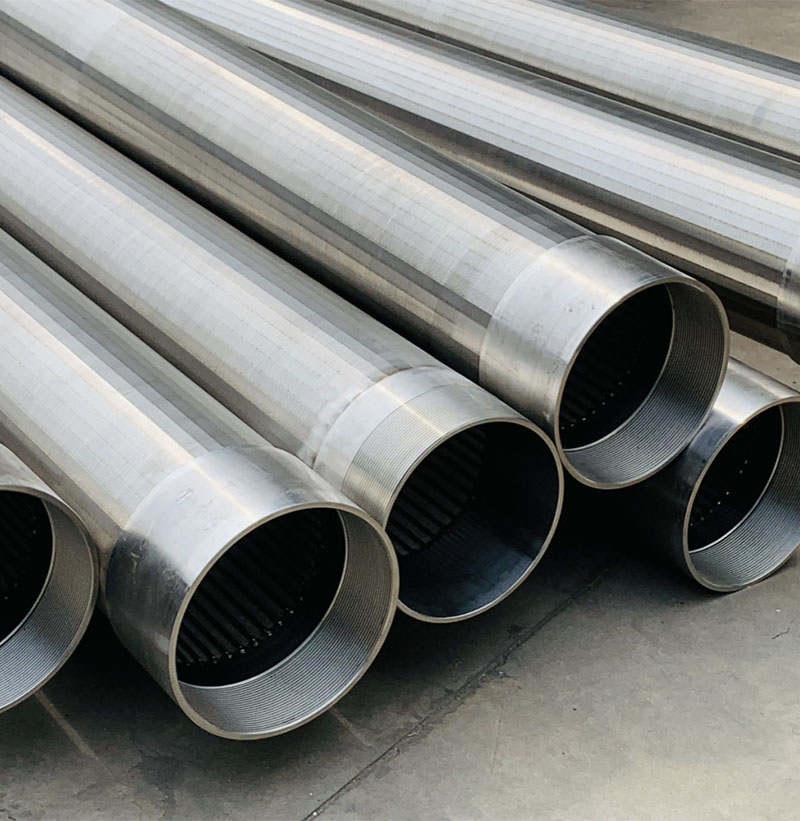
Écran de puits d'eau de fil de coin
Les écrans de puits d'eau profonde Johnson, également appelés écrans de fente continue ou écrans d'enveloppement de fil, ont été développés à l'origine pour résoudre les problèmes de contrôle du sable dans les formations de sable fine graine et uniforme. Ces conditions géologiques sont couramment rencontrées dans les aquifères souterrains profonds, où les tuyaux perforés conventionnels souffrent souvent d'obstruction, de production excessive de sable et de réduction de l'efficacité des puits.
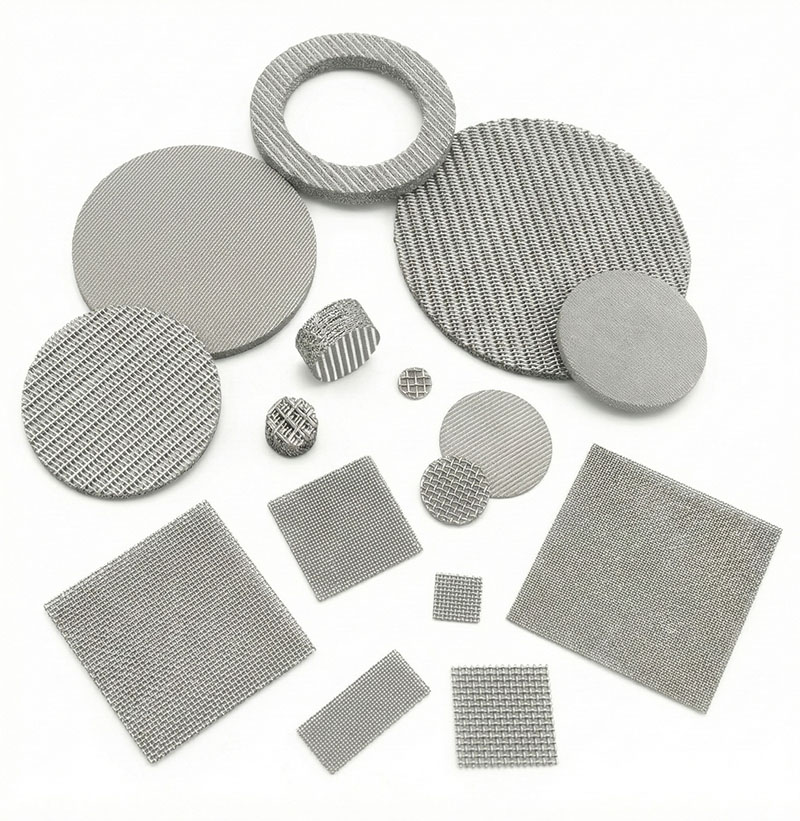
Plaque et disque en maille fritté
Les plaques et disques de maillage fritté sont des composants de filtration de haute précision fabriqués en liant plusieurs couches de maillage en acier inoxydable à travers un processus de frittage sous vide spécialisé. Contrairement au maillage traditionnel qui repose uniquement sur le tissage mécanique, ces plaques sont fusionnées à chaque point de contact, transformant des fils individuels en une tôle porouse rigide et intégrée.Ces plaques peuvent être personnalisées en différentes formes, le plus souvent des disques circulaires, pour s'adapter à des équipements industriels spécifiques. Ils offrent un équilibre idéal entre une perméabilité élevée, une intégrité structurelle extrême et des taux de filtration précis. Étant donné qu'ils sont entièrement en métal (généralement 304 ou 316L), ils fournissent une solution de filtration "permanente" qui peut résister aux températures élevées et aux produits chimiques corrosifs tout en restant entièrement nettoyables et réutilisables.