
Über uns
Ihr Experte Hersteller von Wedge Wire Screens;
Ihr zuverlässiger Partner und Innovationsquelle
Erhalten Sie ein kostenloses Angebot
-
Startseite

-
Blog
-
Branchenblog
- Punched Mesh vs. Wedge Wire for Industrial Filtration
Punched Mesh vs. Wedge Wire for Industrial Filtration
-
 Autor
- 7,Oktober
A filter that catches the right particles can still slow production if it blocks too quickly. For engineers and distributors comparing punched mesh with wedge wire, performance through the operating cycle matters. Punched mesh suits many coarse straining and support duties; wedge wire deserves consideration when slot geometry and particle release become critical.
The job of the punched surface
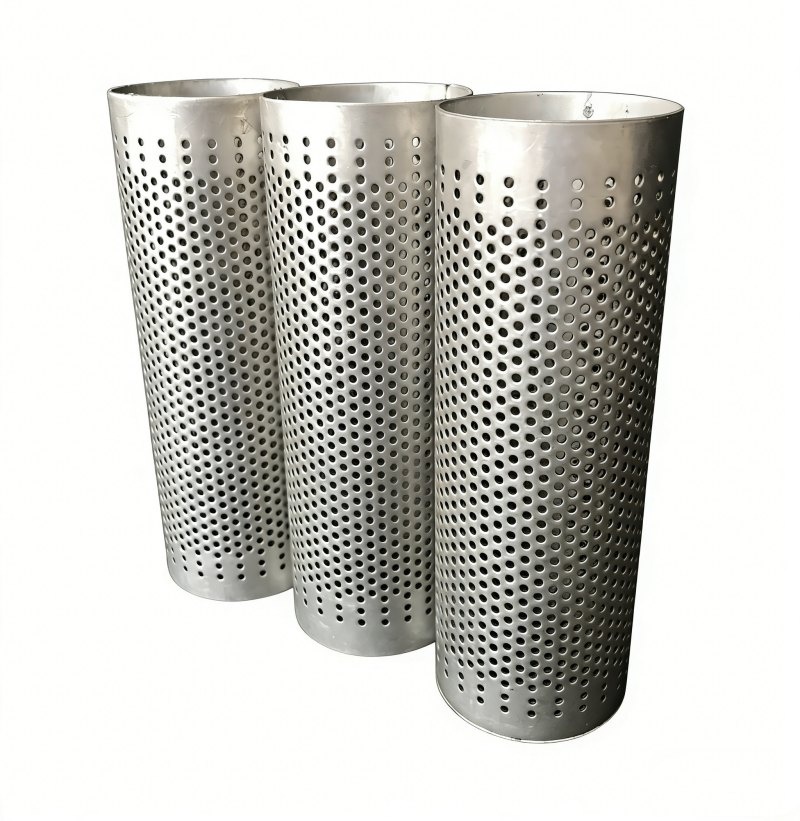
Punched mesh is a perforated metal sheet with discrete openings formed through the metal. Round holes are familiar, but square and slotted patterns are also available. A sheet can become a flat screen, a basket, or a cylindrical element, depending on the equipment it serves.
The first distinction is whether those holes perform the separation themselves. In a coarse strainer, the perforations retain debris directly. In a finer filter, the punched cylinder may support a separate mesh lining or other medium. The support holes then have a different job from the layer that captures particles.
That distinction changes the comparison with wedge wire. Replacing a support cylinder alone will not improve the retention rating of its lining. For a distributor evaluating replacement elements, identifying the active filtering layer prevents a seemingly equivalent metal component from being mistaken for an equivalent filter.
When a perforated element can do the work
A perforated metal filter is a practical candidate when the target debris is coarse enough for the available holes and the process allows effective cleaning. Cooling water strainers, for example, may need to intercept larger debris before it reaches vulnerable downstream equipment. The required retention size should come from that equipment’s needs.
The punched construction also provides a useful base for fabricated elements. Hole size, spacing, sheet thickness, and the finished cylinder or basket geometry can be adjusted together. A visibly thicker wall, however, does not establish an allowable differential pressure without considering the complete structure.
Coarse straining and support duties often require different versions of the same basic construction. At BTOSLOT, we offer perforated cartridges in 304, 316, and 316L stainless steel, with round, square, or slotted openings. This gives those applications a relevant starting point for matching material and hole geometry to the duty.
A perforated element remains attractive when its operating cycle is already satisfactory. If it retains the required debris and cleans reliably, changing to a different screen surface needs a specific process benefit. A different manufacturing method alone does not establish that benefit.

When continuous slots change the result
A wedge wire filter screen becomes relevant when particle release through the opening is a limiting factor. Profile wires welded onto support rods create continuous slots. In a correctly oriented arrangement, the opening widens behind its narrow screening face, giving passing particles clearance beyond the surface.
The widening passage can reduce the tendency of near-size particles to lodge within an opening. This is a useful distinction from a conventional punched hole through sheet thickness. It is especially relevant when repeated obstruction at the aperture, rather than the size of the basket alone, is shortening the run.
Slot geometry still needs to match the solids. An elongated or flexible particle can behave differently at a long slot than at a round hole of similar nominal width. For irregular debris, compare retained and escaped material in an application trial instead of treating the two dimensions as interchangeable ratings.
Wedge wire also offers a surface suited to compatible cleaning arrangements. Backwashing can help release retained material, while an appropriate scraper arrangement may suit certain cylinders. The screen orientation, flow direction, and cleaning mechanism must work together; the presence of V-shaped wire does not make every assembly automatically self-cleaning.

Flow and cleaning settle close comparisons
Open area helps explain why two elements with similar retention dimensions can carry flow differently. It describes the proportion of surface occupied by openings. Hole pitch affects punched sheet open area, while slot width and profile-wire width influence the corresponding proportion in wedge wire.
The useful flow area belongs to the finished assembly. Solid margins, support members, and a separate lining can restrict the area available to liquid. Comparing only the open-area percentage of two bare surfaces can therefore miss what happens inside the actual housing.
Operating evidence makes this comparison more useful than a general claim about higher flow. Review the following under comparable liquid, temperature, solids loading, and flow conditions:
- Clean-element pressure loss at the required flow rate.
- How quickly differential pressure rises as solids accumulate.
- How much performance returns after the intended cleaning cycle.
Cleaning recovery helps distinguish temporary fouling from a persistent mismatch. If a punched element returns to normal performance, its cleaning interval may be manageable. If deposits remain or blockage returns quickly, investigate the contaminant and cleaning method before deciding whether continuous slots address the cause.
A screen choice tied to the operating cycle
Punched mesh is a sensible option for coarse retention or support when its holes, structure, and cleaning cycle suit the process. Wedge wire merits evaluation when continuous slots offer a useful particle-release or cleaning advantage. The stronger choice is the element that maintains acceptable separation and flow between cleanings.
For an existing line, comparing the current element with the actual retained debris provides a practical next step. That evidence makes a discussion of punched or wedge wire construction much more specific.
Häufig gestellte Fragen
Is punched mesh the same as woven wire mesh?
No. Punched mesh is made by creating openings in sheet metal. Woven wire mesh is formed by interlacing wires. A perforated support can carry a woven lining, so both constructions may appear within one filter assembly.
Can punched mesh provide fine filtration?
It can support a finer filtering layer, but the support hole size does not define that layer’s retention. For direct straining, the perforations perform the separation. Identify which construction is being offered before comparing micron ratings.
Is wedge wire always less likely to clog?
Its widening slots can help passing particles clear the opening. Surface deposits and unsuitable solids can still obstruct flow, however. Cleaning performance depends on the contaminant, slot arrangement, and operating conditions as well as the wire profile.
Does a larger open area guarantee more throughput?
No. Available flow also depends on the finished element, liquid properties, fouling, and housing restrictions. Open area is a useful comparison parameter, but a flow and pressure-loss assessment is needed for the actual assembly.
Can a wedge wire element replace a punched basket directly?
Only after checking the complete fit and duty. Matching external dimensions is insufficient: retention behavior, sealing, flow direction, differential-pressure capability, and the cleaning arrangement must also be compatible with the existing equipment.
Letzter Beitrag
Verwandte Produkte
Bestverkaufte Produkte
Stärke Screen
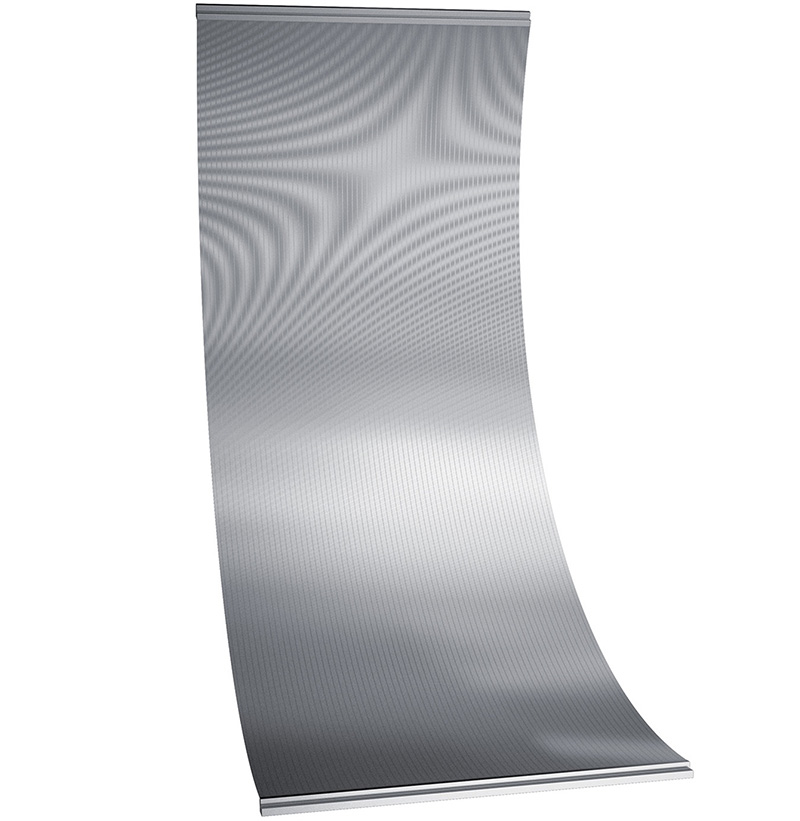
Der Wedge Wire Starch Curved Screen ist ein gekrümmtes Siebgerät, das speziell für die Stärkeindustrie entwickelt wurde. Es verfügt über eine bogenförmige Siebfläche aus präzise geschweißten V-Profil-Edelstahldrähten, die Zentrifugalkraft oder Schwerkraft nutzen, um eine schnelle Entwässerung und Klassifizierung von Stärkeslurry zu erreichen. Seine gekrümmte Struktur verlängert die Schlammretentionszeit und verbessert die Effizienz der Feststoff-Flüssigkeit-Trennung. Es eignet sich für Stärkeextraktion, Raffinierung und Nebenproduktrückgewinnungsprozesse für Stärke wie Kartoffel, Mais und Cassava. Diese Ausrüstung ist durch eine effiziente Siebung, Verschleiß- und Verstopfungsbeständigkeit und einfache Wartung gekennzeichnet und ist eine Schlüsselvorrichtung zur Feststoff-Flüssigkeit-Trennung in der modernen Stärkeverarbeitung.
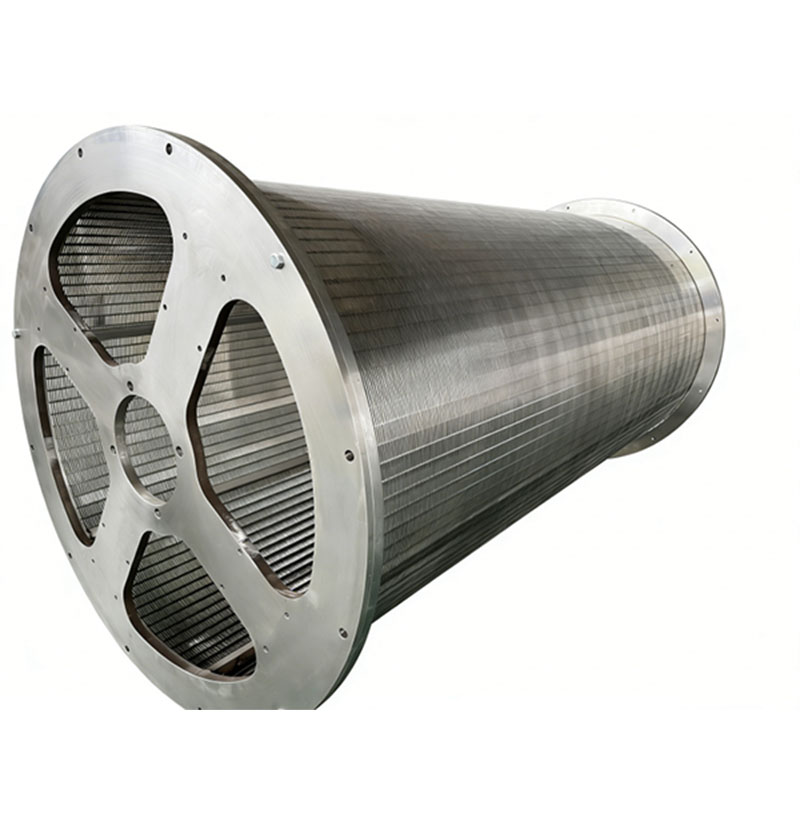
Rotierende Trommel
Der Edelstahl Keil Draht Rotary Drum Screen (auch bekannt als ein Rotary Drum Sieb oder Micro-Screen) ist eine kontinuierlich und automatisch arbeitende Front-End-Feststoff-Flüssigkeit-Trennvorrichtung. Sein Kernbauteil ist eine große zylindrische Trommel, die horizontal oder leicht geneigt installiert ist. Die gesamte Umfangsfläche der Trommel ist mit einem Edelstahlkeildrahtsieb (Johnson-Sieb) bedeckt. Das zu behandelnde Abwasser strömt in ein Ende der Trommel. Unter Schwerkraft passiert das Filtrat durch die Keildrahtschlitze, während feste Suspensionsstoffe (wie Fasern, Haare, Kunststoffstücke und feine Partikel) auf der Innenfläche der Trommel gehalten werden. Während sich die Trommel langsam dreht, wird der zurückgehaltene Trümmer nach oben angehoben, wo er durch Sprühwasser in eine Sammeltage gespült wird, wodurch ein kontinuierlicher Prozess der automatischen Siebung, Filtration und Rückstandsentfernung erreicht wird.
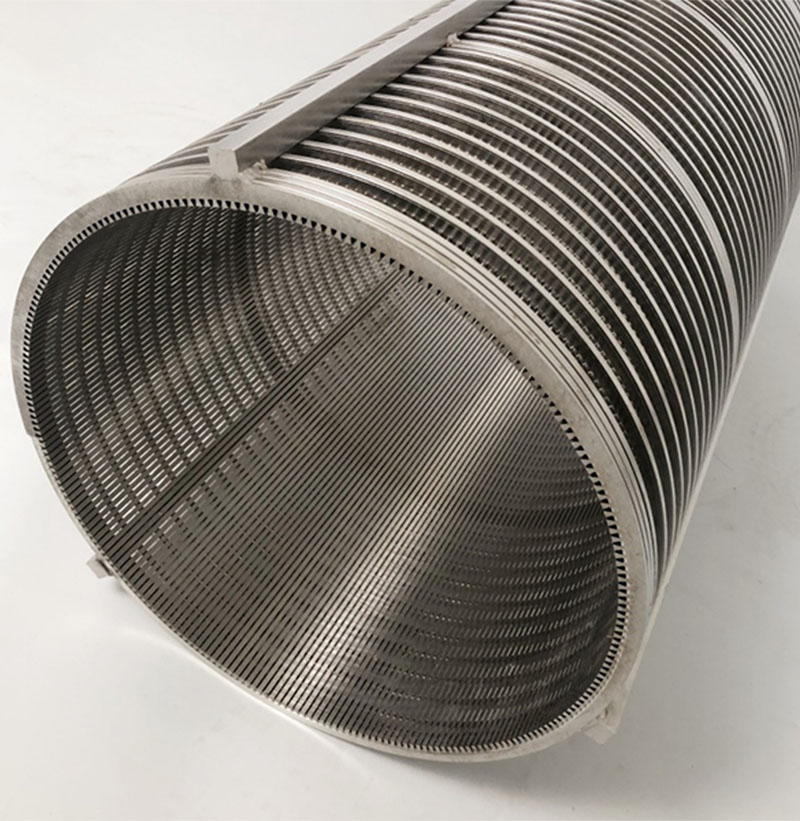
Siebkorb für Screw Press Separator
Der Edelstahl Keil Draht Sieb Korb, allgemein bekannt als der "V-Draht Sieb", "Presse Sieb Korb" oder "Sieb Zylinder", ist ein Kernkomponent der Schraubpresse Fest-Flüssigkeit-Separatoren. Es ist innerhalb der Spiralpresse installiert und umschließt die rotierende Schraubenwelle. Das Arbeitsprinzip lautet wie folgt: Rohslurry mit hohem Feuchtigkeitsgehalt wird durch die Schraubenwelle in den Siebkorb geschoben. Unter der Druck- und Förderwirkung der Spiralflüge wird die Flüssigkeit (Filtrat) durch die präzisen, kontinuierlichen Schlitze des Siebkorbs herausgedrückt, während das feste Material (Düngkuchen) im Inneren gehalten wird und weiterhin komprimiert und entwässert wird, während es sich nach vorne bewegt. Schließlich werden die entwässerten Feststoffe aus dem Auslass abgegeben, wodurch eine Feststoff-Flüssigkeit-Trennung erreicht wird.
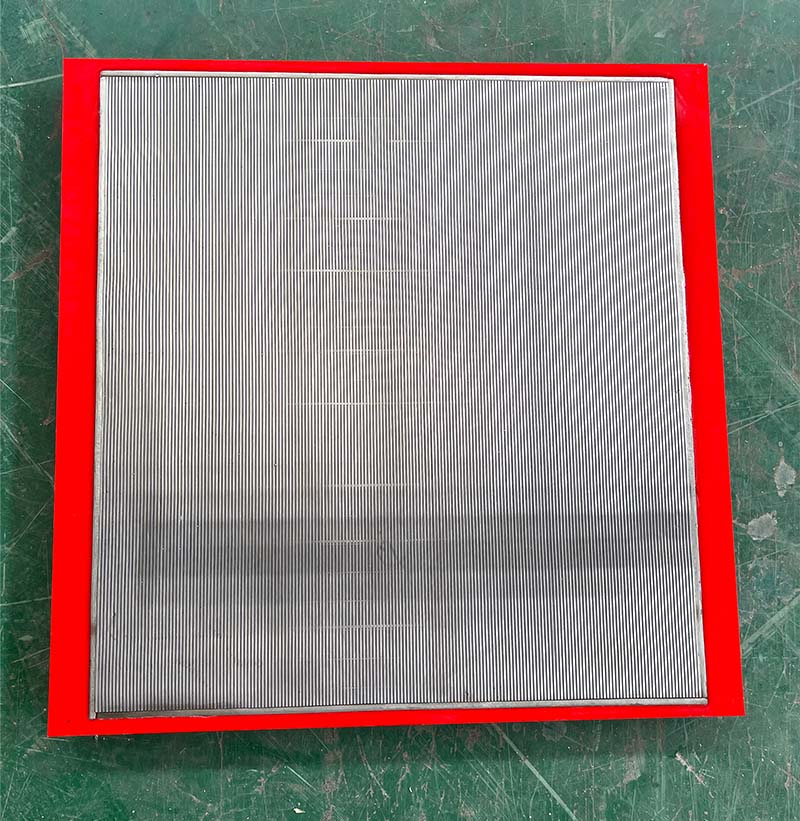
Keil Draht vibrierende Bildschirm
Ein Edelstahlkeildraht-Vibrationsschirm ist eine Fest-Flüssigkeit-Trennvorrichtung mit einer Siebfläche, die durch präzises Schweißen von V-förmigen Edelstahldrähten hergestellt wird, die in ein Hochfrequenzsvibrationssystem integriert ist. Mit einheitlichen Schlitzen, Verschleißbeständigkeit und Korrosionsbeständigkeit ist es für Nasssieb- und Entwässerungsvorgänge geeignet. Der Vibrationsmechanismus ermöglicht eine schnelle Materialverteilung und ein effizientes Sieben, während ein Verstopfen des Siebs effektiv verhindert wird. Weit in Industrien wie Bergbau, Metallurgie, Lebensmittelverarbeitung und Umweltschutz eingesetzt, ist es besonders geeignet für den Umgang mit feinen Partikeln, hochviskosen oder leicht agglomerierenden Materialien und bietet Vorteile wie hohe Siebgenauigkeit, große Verarbeitungskapazität und lange Lebensdauer.
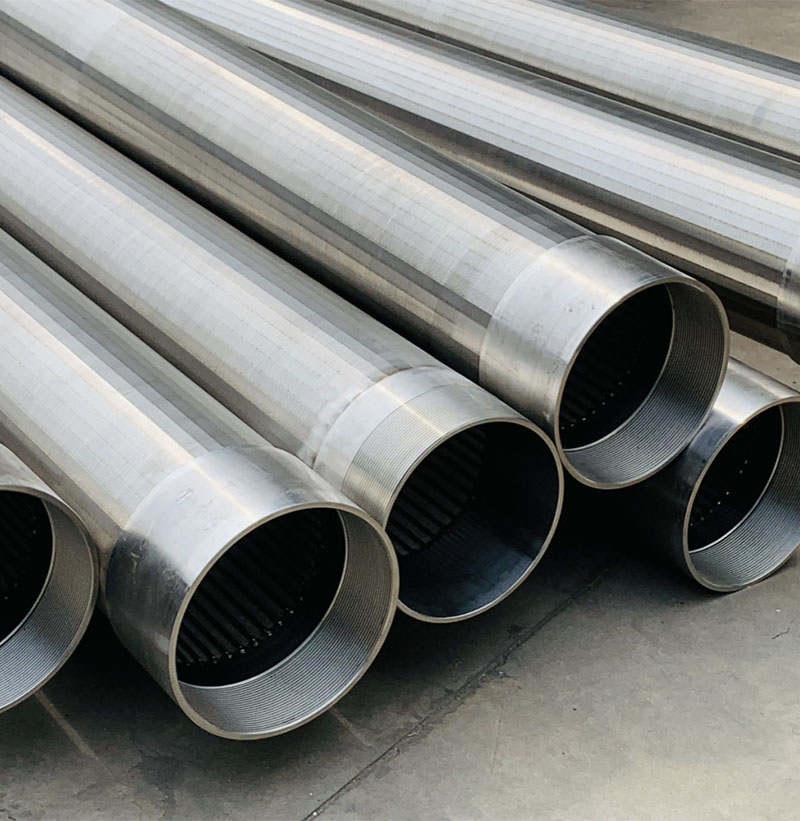
Keil Draht Wasser Brunnen Bildschirm
Johnson Deep Water Well Screens, auch als Continuous Slot Screens oder Wire Wrap Screens bezeichnet, wurden ursprünglich entwickelt, um Herausforderungen bei der Sandkontrolle in feinkörnigen und gleichmäßigen Sandformationen zu lösen. Diese geologischen Bedingungen sind häufig in tiefen Grundwasserwässern zu finden, wo herkömmliche Lochröhren oft unter Verstopfungen, übermäßiger Sandproduktion und reduzierter Brunneneffizienz leiden.
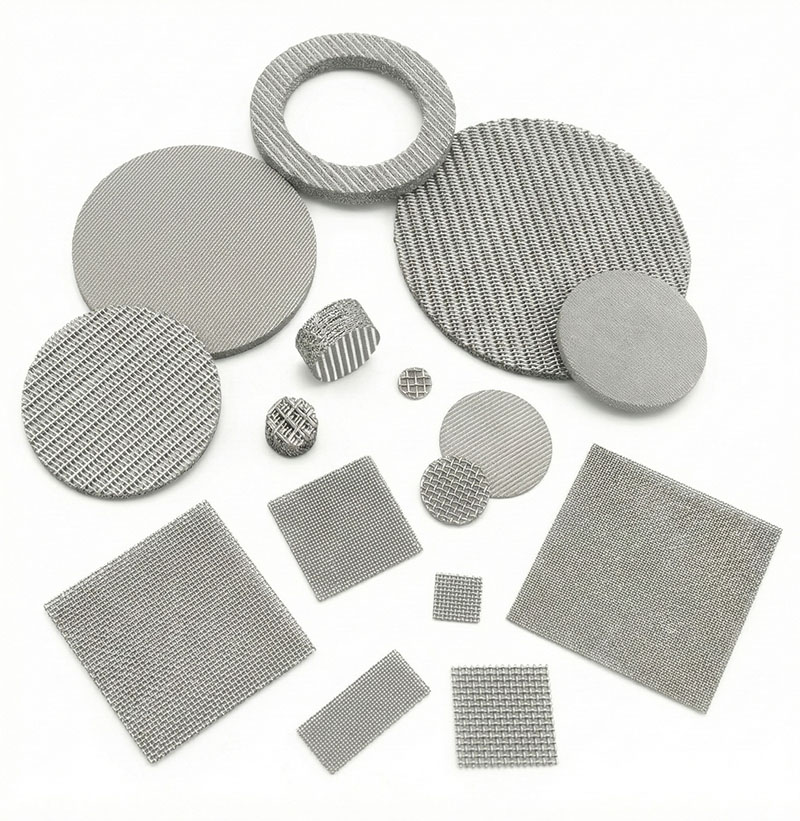
Sinterte Mesh Platte und Scheibe
Sintermaschenplatten und -scheiben sind hochpräzise Filtrationskomponenten, die durch das Verbinden mehrerer Schichten Edelstahldrahtmaschen durch einen spezialisierten Vakuumsinterprozess hergestellt werden. Im Gegensatz zu herkömmlichen Netzen, die sich allein auf mechanisches Weben verlassen, werden diese Platten an jedem Kontaktpunkt geschmolzen und verwandeln einzelne Drähte in ein starres, integriertes poröses Blech.Diese Platten können in verschiedene Formen angepasst werden, am häufigsten kreisförmige Scheiben, um spezifische Industriegeräte anzupassen. Sie bieten eine ideale Balance aus hoher Durchlässigkeit, extremer struktureller Integrität und präzisen Filtrationswerten. Da sie ausschließlich aus Metall (typischerweise 304 oder 316L) hergestellt sind, bieten sie eine "permanente" Filtrationslösung, die hohen Temperaturen und korrosiven Chemikalien standhalten kann, während sie vollständig reinigbar und wiederverwendbar bleiben.