
ABOUT US
Your Expert Manufacturer of Wedge Wire Screens;
Your Reliable Partner and Source of Innovation
GET A FREE QUOTE
-
Home

-
Blog
-
Industry Blog
- How to Specify a Johnson Screen for Chemical Cleaning
How to Specify a Johnson Screen for Chemical Cleaning
-
 author
 - 6,August
Introduction
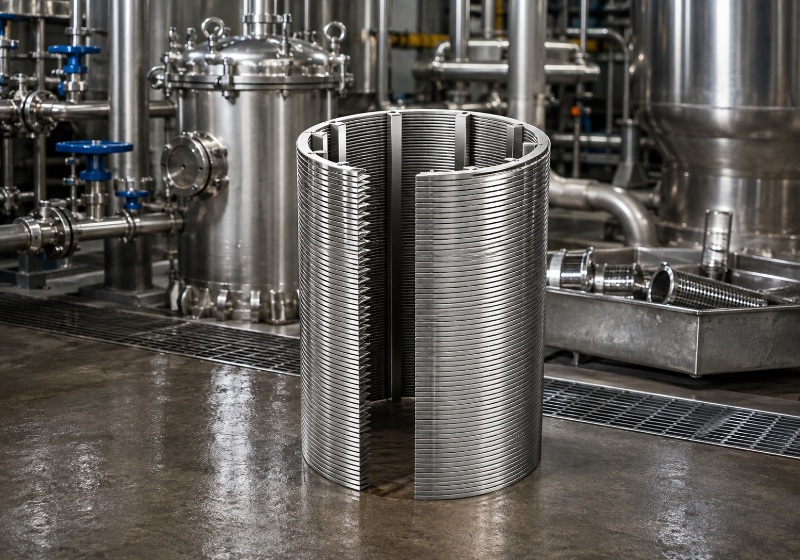
Selecting a Johnson screen for caustic or chemical-cleaning service starts with the fluid, not the alloy name. A reliable specification defines the cleaning chemical, concentration, temperature, pressure, contact time, solids, slot requirement, flow direction, and connection before material or construction is approved. This method reduces avoidable corrosion and cleaning problems while giving suppliers enough information to compare workable designs instead of quoting a generic 316L element.
Why Chemistry Must Lead the Specification
A corrosion-resistant Johnson screen is a matched system, not simply a stainless steel cylinder. Alloy, welds, surface condition, slot geometry, and the cleaning procedure all meet the same liquid. A material that performs in one alkaline wash may behave differently when chlorides, deposits, higher temperature, or reducing acids are present. Procurement should therefore approve the screen against the full process and cleaning envelope.
Start with the actual cleaning solution
An alkaline label is not enough for material selection. The supplier needs the chemical name, concentration range, operating and cleaning temperatures, contact time, pressure, and whether the solution contains chlorides or other contaminants. It also matters whether cleaning is continuous, periodic, static, circulated, or followed by a water rinse. These facts establish the exposure that a corrosion-resistant Johnson screen must tolerate.
Treat every alloy as a conditional option
Material selection should connect the actual exposure to documented compatibility. BTOSLOT can manufacture relevant wedge-wire products in 304, 316L, duplex 2205 or 2507, 904L, and Hastelloy, depending on the product and medium. However, 316L is not a universal answer for chemical service. Chlorides, elevated temperature, crevices, deposits, and reducing acids can change the corrosion risk, so the final grade should be confirmed for the stated conditions.
| Material family | When to evaluate it | Buyer verification |
| 304 or 316L | Preliminary option only after compatibility is confirmed for the stated exposure | Review the full chemistry, concentration, temperature, deposits, and cleaning cycle |
| Duplex 2205 or 2507 | Service needing higher strength or improved chloride resistance | Check fabrication, welding, and grade-specific compatibility |
| 904L or Hastelloy | More aggressive chemical exposure where standard stainless grades require further evaluation | Require written material confirmation and traceable certificates |

Match Slot and Construction to Process Duty
Slot selection should begin with the smallest particle or media that must be retained, not with a standard catalogue opening. A wedge wire screen uses continuous V-shaped openings formed by profile wires and support rods. The narrow entry controls retention while the widening passage behind it helps released particles move away during reverse flow. This geometry supports cleaning, but it cannot replace correct slot selection based on the actual filtration duty.
Define retention, flow, and mechanical boundaries
A complete duty point links solids data to hydraulic and mechanical requirements. Provide the particle-size distribution, solids loading, viscosity, required retention, clean and dirty pressure conditions, flow direction, and target flow. Then define the element diameter, length, allowable envelope, end connection, sealing method, and housing interface. These inputs let the manufacturer choose profile wire, support spacing, reinforcement, and slot orientation for the actual Johnson screen.
Design cleanability into the geometry
Cleanability depends on which surface retains solids and how the cleaning force reaches that surface. Smooth working faces and wedge-shaped passages can reduce particle lodging and support backwashing. Reverse construction or an inside-out design may be useful when the retained cake must be removed from an accessible smooth surface. The chosen wedge wire screen should therefore show filtration direction, support-wire position, and cleaning direction on the approved drawing.
High-Pressure Cleaning Procedures for Wedge Wire Filter Elements
Johnson screen filter element high-pressure cleaning should be specified as a controlled maintenance method, not as an unlimited pressure claim. The cleaning pressure at the element, nozzle distance, spray angle, medium, duration, and direction all affect the load on wires, welds, seals, and retained deposits. The equipment supplier should confirm permissible conditions for the exact element design before the procedure is released.
A practical cleaning plan separates routine regeneration from recovery cleaning. Backwashing can dislodge particles through the widening slots, while water jet, ultrasonic, or chemical cleaning may address different residues. Start with the least aggressive effective method, monitor pressure drop or flow recovery, and inspect the surface and connections after cleaning. Stop when damage, slot distortion, loose welds, or seal deterioration is observed.
*Record the cleaning chemical, concentration, temperature, and contact time.
*State the flow direction, pressure at the element, nozzle setup, and cycle frequency.
*Define inspection points, acceptance limits, and the condition that triggers replacement.

Evaluate an Alkali-Resistant Johnson Screen Supplier
A capable corrosion-resistant Johnson screen supplier should convert the duty data into an auditable proposal. Look for a dimensional drawing, material grade, slot value and tolerance, construction direction, connection details, and inspection scope. For corrosive chemical service, request a Material Test Certificate so the delivered alloy can be traced to the approved specification. Where welding or surface finish affects service, agree on the required records before production.
Supplier qualification should also test whether limitations are stated clearly. A qualified Johnson screen supplier should identify missing chemistry, pressure, or solids data instead of promising universal compatibility. Samples or small trial elements can be useful when deposits, cleaning response, or fit remain uncertain. Quotation comparisons are meaningful only when every bidder prices the same technical boundary and document package.
Request a Usable Technical Proposal
A concise request for quotation should attach the process and cleaning conditions, solids data, required slot, dimensions, connection drawing, quantity, inspection documents, packing needs, and delivery destination. Send that package to an alkali-resistant Johnson screen supplier and ask for written exceptions. BTOSLOT can then review material, construction, slot direction, and cleaning requirements against one defined duty point.
FAQ
Is 316L always suitable for alkaline cleaning?
No. 316L may suit some services, but concentration, temperature, chlorides, deposits, contact time, and other chemicals can change corrosion behavior. Confirm the complete exposure rather than approving an alloy from the word “alkaline” alone.
What data does a Johnson screen supplier need?
Provide chemistry, concentration, temperatures, pressures, solids and particle sizes, viscosity, flow direction, required slot, dimensions, connection, sealing, cleaning method, quantity, and inspection requirements. Missing duty data should be resolved before the design is approved.
Can a wedge wire screen be backwashed?
Yes, many wedge-wire constructions support reverse-flow cleaning because the slot widens behind its narrow entry. The backwash direction and pressure still need confirmation for the selected construction, housing, weld pattern, and seals.
When is Johnson screen filter element high-pressure cleaning appropriate?
Use Johnson screen filter element high-pressure cleaning only when the element manufacturer has confirmed the pressure, nozzle arrangement, direction, medium, and duration for that design. A controlled procedure should include inspection and stop criteria.
Which documents should accompany a corrosion-resistant Johnson screen?
Request the approved drawing, material grade, Material Test Certificate, slot and dimensional inspection results, and any agreed welding or surface-finish records. The document list should match the risks defined in the purchase specification.
Recent Post
Related Products
Best-selling Products
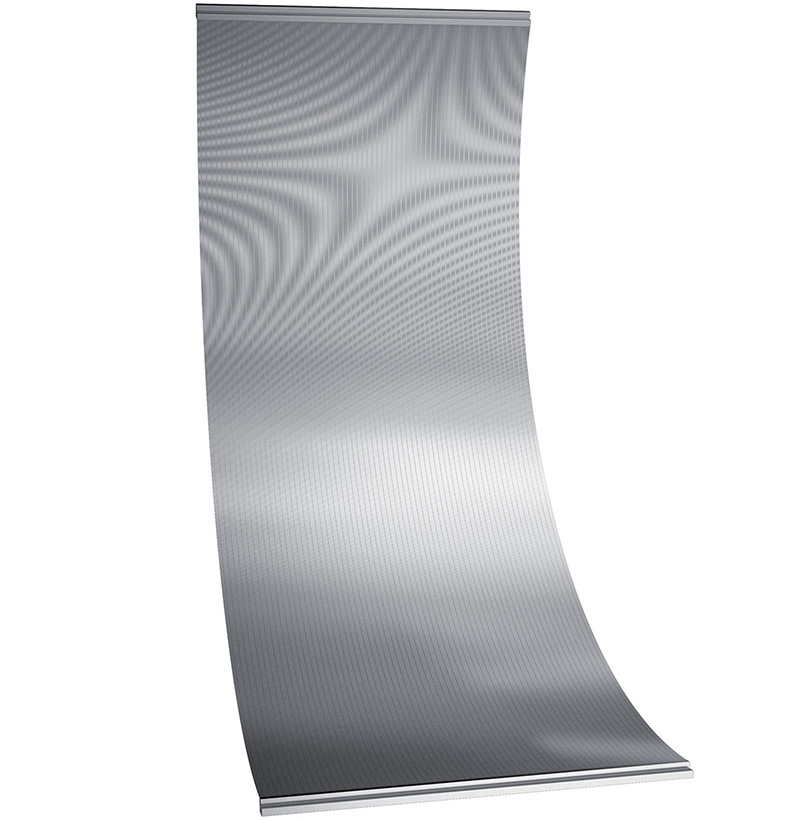
Starch Screen
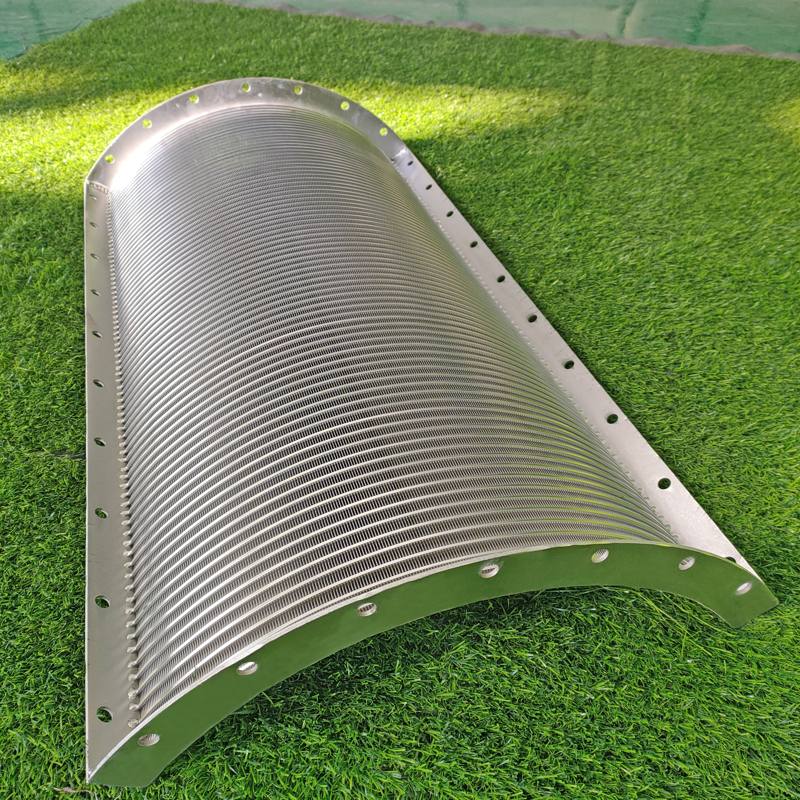
The Wedge Wire Starch Curved Screen is a curved screening device specifically designed for the starch industry. It features an arc-shaped screen surface made of precisely welded V-profile stainless steel wires, utilizing centrifugal force or gravity to achieve rapid dewatering and classification of starch slurry. Its curved structure prolongs slurry retention time, improving solid-liquid separation efficiency. It is suitable for starch extraction, refining, and byproduct recovery processes for starches such as potato, corn, and cassava. Characterized by efficient screening, wear and clogging resistance, and easy maintenance, this equipment is a key solid-liquid separation device in modern starch processing.
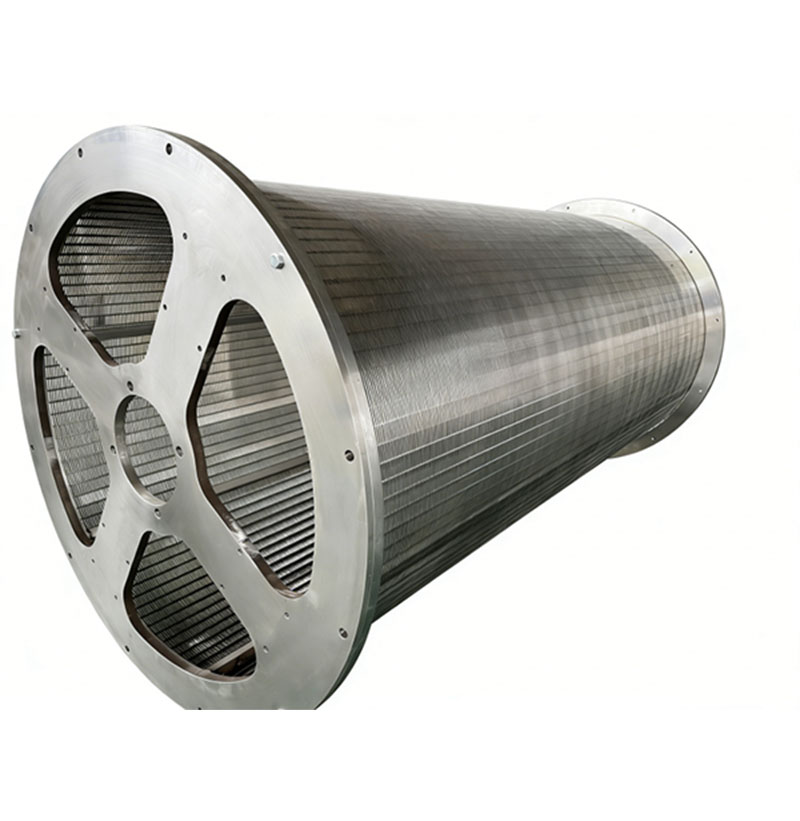
Rotary Drum
The Stainless Steel Wedge Wire Rotary Drum Screen (also known as a Rotary Drum Strainer or Micro-Screen) is a continuously and automatically operating front-end solid-liquid separation device. Its core component is a large cylindrical drum installed horizontally or at a slight incline. The entire circumferential surface of the drum is covered with a stainless steel wedge wire screen (Johnson screen). The wastewater to be treated flows into one end of the drum. Under gravity, the filtrate passes through the wedge wire slots, while solid suspended matter (such as fibers, hair, plastic pieces, and fine particles) is retained on the inner surface of the drum. As the drum rotates slowly, the retained debris is lifted to the top, where it is flushed by spray water into a collection trough, achieving a continuous process of automatic screening, filtration, and residue removal
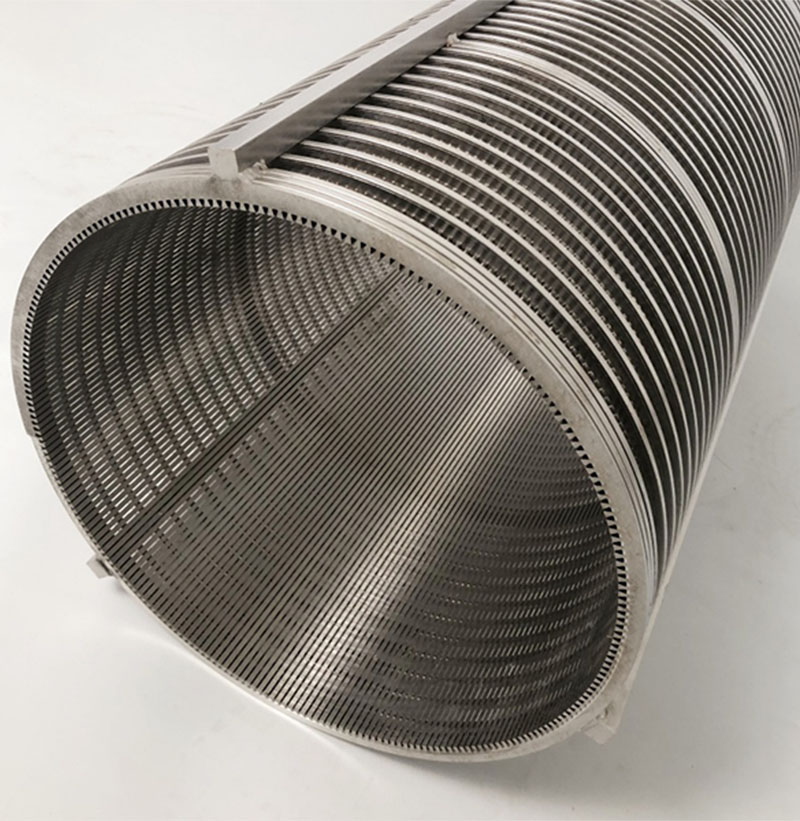
Screen Basket for Screw Press Separator
The stainless steel wedge wire screen basket, commonly known as the "V-wire screen," "press screen basket," or "screen cylinder," is a core component of screw press solid-liquid separators. It is installed inside the spiral press, enclosing the rotating screw shaft. The working principle is as follows: raw slurry with high moisture content is pushed into the screen basket by the screw shaft. Under the squeezing and conveying action of the spiral flights, the liquid (filtrate) is forced out through the precise, continuous slots of the screen basket, while the solid material (manure cake) is retained inside and continues to be compressed and dewatered as it moves forward. Finally, the dewatered solids are discharged from the outlet, achieving solid-liquid separation.
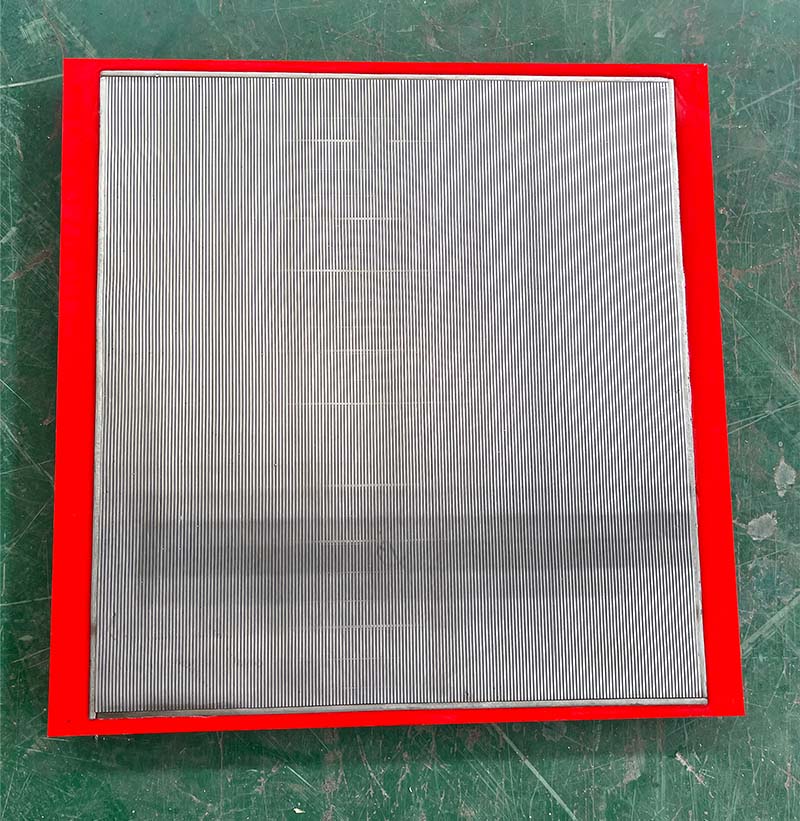
Wedge Wire Vibrating Screen
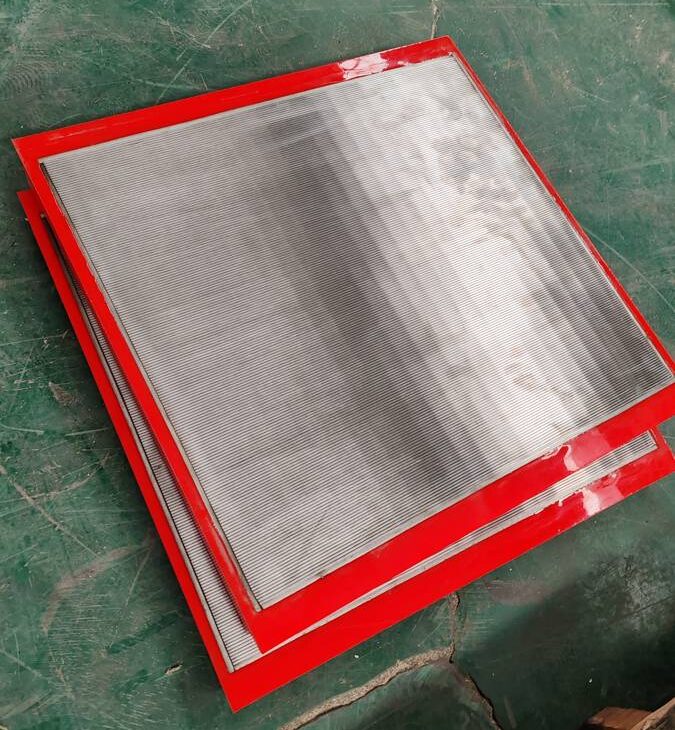
A stainless steel wedge wire vibrating screen is a solid-liquid separation device featuring a screen surface made by precisely welding V-shaped stainless steel wires, integrated with a high-frequency vibration system. With uniform slots, wear resistance, and corrosion resistance, it is suitable for wet screening and dewatering operations. The vibration mechanism enables rapid material dispersion and efficient sieving while effectively preventing screen clogging. Widely used in industries such as mining, metallurgy, food processing, and environmental protection, it is particularly suitable for handling fine particles, high-viscosity, or easily agglomerated materials, offering advantages such as high screening accuracy, large processing capacity, and long service life.
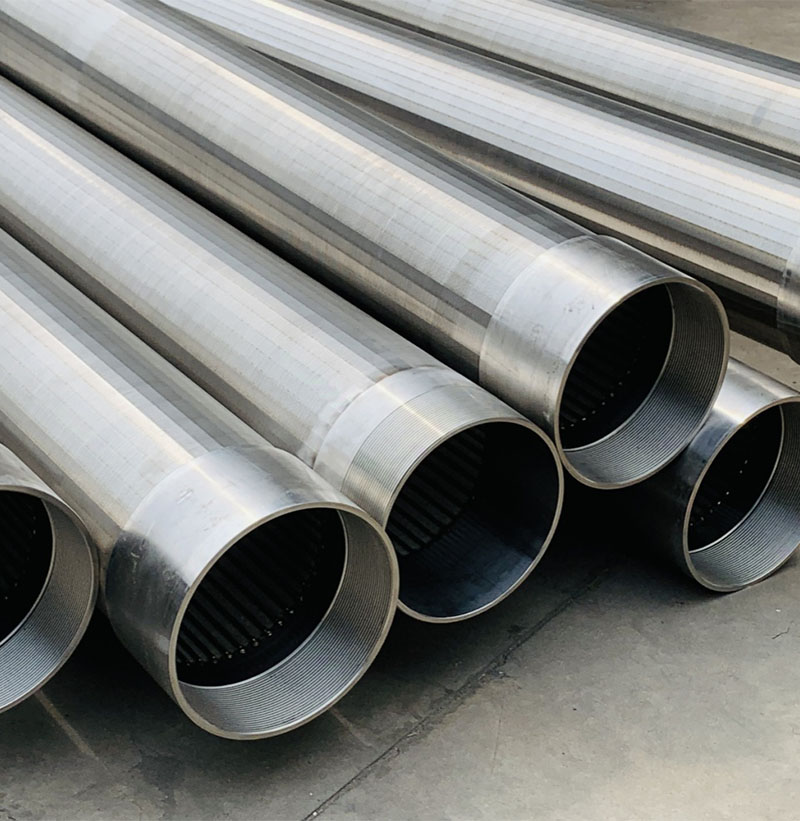
Wedge Wire Water Well Screen
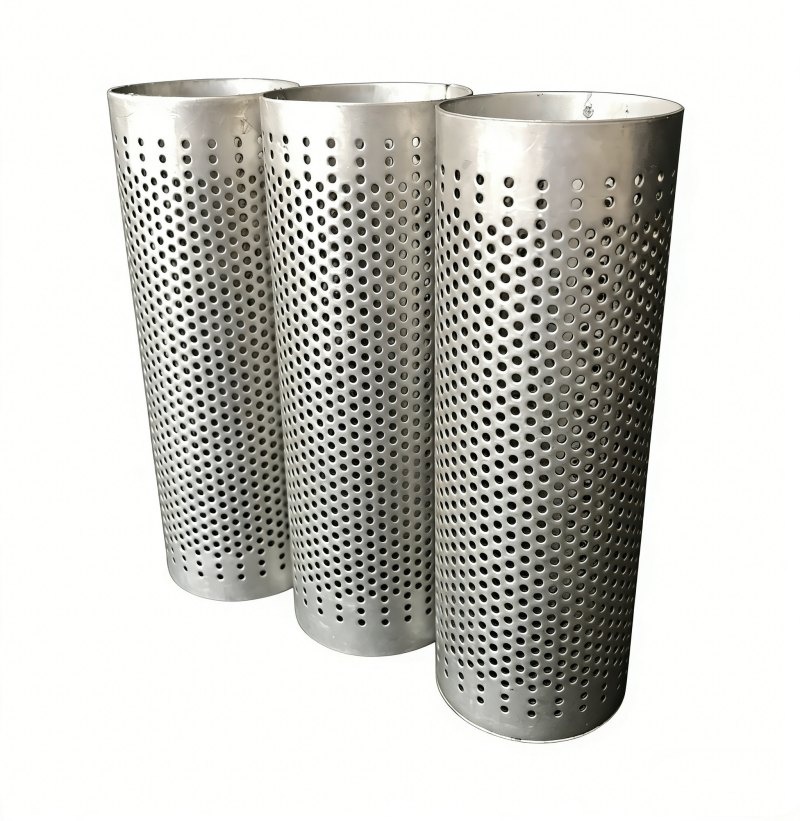
Johnson Deep Water Well Screens, also referred to as continuous slot screens or wire wrap screens, were originally developed to solve sand control challenges in fine-grained and uniform sand formations. These geological conditions are commonly encountered in deep groundwater aquifers, where conventional perforated pipes often suffer from clogging, excessive sand production, and reduced well efficiency.
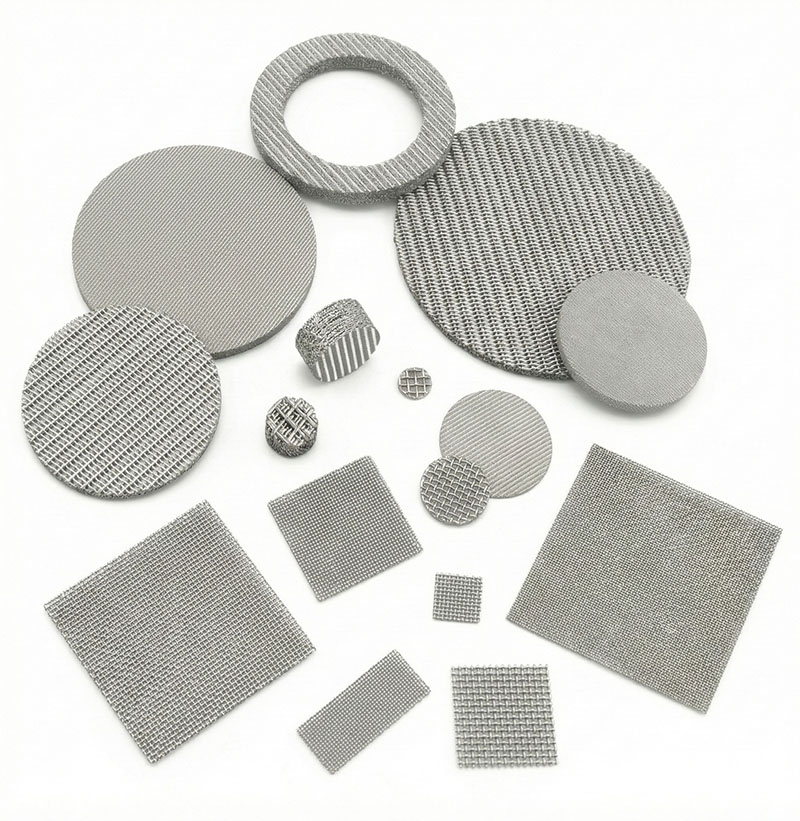
Sintered Mesh Plate and Disc
Sintered Mesh Plates and Discs are high-precision filtration components fabricated by bonding multiple layers of stainless steel wire mesh through a specialized vacuum sintering process. Unlike traditional mesh that relies on mechanical weaving alone, these plates are fused at every contact point, transforming individual wires into a rigid, integrated porous metal sheet.
These plates can be customized into various shapes, most commonly circular discs, to fit specific industrial equipment. They offer an ideal balance of high permeability, extreme structural integrity, and precise filtration ratings. Because they are made entirely of metal (typically 304 or 316L), they provide a "permanent" filtration solution that can withstand high temperatures and corrosive chemicals while remaining fully cleanable and reusable.