
ABOUT US
Your Expert Manufacturer of Wedge Wire Screens;
Your Reliable Partner and Source of Innovation
GET A FREE QUOTE
-
Home

-
Blog
-
Industry Blog
- Wedge Wire Vibrating Screen Application in Slurry

Wedge Wire Vibrating Screen Application in Slurry
-
 author
 - 27,August
 author
Mineral slurry combines fine solids, clay and water, yet the next process still needs a stable cut point. A vibrating wedge wire panel keeps slurry moving, limits blinding and supports repeatable dewatering. This article explains where it fits and which operating details should be confirmed before an upgrade.
Why slurry behaves differently on a vibrating screen
Slurry loading changes as ore hardness, water content and reagent conditions shift. A dry-sizing screen can lose capacity when wet fines form a film. Vibration repeatedly opens the bed, but the surface still determines whether particles release or lodge.
A wedge wire surface uses profile wires and support rods welded into a rigid panel. Continuous V-shaped slots present a narrow face opening and a wider channel behind it. Particles that pass the narrow point have room to move, so the path is less likely to trap them than a perforation or woven-wire intersection.
This is why a Johnson wedge wire screen remains useful in wet classification: it combines a stable frame with slot geometry that supports surface cleaning. Vibration supplies motion; the profile determines how solids and water respond.
Where the screen adds value in mineral processing
The most practical role for screening in mineral processing is fine-material dewatering after grinding, flotation or thickening. Vibration spreads the feed, while continuous slots give water a short route through the panel. The result is a drier underflow or concentrate stream without turning the screen into a pressure filter.
A second role is wet classification. When the circuit separates a target fraction from sub-millimetre to several-millimetre material, slot opening and vibration amplitude define the cut. The setting depends on particle-size distribution, slurry density and clay or fibrous content.
High-frequency dewatering screens are useful before transport, filtration or smelting. Higher open area can increase drainage, but the panel still needs support-rod strength for feed impact and machine acceleration. Specify a load-bearing assembly, not a loose mesh replacement.
A screening line usually gains the most from these four design choices:
*Continuous slots that match the required separation size and the actual particle-size distribution.
*A welded support pattern that resists vibration fatigue and keeps the panel flat under load.
*A material grade selected for abrasion, chloride exposure and any acidic or alkaline process liquor.
*Access for spray washing or backwashing so the operator can restore capacity without removing the panel.
How geometry affects slurry performance
The slot controls retention, throughput and near-size wedging. Choose it from the feed distribution and target product, then check real slurry behaviour. A pilot panel is often more reliable than a theoretical sieve curve when feed contains deformable clay or irregular particles.
Open area affects hydraulic loading. More area can lower resistance and improve water passage, but excessive opening or weak support spacing can reduce life. The useful design balances pressure drop with cut-point stability during vibration and wear.
Material selection follows chemistry and wear. 304 stainless steel suits general mineral slurry, while 316L or duplex grades fit chloride or acid-leach conditions. Abrasive ore may justify a stronger profile or wear-resistant treatment, provided it does not distort the slot.

A compact selection check for the slurry circuit
The following table ties specification to the operating problem. The same opening can behave differently under dense tailings and dilute classification feed.
| Operating concern | Screen response | Confirmation before order |
| Blinding by wet fines | V-shaped continuous slots plus vibration and wash access | Feed PSD, clay content and cleaning method |
| High impact and fatigue | Fully welded panel with adequate support-rod spacing | Acceleration, feed size and panel span |
| Moisture in concentrate | High effective open area and a thin vibrating bed | Target moisture, flow rate and solids density |
| Corrosion in process liquor | 304, 316L or duplex material selection | pH, chlorides, temperature and reagent exposure |
What a buyer should expect from a capable supplier
A reliable slurry screen manufacturer should translate process data into a drawing and a testable acceptance point. Cover slot opening, profile-wire size, support-rod layout, panel dimensions, edge sealing, material certificates and cleaning method. Ask how slot uniformity and weld integrity are verified.
BTOSLOT supports this kind of project with stainless wedge wire screens, mining screens and custom welded assemblies for wet screening and dewatering. Its product range includes the wedge wire vibrating screen format used on high-frequency equipment, while the broader mining screens range can be matched to panels, curved screens or other separation stages.
The supplier conversation should also separate product facts from process guarantees. A screen can be manufactured to a defined slot and material specification, but final throughput, moisture and wear life depend on the complete machine, feed and operating settings. A responsible quotation states what is controlled at manufacture and what must be validated in the plant.

Practical takeaway for a slurry upgrade
A wedge wire vibrating screen works best when the plant treats it as a process surface, not a generic replacement panel. Continuous V-shaped slots reduce lodging, vibration keeps the bed open, and a rigid welded structure preserves alignment under repeated loading. Together, these features support dewatering and wet classification when the opening, material and support layout match the actual slurry.
For a new or replacement panel, prepare the feed particle-size distribution, slurry density, target moisture or cut point, temperature, chemistry, machine acceleration and available cleaning method. Note whether spare mining screens must interchange with the existing frame. These inputs give the design team enough context to specify a panel that can be checked, installed and maintained with clear expectations.
FAQ
Can a vibrating wedge wire panel handle high-solids slurry?
Yes, when the support structure, open area and vibration settings are sized for the solids load. High-solids feed can still blind a screen if the slot is too small or the cleaning path is inadequate, so the feed distribution must be part of the design review.
Is wedge wire better than woven mesh for wet classification?
It can be more stable in wet service because the welded V-shaped slots avoid woven intersections and provide a wider internal channel. The best choice still depends on feed size, abrasion, required cut point and the machine frame.
How should slot size be selected for mineral slurry?
Start with the target retained fraction and the measured particle-size distribution. Then check near-size particles, clay content and the desired water flux. A pilot test or operating data from a comparable circuit is safer than relying on a nominal mesh number.
Recent Post
Related Products
Best-selling Products
Starch Screen
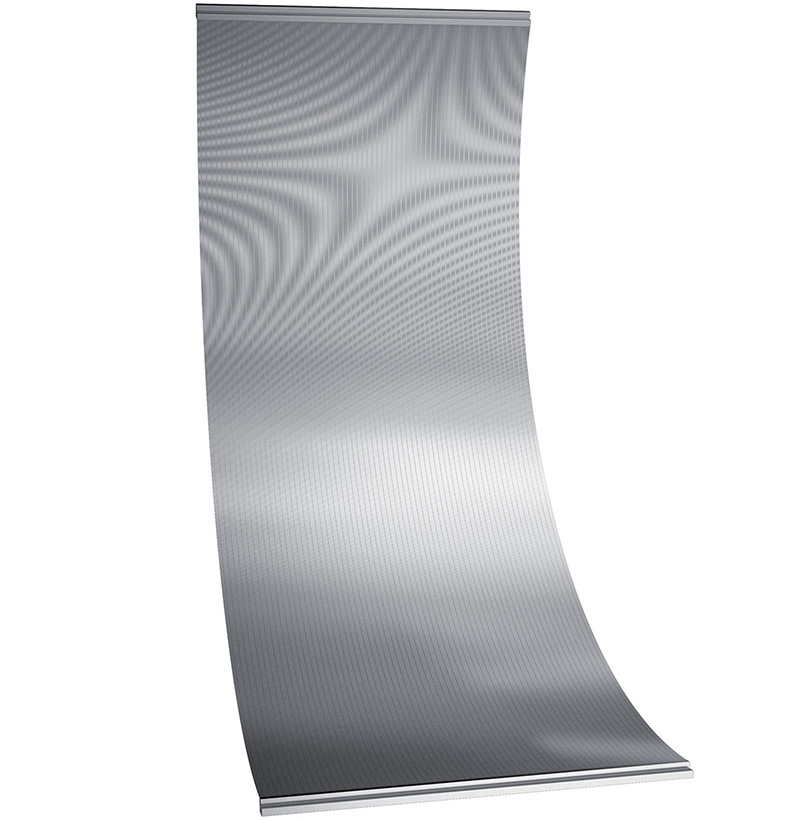
The Wedge Wire Starch Curved Screen is a curved screening device specifically designed for the starch industry. It features an arc-shaped screen surface made of precisely welded V-profile stainless steel wires, utilizing centrifugal force or gravity to achieve rapid dewatering and classification of starch slurry. Its curved structure prolongs slurry retention time, improving solid-liquid separation efficiency. It is suitable for starch extraction, refining, and byproduct recovery processes for starches such as potato, corn, and cassava. Characterized by efficient screening, wear and clogging resistance, and easy maintenance, this equipment is a key solid-liquid separation device in modern starch processing.
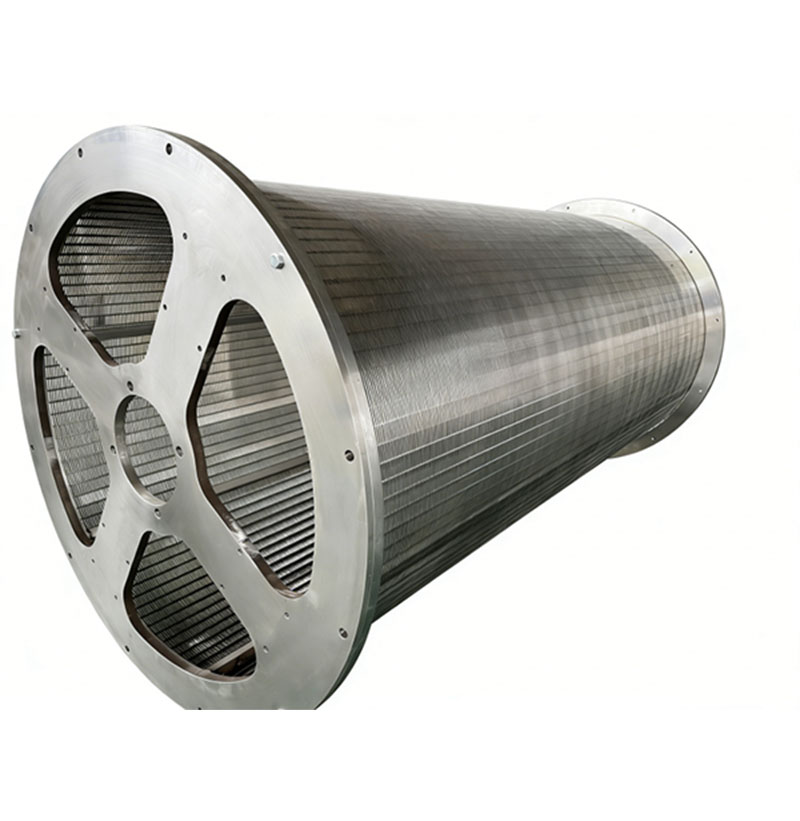
Rotary Drum
The Stainless Steel Wedge Wire Rotary Drum Screen (also known as a Rotary Drum Strainer or Micro-Screen) is a continuously and automatically operating front-end solid-liquid separation device. Its core component is a large cylindrical drum installed horizontally or at a slight incline. The entire circumferential surface of the drum is covered with a stainless steel wedge wire screen (Johnson screen). The wastewater to be treated flows into one end of the drum. Under gravity, the filtrate passes through the wedge wire slots, while solid suspended matter (such as fibers, hair, plastic pieces, and fine particles) is retained on the inner surface of the drum. As the drum rotates slowly, the retained debris is lifted to the top, where it is flushed by spray water into a collection trough, achieving a continuous process of automatic screening, filtration, and residue removal
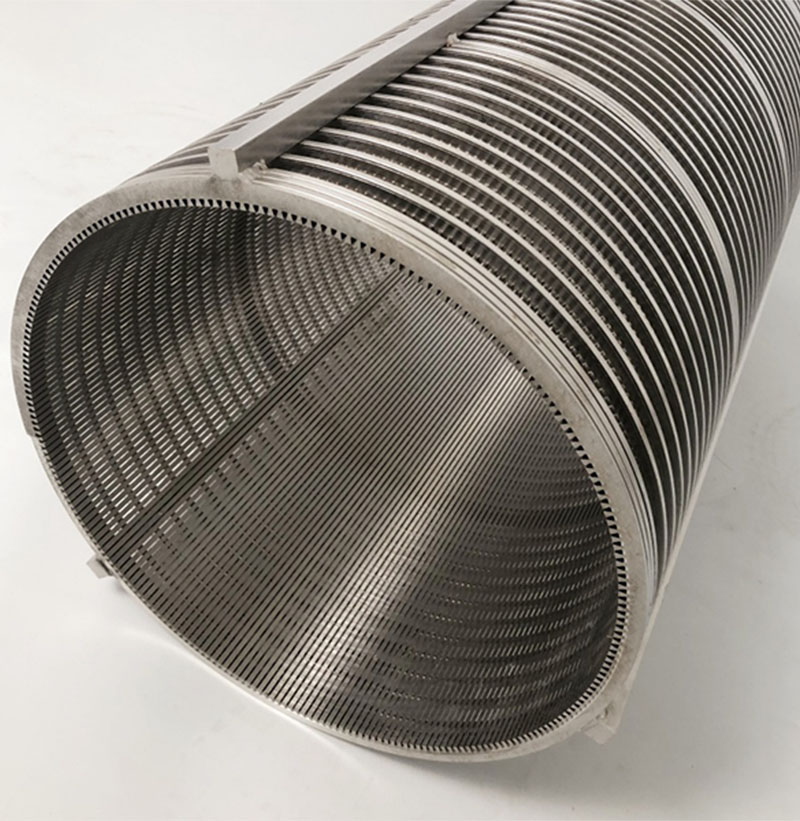
Screen Basket for Screw Press Separator
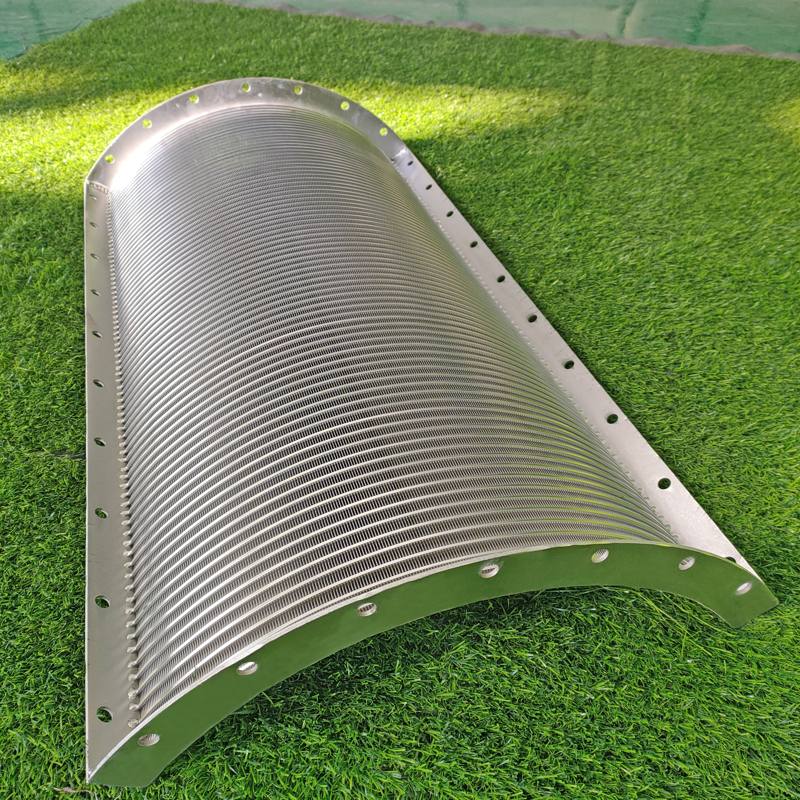
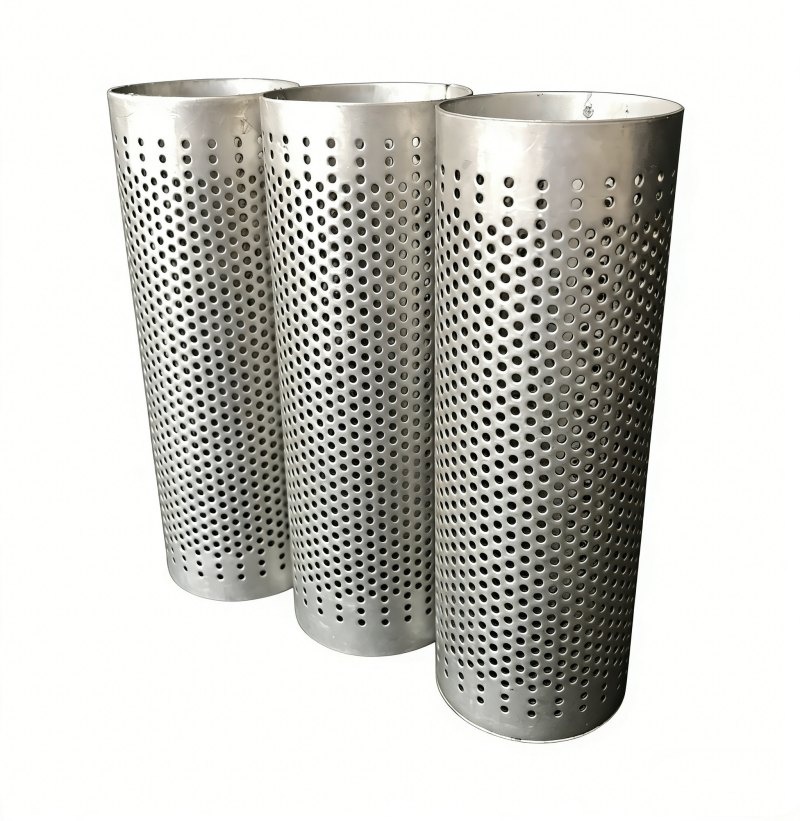
The stainless steel wedge wire screen basket, commonly known as the "V-wire screen," "press screen basket," or "screen cylinder," is a core component of screw press solid-liquid separators. It is installed inside the spiral press, enclosing the rotating screw shaft. The working principle is as follows: raw slurry with high moisture content is pushed into the screen basket by the screw shaft. Under the squeezing and conveying action of the spiral flights, the liquid (filtrate) is forced out through the precise, continuous slots of the screen basket, while the solid material (manure cake) is retained inside and continues to be compressed and dewatered as it moves forward. Finally, the dewatered solids are discharged from the outlet, achieving solid-liquid separation.
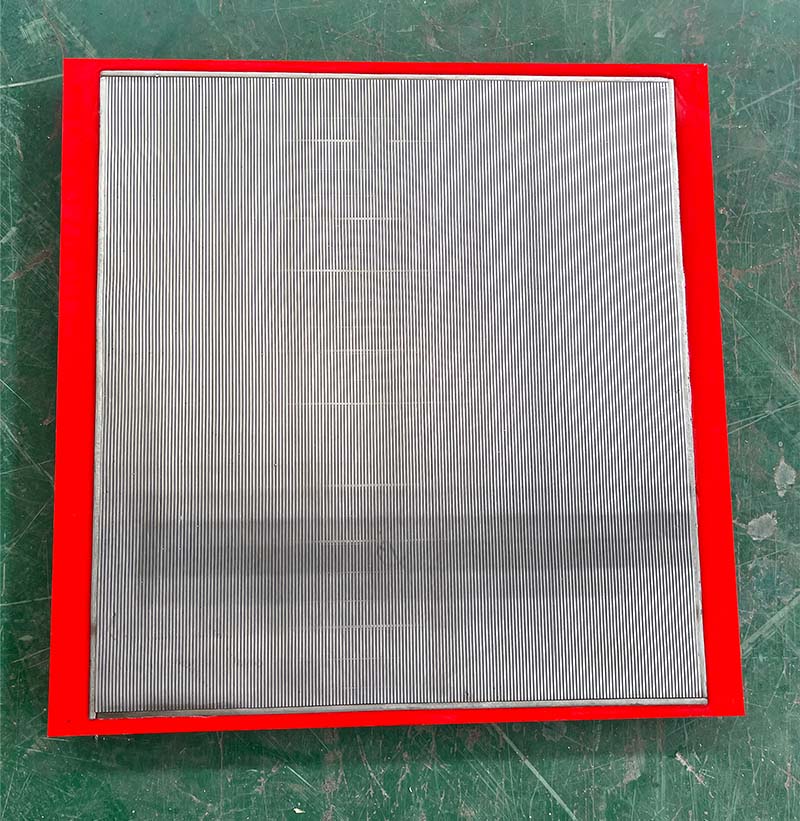
Wedge Wire Vibrating Screen
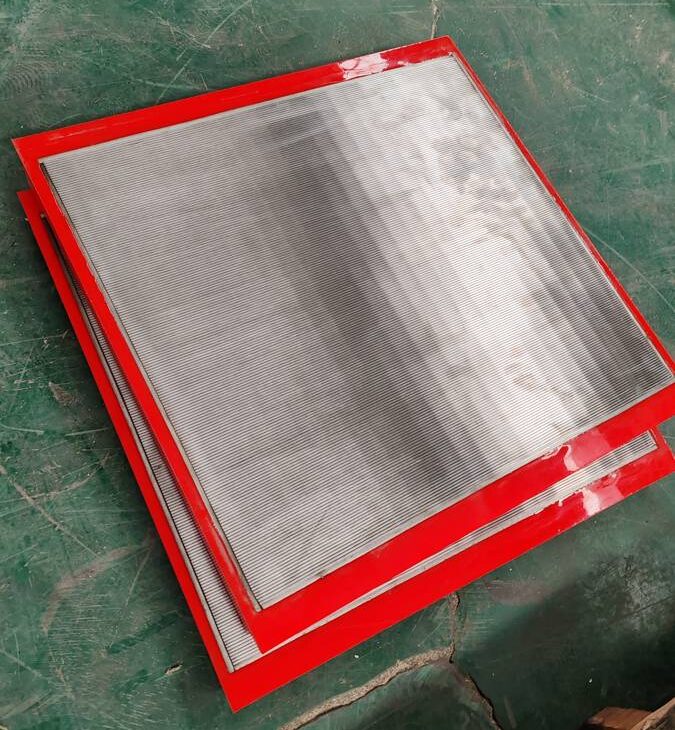
A stainless steel wedge wire vibrating screen is a solid-liquid separation device featuring a screen surface made by precisely welding V-shaped stainless steel wires, integrated with a high-frequency vibration system. With uniform slots, wear resistance, and corrosion resistance, it is suitable for wet screening and dewatering operations. The vibration mechanism enables rapid material dispersion and efficient sieving while effectively preventing screen clogging. Widely used in industries such as mining, metallurgy, food processing, and environmental protection, it is particularly suitable for handling fine particles, high-viscosity, or easily agglomerated materials, offering advantages such as high screening accuracy, large processing capacity, and long service life.
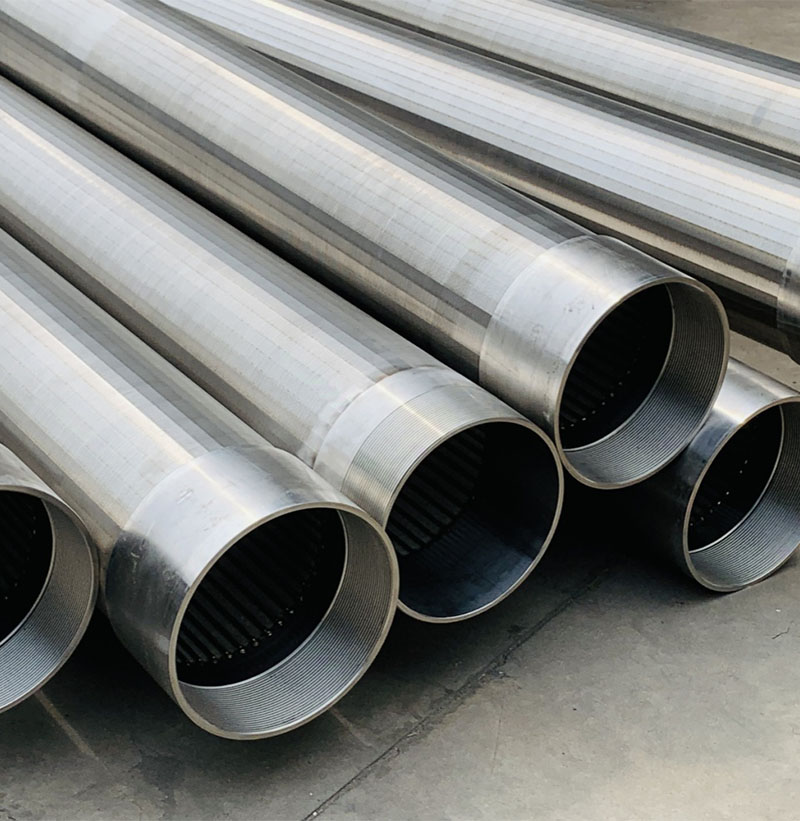
Wedge Wire Water Well Screen
Johnson Deep Water Well Screens, also referred to as continuous slot screens or wire wrap screens, were originally developed to solve sand control challenges in fine-grained and uniform sand formations. These geological conditions are commonly encountered in deep groundwater aquifers, where conventional perforated pipes often suffer from clogging, excessive sand production, and reduced well efficiency.
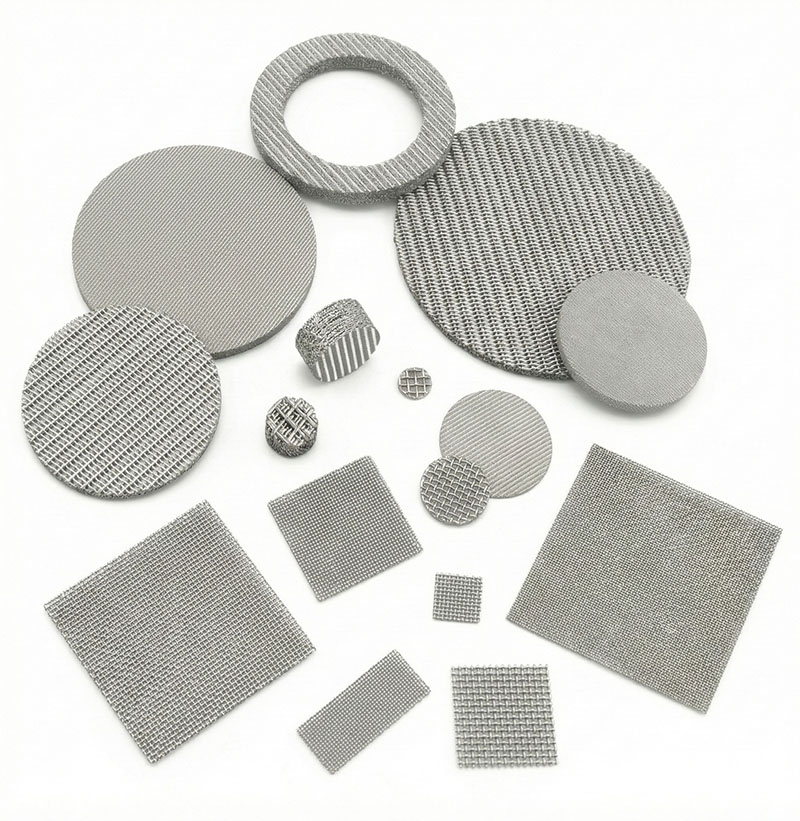
Sintered Mesh Plate and Disc
Sintered Mesh Plates and Discs are high-precision filtration components fabricated by bonding multiple layers of stainless steel wire mesh through a specialized vacuum sintering process. Unlike traditional mesh that relies on mechanical weaving alone, these plates are fused at every contact point, transforming individual wires into a rigid, integrated porous metal sheet.
These plates can be customized into various shapes, most commonly circular discs, to fit specific industrial equipment. They offer an ideal balance of high permeability, extreme structural integrity, and precise filtration ratings. Because they are made entirely of metal (typically 304 or 316L), they provide a "permanent" filtration solution that can withstand high temperatures and corrosive chemicals while remaining fully cleanable and reusable.