
ABOUT US
Your Expert Manufacturer of Wedge Wire Screens;
Your Reliable Partner and Source of Innovation
GET A FREE QUOTE
-
Home

-
Blog
-
Industry Blog
- Why Use Sieve Bend Screens for Mineral Slurry Pre-Dewatering?
Why Use Sieve Bend Screens for Mineral Slurry Pre-Dewatering?
-
 author
 - 3,September

A dewatering circuit can lose stability before its main equipment fails. When mineral slurry carries more free water than the next stage can handle, the result is often a thin, uneven feed and a harder job downstream. A sieve bend gives that water an earlier path out, helping the circuit receive a more manageable stream.
The downstream problem begins with excess free water
Pre-dewatering matters because downstream equipment works best when the feed has a reasonably consistent solids loading. Excess free water occupies volume without contributing recoverable solids, so it can spread material across a larger area, reduce residence time, and make moisture control less predictable. The issue is not simply that the slurry is wet; it is that the water arrives in the wrong part of the circuit.
A sieve bend is useful when the process needs an early gravity-driven split rather than a final dry product. In mineral slurry dewatering, its role is to remove water and fine material before the stream reaches equipment designed for a more concentrated feed. The practical question is where a static screen can relieve the next stage without pretending to replace it.
How the curved screen removes the first water
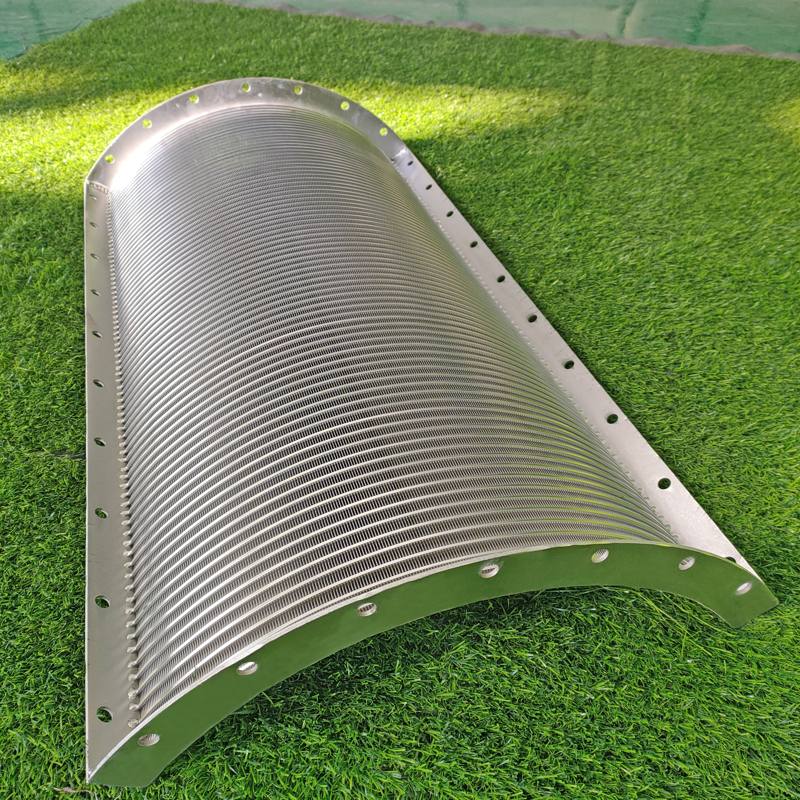
A sieve bend screen receives slurry tangentially across a concave surface. As the stream follows the curve, liquid and suitably small particles pass through continuous slots, while the coarser fraction continues to the discharge edge. The separation is driven by feed momentum, the screen geometry, and gravity, so the screen needs no powered vibration of its own.
The important effect is progressive drainage, not a single all-or-nothing cut. Each section of the curved face has another opportunity to peel away a thin liquid-rich layer. The remaining stream becomes less fluid as it travels, which is why a well-fed static arc wedge wire screen can reduce hydraulic load before a dewatering screen, cyclone, or other concentration step.

Why wedge-wire geometry suits a flowing slurry
The screen face must let liquid escape without turning every near-size particle into a blockage risk. A wedge wire screen uses V-profile wires with continuous openings rather than isolated punched holes. The widening space below the narrow slot helps particles that enter the opening avoid becoming tightly trapped, while the welded support structure keeps the slot pattern stable under normal service.
That geometry does not make blinding impossible. Sticky fines, clay, poor feed distribution, or a slot selected too close to the dominant particle size can still reduce drainage. Its value is that the screen surface is built around a flowing, self-releasing path, giving operators a more forgiving starting point than a surface full of discrete holes.
Feed conditions decide whether pre-dewatering pays off
Water split and solids loading
Feed consistency determines how much useful work the arc screen can do. A slurry with abundant free water and a controllable flow profile can shed liquid readily, whereas a very dense or highly viscous stream may ride the surface with less drainage. Mineral slurry dewatering therefore starts with actual solids concentration and flow behavior, not an assumed performance number.
Slot selection and the real cut point
Slot width is a control point, but it is not the same as the plant’s final separation size. Particle shape, near-size material, feed velocity, screen radius, and the amount of fine solids all affect what travels through the slots. For that reason, a sieve bend screen capacity discussion must include the slurry itself as well as the width and arc of the screen.
-Use representative particle-size data, including the near-size fraction rather than only a top-size figure.
-Check whether the feed box can distribute slurry evenly across the screen width.
-Set the pre-dewatering target: lower hydraulic load, more solids concentration, or a specific water split.
What the next dewatering stage receives
The gain from a sieve bend is easiest to judge at the handoff. A successful pre-dewatering step delivers less free water while preserving a feed character that the downstream machine can handle. It should not be assessed as a stand-alone screen, because the useful result is a calmer and more appropriate feed to the equipment that follows.
| Circuit condition | What the sieve bend changes | What to confirm downstream |
| High free-water load | Removes part of the liquid before the main dewatering duty | Feed depth and hydraulic capacity |
| Uneven slurry distribution | Exposes a feed-box problem rather than hiding it | Whether the screen width is used evenly |
| Large near-size fraction | Makes actual passage behavior more sensitive than slot size alone | Filtrate solids and recovery target |
| Abrasive service | Places wear attention on the curved face and slot stability | Inspection interval and change in process cut |
A static screen has a specific place in the circuit
A sieve bend is most useful when it is assigned a clear upstream task: reduce water early, make a preliminary classification, or prepare a feed for a more intensive dewatering machine. It is less useful when expected to deliver the final moisture result by itself. Keeping that division clear prevents a sound screening choice from being judged against the wrong duty.
Once the plant has defined its feed rate, solids behavior, desired split, and physical space, BTOSLOT, a slurry screen manufacturer, can relate those operating details to a curved wedge-wire configuration. That conversation is most productive when it begins with the process objective instead of a slot size alone.

The practical takeaway
Sieve bends earn their place ahead of dewatering equipment by making the first water split simple and purposeful. Their curved, static wedge-wire surface can reduce hydraulic load, while the final moisture and recovery target remain the responsibility of the full circuit. Treat the screen as a pre-dewatering stage, verify it against real slurry behavior, and it becomes a useful bridge between a wet feed and a more controllable downstream operation.
FAQ
Does a sieve bend replace a dewatering screen?
No. A sieve bend usually performs an early gravity-driven water split or classification step. It can make the feed easier for a dewatering screen to process, but the downstream machine remains responsible for the later-stage moisture target.
What mineral slurries are good candidates for pre-dewatering?
Slurries carrying appreciable free water and requiring a more concentrated feed for the next operation are common candidates. The practical fit depends on particle-size distribution, solids concentration, viscosity, and the value of solids that may report to the filtrate.
Is the slot opening the same as the separation size?
No. The observed cut is affected by particle shape, feed velocity, near-size material, and the curved screening path. Slot width is an essential design input, but plant testing or representative process data is needed to predict separation behavior.
Recent Post
Related Products
Best-selling Products
Starch Screen
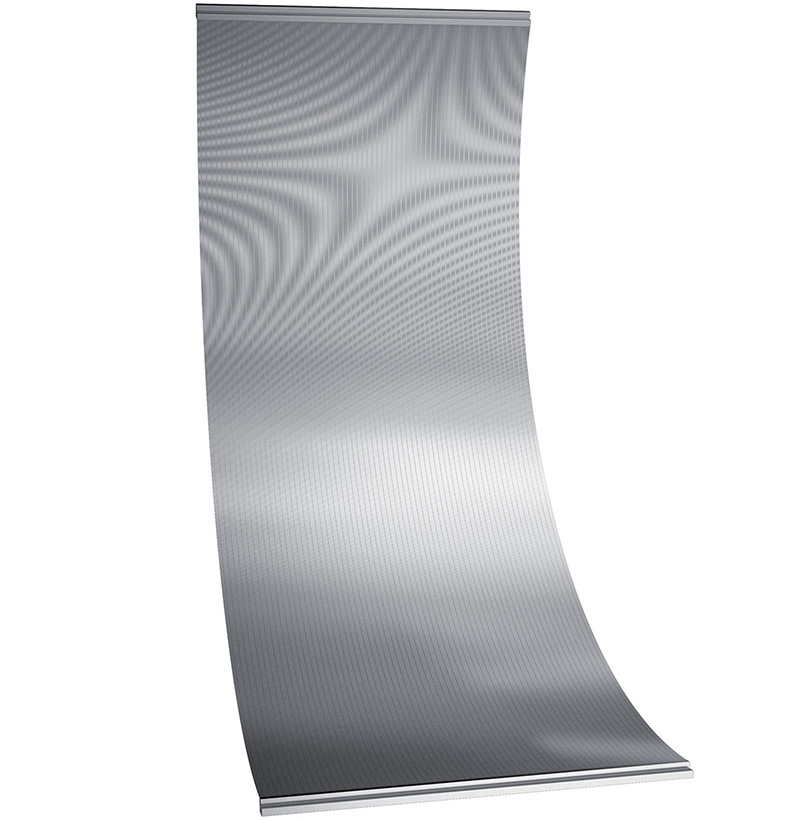
The Wedge Wire Starch Curved Screen is a curved screening device specifically designed for the starch industry. It features an arc-shaped screen surface made of precisely welded V-profile stainless steel wires, utilizing centrifugal force or gravity to achieve rapid dewatering and classification of starch slurry. Its curved structure prolongs slurry retention time, improving solid-liquid separation efficiency. It is suitable for starch extraction, refining, and byproduct recovery processes for starches such as potato, corn, and cassava. Characterized by efficient screening, wear and clogging resistance, and easy maintenance, this equipment is a key solid-liquid separation device in modern starch processing.
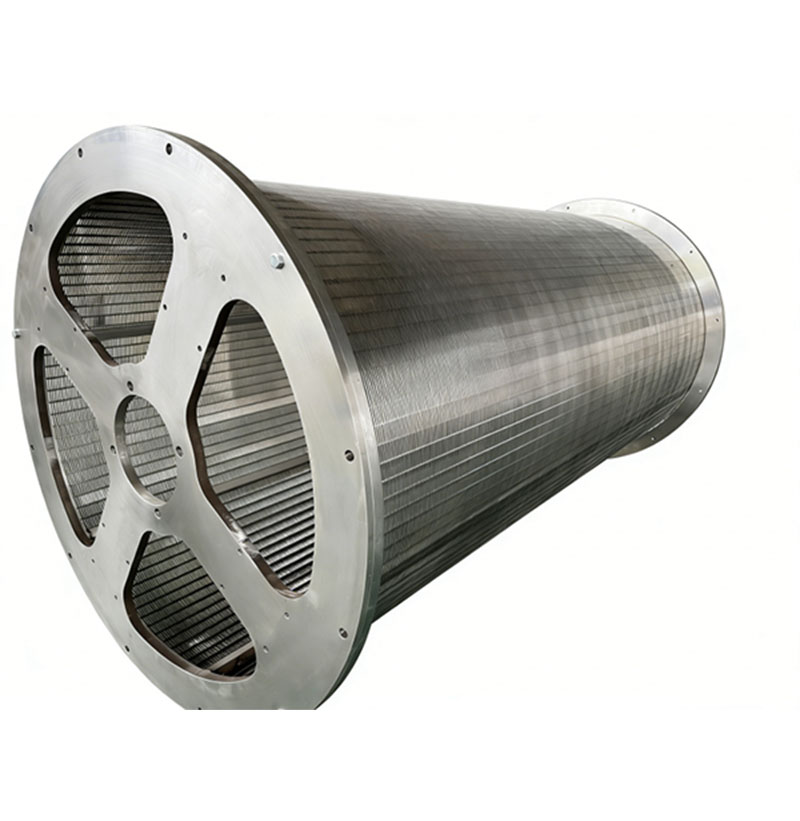
Rotary Drum
The Stainless Steel Wedge Wire Rotary Drum Screen (also known as a Rotary Drum Strainer or Micro-Screen) is a continuously and automatically operating front-end solid-liquid separation device. Its core component is a large cylindrical drum installed horizontally or at a slight incline. The entire circumferential surface of the drum is covered with a stainless steel wedge wire screen (Johnson screen). The wastewater to be treated flows into one end of the drum. Under gravity, the filtrate passes through the wedge wire slots, while solid suspended matter (such as fibers, hair, plastic pieces, and fine particles) is retained on the inner surface of the drum. As the drum rotates slowly, the retained debris is lifted to the top, where it is flushed by spray water into a collection trough, achieving a continuous process of automatic screening, filtration, and residue removal
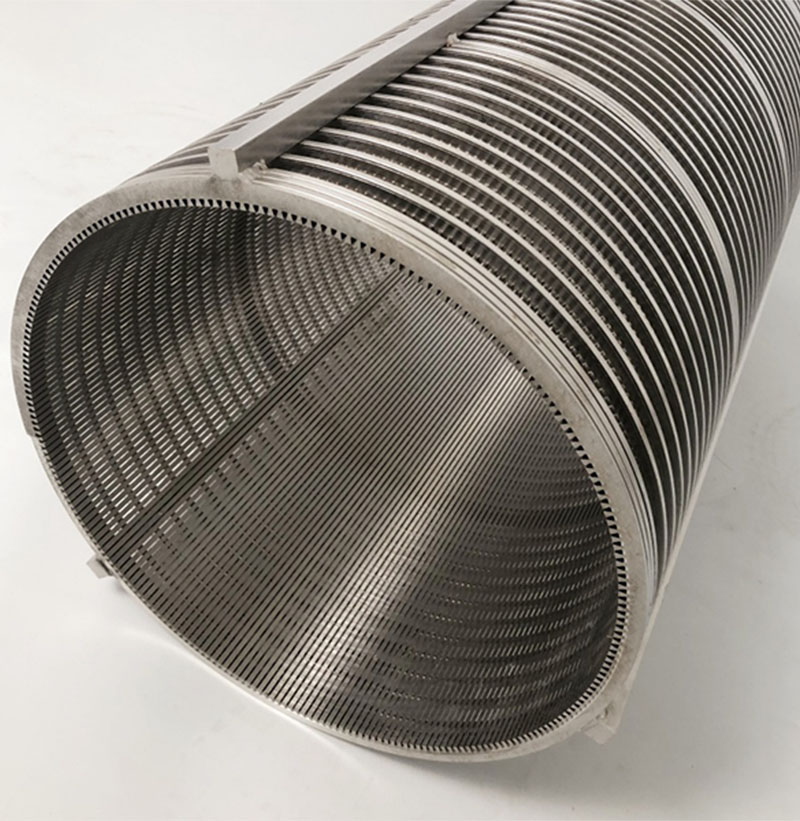
Screen Basket for Screw Press Separator
The stainless steel wedge wire screen basket, commonly known as the "V-wire screen," "press screen basket," or "screen cylinder," is a core component of screw press solid-liquid separators. It is installed inside the spiral press, enclosing the rotating screw shaft. The working principle is as follows: raw slurry with high moisture content is pushed into the screen basket by the screw shaft. Under the squeezing and conveying action of the spiral flights, the liquid (filtrate) is forced out through the precise, continuous slots of the screen basket, while the solid material (manure cake) is retained inside and continues to be compressed and dewatered as it moves forward. Finally, the dewatered solids are discharged from the outlet, achieving solid-liquid separation.
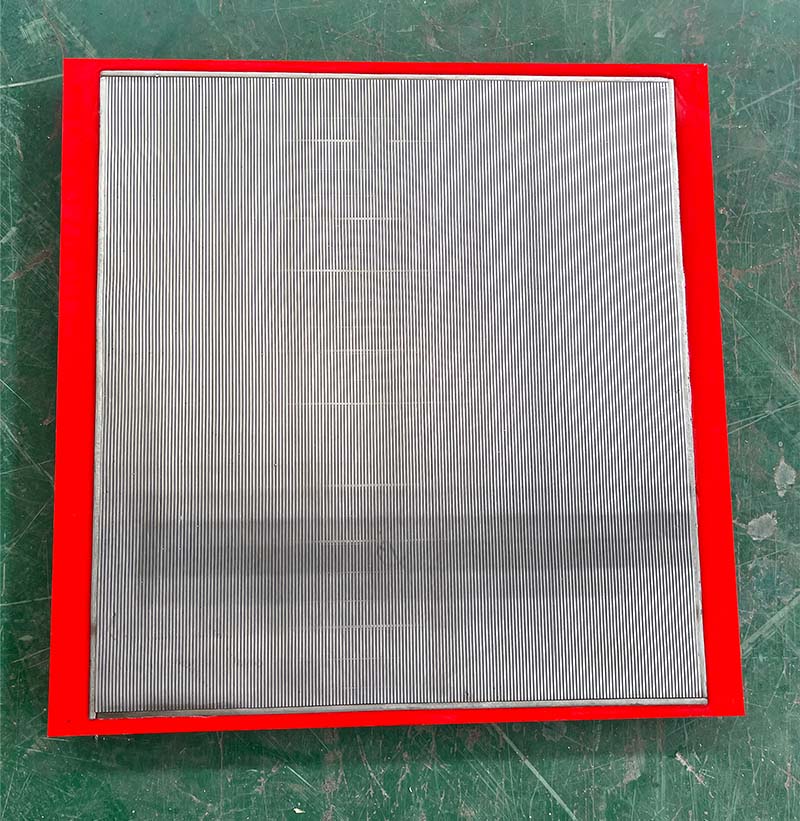
Wedge Wire Vibrating Screen
A stainless steel wedge wire vibrating screen is a solid-liquid separation device featuring a screen surface made by precisely welding V-shaped stainless steel wires, integrated with a high-frequency vibration system. With uniform slots, wear resistance, and corrosion resistance, it is suitable for wet screening and dewatering operations. The vibration mechanism enables rapid material dispersion and efficient sieving while effectively preventing screen clogging. Widely used in industries such as mining, metallurgy, food processing, and environmental protection, it is particularly suitable for handling fine particles, high-viscosity, or easily agglomerated materials, offering advantages such as high screening accuracy, large processing capacity, and long service life.
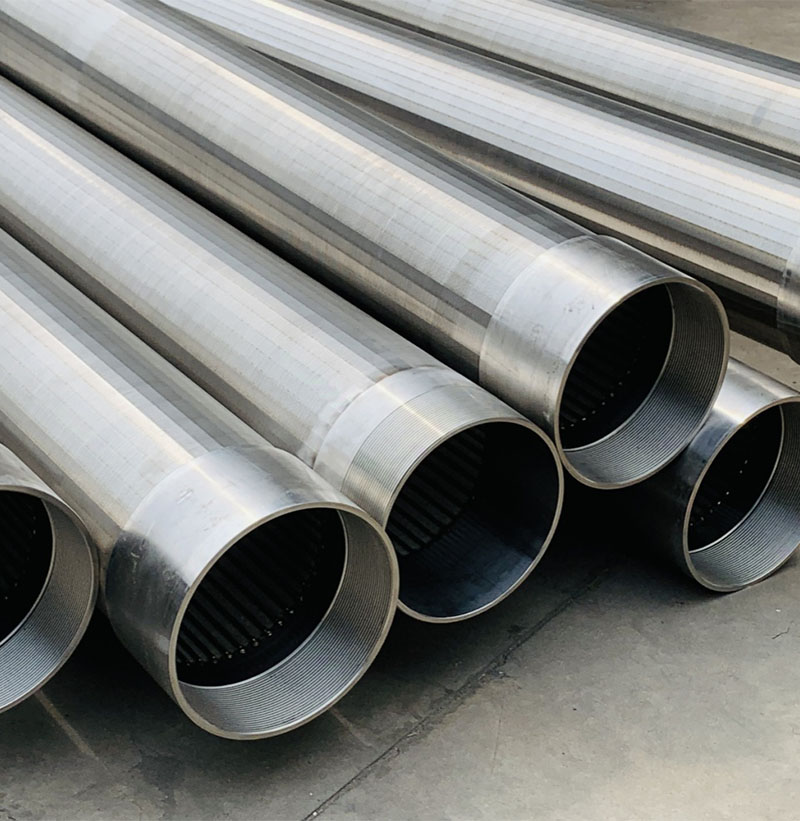
Wedge Wire Water Well Screen
Johnson Deep Water Well Screens, also referred to as continuous slot screens or wire wrap screens, were originally developed to solve sand control challenges in fine-grained and uniform sand formations. These geological conditions are commonly encountered in deep groundwater aquifers, where conventional perforated pipes often suffer from clogging, excessive sand production, and reduced well efficiency.
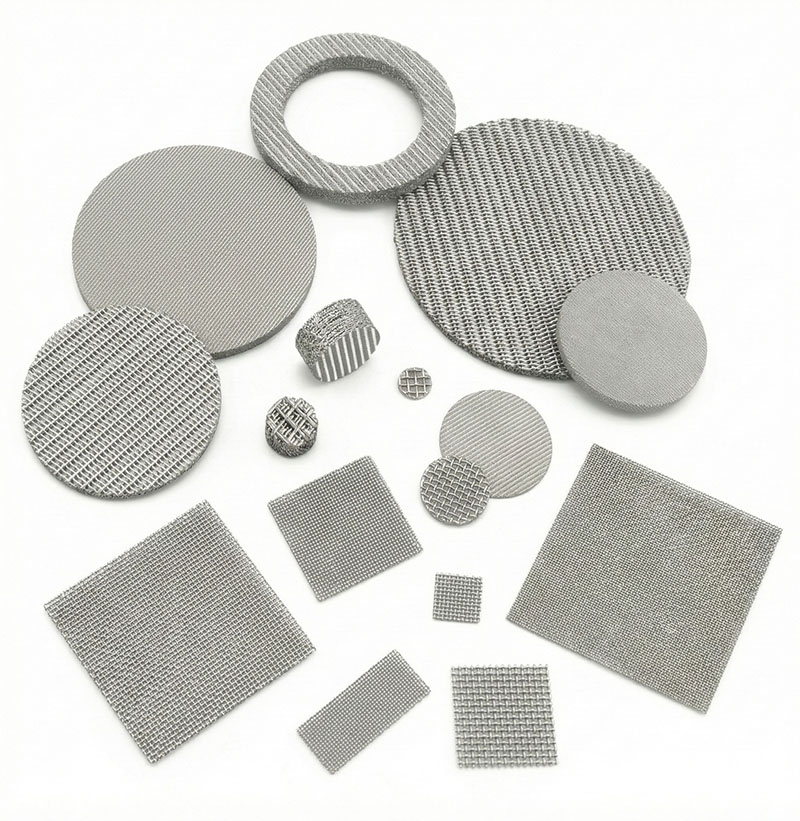
Sintered Mesh Plate and Disc
Sintered Mesh Plates and Discs are high-precision filtration components fabricated by bonding multiple layers of stainless steel wire mesh through a specialized vacuum sintering process. Unlike traditional mesh that relies on mechanical weaving alone, these plates are fused at every contact point, transforming individual wires into a rigid, integrated porous metal sheet.
These plates can be customized into various shapes, most commonly circular discs, to fit specific industrial equipment. They offer an ideal balance of high permeability, extreme structural integrity, and precise filtration ratings. Because they are made entirely of metal (typically 304 or 316L), they provide a "permanent" filtration solution that can withstand high temperatures and corrosive chemicals while remaining fully cleanable and reusable.