
ABOUT US
Your Expert Manufacturer of Wedge Wire Screens;
Your Reliable Partner and Source of Innovation
GET A FREE QUOTE
-
Home

-
Blog
-
Industry Blog
- How Wedge Wire Trommel Screens Handle Wet Sticky Ore
How Wedge Wire Trommel Screens Handle Wet Sticky Ore
-
 author
 - 23,September
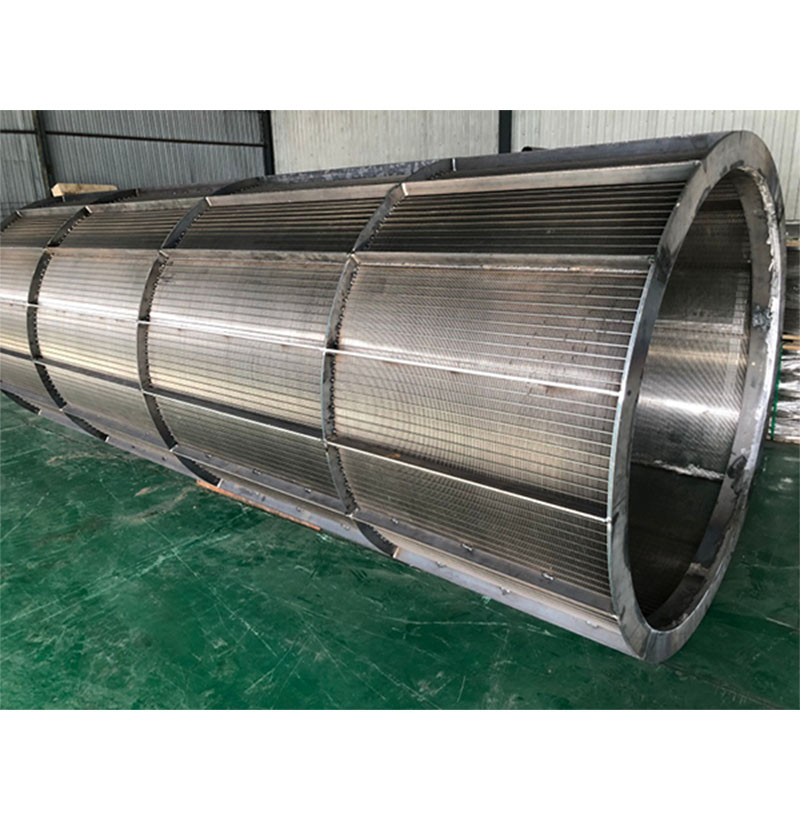
Wet, clay-rich ore can make a sound screening circuit look unpredictable. Feed that appears to be one size on the belt may enter a drum as sticky lumps, fines-coated pebbles, and free water, so the question is not simply whether a screen has enough area. The practical question is how the drum keeps material moving long enough for usable fines to find an opening without turning the surface into a mud-lined barrier.
Why wet clay changes the drum
Clay changes screening because it binds particles that would otherwise behave independently. Fine material can coat coarser fragments, bridge across openings, and travel as soft balls instead of presenting individual particles to the screen. Water may still drain, yet the desired size separation becomes unstable because the fines remain trapped inside the agglomerates.
That is why wet sticky ore screening should be judged by the moving bed on the drum, not by slot size alone. A screen that looks generous on a drawing can blind quickly if feed arrives in thick layers or if wash water turns the surface into a paste. Conversely, a moderate opening can work well when tumbling repeatedly exposes fresh particle surfaces.
The separation path inside the drum
A rotary drum creates a sequence of lifting, cascading, spreading, and forward travel. As feed enters, the drum carries part of the bed upward; gravity then lets it tumble back across the screening surface. Fines and water that reach an open slot pass through, while oversize material advances to the discharge end for further handling or removal.
Rotation keeps the feed from settling into one layer
Rotation matters because it repeatedly changes which particles face the aperture. In a wet ore circuit, this motion can break fragile clay-rich lumps and release fines that initially arrived hidden inside a coating. It does not replace scrubbing when lumps are strongly cemented, but it gives liberated particles multiple chances to meet the screen instead of leaving them packed against one static surface.
Continuous slots give fines a clearer exit path
The geometry of wedge wire trommel screens supports that motion with long, continuous openings rather than isolated round holes. A V-shaped slot is narrow at the working surface and widens behind it, so a particle that enters the slot is less likely to lodge at the same point. This does not make every sticky feed self-cleaning, but it reduces one common source of pegging while the drum and wash system keep the surface active.

Where wedge wire helps – and where preparation still matters
Wedge wire is most useful when the circuit needs a durable screening surface and a less trap-prone route for liberated fines. The fully welded screen construction also suits a rotating component that sees repeated abrasion and mechanical load. In a mineral circuit, however, the screen is only one part of the separation decision; feed conditioning determines whether its open area can be used.
The following conditions usually deserve attention before changing a drum surface:
- Clay content and plasticity, which determine whether lumps fall apart or smear across the slot.
- Feed rate and bed depth, which determine whether particles can contact the screening surface.
- Wash-water location and pressure, which should clear retained fines without carrying usable material past the cut.
For a plant reviewing a slurry screen manufacturer, the valuable discussion is therefore about feed behavior, target cut, drum motion, and cleaning access together. A promising screen surface cannot compensate for a circuit that sends compacted, unwashed clay directly into a short, overloaded drum.
Operating variables must move together
The variables below influence the same outcome from different directions: how often a particle reaches an opening, whether that opening remains available, and whether the material stays in the drum long enough to separate. Changing one variable in isolation can shift capacity while quietly weakening the cut point.
| Variable | What changes in wet ore | Useful operating question |
| Drum speed | Changes lift, cascade, and residence time. | Is the bed tumbling freely or being carried too far? |
| Feed rate | Controls bed depth and surface exposure. | Can fine particles reach the slots before discharge? |
| Slot opening | Sets the physical route for water and undersize. | Does it match the actual, conditioned particle-size distribution? |
| Wash water | Clears fines and controls surface paste. | Does it reopen slots without flooding the separation zone? |
In other words, rotary drum screening is a contact-and-release process, not a fixed capacity number. That is especially important in screening in mineral processing, where changes in ore moisture, clay fraction, and feed fragmentation can alter the result from shift to shift. Trial data should therefore record both throughput and the condition of the material leaving each side of the drum.

A practical takeaway for wet ore circuits
The best use of a rotary screen in wet, sticky ore is to give liberated fines a repeatable chance to leave while keeping the coarse fraction moving. A BTOSLOT wedge wire screen can support that purpose through continuous V-shaped slots and a rigid welded surface, but it works best when feed preparation, drum speed, wash water, and residence time are treated as one operating system.
The next sensible decision is not to select a slot from the desired product size alone. First observe whether the feed is tumbling, smearing, or riding through; then compare the undersize recovery and the oversize contamination at real moisture and clay levels. That evidence reveals whether the constraint is the screen, the drum setting, or upstream conditioning.
FAQ
Can a trommel screen handle wet clay-rich ore?
It can handle it when tumbling and wash action keep the bed mobile, but very plastic or cemented clay may need scrubbing or dilution upstream. The useful test is whether fines are released from lumps before the material reaches the discharge end.
Why do wet fines blind a rotary drum screen?
Wet fines can coat larger particles and form a paste across openings. Blinding worsens when feed depth is high, the drum lacks enough tumbling action, or wash water does not reach the retained layer.
Does a larger slot always improve trommel capacity?
A larger slot may pass more water and fines, but it can also send unwanted particles downstream. Capacity should be evaluated with the required cut, the actual particle-size distribution, and the behavior of sticky agglomerates.
When is wedge wire preferable to perforated plate in a drum?
Wedge wire is useful when continuous slots, a less trap-prone opening shape, and a welded screening surface fit the process. The choice still depends on abrasion, target separation, cleaning method, and the drum’s mechanical design.
Recent Post
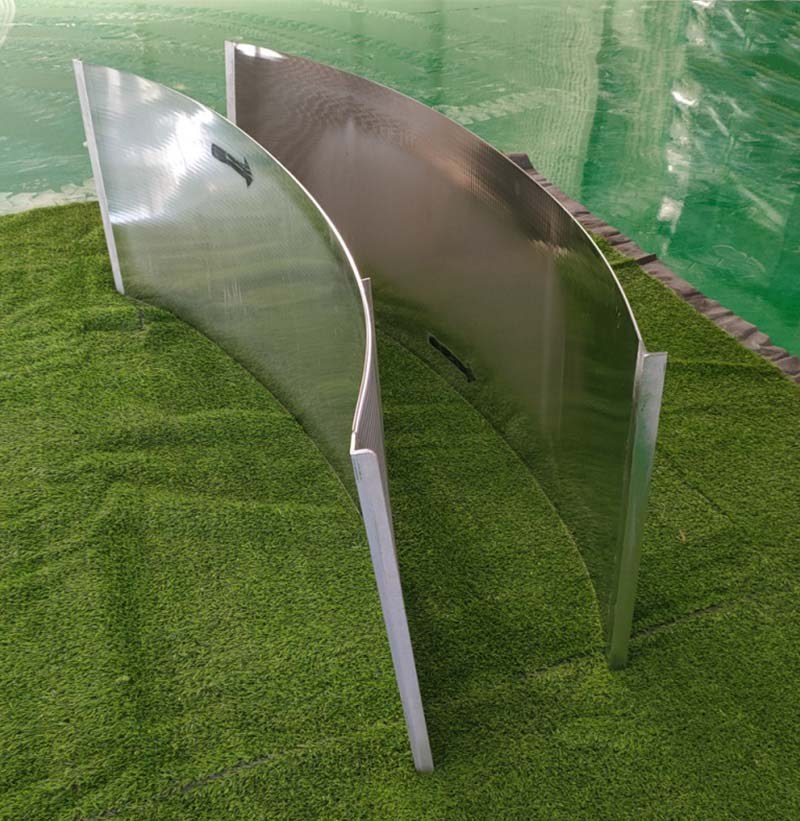

Related Products
Best-selling Products
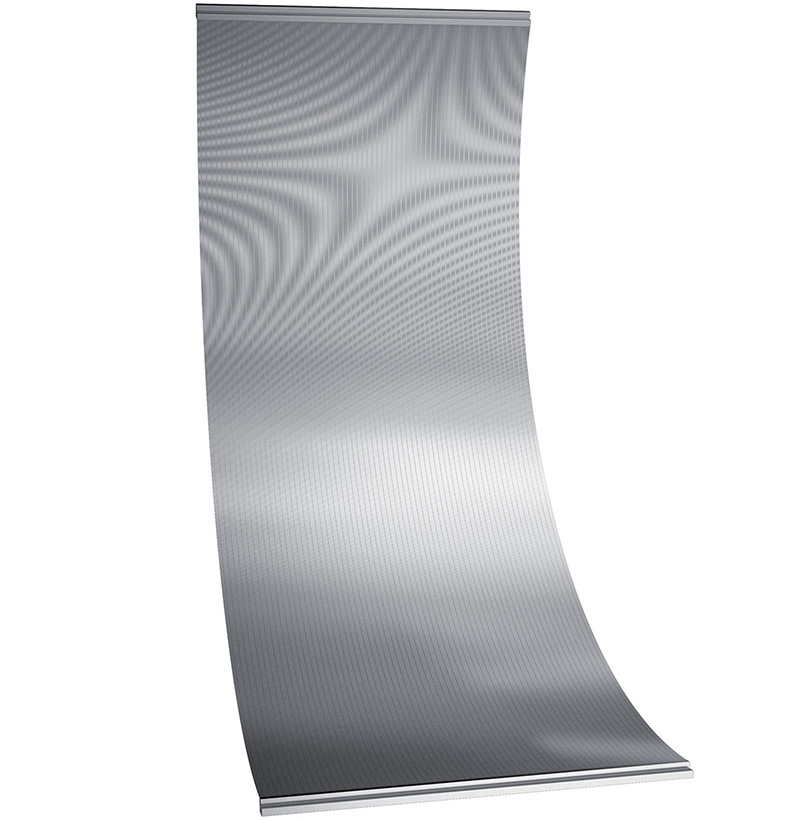
Starch Screen
The Wedge Wire Starch Curved Screen is a curved screening device specifically designed for the starch industry. It features an arc-shaped screen surface made of precisely welded V-profile stainless steel wires, utilizing centrifugal force or gravity to achieve rapid dewatering and classification of starch slurry. Its curved structure prolongs slurry retention time, improving solid-liquid separation efficiency. It is suitable for starch extraction, refining, and byproduct recovery processes for starches such as potato, corn, and cassava. Characterized by efficient screening, wear and clogging resistance, and easy maintenance, this equipment is a key solid-liquid separation device in modern starch processing.
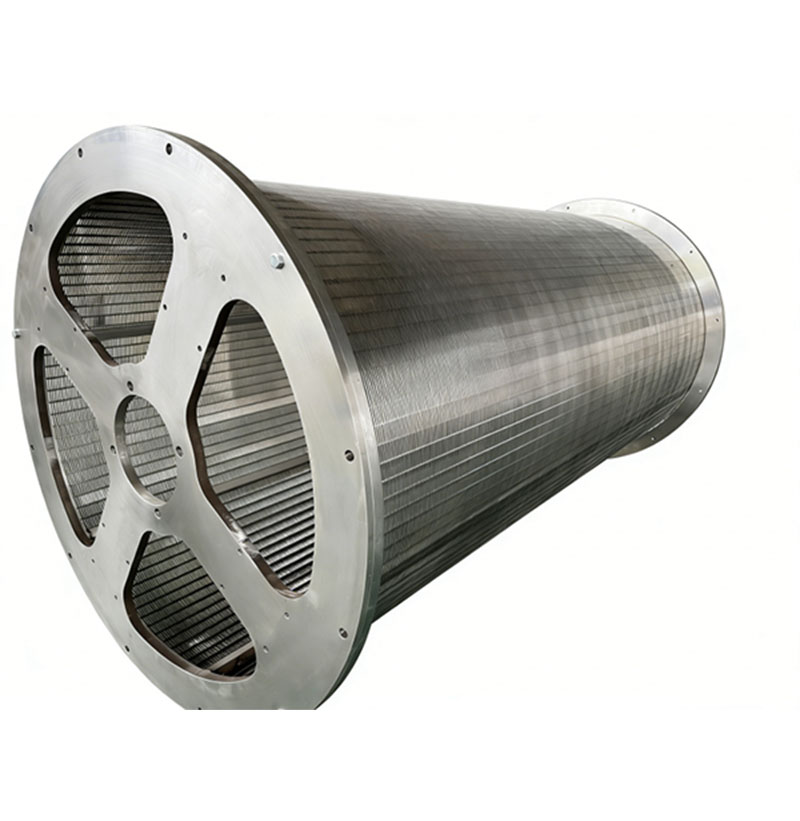
Rotary Drum
The Stainless Steel Wedge Wire Rotary Drum Screen (also known as a Rotary Drum Strainer or Micro-Screen) is a continuously and automatically operating front-end solid-liquid separation device. Its core component is a large cylindrical drum installed horizontally or at a slight incline. The entire circumferential surface of the drum is covered with a stainless steel wedge wire screen (Johnson screen). The wastewater to be treated flows into one end of the drum. Under gravity, the filtrate passes through the wedge wire slots, while solid suspended matter (such as fibers, hair, plastic pieces, and fine particles) is retained on the inner surface of the drum. As the drum rotates slowly, the retained debris is lifted to the top, where it is flushed by spray water into a collection trough, achieving a continuous process of automatic screening, filtration, and residue removal
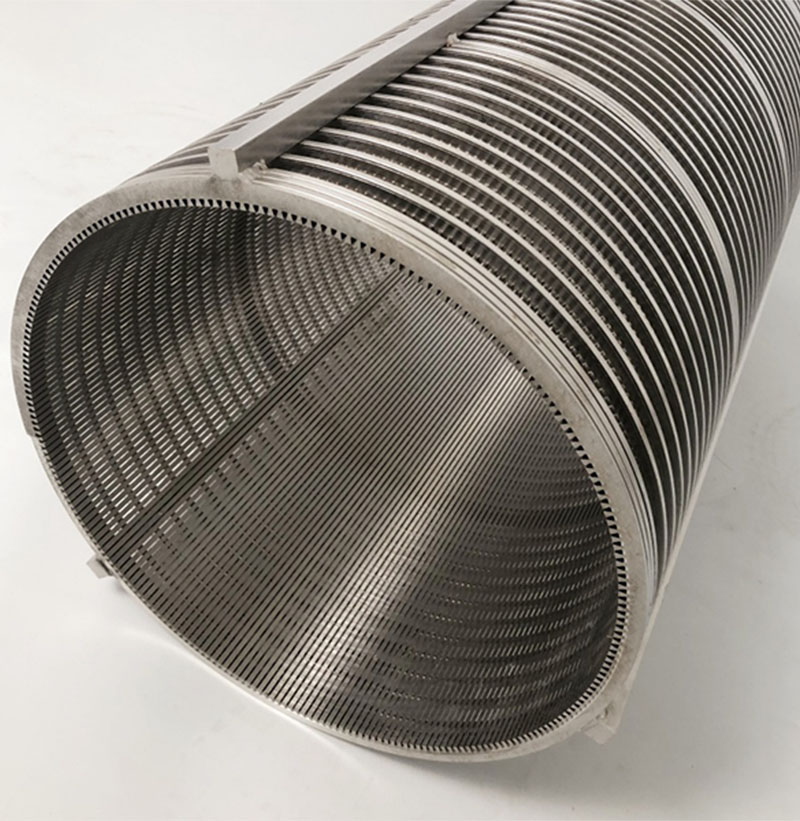
Screen Basket for Screw Press Separator
The stainless steel wedge wire screen basket, commonly known as the "V-wire screen," "press screen basket," or "screen cylinder," is a core component of screw press solid-liquid separators. It is installed inside the spiral press, enclosing the rotating screw shaft. The working principle is as follows: raw slurry with high moisture content is pushed into the screen basket by the screw shaft. Under the squeezing and conveying action of the spiral flights, the liquid (filtrate) is forced out through the precise, continuous slots of the screen basket, while the solid material (manure cake) is retained inside and continues to be compressed and dewatered as it moves forward. Finally, the dewatered solids are discharged from the outlet, achieving solid-liquid separation.
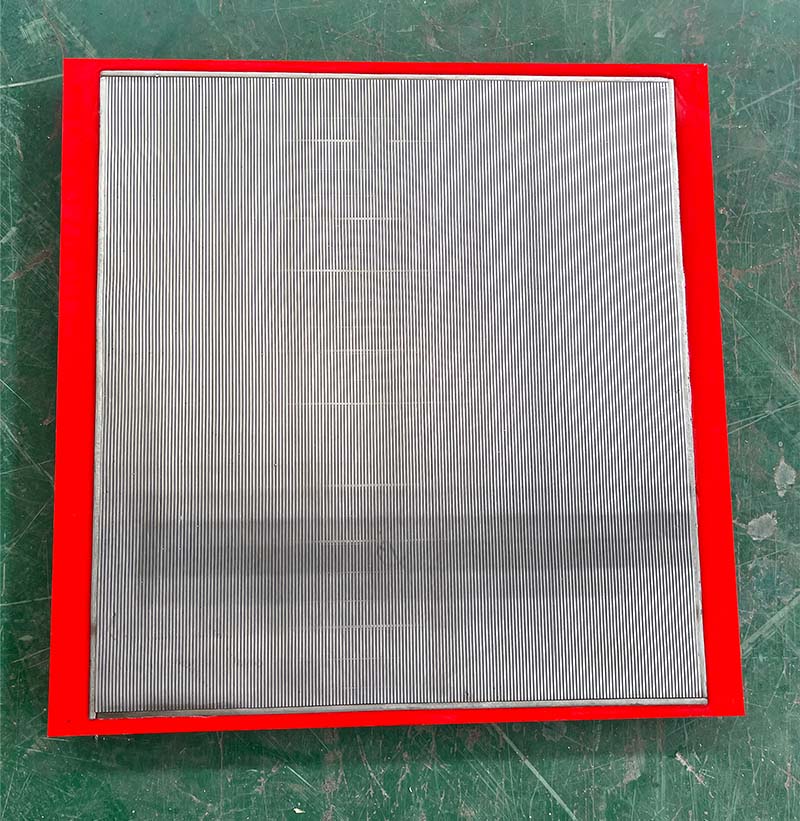
Wedge Wire Vibrating Screen
A stainless steel wedge wire vibrating screen is a solid-liquid separation device featuring a screen surface made by precisely welding V-shaped stainless steel wires, integrated with a high-frequency vibration system. With uniform slots, wear resistance, and corrosion resistance, it is suitable for wet screening and dewatering operations. The vibration mechanism enables rapid material dispersion and efficient sieving while effectively preventing screen clogging. Widely used in industries such as mining, metallurgy, food processing, and environmental protection, it is particularly suitable for handling fine particles, high-viscosity, or easily agglomerated materials, offering advantages such as high screening accuracy, large processing capacity, and long service life.
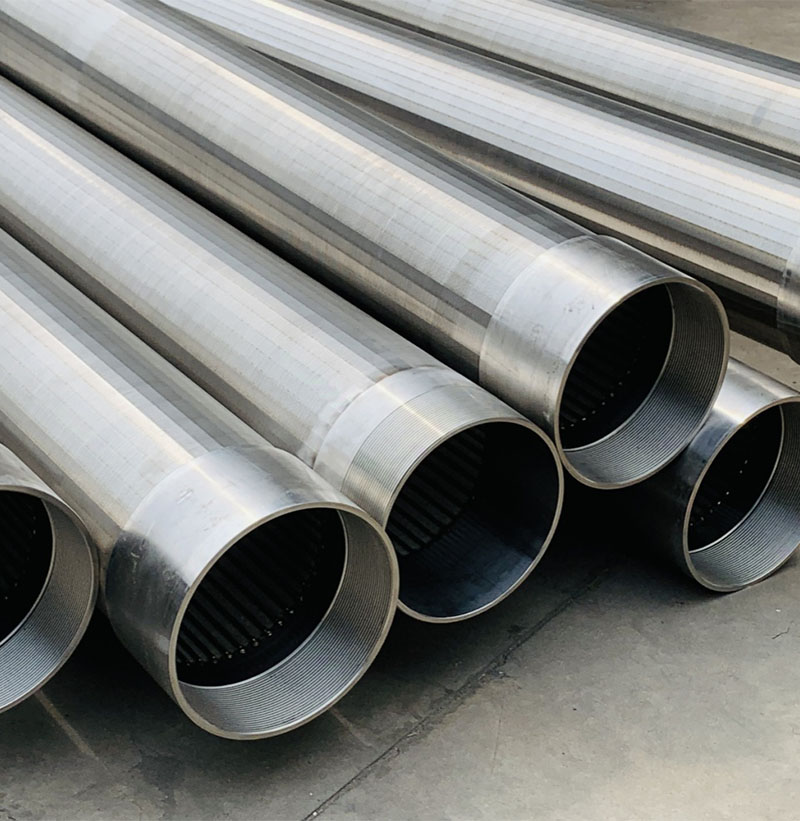
Wedge Wire Water Well Screen
Johnson Deep Water Well Screens, also referred to as continuous slot screens or wire wrap screens, were originally developed to solve sand control challenges in fine-grained and uniform sand formations. These geological conditions are commonly encountered in deep groundwater aquifers, where conventional perforated pipes often suffer from clogging, excessive sand production, and reduced well efficiency.
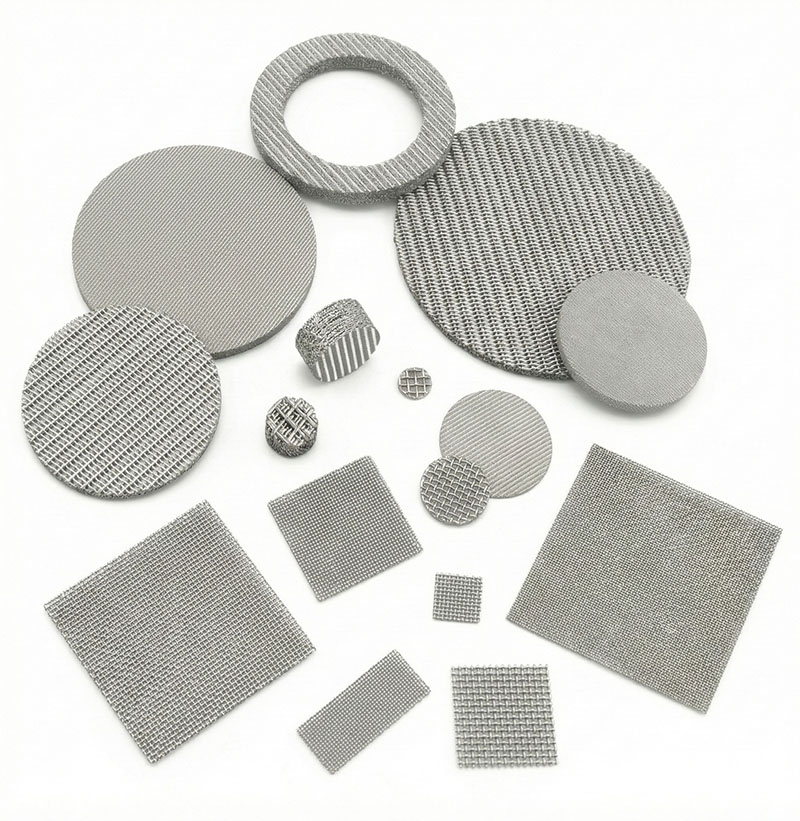
Sintered Mesh Plate and Disc
Sintered Mesh Plates and Discs are high-precision filtration components fabricated by bonding multiple layers of stainless steel wire mesh through a specialized vacuum sintering process. Unlike traditional mesh that relies on mechanical weaving alone, these plates are fused at every contact point, transforming individual wires into a rigid, integrated porous metal sheet.
These plates can be customized into various shapes, most commonly circular discs, to fit specific industrial equipment. They offer an ideal balance of high permeability, extreme structural integrity, and precise filtration ratings. Because they are made entirely of metal (typically 304 or 316L), they provide a "permanent" filtration solution that can withstand high temperatures and corrosive chemicals while remaining fully cleanable and reusable.