
Sobre nós
Seu fabricante especializado de telas Wedge Wire;
Seu parceiro confiável e fonte de inovação
Obter uma quota livre
-
Casa

-
Blog
-
Blog Industrial
- How Wedge Wire Trommel Screens Handle Wet Sticky Ore
How Wedge Wire Trommel Screens Handle Wet Sticky Ore
-
 autor
autor - 23,Setembro
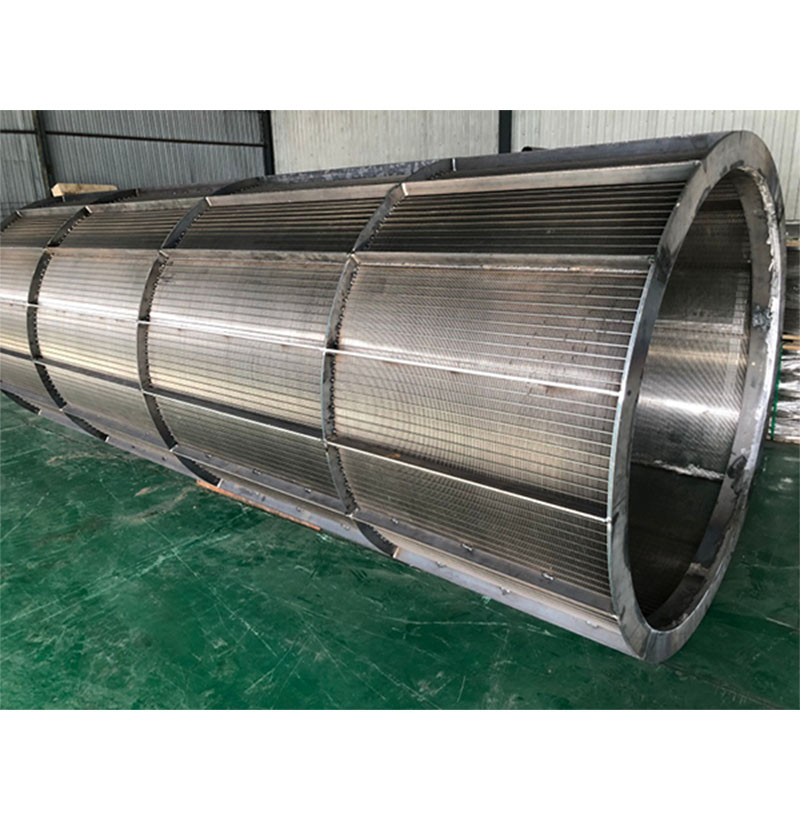
Wet, clay-rich ore can make a sound screening circuit look unpredictable. Feed that appears to be one size on the belt may enter a drum as sticky lumps, fines-coated pebbles, and free water, so the question is not simply whether a screen has enough area. The practical question is how the drum keeps material moving long enough for usable fines to find an opening without turning the surface into a mud-lined barrier.
Why wet clay changes the drum
Clay changes screening because it binds particles that would otherwise behave independently. Fine material can coat coarser fragments, bridge across openings, and travel as soft balls instead of presenting individual particles to the screen. Water may still drain, yet the desired size separation becomes unstable because the fines remain trapped inside the agglomerates.
That is why wet sticky ore screening should be judged by the moving bed on the drum, not by slot size alone. A screen that looks generous on a drawing can blind quickly if feed arrives in thick layers or if wash water turns the surface into a paste. Conversely, a moderate opening can work well when tumbling repeatedly exposes fresh particle surfaces.
The separation path inside the drum
A rotary drum creates a sequence of lifting, cascading, spreading, and forward travel. As feed enters, the drum carries part of the bed upward; gravity then lets it tumble back across the screening surface. Fines and water that reach an open slot pass through, while oversize material advances to the discharge end for further handling or removal.
Rotation keeps the feed from settling into one layer
Rotation matters because it repeatedly changes which particles face the aperture. In a wet ore circuit, this motion can break fragile clay-rich lumps and release fines that initially arrived hidden inside a coating. It does not replace scrubbing when lumps are strongly cemented, but it gives liberated particles multiple chances to meet the screen instead of leaving them packed against one static surface.
Continuous slots give fines a clearer exit path
The geometry of wedge wire trommel screens supports that motion with long, continuous openings rather than isolated round holes. A V-shaped slot is narrow at the working surface and widens behind it, so a particle that enters the slot is less likely to lodge at the same point. This does not make every sticky feed self-cleaning, but it reduces one common source of pegging while the drum and wash system keep the surface active.

Where wedge wire helps – and where preparation still matters
Wedge wire is most useful when the circuit needs a durable screening surface and a less trap-prone route for liberated fines. The fully welded screen construction also suits a rotating component that sees repeated abrasion and mechanical load. In a mineral circuit, however, the screen is only one part of the separation decision; feed conditioning determines whether its open area can be used.
The following conditions usually deserve attention before changing a drum surface:
- Clay content and plasticity, which determine whether lumps fall apart or smear across the slot.
- Feed rate and bed depth, which determine whether particles can contact the screening surface.
- Wash-water location and pressure, which should clear retained fines without carrying usable material past the cut.
For a plant reviewing a slurry screen manufacturer, the valuable discussion is therefore about feed behavior, target cut, drum motion, and cleaning access together. A promising screen surface cannot compensate for a circuit that sends compacted, unwashed clay directly into a short, overloaded drum.
Operating variables must move together
The variables below influence the same outcome from different directions: how often a particle reaches an opening, whether that opening remains available, and whether the material stays in the drum long enough to separate. Changing one variable in isolation can shift capacity while quietly weakening the cut point.
| Variable | What changes in wet ore | Useful operating question |
| Drum speed | Changes lift, cascade, and residence time. | Is the bed tumbling freely or being carried too far? |
| Feed rate | Controls bed depth and surface exposure. | Can fine particles reach the slots before discharge? |
| Slot opening | Sets the physical route for water and undersize. | Does it match the actual, conditioned particle-size distribution? |
| Wash water | Clears fines and controls surface paste. | Does it reopen slots without flooding the separation zone? |
In other words, rotary drum screening is a contact-and-release process, not a fixed capacity number. That is especially important in screening in mineral processing, where changes in ore moisture, clay fraction, and feed fragmentation can alter the result from shift to shift. Trial data should therefore record both throughput and the condition of the material leaving each side of the drum.

A practical takeaway for wet ore circuits
The best use of a rotary screen in wet, sticky ore is to give liberated fines a repeatable chance to leave while keeping the coarse fraction moving. A BTOSLOT wedge wire screen can support that purpose through continuous V-shaped slots and a rigid welded surface, but it works best when feed preparation, drum speed, wash water, and residence time are treated as one operating system.
The next sensible decision is not to select a slot from the desired product size alone. First observe whether the feed is tumbling, smearing, or riding through; then compare the undersize recovery and the oversize contamination at real moisture and clay levels. That evidence reveals whether the constraint is the screen, the drum setting, or upstream conditioning.
Perguntas frequentes
Can a trommel screen handle wet clay-rich ore?
It can handle it when tumbling and wash action keep the bed mobile, but very plastic or cemented clay may need scrubbing or dilution upstream. The useful test is whether fines are released from lumps before the material reaches the discharge end.
Why do wet fines blind a rotary drum screen?
Wet fines can coat larger particles and form a paste across openings. Blinding worsens when feed depth is high, the drum lacks enough tumbling action, or wash water does not reach the retained layer.
Does a larger slot always improve trommel capacity?
A larger slot may pass more water and fines, but it can also send unwanted particles downstream. Capacity should be evaluated with the required cut, the actual particle-size distribution, and the behavior of sticky agglomerates.
When is wedge wire preferable to perforated plate in a drum?
Wedge wire is useful when continuous slots, a less trap-prone opening shape, and a welded screening surface fit the process. The choice still depends on abrasion, target separation, cleaning method, and the drum’s mechanical design.
Recent Post

Produtos relacionados
Produtos de melhor venda
Pantalla Starch
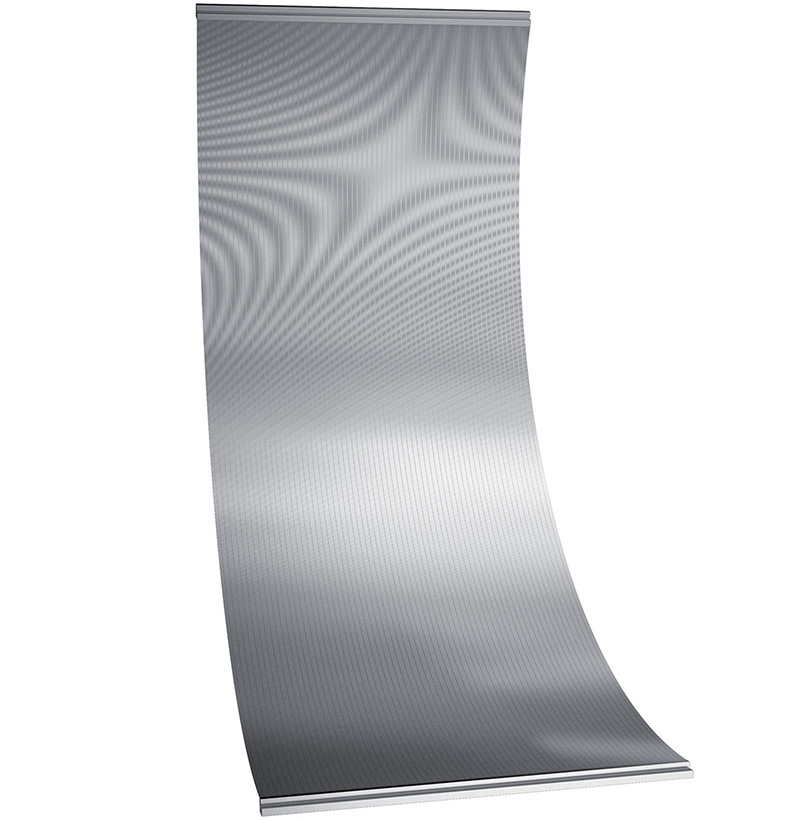
A Wedge Wire Starch Curved Screen é um dispositivo de rastreamento curvo especificamente projetado para a indústria do amido. Ela apresenta uma superfície de tela em forma de arco feita de fios de aço inoxidável de perfil V, bem suavizados, utilizando força centrífuga ou gravidade para alcançar deságua rápida e classificação de molho de amido. Sua estrutura curva prolonga o tempo de retenção de esgoto, melhorando a eficiência de separação sólida-líquida. É adequado para extração de amido, refinação e processos de recuperação de subprodutos para amidos como batata, milho e cassava. Caracterizado por um rastreio eficiente, resistência ao uso e bloqueio, e manutenção fácil, este equipamento é um dispositivo de separação sólido-líquido chave no processo moderno de amido.
Drum Rotar
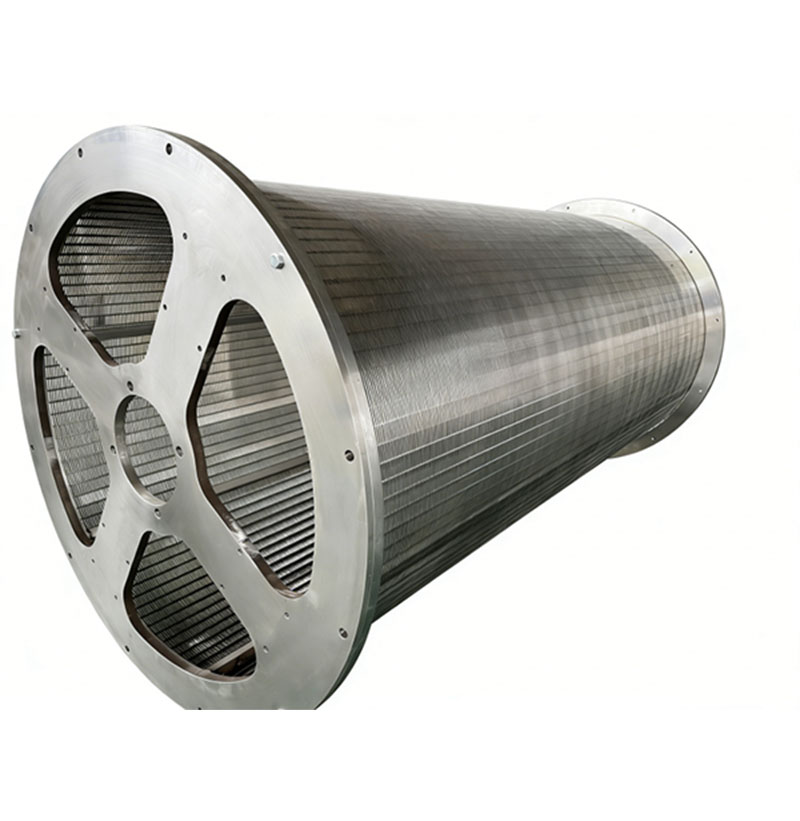
A tela rotatória de tubo de fio de ferro inoxidável Wedge Wire (também conhecida como um estrangeiro rotatório de tubo ou micro-tela) é um dispositivo de separação sólido-líquido de fronte que funciona continuamente e automaticamente. Seu componente central é um grande tambor cilindrico instalado horizontalmente ou em uma ligeira inclinação. A superfície circunferencial inteira do tambor está coberta com uma tela de fio de fio de a ço inoxidável (tela Johnson). A água residual a ser tratada flui para um extremo do tambor. Sob a gravidade, o filtrado passa através dos intervalos de fio de corda, enquanto matéria sólida suspensa (como fibras, cabelo, peças plásticas e partículas finas) é mantida na superfície interior do tambor. À medida que o tambor gira lentamente, os resíduos retirados são levantados para o topo, onde são lavados por água pulverizada em um tronco de coleta, atingindo um processo contínuo de rastreamento automático, filtração e remoção de resíduos
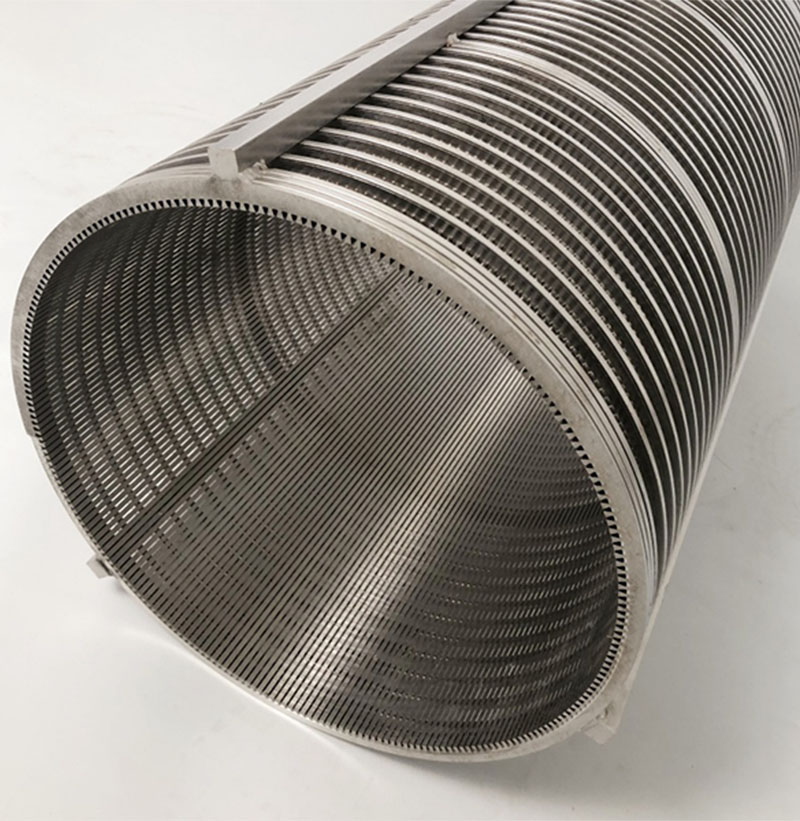
Basquete de Pantalla para Separador de Impressão de Pantalla
O cesto de tela de fio de a ço inoxidável, comumente conhecido como "tela de fio V", "cesto de tela de pulsação" ou "cilindro de tela", é um componente central de separadores de fio de pulsação sólido-líquido. - Está instalado dentro da imprensa espiral, encerrando o barro rotante. O princípio de funcionamento é o seguinte: a chuva bruta com alto conteúdo de umidade é empurrada no cesto da tela pelo barro de screw. Sob a ação de apertação e de transmissão dos voos espirais, o líquido (filtrado) é forçado a sair através dos slots precisos e contínuos do cesto da tela, enquanto o material sólido (bolo de manteiga) é mantido dentro e continua a ser comprimido e desmatado enquanto se move em frente. Finalmente, os sólidos deshidratados são descarregados da saída, atingindo separação sólida-líquida.
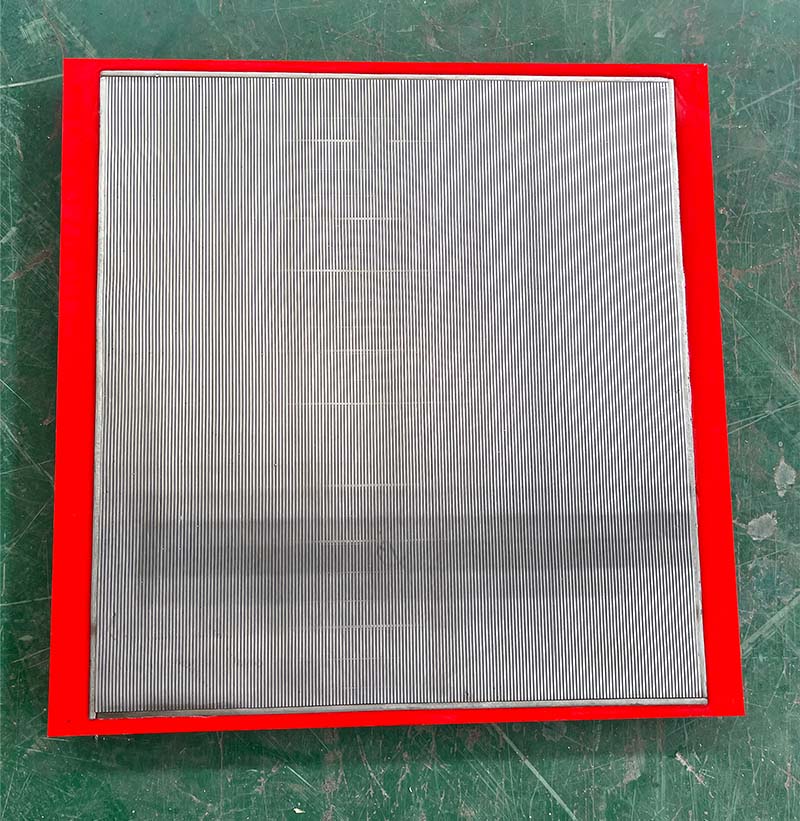
Wedge Wire Vibrating Screen
Uma tela de vibração de fios de a ço inoxidável é um dispositivo de separação sólido-líquido com uma superfície de tela feita precisamente soldando fios de aço inoxidável em forma V, integrado com um sistema de vibração de alta frequência. Com slots uniformes, resistência ao uso e resistência à corrosão, é adequado para operações de rastreamento húmido e desmatamento. O mecanismo de vibração permite uma rápida dispersão de materiais e uma assediação eficiente, evitando efetivamente o bloqueio da tela. Uma grande utilização em indústrias como mineração, metalurgia, processamento de alimentos e proteção ambiental, é particularmente adequada para manejar partículas finas, alta viscosidade ou materiais facilmente aglomerados, oferecendo vantagens como alta precisão de rastreamento, grande capacidade de processamento e longa vida de serviço.
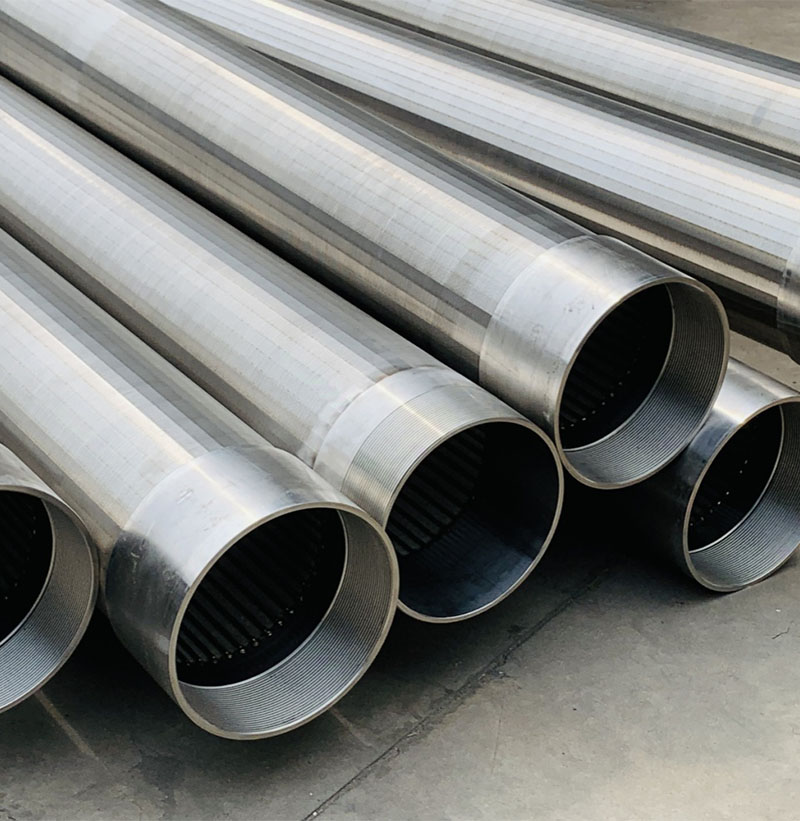
Wedge Wire Water Well Screen
Johnson Deep Water Well Screens, também chamadas de telas de slot contínuas ou telas de envolvimento de fios, foram originalmente desenvolvidos para resolver desafios de controle de areia em formações de areia finas e uniformes. Essas condições geológicas são comumente encontradas em aquíferos de água subterrânea profunda, onde tubos perforados convencionais frequentemente sofrem de obstruções, produção excessiva de areia e redução da eficiência do poço.
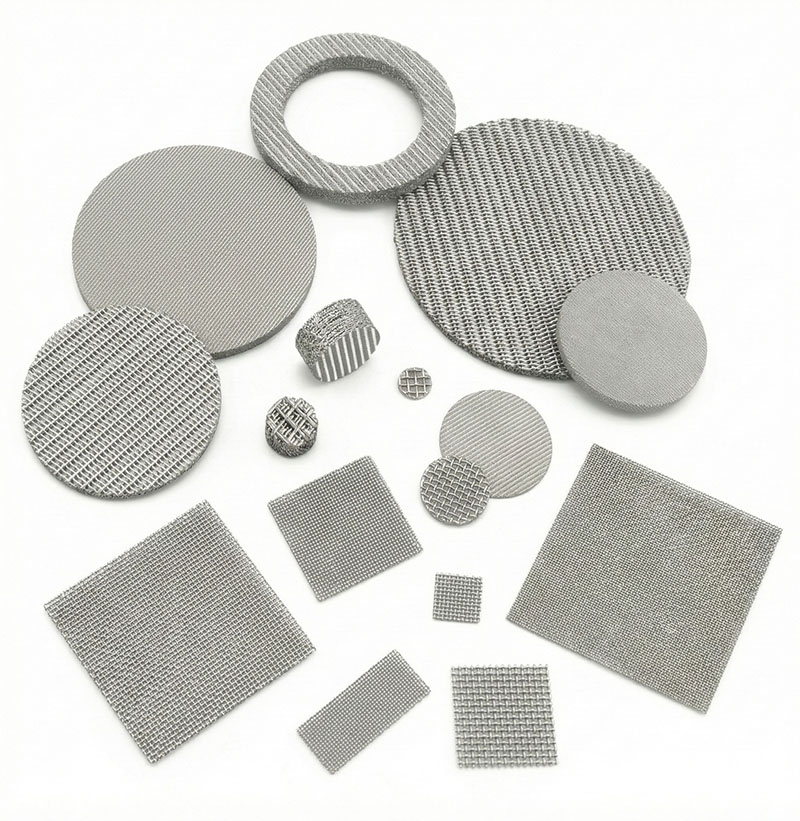
Plata e Disco de Malha Sintered
Platas e discos de malha sinteradas são componentes de filtração de alta precisão fabricados ligando múltiplas camadas de malha de fio de a ço inoxidável através de um processo de sinterização de vácuo especializado. Ao contrário das malhas tradicionais que dependem apenas de tecido mecânico, essas placas são fusionadas em todos os pontos de contato, transformando fios individuais em uma folha metal rígida e integrada porosa.Essas placas podem ser personalizadas em várias formas, mais comunmente discos circulares, para encaixar equipamentos industriais específicos. Eles oferecem um equilíbrio ideal de alta permeabilidade, integridade estrutural extrema e notações de filtração precisas. Porque são feitos inteiramente de metal (tipicamente 304 ou 316L), eles fornecem uma solução de filtração "permanente" que pode resistir a altas temperaturas e substâncias químicas corrosivas enquanto permanecem completamente limpas e reutilizables.