
Über uns
Ihr Experte Hersteller von Wedge Wire Screens;
Ihr zuverlässiger Partner und Innovationsquelle
Erhalten Sie ein kostenloses Angebot
-
Startseite

-
Blog
-
Branchenblog
- How Wedge Wire Trommel Screens Handle Wet Sticky Ore
How Wedge Wire Trommel Screens Handle Wet Sticky Ore
-
 Autor
Autor - 23,September
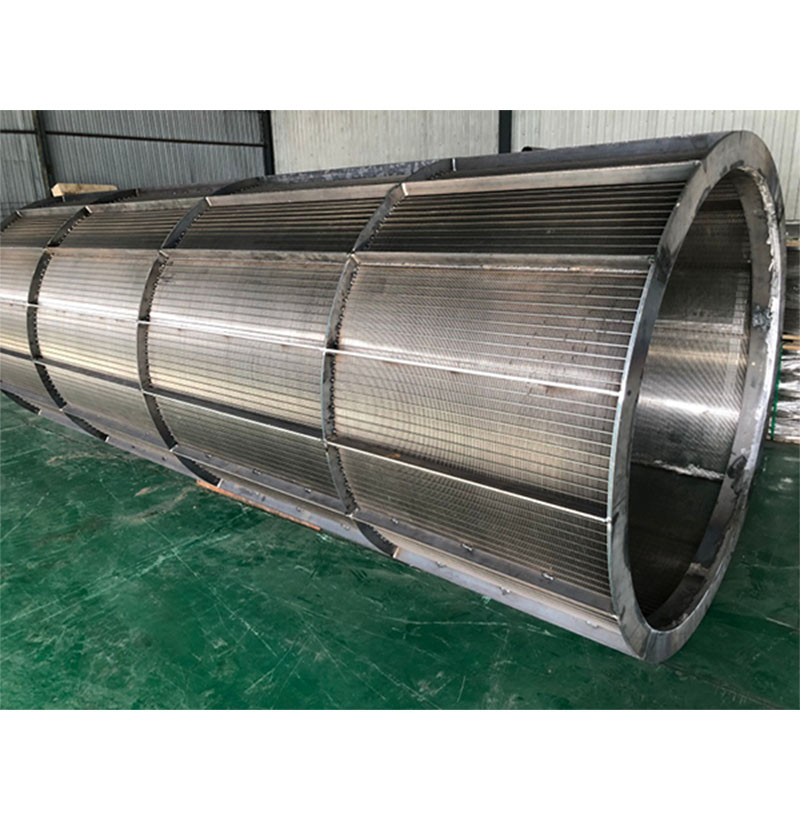
Wet, clay-rich ore can make a sound screening circuit look unpredictable. Feed that appears to be one size on the belt may enter a drum as sticky lumps, fines-coated pebbles, and free water, so the question is not simply whether a screen has enough area. The practical question is how the drum keeps material moving long enough for usable fines to find an opening without turning the surface into a mud-lined barrier.
Why wet clay changes the drum
Clay changes screening because it binds particles that would otherwise behave independently. Fine material can coat coarser fragments, bridge across openings, and travel as soft balls instead of presenting individual particles to the screen. Water may still drain, yet the desired size separation becomes unstable because the fines remain trapped inside the agglomerates.
That is why wet sticky ore screening should be judged by the moving bed on the drum, not by slot size alone. A screen that looks generous on a drawing can blind quickly if feed arrives in thick layers or if wash water turns the surface into a paste. Conversely, a moderate opening can work well when tumbling repeatedly exposes fresh particle surfaces.
The separation path inside the drum
A rotary drum creates a sequence of lifting, cascading, spreading, and forward travel. As feed enters, the drum carries part of the bed upward; gravity then lets it tumble back across the screening surface. Fines and water that reach an open slot pass through, while oversize material advances to the discharge end for further handling or removal.
Rotation keeps the feed from settling into one layer
Rotation matters because it repeatedly changes which particles face the aperture. In a wet ore circuit, this motion can break fragile clay-rich lumps and release fines that initially arrived hidden inside a coating. It does not replace scrubbing when lumps are strongly cemented, but it gives liberated particles multiple chances to meet the screen instead of leaving them packed against one static surface.
Continuous slots give fines a clearer exit path
The geometry of wedge wire trommel screens supports that motion with long, continuous openings rather than isolated round holes. A V-shaped slot is narrow at the working surface and widens behind it, so a particle that enters the slot is less likely to lodge at the same point. This does not make every sticky feed self-cleaning, but it reduces one common source of pegging while the drum and wash system keep the surface active.

Where wedge wire helps – and where preparation still matters
Wedge wire is most useful when the circuit needs a durable screening surface and a less trap-prone route for liberated fines. The fully welded screen construction also suits a rotating component that sees repeated abrasion and mechanical load. In a mineral circuit, however, the screen is only one part of the separation decision; feed conditioning determines whether its open area can be used.
The following conditions usually deserve attention before changing a drum surface:
- Clay content and plasticity, which determine whether lumps fall apart or smear across the slot.
- Feed rate and bed depth, which determine whether particles can contact the screening surface.
- Wash-water location and pressure, which should clear retained fines without carrying usable material past the cut.
For a plant reviewing a slurry screen manufacturer, the valuable discussion is therefore about feed behavior, target cut, drum motion, and cleaning access together. A promising screen surface cannot compensate for a circuit that sends compacted, unwashed clay directly into a short, overloaded drum.
Operating variables must move together
The variables below influence the same outcome from different directions: how often a particle reaches an opening, whether that opening remains available, and whether the material stays in the drum long enough to separate. Changing one variable in isolation can shift capacity while quietly weakening the cut point.
| Variable | What changes in wet ore | Useful operating question |
| Drum speed | Changes lift, cascade, and residence time. | Is the bed tumbling freely or being carried too far? |
| Feed rate | Controls bed depth and surface exposure. | Can fine particles reach the slots before discharge? |
| Slot opening | Sets the physical route for water and undersize. | Does it match the actual, conditioned particle-size distribution? |
| Wash water | Clears fines and controls surface paste. | Does it reopen slots without flooding the separation zone? |
In other words, rotary drum screening is a contact-and-release process, not a fixed capacity number. That is especially important in screening in mineral processing, where changes in ore moisture, clay fraction, and feed fragmentation can alter the result from shift to shift. Trial data should therefore record both throughput and the condition of the material leaving each side of the drum.

A practical takeaway for wet ore circuits
The best use of a rotary screen in wet, sticky ore is to give liberated fines a repeatable chance to leave while keeping the coarse fraction moving. A BTOSLOT wedge wire screen can support that purpose through continuous V-shaped slots and a rigid welded surface, but it works best when feed preparation, drum speed, wash water, and residence time are treated as one operating system.
The next sensible decision is not to select a slot from the desired product size alone. First observe whether the feed is tumbling, smearing, or riding through; then compare the undersize recovery and the oversize contamination at real moisture and clay levels. That evidence reveals whether the constraint is the screen, the drum setting, or upstream conditioning.
Häufig gestellte Fragen
Can a trommel screen handle wet clay-rich ore?
It can handle it when tumbling and wash action keep the bed mobile, but very plastic or cemented clay may need scrubbing or dilution upstream. The useful test is whether fines are released from lumps before the material reaches the discharge end.
Why do wet fines blind a rotary drum screen?
Wet fines can coat larger particles and form a paste across openings. Blinding worsens when feed depth is high, the drum lacks enough tumbling action, or wash water does not reach the retained layer.
Does a larger slot always improve trommel capacity?
A larger slot may pass more water and fines, but it can also send unwanted particles downstream. Capacity should be evaluated with the required cut, the actual particle-size distribution, and the behavior of sticky agglomerates.
When is wedge wire preferable to perforated plate in a drum?
Wedge wire is useful when continuous slots, a less trap-prone opening shape, and a welded screening surface fit the process. The choice still depends on abrasion, target separation, cleaning method, and the drum’s mechanical design.
Letzter Beitrag

Verwandte Produkte
Bestverkaufte Produkte
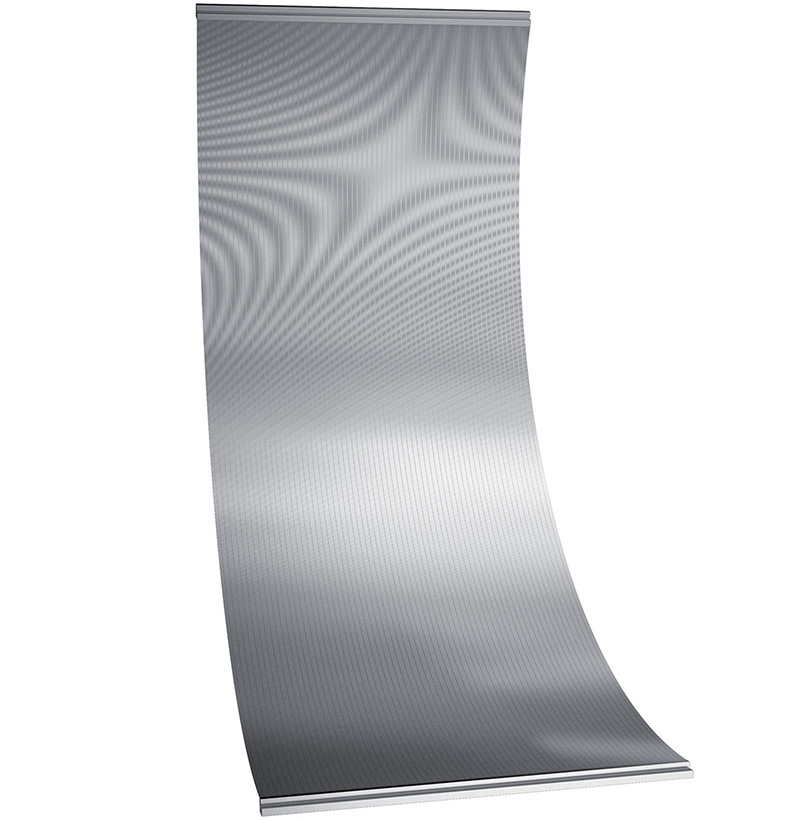
Stärke Screen
Der Wedge Wire Starch Curved Screen ist ein gekrümmtes Siebgerät, das speziell für die Stärkeindustrie entwickelt wurde. Es verfügt über eine bogenförmige Siebfläche aus präzise geschweißten V-Profil-Edelstahldrähten, die Zentrifugalkraft oder Schwerkraft nutzen, um eine schnelle Entwässerung und Klassifizierung von Stärkeslurry zu erreichen. Seine gekrümmte Struktur verlängert die Schlammretentionszeit und verbessert die Effizienz der Feststoff-Flüssigkeit-Trennung. Es eignet sich für Stärkeextraktion, Raffinierung und Nebenproduktrückgewinnungsprozesse für Stärke wie Kartoffel, Mais und Cassava. Diese Ausrüstung ist durch eine effiziente Siebung, Verschleiß- und Verstopfungsbeständigkeit und einfache Wartung gekennzeichnet und ist eine Schlüsselvorrichtung zur Feststoff-Flüssigkeit-Trennung in der modernen Stärkeverarbeitung.
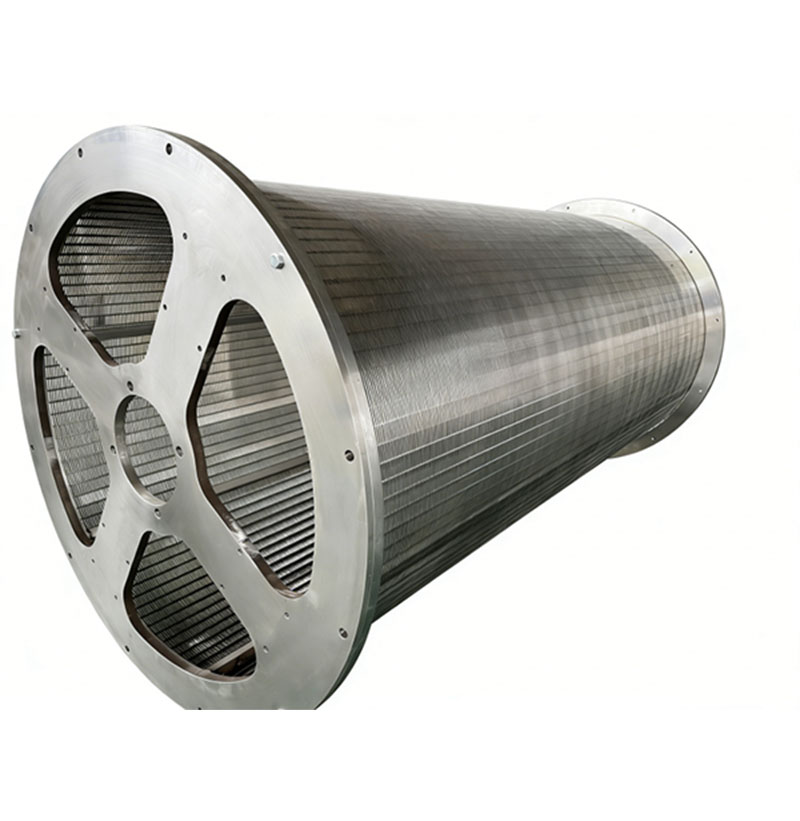
Rotierende Trommel
Der Edelstahl Keil Draht Rotary Drum Screen (auch bekannt als ein Rotary Drum Sieb oder Micro-Screen) ist eine kontinuierlich und automatisch arbeitende Front-End-Feststoff-Flüssigkeit-Trennvorrichtung. Sein Kernbauteil ist eine große zylindrische Trommel, die horizontal oder leicht geneigt installiert ist. Die gesamte Umfangsfläche der Trommel ist mit einem Edelstahlkeildrahtsieb (Johnson-Sieb) bedeckt. Das zu behandelnde Abwasser strömt in ein Ende der Trommel. Unter Schwerkraft passiert das Filtrat durch die Keildrahtschlitze, während feste Suspensionsstoffe (wie Fasern, Haare, Kunststoffstücke und feine Partikel) auf der Innenfläche der Trommel gehalten werden. Während sich die Trommel langsam dreht, wird der zurückgehaltene Trümmer nach oben angehoben, wo er durch Sprühwasser in eine Sammeltage gespült wird, wodurch ein kontinuierlicher Prozess der automatischen Siebung, Filtration und Rückstandsentfernung erreicht wird.
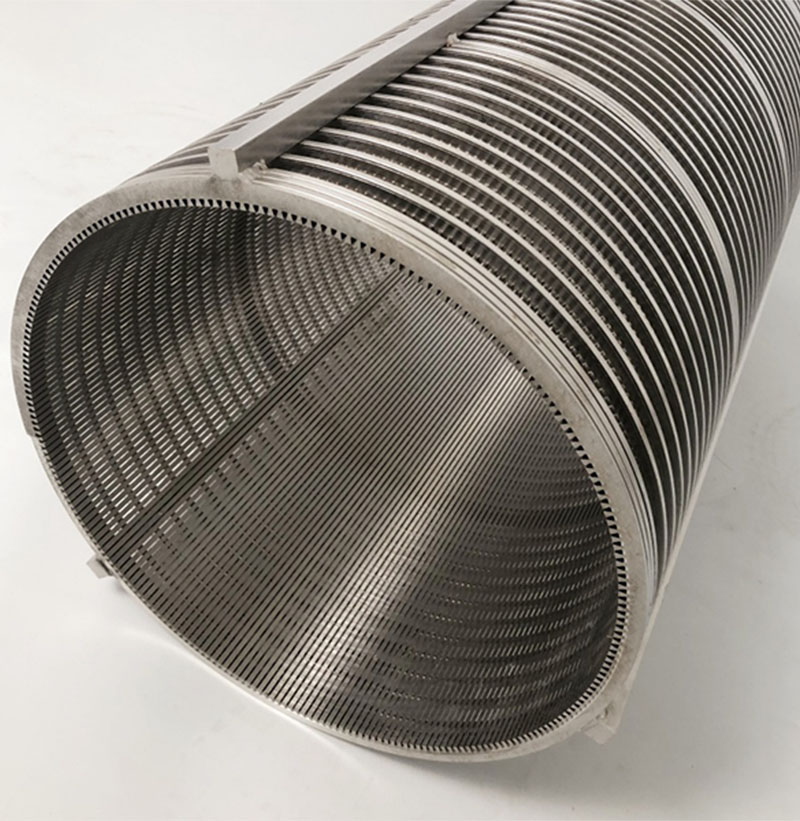
Siebkorb für Screw Press Separator
Der Edelstahl Keil Draht Sieb Korb, allgemein bekannt als der "V-Draht Sieb", "Presse Sieb Korb" oder "Sieb Zylinder", ist ein Kernkomponent der Schraubpresse Fest-Flüssigkeit-Separatoren. Es ist innerhalb der Spiralpresse installiert und umschließt die rotierende Schraubenwelle. Das Arbeitsprinzip lautet wie folgt: Rohslurry mit hohem Feuchtigkeitsgehalt wird durch die Schraubenwelle in den Siebkorb geschoben. Unter der Druck- und Förderwirkung der Spiralflüge wird die Flüssigkeit (Filtrat) durch die präzisen, kontinuierlichen Schlitze des Siebkorbs herausgedrückt, während das feste Material (Düngkuchen) im Inneren gehalten wird und weiterhin komprimiert und entwässert wird, während es sich nach vorne bewegt. Schließlich werden die entwässerten Feststoffe aus dem Auslass abgegeben, wodurch eine Feststoff-Flüssigkeit-Trennung erreicht wird.
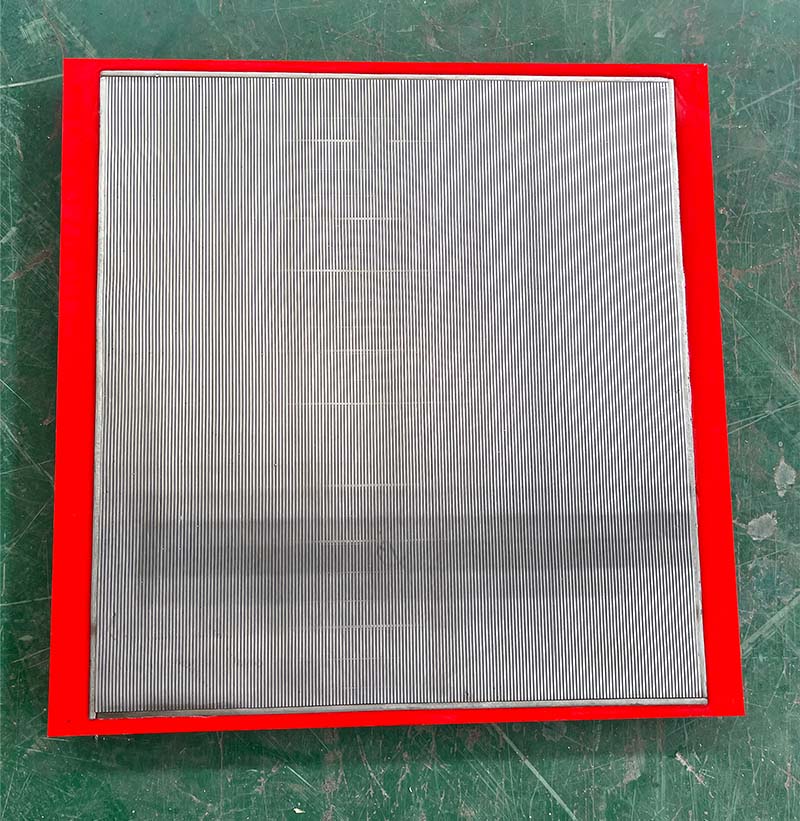
Keil Draht vibrierende Bildschirm
Ein Edelstahlkeildraht-Vibrationsschirm ist eine Fest-Flüssigkeit-Trennvorrichtung mit einer Siebfläche, die durch präzises Schweißen von V-förmigen Edelstahldrähten hergestellt wird, die in ein Hochfrequenzsvibrationssystem integriert ist. Mit einheitlichen Schlitzen, Verschleißbeständigkeit und Korrosionsbeständigkeit ist es für Nasssieb- und Entwässerungsvorgänge geeignet. Der Vibrationsmechanismus ermöglicht eine schnelle Materialverteilung und ein effizientes Sieben, während ein Verstopfen des Siebs effektiv verhindert wird. Weit in Industrien wie Bergbau, Metallurgie, Lebensmittelverarbeitung und Umweltschutz eingesetzt, ist es besonders geeignet für den Umgang mit feinen Partikeln, hochviskosen oder leicht agglomerierenden Materialien und bietet Vorteile wie hohe Siebgenauigkeit, große Verarbeitungskapazität und lange Lebensdauer.
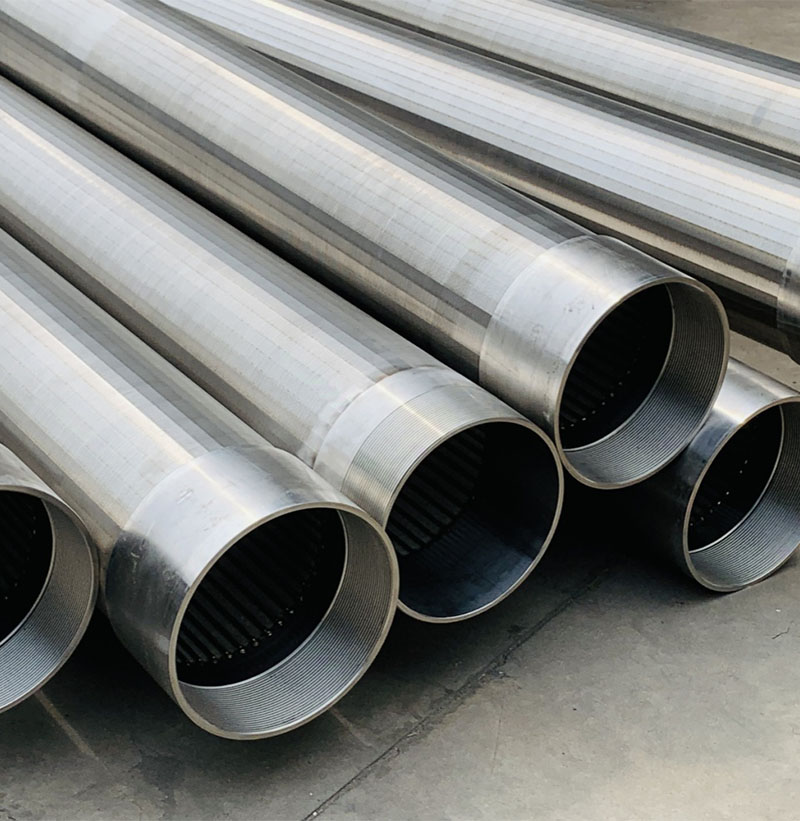
Keil Draht Wasser Brunnen Bildschirm
Johnson Deep Water Well Screens, auch als Continuous Slot Screens oder Wire Wrap Screens bezeichnet, wurden ursprünglich entwickelt, um Herausforderungen bei der Sandkontrolle in feinkörnigen und gleichmäßigen Sandformationen zu lösen. Diese geologischen Bedingungen sind häufig in tiefen Grundwasserwässern zu finden, wo herkömmliche Lochröhren oft unter Verstopfungen, übermäßiger Sandproduktion und reduzierter Brunneneffizienz leiden.
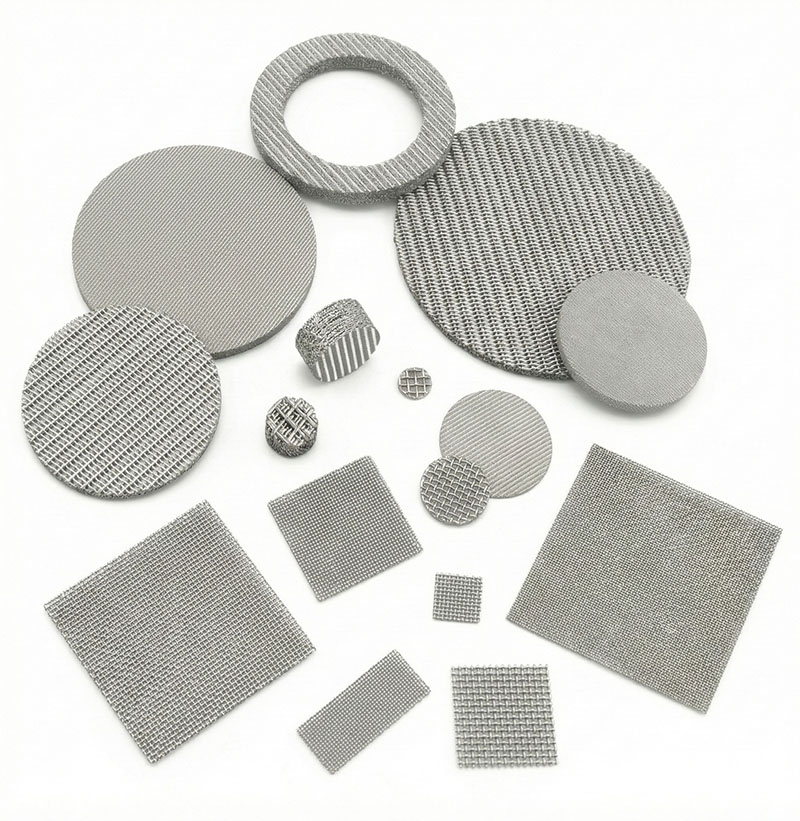
Sinterte Mesh Platte und Scheibe
Sintermaschenplatten und -scheiben sind hochpräzise Filtrationskomponenten, die durch das Verbinden mehrerer Schichten Edelstahldrahtmaschen durch einen spezialisierten Vakuumsinterprozess hergestellt werden. Im Gegensatz zu herkömmlichen Netzen, die sich allein auf mechanisches Weben verlassen, werden diese Platten an jedem Kontaktpunkt geschmolzen und verwandeln einzelne Drähte in ein starres, integriertes poröses Blech.Diese Platten können in verschiedene Formen angepasst werden, am häufigsten kreisförmige Scheiben, um spezifische Industriegeräte anzupassen. Sie bieten eine ideale Balance aus hoher Durchlässigkeit, extremer struktureller Integrität und präzisen Filtrationswerten. Da sie ausschließlich aus Metall (typischerweise 304 oder 316L) hergestellt sind, bieten sie eine "permanente" Filtrationslösung, die hohen Temperaturen und korrosiven Chemikalien standhalten kann, während sie vollständig reinigbar und wiederverwendbar bleiben.