
ABOUT US
Your Expert Manufacturer of Wedge Wire Screens;
Your Reliable Partner and Source of Innovation
GET A FREE QUOTE
-
Home

-
Blog
-
Industry Blog
- How Centrifuge Screen Baskets Dewater High-Solids Mineral Slurry

How Centrifuge Screen Baskets Dewater High-Solids Mineral Slurry
-
 author
 - 10,September
 author
High-solids mineral slurry can overwhelm a dewatering stage when free liquid, abrasive particles, and a heavy solids load arrive together. A centrifuge screen basket creates a controlled drainage surface inside the rotating machine, so liquid leaves quickly while the valuable solids remain in the transport path. The practical question is how the basket geometry and slot design work together without sacrificing recovery or service life.
What the basket changes inside a centrifuge
A centrifuge basket turns rotational force into a pressure difference across the screen surface. The feed forms a moving solids layer against the basket, and liquid is driven through continuous slots while cake travels toward discharge. This helps when gravity drainage leaves slurry liquid that would dilute the next process step. A correctly fitted centrifuge basket keeps drainage open, while a conical screen guides the cake.
A wedge wire screen basket uses profile wires welded to support rods, producing smooth openings. Its V-shaped passage is narrow at the surface and wider behind it, reducing deep wedging and helping filtrate flow stay stable.
How high-solids slurry moves across the screen
Feed distribution determines whether screen area is used evenly. A concentrated underflow entering one side can create a thick local cake, higher differential pressure, and faster wear even when average flow looks acceptable.
A well-matched conical screen gives solids a progressive path. Centrifugal force presses liquid outward through the slots, while cone angle and rotation move retained cake toward the outlet. The opening cone gives liquid more opportunities to escape before discharge. This conical screen also needs balance at machine speed.
This is where a conical wedge wire screen can be useful in a mineral circuit: the continuous slot surface supports drainage along the whole travel path, rather than forcing liquid through a small set of isolated holes. The result is a more predictable handoff to thickening, filtration, or tailings handling.
The design variables that control dewatering
Slot and geometry decisions
Slot opening is not a direct copy of nominal particle size. Angular grains can pass diagonally, while flaky particles can bridge a slot. A pilot sample and full particle-size distribution are more reliable than one sieve result.
Consider these variables as a group:
*Slot width: balances filtrate clarity, solids recovery, and blinding risk.
*Open area: increases drainage potential, but must be supported by adequate wire and rod strength.
*Cone angle: changes residence time, cake movement, and the useful screening area.
*Material and wear allowance: 304/316 stainless steel suits many duties; duplex or a wear coating may be justified for severe abrasion.
*Interface and support: flange, clamp, or custom mounting must keep the basket concentric at operating speed.
| Condition | What it does to the basket | Design response |
| High clay or slimy fines | Builds a low-permeability cake and raises pressure drop | Allow cleaning access, review slot width, and avoid overloading the feed zone |
| Coarse, angular ore | Accelerates impact and slot-edge wear | Use a wear-resistant grade or coating and verify support spacing |
| Variable cyclone underflow | Creates uneven cake thickness and fluctuating filtrate quality | Improve feed distribution and monitor torque, vibration, and pressure |
| Very fine target cut | Improves retention but can reduce throughput | Confirm the real PSD with a pilot test before fixing the opening |

Why anti-clogging matters more at high solids
High solids make a small loss of open area expensive. As fines cover the surface, more force is needed to push liquid through. The V-shaped slot reduces particle locking, while the smooth face helps a scraper, rinse, or backwash release the cake.
Cleaning should follow operating signals rather than a fixed calendar. Rising differential pressure, lower filtrate flow, higher torque, or changed filtrate solids can indicate surface loading. Confirm cleaning pressure and chemical compatibility before setting a routine.
A practical selection conversation with a centrifuge basket supplier should include feed density, PSD, temperature, chemistry, target moisture, expected throughput, rotation speed, and the available cleaning method. Those inputs let the supplier check slot tolerance, cone geometry, weld pattern, and mounting loads as one operating system.
Where the basket fits in a mineral circuit
Cyclone underflow is a natural application because it already arrives concentrated and needs rapid liquid removal before storage, transport, or a downstream polishing step. The basket can also support tailings thickening, media recovery, and selected classification duties when the retained solids and filtrate quality are defined clearly.
BTOSLOT can translate those operating inputs into a custom conical assembly, including 304/316 stainless steel or duplex options, slot ranges from 0.1 to 5 mm, cone angles from 10 to 60 degrees, and flange, thread, or clamp interfaces. These are configurable design ranges, not a universal performance guarantee; final dimensions should be confirmed against the machine and slurry test results.
A focused way to specify the basket
Specification details that prevent surprises
A useful specification starts with the separation outcome. State target solids recovery and filtrate clarity, then add feed conditions, speed, centrifugal load, cleaning method, and failure consequence. This keeps nominal slot size from becoming the only criterion.
Before release, ask for a drawing showing screening direction, support arrangement, weld details, and interface dimensions. Check finished-basket dimensions when concentricity or balance is tight, and agree how abrasive wear will be monitored.
The operating takeaway
A centrifuge screen basket dewaters high-solids mineral slurry by combining centrifugal force, a progressively supported screen surface, and slots sized for the real particle population. The best result is not simply the driest cake; it is a stable balance of liquid removal, solids retention, cleanability, and wear. Define that balance with representative slurry data, then match the cone and screen to the machine rather than selecting a basket from a generic capacity claim.
For background on wedge wire construction and related mining screens, see BTOSLOT’s screening in mineral processing resources. A short operating data sheet is enough for a first design review; the final basket should follow a drawing and application check.

FAQ
Can a conical basket handle cyclone underflow directly?
It can, when the underflow density, particle size, chemistry, and flow are within the centrifuge design envelope. Feed distribution and wear protection are critical because cyclone underflow can be both concentrated and abrasive.
Does a finer slot always produce a drier cake?
No. A finer slot may improve retention but can blind sooner and raise pressure drop. Cake permeability, residence time, and the liquid viscosity often matter as much as the nominal opening.
Which stainless steel is suitable for mineral slurry?
304 or 316 stainless steel covers many general duties. Chloride exposure, abrasion, temperature, and cleaning chemistry may justify duplex steel or a wear-resistant surface; material selection should follow the actual slurry.
How can operators tell that the basket is loading up?
Watch for a sustained rise in differential pressure or torque, lower filtrate flow, higher filtrate solids, or an unusual vibration pattern. These signals should trigger an equipment-specific inspection and cleaning check.
What information is needed to size a basket?
Provide feed rate, solids concentration, PSD, density, viscosity, target moisture, allowable solids loss, rotation speed, available envelope, mounting details, and the planned cleaning method. Representative samples improve the slot and cone-angle decision.
Recent Post
Related Products
Best-selling Products
Starch Screen
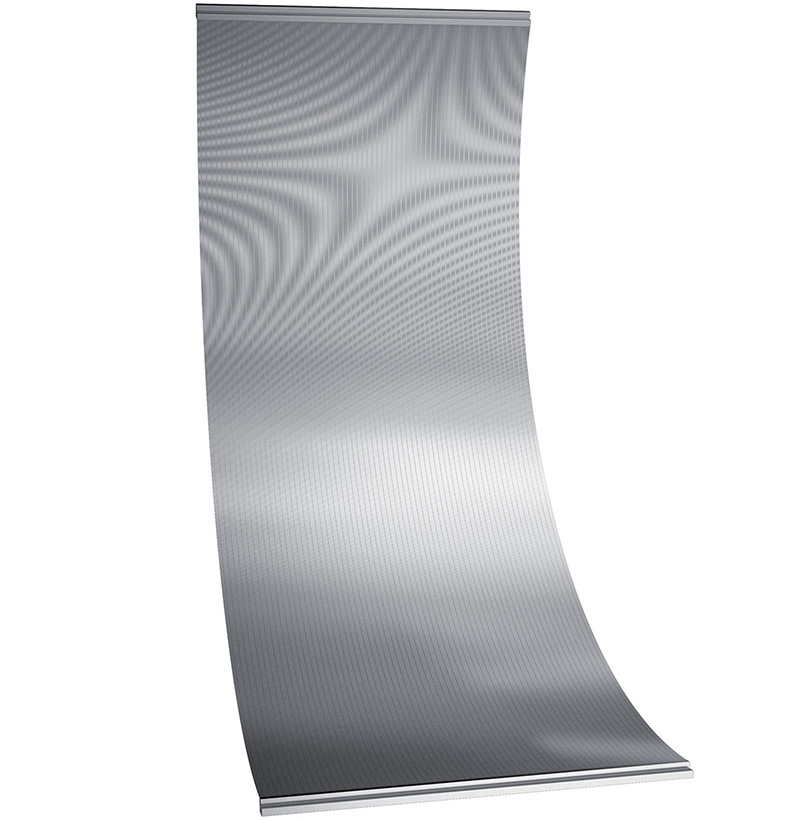
The Wedge Wire Starch Curved Screen is a curved screening device specifically designed for the starch industry. It features an arc-shaped screen surface made of precisely welded V-profile stainless steel wires, utilizing centrifugal force or gravity to achieve rapid dewatering and classification of starch slurry. Its curved structure prolongs slurry retention time, improving solid-liquid separation efficiency. It is suitable for starch extraction, refining, and byproduct recovery processes for starches such as potato, corn, and cassava. Characterized by efficient screening, wear and clogging resistance, and easy maintenance, this equipment is a key solid-liquid separation device in modern starch processing.
Rotary Drum
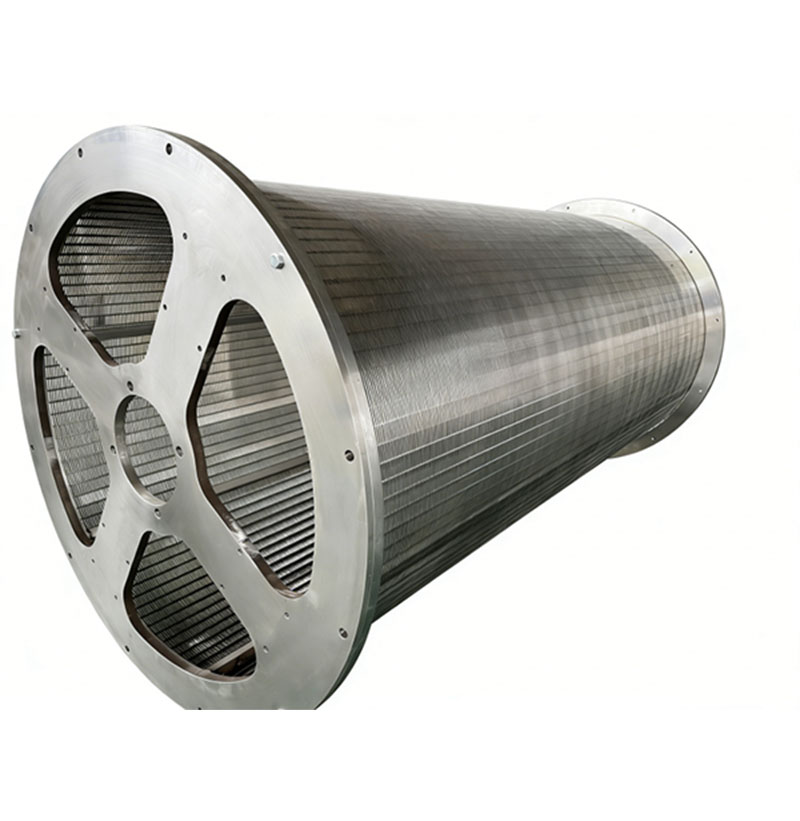
The Stainless Steel Wedge Wire Rotary Drum Screen (also known as a Rotary Drum Strainer or Micro-Screen) is a continuously and automatically operating front-end solid-liquid separation device. Its core component is a large cylindrical drum installed horizontally or at a slight incline. The entire circumferential surface of the drum is covered with a stainless steel wedge wire screen (Johnson screen). The wastewater to be treated flows into one end of the drum. Under gravity, the filtrate passes through the wedge wire slots, while solid suspended matter (such as fibers, hair, plastic pieces, and fine particles) is retained on the inner surface of the drum. As the drum rotates slowly, the retained debris is lifted to the top, where it is flushed by spray water into a collection trough, achieving a continuous process of automatic screening, filtration, and residue removal
Screen Basket for Screw Press Separator
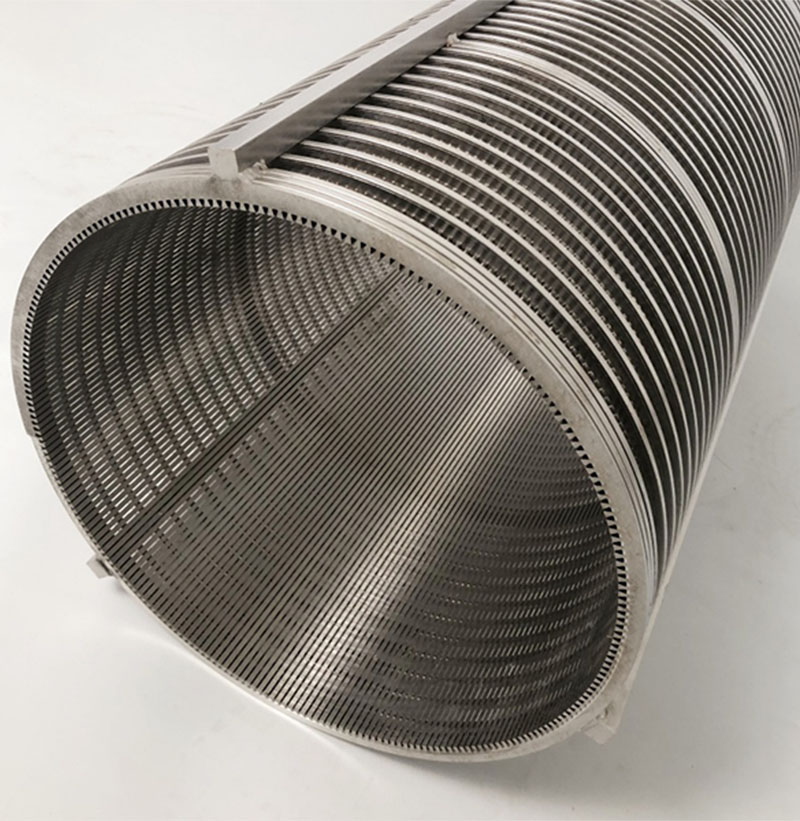
The stainless steel wedge wire screen basket, commonly known as the "V-wire screen," "press screen basket," or "screen cylinder," is a core component of screw press solid-liquid separators. It is installed inside the spiral press, enclosing the rotating screw shaft. The working principle is as follows: raw slurry with high moisture content is pushed into the screen basket by the screw shaft. Under the squeezing and conveying action of the spiral flights, the liquid (filtrate) is forced out through the precise, continuous slots of the screen basket, while the solid material (manure cake) is retained inside and continues to be compressed and dewatered as it moves forward. Finally, the dewatered solids are discharged from the outlet, achieving solid-liquid separation.
Wedge Wire Vibrating Screen
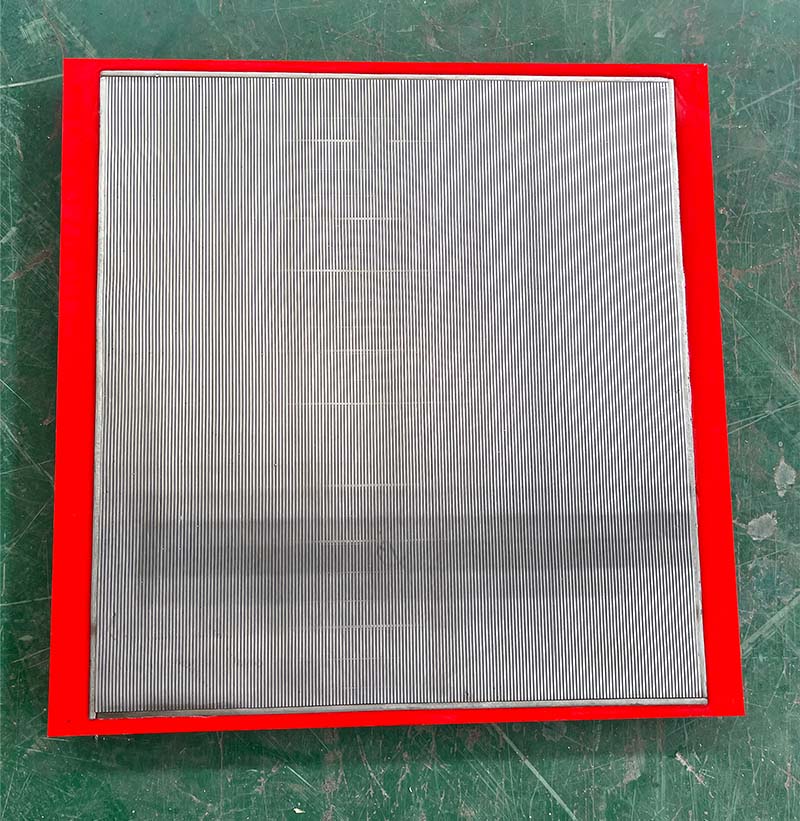
A stainless steel wedge wire vibrating screen is a solid-liquid separation device featuring a screen surface made by precisely welding V-shaped stainless steel wires, integrated with a high-frequency vibration system. With uniform slots, wear resistance, and corrosion resistance, it is suitable for wet screening and dewatering operations. The vibration mechanism enables rapid material dispersion and efficient sieving while effectively preventing screen clogging. Widely used in industries such as mining, metallurgy, food processing, and environmental protection, it is particularly suitable for handling fine particles, high-viscosity, or easily agglomerated materials, offering advantages such as high screening accuracy, large processing capacity, and long service life.
Wedge Wire Water Well Screen
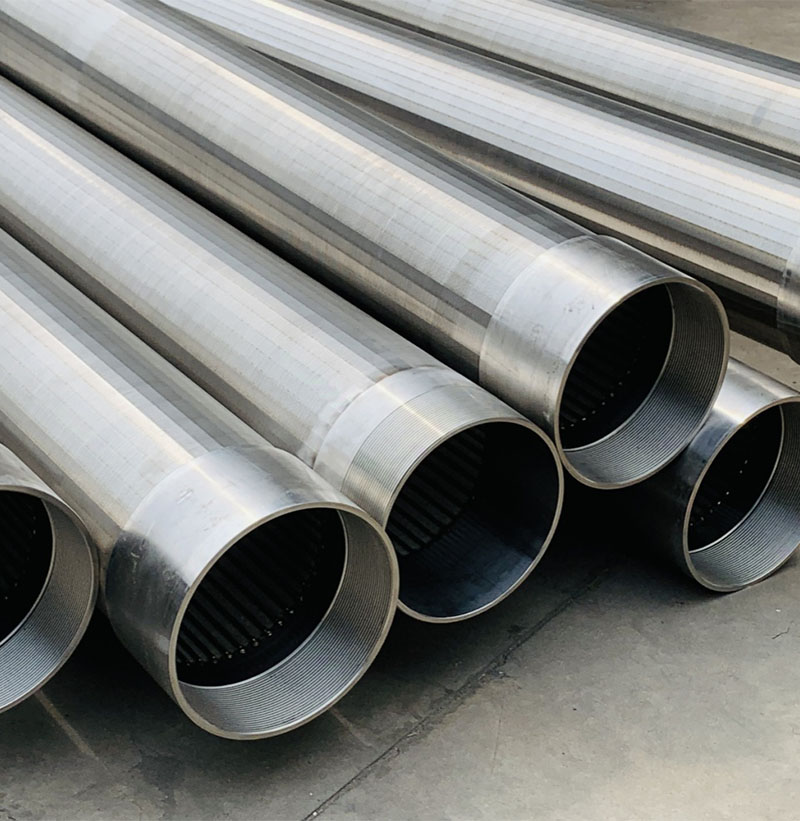
Johnson Deep Water Well Screens, also referred to as continuous slot screens or wire wrap screens, were originally developed to solve sand control challenges in fine-grained and uniform sand formations. These geological conditions are commonly encountered in deep groundwater aquifers, where conventional perforated pipes often suffer from clogging, excessive sand production, and reduced well efficiency.
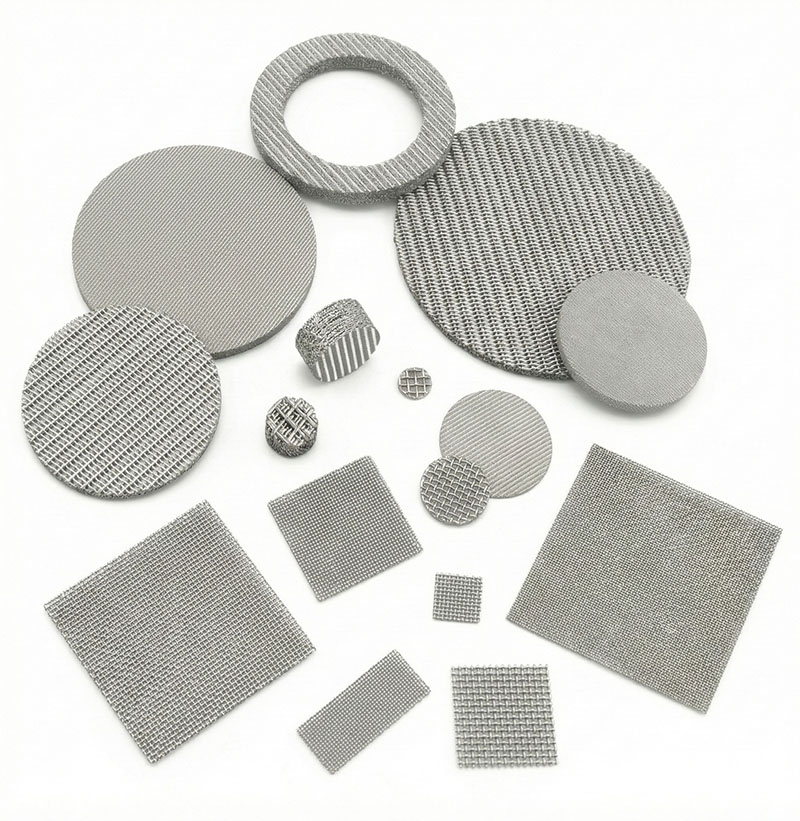
Sintered Mesh Plate and Disc
Sintered Mesh Plates and Discs are high-precision filtration components fabricated by bonding multiple layers of stainless steel wire mesh through a specialized vacuum sintering process. Unlike traditional mesh that relies on mechanical weaving alone, these plates are fused at every contact point, transforming individual wires into a rigid, integrated porous metal sheet.
These plates can be customized into various shapes, most commonly circular discs, to fit specific industrial equipment. They offer an ideal balance of high permeability, extreme structural integrity, and precise filtration ratings. Because they are made entirely of metal (typically 304 or 316L), they provide a "permanent" filtration solution that can withstand high temperatures and corrosive chemicals while remaining fully cleanable and reusable.