
О нас
Ваш эксперт производитель клиновых проводных экранов;
Ваш надежный партнер и источник инноваций
Получите бесплатную котировку
-
Главная

-
Блог
-
Блог промышленности
- How Wedge Wire Trommel Screens Handle Wet Sticky Ore
How Wedge Wire Trommel Screens Handle Wet Sticky Ore
-
 автор
автор - 23,Сентябрь
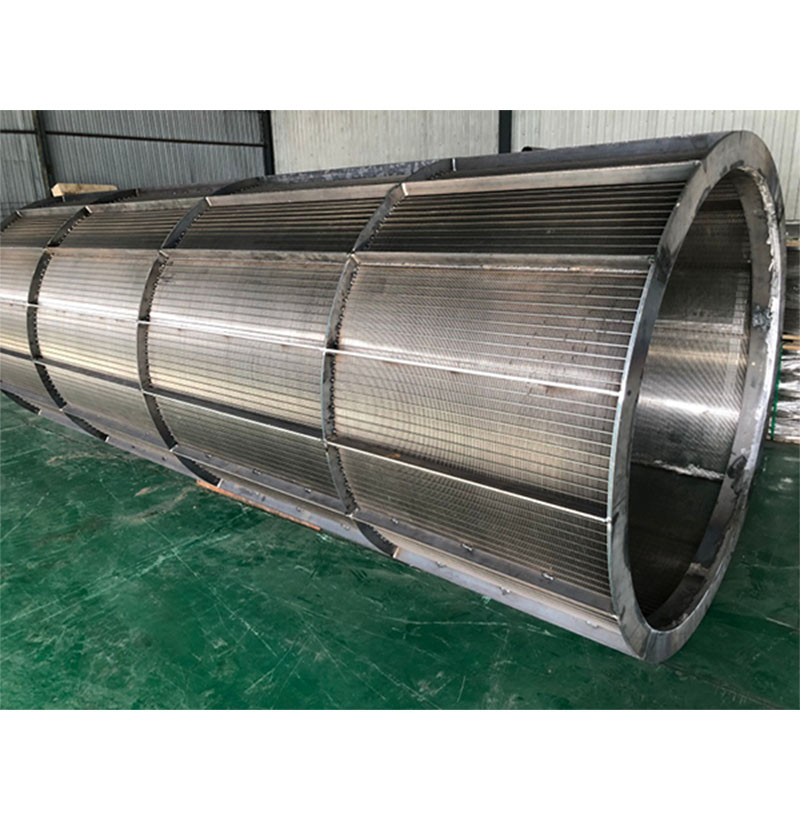
Wet, clay-rich ore can make a sound screening circuit look unpredictable. Feed that appears to be one size on the belt may enter a drum as sticky lumps, fines-coated pebbles, and free water, so the question is not simply whether a screen has enough area. The practical question is how the drum keeps material moving long enough for usable fines to find an opening without turning the surface into a mud-lined barrier.
Why wet clay changes the drum
Clay changes screening because it binds particles that would otherwise behave independently. Fine material can coat coarser fragments, bridge across openings, and travel as soft balls instead of presenting individual particles to the screen. Water may still drain, yet the desired size separation becomes unstable because the fines remain trapped inside the agglomerates.
That is why wet sticky ore screening should be judged by the moving bed on the drum, not by slot size alone. A screen that looks generous on a drawing can blind quickly if feed arrives in thick layers or if wash water turns the surface into a paste. Conversely, a moderate opening can work well when tumbling repeatedly exposes fresh particle surfaces.
The separation path inside the drum
A rotary drum creates a sequence of lifting, cascading, spreading, and forward travel. As feed enters, the drum carries part of the bed upward; gravity then lets it tumble back across the screening surface. Fines and water that reach an open slot pass through, while oversize material advances to the discharge end for further handling or removal.
Rotation keeps the feed from settling into one layer
Rotation matters because it repeatedly changes which particles face the aperture. In a wet ore circuit, this motion can break fragile clay-rich lumps and release fines that initially arrived hidden inside a coating. It does not replace scrubbing when lumps are strongly cemented, but it gives liberated particles multiple chances to meet the screen instead of leaving them packed against one static surface.
Continuous slots give fines a clearer exit path
The geometry of wedge wire trommel screens supports that motion with long, continuous openings rather than isolated round holes. A V-shaped slot is narrow at the working surface and widens behind it, so a particle that enters the slot is less likely to lodge at the same point. This does not make every sticky feed self-cleaning, but it reduces one common source of pegging while the drum and wash system keep the surface active.

Where wedge wire helps – and where preparation still matters
Wedge wire is most useful when the circuit needs a durable screening surface and a less trap-prone route for liberated fines. The fully welded screen construction also suits a rotating component that sees repeated abrasion and mechanical load. In a mineral circuit, however, the screen is only one part of the separation decision; feed conditioning determines whether its open area can be used.
The following conditions usually deserve attention before changing a drum surface:
- Clay content and plasticity, which determine whether lumps fall apart or smear across the slot.
- Feed rate and bed depth, which determine whether particles can contact the screening surface.
- Wash-water location and pressure, which should clear retained fines without carrying usable material past the cut.
For a plant reviewing a slurry screen manufacturer, the valuable discussion is therefore about feed behavior, target cut, drum motion, and cleaning access together. A promising screen surface cannot compensate for a circuit that sends compacted, unwashed clay directly into a short, overloaded drum.
Operating variables must move together
The variables below influence the same outcome from different directions: how often a particle reaches an opening, whether that opening remains available, and whether the material stays in the drum long enough to separate. Changing one variable in isolation can shift capacity while quietly weakening the cut point.
| Variable | What changes in wet ore | Useful operating question |
| Drum speed | Changes lift, cascade, and residence time. | Is the bed tumbling freely or being carried too far? |
| Feed rate | Controls bed depth and surface exposure. | Can fine particles reach the slots before discharge? |
| Slot opening | Sets the physical route for water and undersize. | Does it match the actual, conditioned particle-size distribution? |
| Wash water | Clears fines and controls surface paste. | Does it reopen slots without flooding the separation zone? |
In other words, rotary drum screening is a contact-and-release process, not a fixed capacity number. That is especially important in screening in mineral processing, where changes in ore moisture, clay fraction, and feed fragmentation can alter the result from shift to shift. Trial data should therefore record both throughput and the condition of the material leaving each side of the drum.

A practical takeaway for wet ore circuits
The best use of a rotary screen in wet, sticky ore is to give liberated fines a repeatable chance to leave while keeping the coarse fraction moving. A BTOSLOT wedge wire screen can support that purpose through continuous V-shaped slots and a rigid welded surface, but it works best when feed preparation, drum speed, wash water, and residence time are treated as one operating system.
The next sensible decision is not to select a slot from the desired product size alone. First observe whether the feed is tumbling, smearing, or riding through; then compare the undersize recovery and the oversize contamination at real moisture and clay levels. That evidence reveals whether the constraint is the screen, the drum setting, or upstream conditioning.
Часто задаваемые вопросы
Can a trommel screen handle wet clay-rich ore?
It can handle it when tumbling and wash action keep the bed mobile, but very plastic or cemented clay may need scrubbing or dilution upstream. The useful test is whether fines are released from lumps before the material reaches the discharge end.
Why do wet fines blind a rotary drum screen?
Wet fines can coat larger particles and form a paste across openings. Blinding worsens when feed depth is high, the drum lacks enough tumbling action, or wash water does not reach the retained layer.
Does a larger slot always improve trommel capacity?
A larger slot may pass more water and fines, but it can also send unwanted particles downstream. Capacity should be evaluated with the required cut, the actual particle-size distribution, and the behavior of sticky agglomerates.
When is wedge wire preferable to perforated plate in a drum?
Wedge wire is useful when continuous slots, a less trap-prone opening shape, and a welded screening surface fit the process. The choice still depends on abrasion, target separation, cleaning method, and the drum’s mechanical design.
Последний пост

Связанные продукты
Лучшие Продукты
Экран крахмала
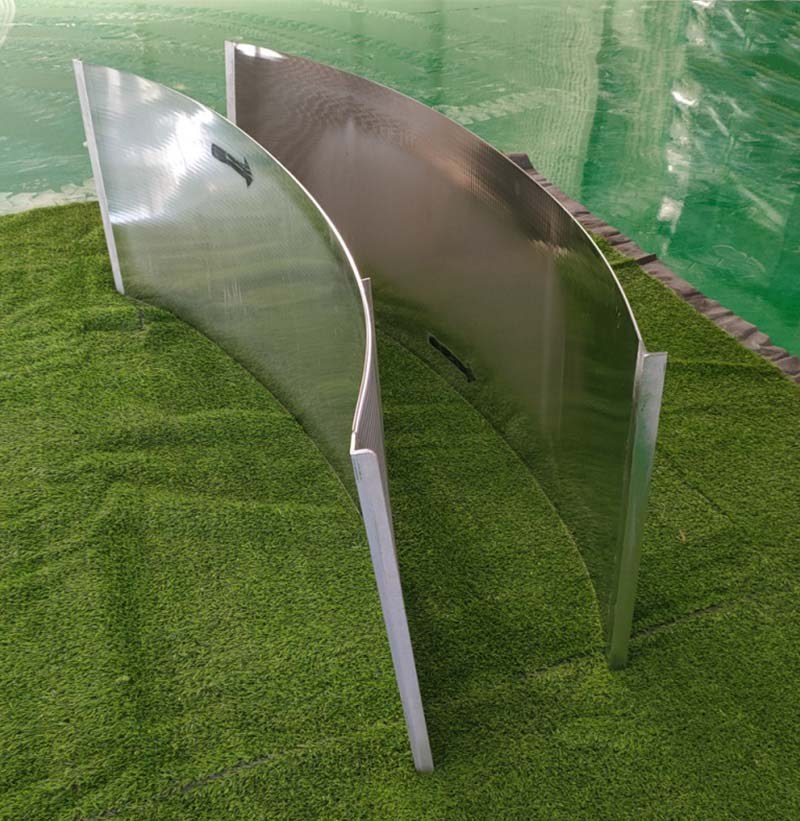
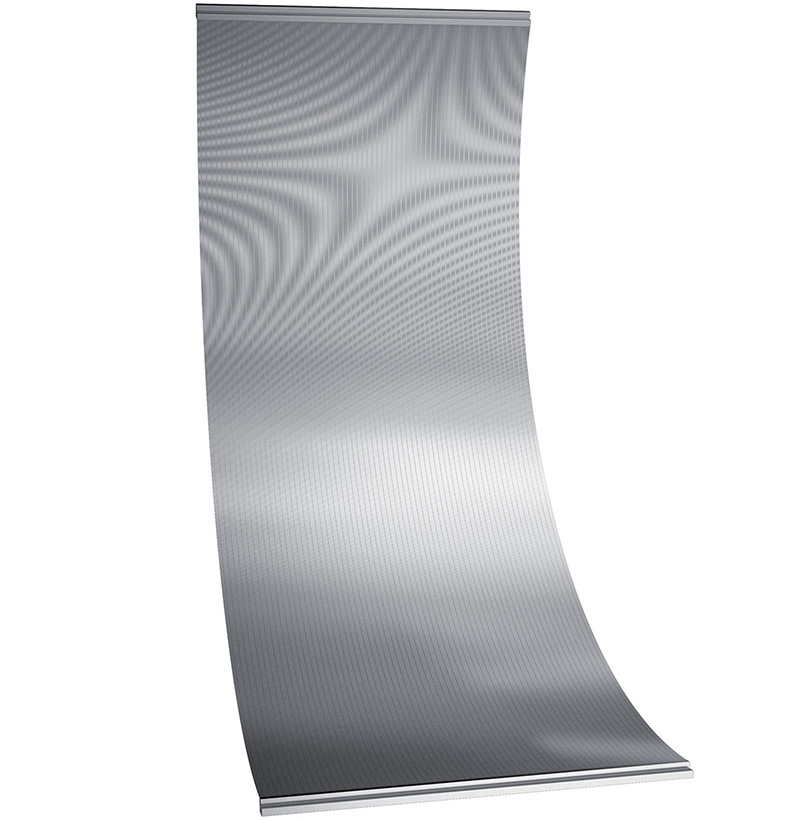
Клиновый проволочный крихмальный экран - это изогнутое скрининговое устройство, специально разработанное для крахмальной промышленности. Он имеет дуговидную поверхность экрана, изготовленную из точно сваренных V-профильных проводов из нержавеющей стали, используя центробежную силу или гравитацию для достижения быстрого обезводнения и классификации крахмальной шламы. Его изогнутая структура продлевает время удержания шламы, улучшая эффективность разделения твердой и жидкой. Он подходит для экстракции крахмала, переработки и процессов восстановления побочных продуктов для крахмала, такого как картофель, кукуруза и манака. Характеризуясь эффективным скринингом, устойчивостью к износу и засорению и простотой обслуживания, это оборудование является ключевым устройством разделения твердого и жидкого в современной обработке крахмала.
Ротарный барабан
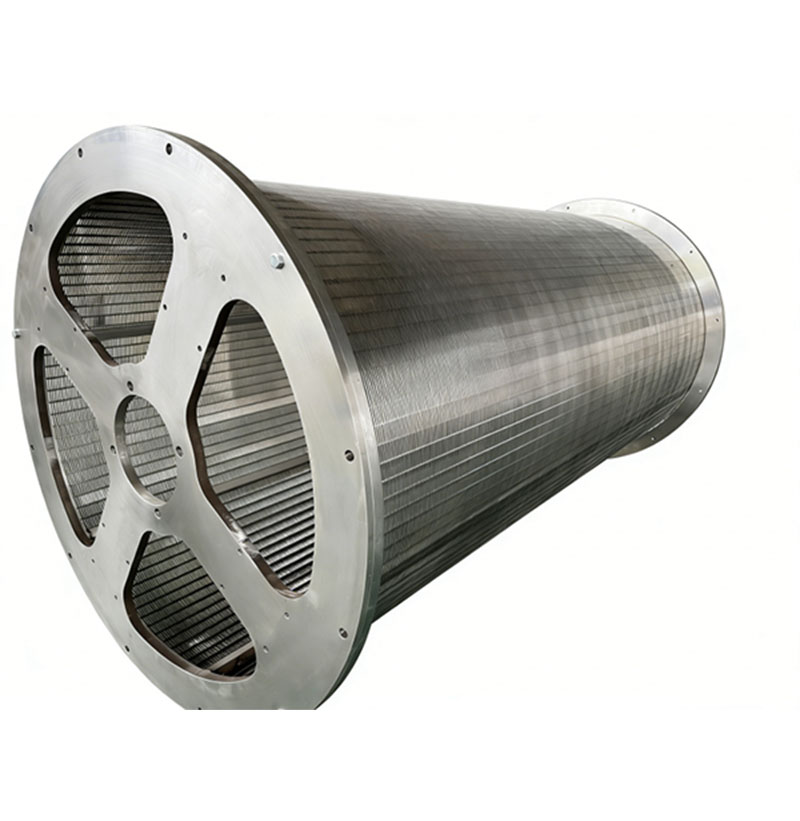
Ротарный барабанный экран из нержавеющей стали (также известный как ротационный барабанный фильтр или микроэкран) - это непрерывно и автоматически работающее переднее устройство разделения твердой и жидкой. Его основной компонентом является большой цилиндрический барабан, установленный горизонтально или с небольшим наклоном. Вся окружность барабана покрыта клиновой проволочной экраном из нержавеющей стали (экран Джонсона). Сточные воды, подлежащие очистке, поступают в один конец барабана. Под гравитацией фильтрат проходит через клиновые слои провода, в то время как твердое подвешенное вещество (например, волокна, волосы, пластиковые куски и мелкие частицы) удерживается на внутренней поверхности барабана. По мере того как барабан медленно вращается, удерживаемый мусор поднимается сверху, где он промывается распылительной водой в сборную воду, обеспечивая непрерывный процесс автоматического скрининга, фильтрации и удаления остатков
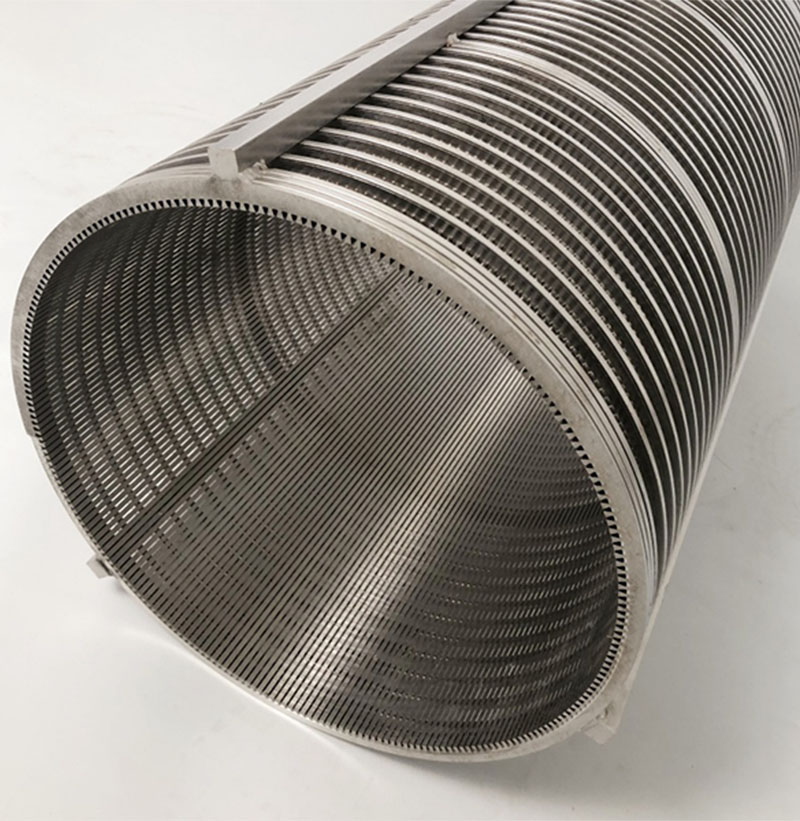
Корзина экрана для винтового сепаратора пресса
Корзина экрана из нержавеющей стали, обычно известная как "V-проволочный экран", "корзина экрана пресса" или "цилиндр экрана", является основным компонентом винтовых сепараторов твердого и жидкого пресса. Он устанавливается внутри спирального пресса, охватывающего вращающийся винтовый вал. Принцип работы заключается в следующем: сырый шлам с высоким содержанием влаги толкается в корзину экрана винтовым валом. Под давлением и транспортировкой спиральных полетов жидкость (фильтрат) вытесняется через точные непрерывные щелины экранной корзины, в то время как твердый материал (торт с гноем) удерживается внутри и продолжает сжаться и обезводняться, когда он движется вперед. Наконец, обезводненные твердые вещества выбрасываются из выхода, достигая отделения твердой и жидкой.
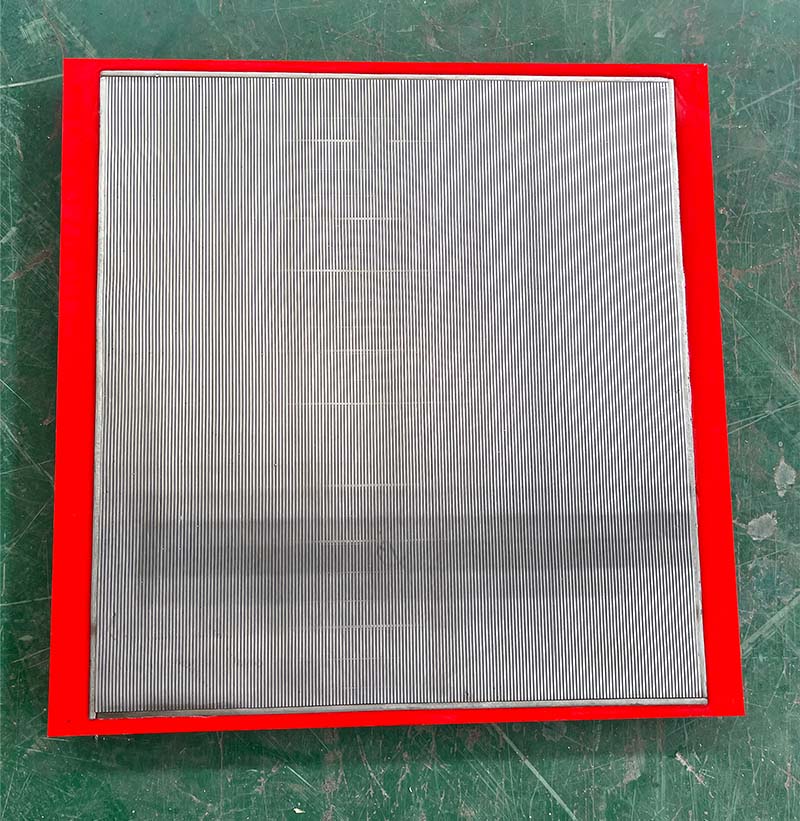
Клиновая провода вибрирующий экран
Вибрационный экран из нержавеющей стали - это устройство разделения твердой и жидкой железы с поверхностью экрана, сделанной путем точной сварки V-образных проводов из нержавеющей стали, интегрированных в систему высокочастотной вибрации. С равномерными слотами, износостойкостью и коррозионной стойкостью он подходит для мокрого скрининга и обезводнения. Вибрационный механизм позволяет быстро рассеивать материал и эффективно ситить, эффективно предотвращая забор экрана. Широко используется в таких отраслях промышленности, как горнодобывающая промышленность, металлургия, пищевая переработка и защита окружающей среды, он особенно подходит для обработки тонких частиц, высоковязких или легко агломерируемых материалов, предлагая такие преимущества, как высокая точность скрининга, большая мощность обработки и длительный срок службы.
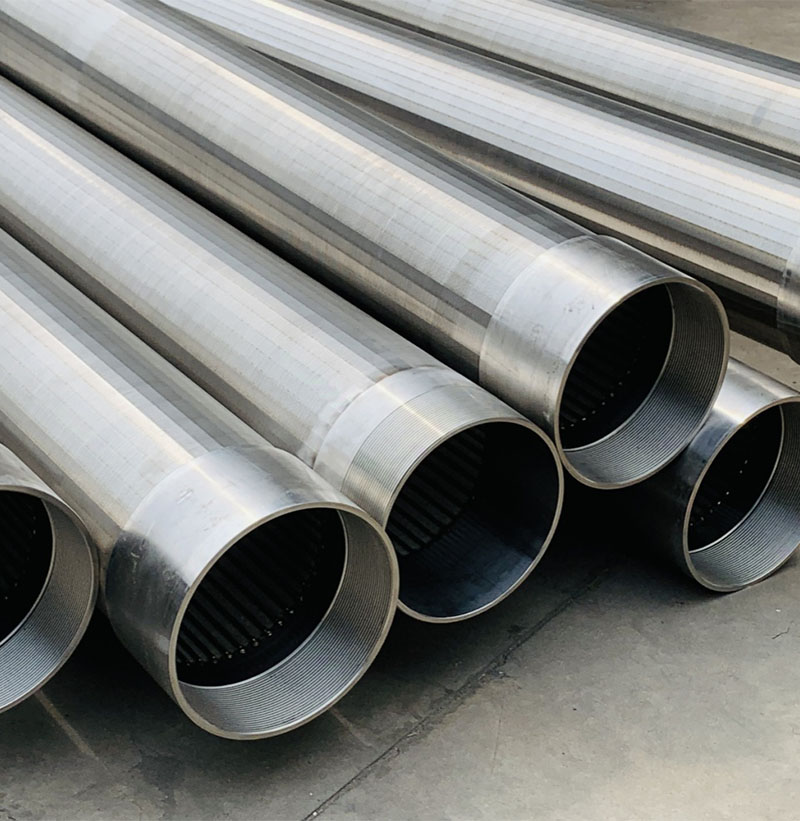
Клиновая провода экран воды
Johnson Deep Water Well Screens, также известные как непрерывные слотовые экраны или проволочные обмоточные экраны, изначально были разработаны для решения проблем контроля песка в мелкозернистых и равномерных песчаных образованиях. Эти геологические условия обычно встречаются в глубоких подземных водоносных горизонтах, где обычные перфорированные трубы часто страдают от забора, чрезмерного производства песка и снижения эффективности скважин.
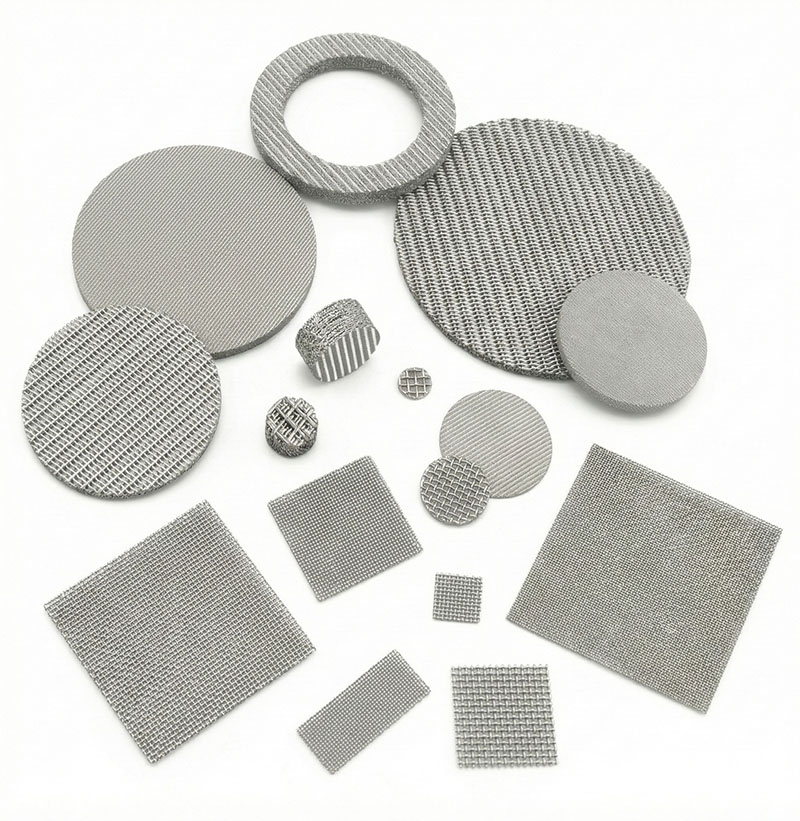
Печеная сетка пластина и диск
Печеные сетчатые пластины и диски являются высокоточными компонентами фильтрации, изготовленными путем соединения нескольких слоев проволочной сетки из нержавеющей стали через специализированный вакуумный процесс спечения. В отличие от традиционной сетки, которая полагается только на механическое плетение, эти пластины сливаются в каждой точке контакта, превращая отдельные проводы в жесткий, интегрированный пористый металлический лист.Эти пластины могут быть настроены на различные формы, чаще всего круглые диски, чтобы соответствовать конкретному промышленному оборудованию. Они предлагают идеальный баланс высокой проницаемости, крайней конструктивной целостности и точных показателей фильтрации. Поскольку они изготовлены полностью из металла (обычно 304 или 316L), они обеспечивают «постоянный» фильтрационный раствор, который может выдерживать высокие температуры и коррозионные химические вещества, оставаясь полностью чистимым и повторно используемым.