
Sobre nós
Seu fabricante especializado de telas Wedge Wire;
Seu parceiro confiável e fonte de inovação
Obter uma quota livre
-
Casa

-
Blog
-
Blog Industrial
- Sieve Bend Screen Capacity in Mineral Slurry Applications
Sieve Bend Screen Capacity in Mineral Slurry Applications
-
 autor
autor - 17,Setembro
A slurry line can deliver more flow while leaving its discharged solids wetter. For mineral processing teams, that is the difficulty with sieve bend screen capacity: the useful limit depends on the separation achieved, as well as the feed accepted. Understanding how slurry crosses the curved panel helps explain why two screens with similar dimensions can perform differently.
Capacity depends on the separation duty
A sieve bend screen removes liquid and some fine particles as slurry travels across its curved surface. Coarser material continues toward the discharge. In tailings pre-dewatering, the useful result is less water accompanying retained solids. In classification, the size distribution of both outgoing streams matters. These duties can produce different capacity limits on the same panel.
Capacity figures need a clear measurement basis. A slurry flow in cubic metres per hour includes liquid and solids; dry tonnes per hour measures only solids. A rating per metre of screen width also differs from the total flow through an assembly. Comparing these figures without their units and feed conditions can create a misleading impression of spare capacity.
Feed distribution controls the width doing the work
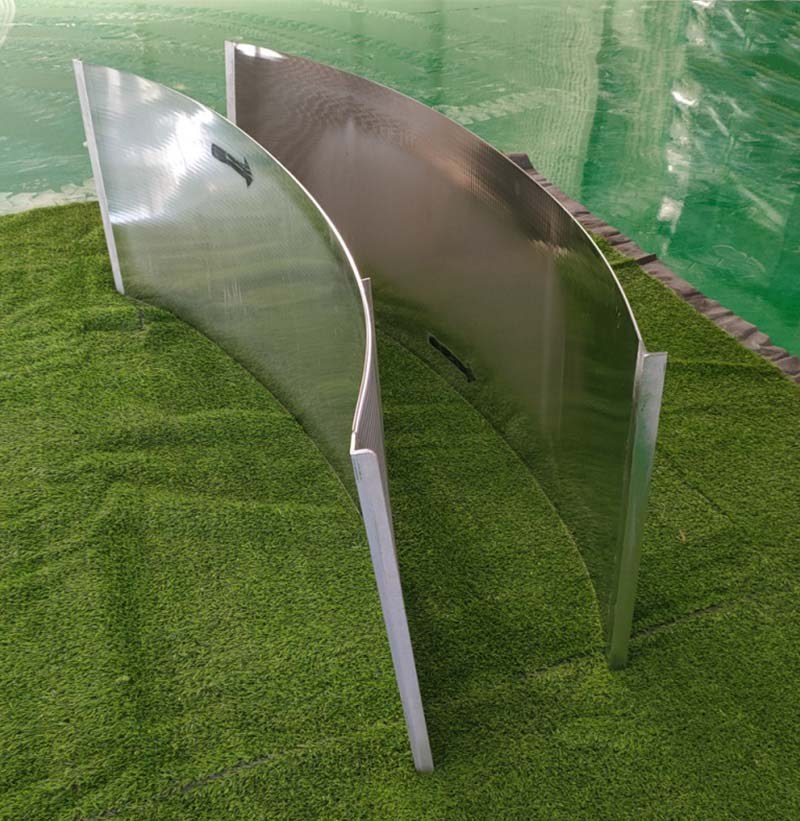
The separation mechanism depends on slurry arriving tangentially and spreading across the upper screen. Flow crosses the profile wires and slots, allowing successive wire edges to remove layers of liquid and undersize material. The feed box therefore influences how much of the screen can contribute to separation.
Uneven feeding concentrates the load into a smaller working width. A heavy stream down the centre can coexist with lightly loaded edges. Increasing the total feed in that condition intensifies local loading before the full panel is effectively used. Checking the distribution across the entry lip is a useful first response when discharge becomes unexpectedly wet.
Feed velocity belongs in the same assessment as distribution. A different feed head or gate setting changes how slurry reaches the arc, so a capacity figure established under one inlet condition cannot automatically describe another. A wider replacement panel needs an inlet arrangement that spreads the additional flow across that width.

Solids concentration changes the load behind the flow
Equal slurry volumes can carry very different solids loads. As an illustrative calculation, 100 cubic metres per hour at a measured slurry density of 1.2 tonnes per cubic metre and 20% solids by mass contains 24 dry tonnes per hour. The calculation is volume flow multiplied by slurry density and solids mass fraction; these values are assumptions, not a screen rating.
Particle size distribution also affects the separation that remains achievable at a given feed rate. A stream rich in fine particles behaves differently from a coarser feed, even when both have the same solids percentage. Clay content and slurry flow behaviour deserve attention when operating results change after a change in ore feed.
Dilution changes both sides of the capacity problem. Adding water reduces the solids concentration but increases the liquid volume that must be handled. It should therefore be judged against the measured separation result and downstream water load. A lower solids percentage alone does not establish that the circuit can accept more dry tonnes.

Slots and the curved surface set different limits
O tela de arame em cunha provides continuous openings between supported profile wires. Slot width and wire width together influence the available drainage area. Opening the slots can increase drainage, but it also changes which particles pass through. A capacity improvement that sends valuable retained material into the undersize stream may undermine the purpose of the screen.
The curved path adds another design variable. Radius and wrap angle determine the developed arc length, while the screen width determines how broadly the feed can spread. Longer arcs can be relevant to feeds with a high solids content. Width, length and slot opening therefore need to be considered together, rather than reduced to one overall panel area.
Mineral slurry duties require the curved geometry to suit the intended classification or dewatering result. BTOSLOT offers stainless steel sieve bends for tailings dewatering, cyclone underflow classification and slurry thickening, with customizable slots. This makes the curved screen a relevant component to assess against the actual feed and separation objective.
A useful capacity check follows both outlet streams
An operating trial establishes sieve bend screen capacity more meaningfully when feed and separation are recorded together. At each stable feed condition, compare the water carried with retained solids and the particles reporting to the undersize. Increasing throughput is useful only while those results remain acceptable for the process.
Screen condition must remain part of that comparison. Deposits can obscure drainage openings, while wear changes the working wire edges. Comparing a clean panel with a worn or partly blinded panel can make a feed change appear responsible for a loss that has another cause. Record panel condition before interpreting the trial.
A representative trial should include the feed variation the plant actually encounters. Keep separate records for materially different solids concentrations or ore conditions instead of averaging them into one reassuring number. The resulting operating range is more useful than a peak flow observed briefly under favourable conditions.
The operating window matters more than peak flow
Useful capacity is the flow a sieve bend can process while preserving its intended separation. Even feeding makes the width available; slurry characteristics determine the load; slots and curvature govern how that load separates. Evaluate those conditions together, then confirm the operating range from both discharge streams before increasing plant throughput.
Perguntas frequentes
What is the capacity of a sieve bend screen?
There is no single capacity for all sieve bends. The applicable figure depends on width, slot opening, wire profile, feed conditions and the required separation. Confirm whether a stated rate refers to slurry volume, dry solids or flow per unit width.
Does doubling screen width double capacity?
Additional width provides more parallel screening surface, but proportional capacity requires comparable loading and effective feed distribution. A narrow inlet stream can leave much of the extra width underused.
Can wider slots increase throughput?
Wider slots can improve drainage, but they also affect particle passage. Check the undersize and retained product before treating increased flow as a process improvement.
Why does capacity fall when the ore feed changes?
Changes in solids concentration, particle sizes and flow behaviour can alter separation at the same volumetric feed rate. Check these alongside feed distribution and panel condition.
Does a static sieve bend need a motor?
The static screen has no driven screening motion; it uses the incoming slurry’s energy and gravity. Pumps or other equipment supplying the feed can still consume power, so the complete circuit is not necessarily energy-free.
Recent Post

Produtos relacionados
Produtos de melhor venda
Pantalla Starch
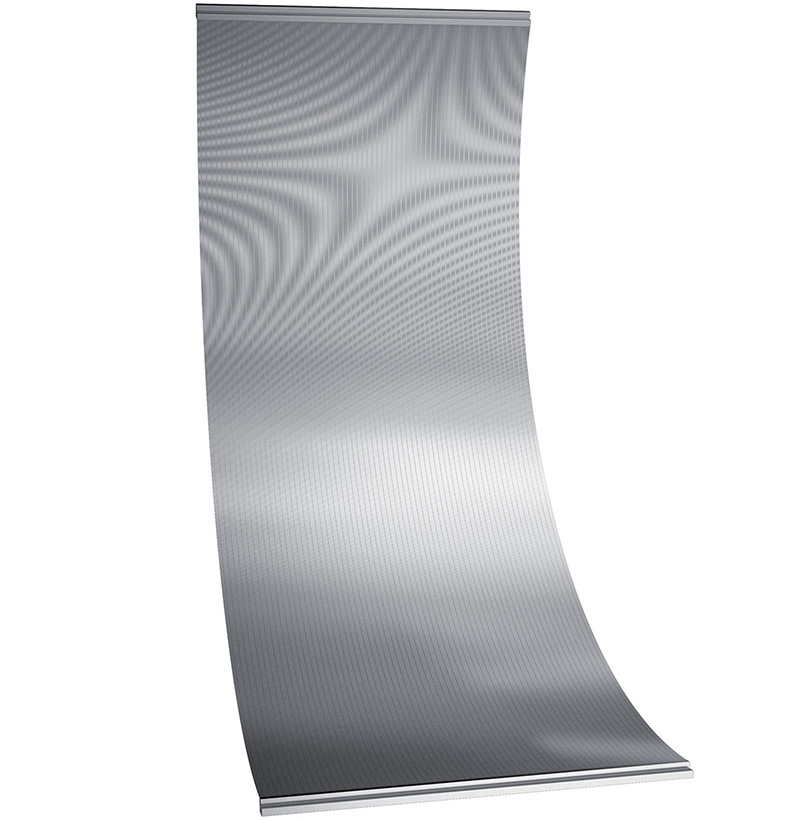
A Wedge Wire Starch Curved Screen é um dispositivo de rastreamento curvo especificamente projetado para a indústria do amido. Ela apresenta uma superfície de tela em forma de arco feita de fios de aço inoxidável de perfil V, bem suavizados, utilizando força centrífuga ou gravidade para alcançar deságua rápida e classificação de molho de amido. Sua estrutura curva prolonga o tempo de retenção de esgoto, melhorando a eficiência de separação sólida-líquida. É adequado para extração de amido, refinação e processos de recuperação de subprodutos para amidos como batata, milho e cassava. Caracterizado por um rastreio eficiente, resistência ao uso e bloqueio, e manutenção fácil, este equipamento é um dispositivo de separação sólido-líquido chave no processo moderno de amido.
Drum Rotar
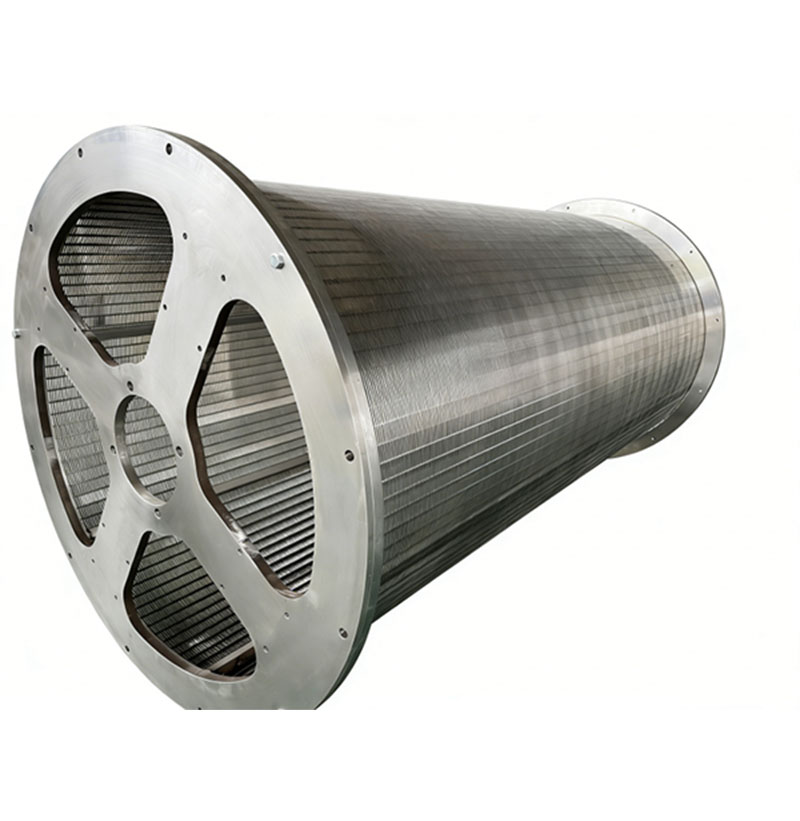
A tela rotatória de tubo de fio de ferro inoxidável Wedge Wire (também conhecida como um estrangeiro rotatório de tubo ou micro-tela) é um dispositivo de separação sólido-líquido de fronte que funciona continuamente e automaticamente. Seu componente central é um grande tambor cilindrico instalado horizontalmente ou em uma ligeira inclinação. A superfície circunferencial inteira do tambor está coberta com uma tela de fio de fio de a ço inoxidável (tela Johnson). A água residual a ser tratada flui para um extremo do tambor. Sob a gravidade, o filtrado passa através dos intervalos de fio de corda, enquanto matéria sólida suspensa (como fibras, cabelo, peças plásticas e partículas finas) é mantida na superfície interior do tambor. À medida que o tambor gira lentamente, os resíduos retirados são levantados para o topo, onde são lavados por água pulverizada em um tronco de coleta, atingindo um processo contínuo de rastreamento automático, filtração e remoção de resíduos
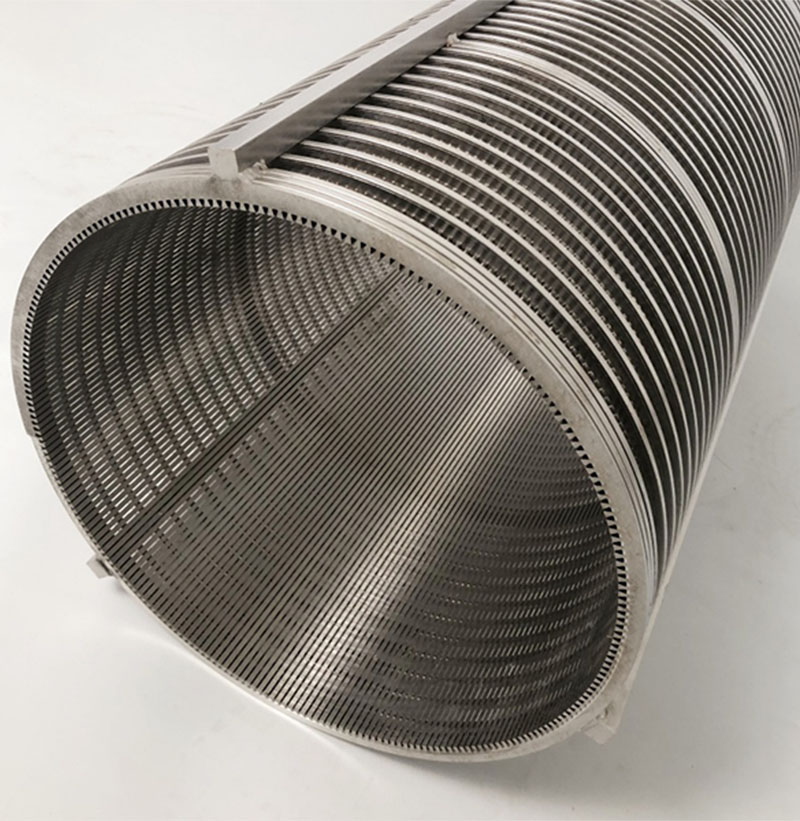
Basquete de Pantalla para Separador de Impressão de Pantalla
O cesto de tela de fio de a ço inoxidável, comumente conhecido como "tela de fio V", "cesto de tela de pulsação" ou "cilindro de tela", é um componente central de separadores de fio de pulsação sólido-líquido. - Está instalado dentro da imprensa espiral, encerrando o barro rotante. O princípio de funcionamento é o seguinte: a chuva bruta com alto conteúdo de umidade é empurrada no cesto da tela pelo barro de screw. Sob a ação de apertação e de transmissão dos voos espirais, o líquido (filtrado) é forçado a sair através dos slots precisos e contínuos do cesto da tela, enquanto o material sólido (bolo de manteiga) é mantido dentro e continua a ser comprimido e desmatado enquanto se move em frente. Finalmente, os sólidos deshidratados são descarregados da saída, atingindo separação sólida-líquida.
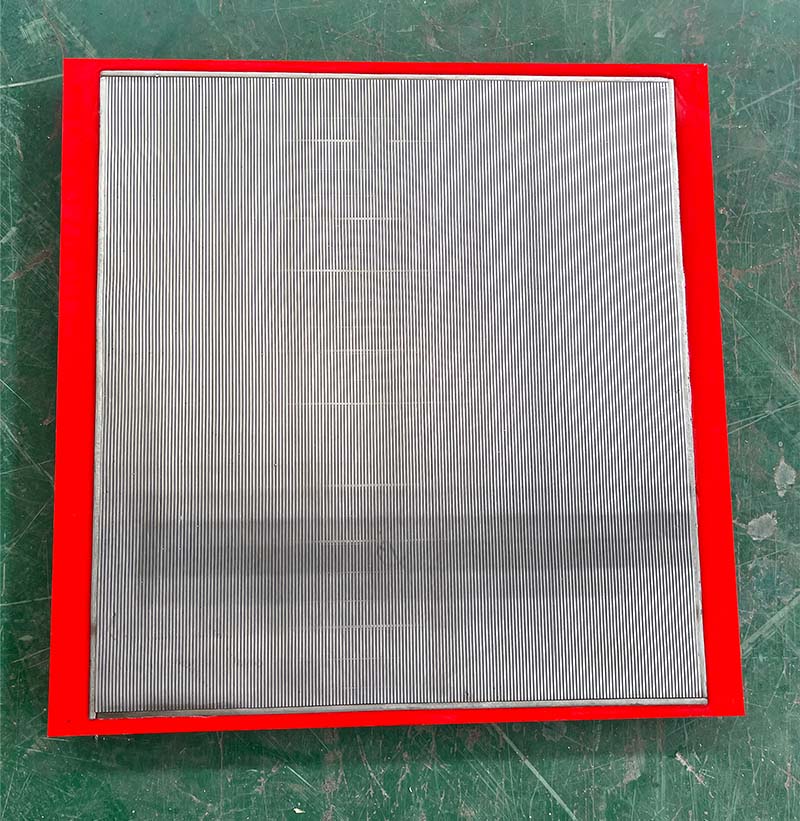
Wedge Wire Vibrating Screen
Uma tela de vibração de fios de a ço inoxidável é um dispositivo de separação sólido-líquido com uma superfície de tela feita precisamente soldando fios de aço inoxidável em forma V, integrado com um sistema de vibração de alta frequência. Com slots uniformes, resistência ao uso e resistência à corrosão, é adequado para operações de rastreamento húmido e desmatamento. O mecanismo de vibração permite uma rápida dispersão de materiais e uma assediação eficiente, evitando efetivamente o bloqueio da tela. Uma grande utilização em indústrias como mineração, metalurgia, processamento de alimentos e proteção ambiental, é particularmente adequada para manejar partículas finas, alta viscosidade ou materiais facilmente aglomerados, oferecendo vantagens como alta precisão de rastreamento, grande capacidade de processamento e longa vida de serviço.
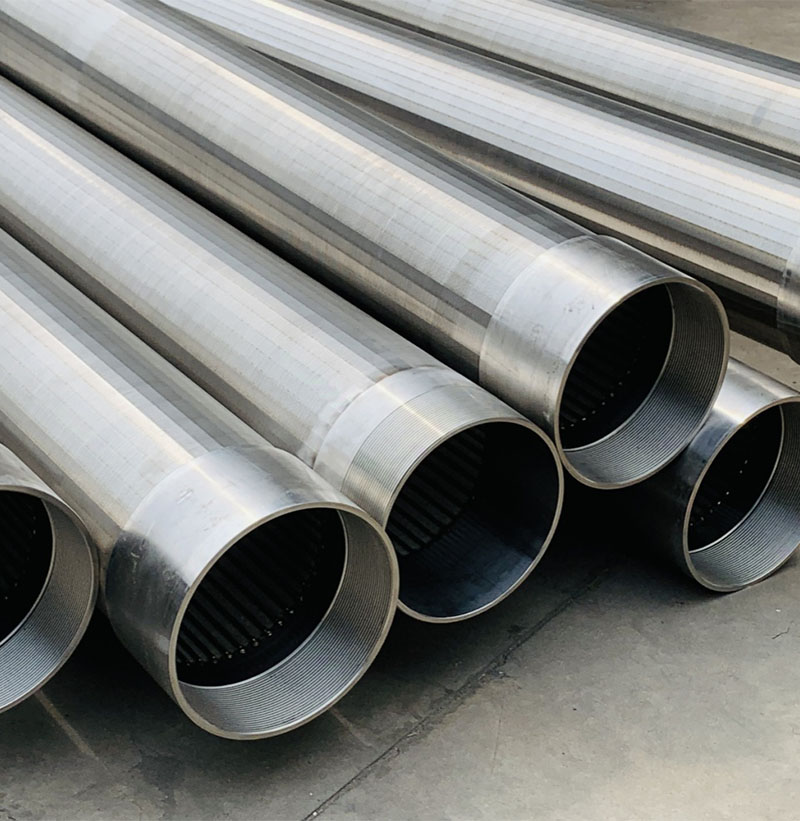
Wedge Wire Water Well Screen
Johnson Deep Water Well Screens, também chamadas de telas de slot contínuas ou telas de envolvimento de fios, foram originalmente desenvolvidos para resolver desafios de controle de areia em formações de areia finas e uniformes. Essas condições geológicas são comumente encontradas em aquíferos de água subterrânea profunda, onde tubos perforados convencionais frequentemente sofrem de obstruções, produção excessiva de areia e redução da eficiência do poço.
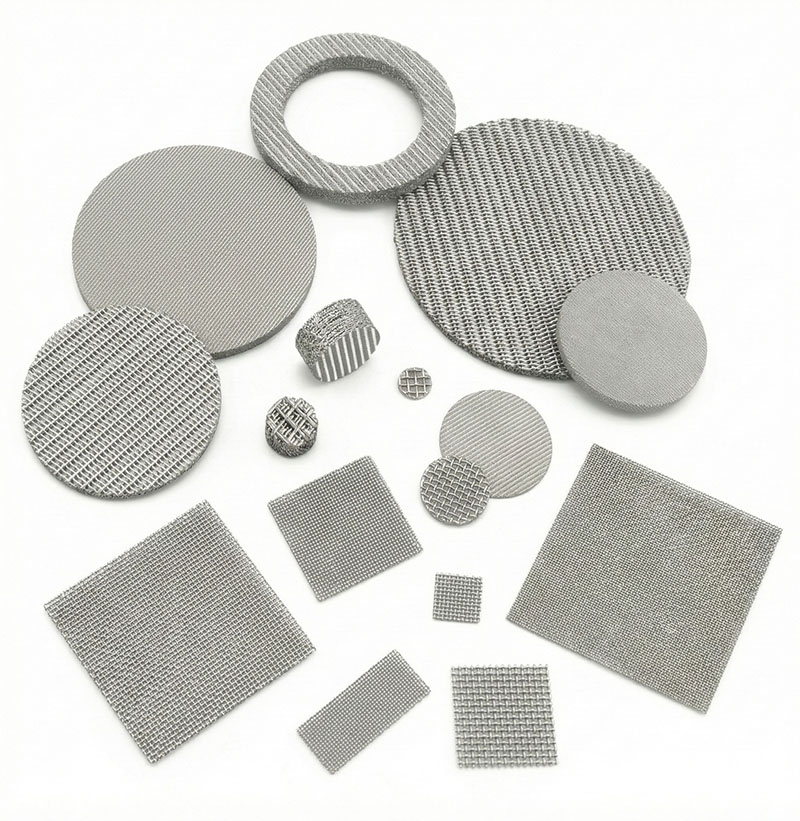
Plata e Disco de Malha Sintered
Platas e discos de malha sinteradas são componentes de filtração de alta precisão fabricados ligando múltiplas camadas de malha de fio de a ço inoxidável através de um processo de sinterização de vácuo especializado. Ao contrário das malhas tradicionais que dependem apenas de tecido mecânico, essas placas são fusionadas em todos os pontos de contato, transformando fios individuais em uma folha metal rígida e integrada porosa.Essas placas podem ser personalizadas em várias formas, mais comunmente discos circulares, para encaixar equipamentos industriais específicos. Eles oferecem um equilíbrio ideal de alta permeabilidade, integridade estrutural extrema e notações de filtração precisas. Porque são feitos inteiramente de metal (tipicamente 304 ou 316L), eles fornecem uma solução de filtração "permanente" que pode resistir a altas temperaturas e substâncias químicas corrosivas enquanto permanecem completamente limpas e reutilizables.