
Sobre nós
Seu fabricante especializado de telas Wedge Wire;
Seu parceiro confiável e fonte de inovação
Obter uma quota livre
-
Casa

-
Blog
-
Blog Industrial
- How Centrifuge Screen Baskets Dewater High-Solids Mineral Slurry

How Centrifuge Screen Baskets Dewater High-Solids Mineral Slurry
-
 autor
autor - 10,Setembro
 autor
autor 
High-solids mineral slurry can overwhelm a dewatering stage when free liquid, abrasive particles, and a heavy solids load arrive together. A centrifuge screen basket creates a controlled drainage surface inside the rotating machine, so liquid leaves quickly while the valuable solids remain in the transport path. The practical question is how the basket geometry and slot design work together without sacrificing recovery or service life.
What the basket changes inside a centrifuge
A centrifuge basket turns rotational force into a pressure difference across the screen surface. The feed forms a moving solids layer against the basket, and liquid is driven through continuous slots while cake travels toward discharge. This helps when gravity drainage leaves slurry liquid that would dilute the next process step. A correctly fitted centrifuge basket keeps drainage open, while a conical screen guides the cake.
A wedge wire screen basket uses profile wires welded to support rods, producing smooth openings. Its V-shaped passage is narrow at the surface and wider behind it, reducing deep wedging and helping filtrate flow stay stable.
How high-solids slurry moves across the screen
Feed distribution determines whether screen area is used evenly. A concentrated underflow entering one side can create a thick local cake, higher differential pressure, and faster wear even when average flow looks acceptable.
A well-matched conical screen gives solids a progressive path. Centrifugal force presses liquid outward through the slots, while cone angle and rotation move retained cake toward the outlet. The opening cone gives liquid more opportunities to escape before discharge. This conical screen also needs balance at machine speed.
This is where a conical wedge wire screen can be useful in a mineral circuit: the continuous slot surface supports drainage along the whole travel path, rather than forcing liquid through a small set of isolated holes. The result is a more predictable handoff to thickening, filtration, or tailings handling.
The design variables that control dewatering
Slot and geometry decisions
Slot opening is not a direct copy of nominal particle size. Angular grains can pass diagonally, while flaky particles can bridge a slot. A pilot sample and full particle-size distribution are more reliable than one sieve result.
Consider these variables as a group:
*Slot width: balances filtrate clarity, solids recovery, and blinding risk.
*Open area: increases drainage potential, but must be supported by adequate wire and rod strength.
*Cone angle: changes residence time, cake movement, and the useful screening area.
*Material and wear allowance: 304/316 stainless steel suits many duties; duplex or a wear coating may be justified for severe abrasion.
*Interface and support: flange, clamp, or custom mounting must keep the basket concentric at operating speed.
| Condition | What it does to the basket | Design response |
| High clay or slimy fines | Builds a low-permeability cake and raises pressure drop | Allow cleaning access, review slot width, and avoid overloading the feed zone |
| Coarse, angular ore | Accelerates impact and slot-edge wear | Use a wear-resistant grade or coating and verify support spacing |
| Variable cyclone underflow | Creates uneven cake thickness and fluctuating filtrate quality | Improve feed distribution and monitor torque, vibration, and pressure |
| Very fine target cut | Improves retention but can reduce throughput | Confirm the real PSD with a pilot test before fixing the opening |

Why anti-clogging matters more at high solids
High solids make a small loss of open area expensive. As fines cover the surface, more force is needed to push liquid through. The V-shaped slot reduces particle locking, while the smooth face helps a scraper, rinse, or backwash release the cake.
Cleaning should follow operating signals rather than a fixed calendar. Rising differential pressure, lower filtrate flow, higher torque, or changed filtrate solids can indicate surface loading. Confirm cleaning pressure and chemical compatibility before setting a routine.
A practical selection conversation with a centrifuge basket supplier should include feed density, PSD, temperature, chemistry, target moisture, expected throughput, rotation speed, and the available cleaning method. Those inputs let the supplier check slot tolerance, cone geometry, weld pattern, and mounting loads as one operating system.
Where the basket fits in a mineral circuit
Cyclone underflow is a natural application because it already arrives concentrated and needs rapid liquid removal before storage, transport, or a downstream polishing step. The basket can also support tailings thickening, media recovery, and selected classification duties when the retained solids and filtrate quality are defined clearly.
BTOSLOT can translate those operating inputs into a custom conical assembly, including 304/316 stainless steel or duplex options, slot ranges from 0.1 to 5 mm, cone angles from 10 to 60 degrees, and flange, thread, or clamp interfaces. These are configurable design ranges, not a universal performance guarantee; final dimensions should be confirmed against the machine and slurry test results.
A focused way to specify the basket
Specification details that prevent surprises
A useful specification starts with the separation outcome. State target solids recovery and filtrate clarity, then add feed conditions, speed, centrifugal load, cleaning method, and failure consequence. This keeps nominal slot size from becoming the only criterion.
Before release, ask for a drawing showing screening direction, support arrangement, weld details, and interface dimensions. Check finished-basket dimensions when concentricity or balance is tight, and agree how abrasive wear will be monitored.
The operating takeaway
A centrifuge screen basket dewaters high-solids mineral slurry by combining centrifugal force, a progressively supported screen surface, and slots sized for the real particle population. The best result is not simply the driest cake; it is a stable balance of liquid removal, solids retention, cleanability, and wear. Define that balance with representative slurry data, then match the cone and screen to the machine rather than selecting a basket from a generic capacity claim.
For background on wedge wire construction and related mining screens, see BTOSLOT’s screening in mineral processing resources. A short operating data sheet is enough for a first design review; the final basket should follow a drawing and application check.

Perguntas frequentes
Can a conical basket handle cyclone underflow directly?
It can, when the underflow density, particle size, chemistry, and flow are within the centrifuge design envelope. Feed distribution and wear protection are critical because cyclone underflow can be both concentrated and abrasive.
Does a finer slot always produce a drier cake?
No. A finer slot may improve retention but can blind sooner and raise pressure drop. Cake permeability, residence time, and the liquid viscosity often matter as much as the nominal opening.
Which stainless steel is suitable for mineral slurry?
304 or 316 stainless steel covers many general duties. Chloride exposure, abrasion, temperature, and cleaning chemistry may justify duplex steel or a wear-resistant surface; material selection should follow the actual slurry.
How can operators tell that the basket is loading up?
Watch for a sustained rise in differential pressure or torque, lower filtrate flow, higher filtrate solids, or an unusual vibration pattern. These signals should trigger an equipment-specific inspection and cleaning check.
What information is needed to size a basket?
Provide feed rate, solids concentration, PSD, density, viscosity, target moisture, allowable solids loss, rotation speed, available envelope, mounting details, and the planned cleaning method. Representative samples improve the slot and cone-angle decision.
Recent Post
Produtos relacionados
Produtos de melhor venda
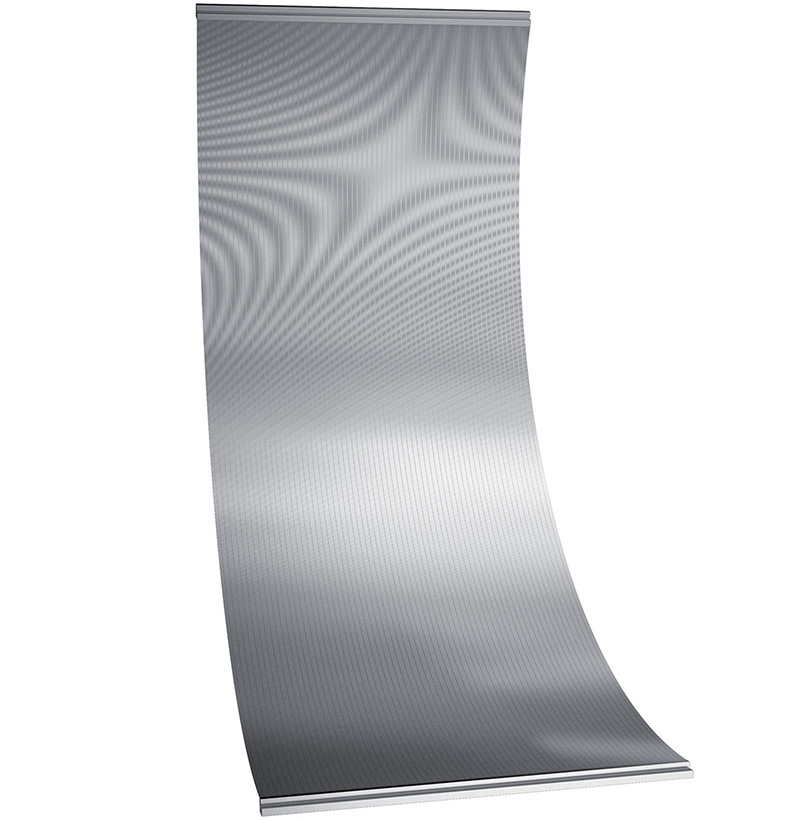
Pantalla Starch
A Wedge Wire Starch Curved Screen é um dispositivo de rastreamento curvo especificamente projetado para a indústria do amido. Ela apresenta uma superfície de tela em forma de arco feita de fios de aço inoxidável de perfil V, bem suavizados, utilizando força centrífuga ou gravidade para alcançar deságua rápida e classificação de molho de amido. Sua estrutura curva prolonga o tempo de retenção de esgoto, melhorando a eficiência de separação sólida-líquida. É adequado para extração de amido, refinação e processos de recuperação de subprodutos para amidos como batata, milho e cassava. Caracterizado por um rastreio eficiente, resistência ao uso e bloqueio, e manutenção fácil, este equipamento é um dispositivo de separação sólido-líquido chave no processo moderno de amido.
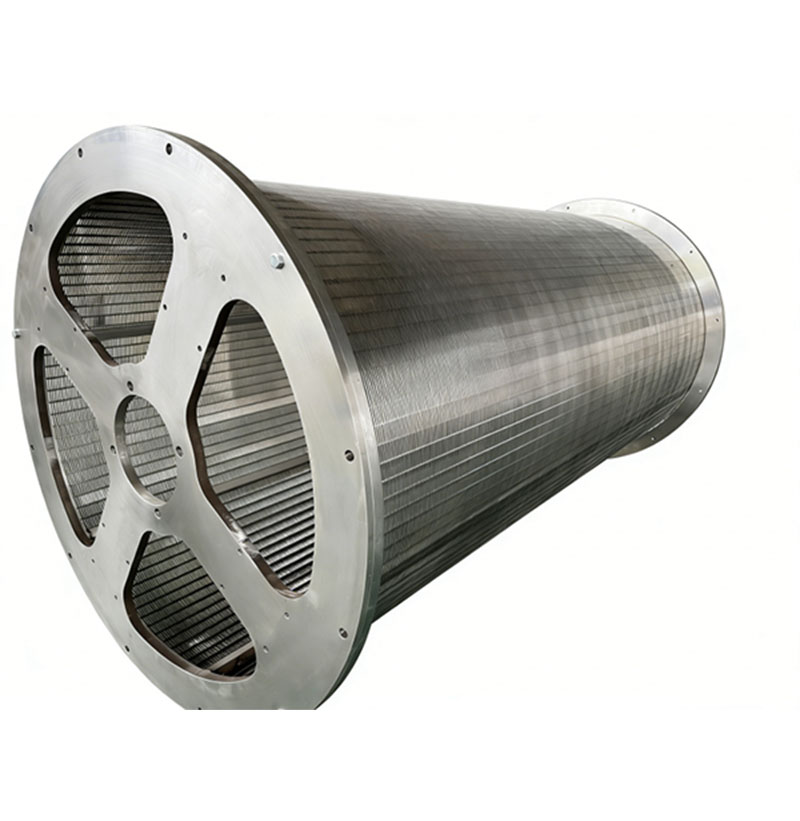
Drum Rotar
A tela rotatória de tubo de fio de ferro inoxidável Wedge Wire (também conhecida como um estrangeiro rotatório de tubo ou micro-tela) é um dispositivo de separação sólido-líquido de fronte que funciona continuamente e automaticamente. Seu componente central é um grande tambor cilindrico instalado horizontalmente ou em uma ligeira inclinação. A superfície circunferencial inteira do tambor está coberta com uma tela de fio de fio de a ço inoxidável (tela Johnson). A água residual a ser tratada flui para um extremo do tambor. Sob a gravidade, o filtrado passa através dos intervalos de fio de corda, enquanto matéria sólida suspensa (como fibras, cabelo, peças plásticas e partículas finas) é mantida na superfície interior do tambor. À medida que o tambor gira lentamente, os resíduos retirados são levantados para o topo, onde são lavados por água pulverizada em um tronco de coleta, atingindo um processo contínuo de rastreamento automático, filtração e remoção de resíduos
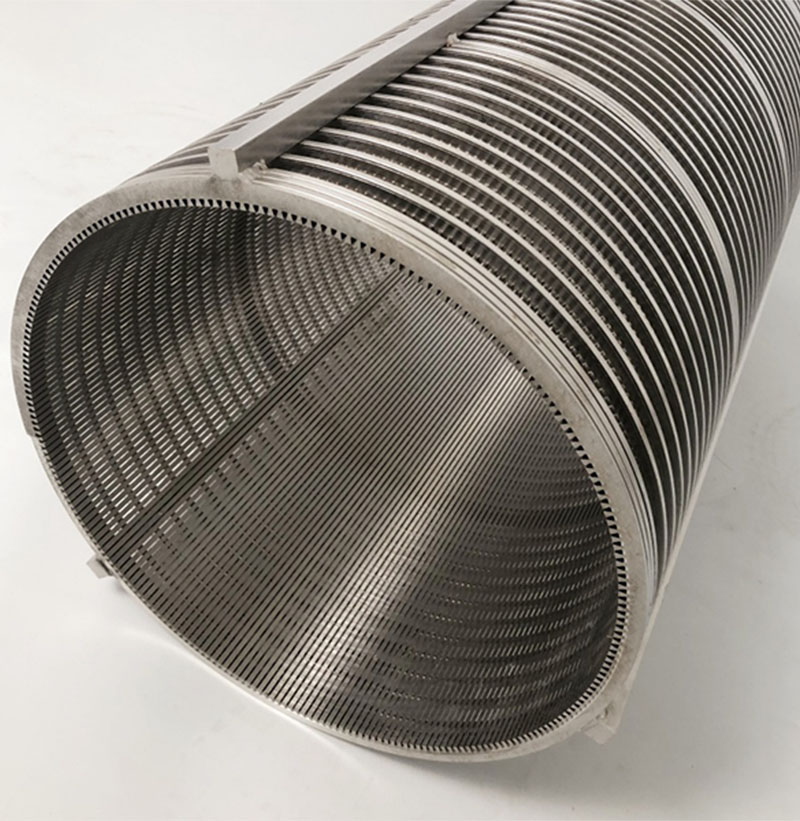
Basquete de Pantalla para Separador de Impressão de Pantalla
O cesto de tela de fio de a ço inoxidável, comumente conhecido como "tela de fio V", "cesto de tela de pulsação" ou "cilindro de tela", é um componente central de separadores de fio de pulsação sólido-líquido. - Está instalado dentro da imprensa espiral, encerrando o barro rotante. O princípio de funcionamento é o seguinte: a chuva bruta com alto conteúdo de umidade é empurrada no cesto da tela pelo barro de screw. Sob a ação de apertação e de transmissão dos voos espirais, o líquido (filtrado) é forçado a sair através dos slots precisos e contínuos do cesto da tela, enquanto o material sólido (bolo de manteiga) é mantido dentro e continua a ser comprimido e desmatado enquanto se move em frente. Finalmente, os sólidos deshidratados são descarregados da saída, atingindo separação sólida-líquida.
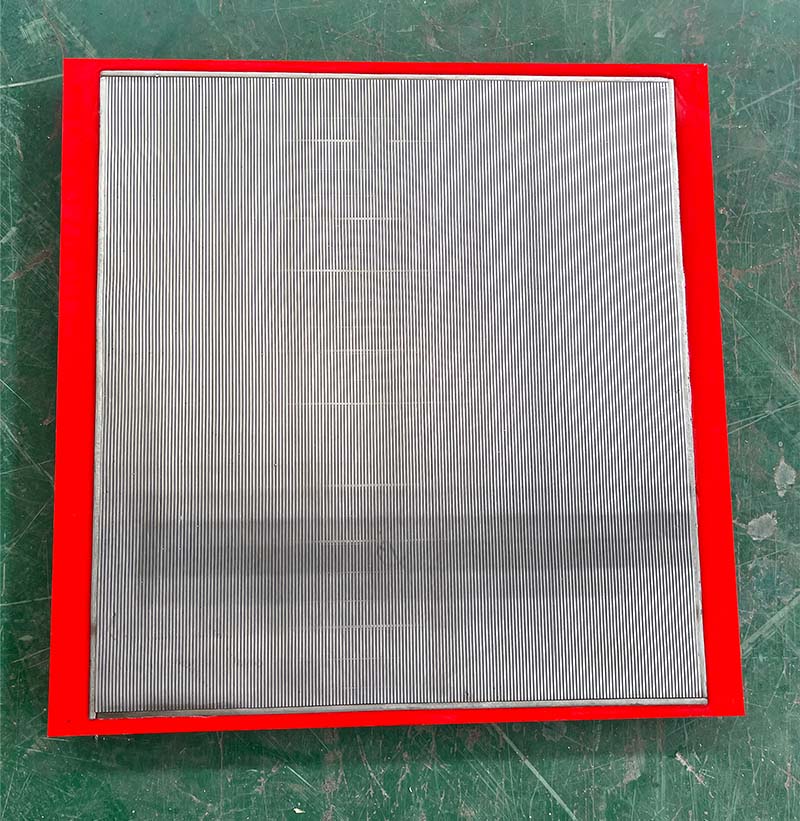
Wedge Wire Vibrating Screen
Uma tela de vibração de fios de a ço inoxidável é um dispositivo de separação sólido-líquido com uma superfície de tela feita precisamente soldando fios de aço inoxidável em forma V, integrado com um sistema de vibração de alta frequência. Com slots uniformes, resistência ao uso e resistência à corrosão, é adequado para operações de rastreamento húmido e desmatamento. O mecanismo de vibração permite uma rápida dispersão de materiais e uma assediação eficiente, evitando efetivamente o bloqueio da tela. Uma grande utilização em indústrias como mineração, metalurgia, processamento de alimentos e proteção ambiental, é particularmente adequada para manejar partículas finas, alta viscosidade ou materiais facilmente aglomerados, oferecendo vantagens como alta precisão de rastreamento, grande capacidade de processamento e longa vida de serviço.
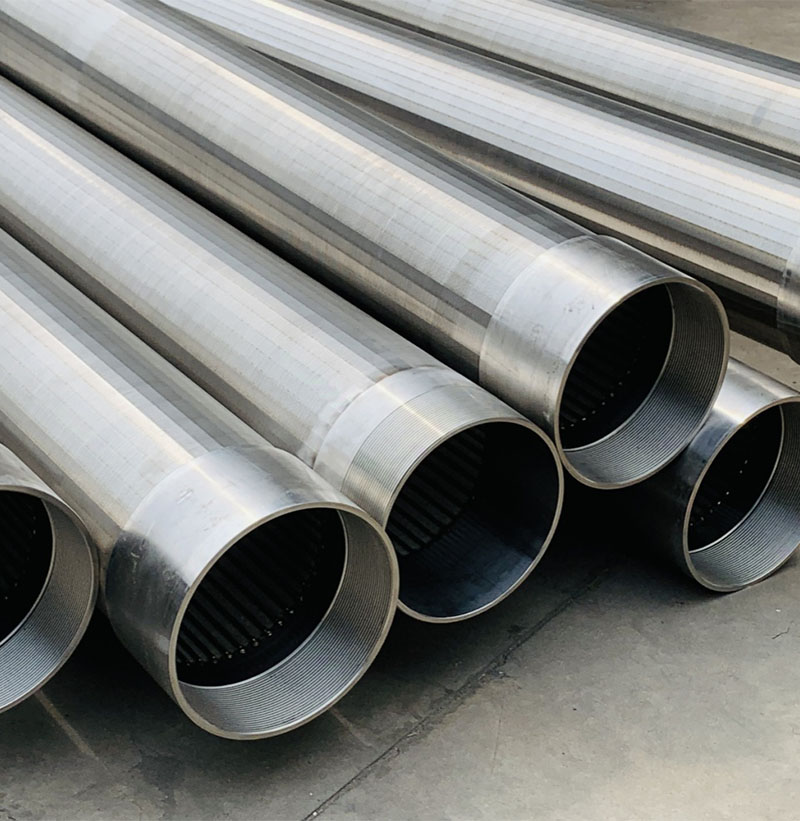
Wedge Wire Water Well Screen
Johnson Deep Water Well Screens, também chamadas de telas de slot contínuas ou telas de envolvimento de fios, foram originalmente desenvolvidos para resolver desafios de controle de areia em formações de areia finas e uniformes. Essas condições geológicas são comumente encontradas em aquíferos de água subterrânea profunda, onde tubos perforados convencionais frequentemente sofrem de obstruções, produção excessiva de areia e redução da eficiência do poço.
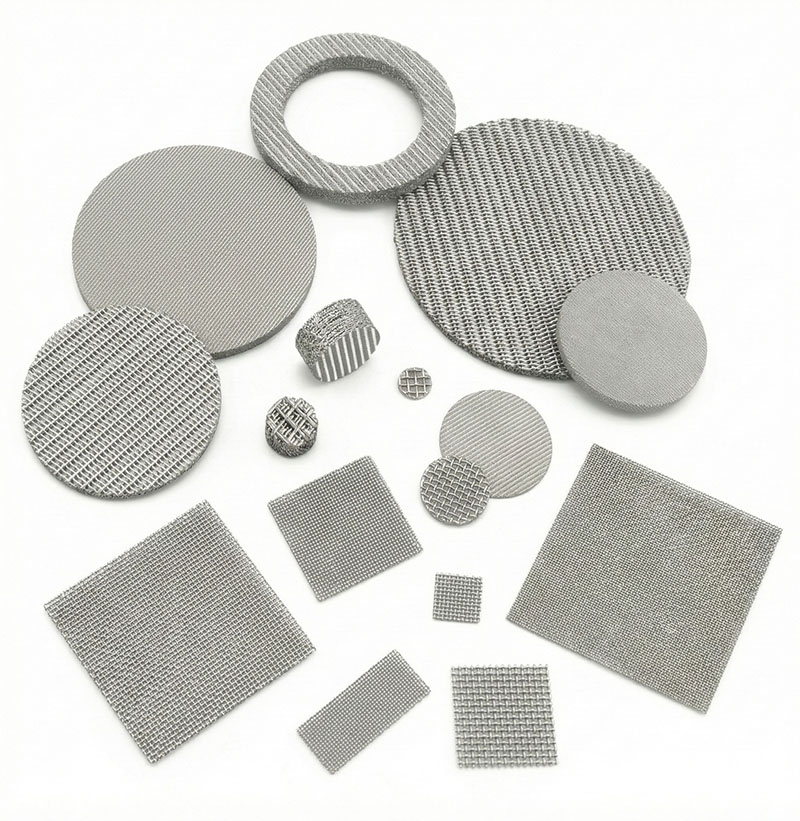
Plata e Disco de Malha Sintered
Platas e discos de malha sinteradas são componentes de filtração de alta precisão fabricados ligando múltiplas camadas de malha de fio de a ço inoxidável através de um processo de sinterização de vácuo especializado. Ao contrário das malhas tradicionais que dependem apenas de tecido mecânico, essas placas são fusionadas em todos os pontos de contato, transformando fios individuais em uma folha metal rígida e integrada porosa.Essas placas podem ser personalizadas em várias formas, mais comunmente discos circulares, para encaixar equipamentos industriais específicos. Eles oferecem um equilíbrio ideal de alta permeabilidade, integridade estrutural extrema e notações de filtração precisas. Porque são feitos inteiramente de metal (tipicamente 304 ou 316L), eles fornecem uma solução de filtração "permanente" que pode resistir a altas temperaturas e substâncias químicas corrosivas enquanto permanecem completamente limpas e reutilizables.