
À propos de nous
Votre fabricant expert d'écrans de fil de coin;
Votre partenaire fiable et source d’innovation
Obtenez un devis gratuit
-
Accueil

-
Blog
-
Blog de l'industrie
- How Centrifuge Screen Baskets Dewater High-Solids Mineral Slurry

How Centrifuge Screen Baskets Dewater High-Solids Mineral Slurry
-
 auteur
 - 10,septembre
 auteur
High-solids mineral slurry can overwhelm a dewatering stage when free liquid, abrasive particles, and a heavy solids load arrive together. A centrifuge screen basket creates a controlled drainage surface inside the rotating machine, so liquid leaves quickly while the valuable solids remain in the transport path. The practical question is how the basket geometry and slot design work together without sacrificing recovery or service life.
What the basket changes inside a centrifuge
A centrifuge basket turns rotational force into a pressure difference across the screen surface. The feed forms a moving solids layer against the basket, and liquid is driven through continuous slots while cake travels toward discharge. This helps when gravity drainage leaves slurry liquid that would dilute the next process step. A correctly fitted centrifuge basket keeps drainage open, while a conical screen guides the cake.
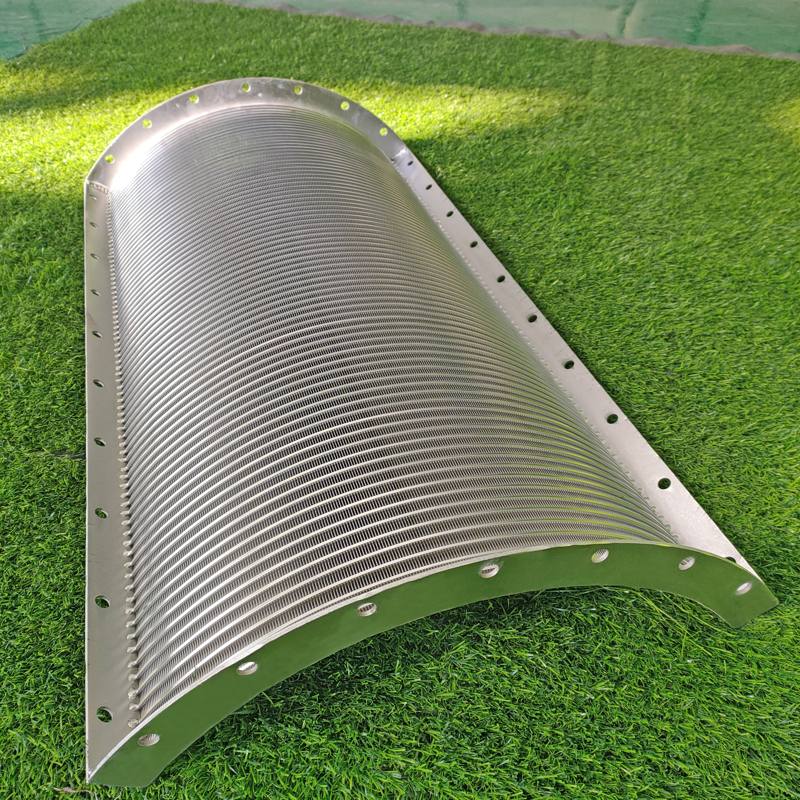
A wedge wire screen basket uses profile wires welded to support rods, producing smooth openings. Its V-shaped passage is narrow at the surface and wider behind it, reducing deep wedging and helping filtrate flow stay stable.
How high-solids slurry moves across the screen
Feed distribution determines whether screen area is used evenly. A concentrated underflow entering one side can create a thick local cake, higher differential pressure, and faster wear even when average flow looks acceptable.
A well-matched conical screen gives solids a progressive path. Centrifugal force presses liquid outward through the slots, while cone angle and rotation move retained cake toward the outlet. The opening cone gives liquid more opportunities to escape before discharge. This conical screen also needs balance at machine speed.
This is where a conical wedge wire screen can be useful in a mineral circuit: the continuous slot surface supports drainage along the whole travel path, rather than forcing liquid through a small set of isolated holes. The result is a more predictable handoff to thickening, filtration, or tailings handling.
The design variables that control dewatering
Slot and geometry decisions
Slot opening is not a direct copy of nominal particle size. Angular grains can pass diagonally, while flaky particles can bridge a slot. A pilot sample and full particle-size distribution are more reliable than one sieve result.
Consider these variables as a group:
*Slot width: balances filtrate clarity, solids recovery, and blinding risk.
*Open area: increases drainage potential, but must be supported by adequate wire and rod strength.
*Cone angle: changes residence time, cake movement, and the useful screening area.
*Material and wear allowance: 304/316 stainless steel suits many duties; duplex or a wear coating may be justified for severe abrasion.
*Interface and support: flange, clamp, or custom mounting must keep the basket concentric at operating speed.
| Condition | What it does to the basket | Design response |
| High clay or slimy fines | Builds a low-permeability cake and raises pressure drop | Allow cleaning access, review slot width, and avoid overloading the feed zone |
| Coarse, angular ore | Accelerates impact and slot-edge wear | Use a wear-resistant grade or coating and verify support spacing |
| Variable cyclone underflow | Creates uneven cake thickness and fluctuating filtrate quality | Improve feed distribution and monitor torque, vibration, and pressure |
| Very fine target cut | Improves retention but can reduce throughput | Confirm the real PSD with a pilot test before fixing the opening |

Why anti-clogging matters more at high solids
High solids make a small loss of open area expensive. As fines cover the surface, more force is needed to push liquid through. The V-shaped slot reduces particle locking, while the smooth face helps a scraper, rinse, or backwash release the cake.
Cleaning should follow operating signals rather than a fixed calendar. Rising differential pressure, lower filtrate flow, higher torque, or changed filtrate solids can indicate surface loading. Confirm cleaning pressure and chemical compatibility before setting a routine.
A practical selection conversation with a centrifuge basket supplier should include feed density, PSD, temperature, chemistry, target moisture, expected throughput, rotation speed, and the available cleaning method. Those inputs let the supplier check slot tolerance, cone geometry, weld pattern, and mounting loads as one operating system.
Where the basket fits in a mineral circuit
Cyclone underflow is a natural application because it already arrives concentrated and needs rapid liquid removal before storage, transport, or a downstream polishing step. The basket can also support tailings thickening, media recovery, and selected classification duties when the retained solids and filtrate quality are defined clearly.
BTOSLOT can translate those operating inputs into a custom conical assembly, including 304/316 stainless steel or duplex options, slot ranges from 0.1 to 5 mm, cone angles from 10 to 60 degrees, and flange, thread, or clamp interfaces. These are configurable design ranges, not a universal performance guarantee; final dimensions should be confirmed against the machine and slurry test results.
A focused way to specify the basket
Specification details that prevent surprises
A useful specification starts with the separation outcome. State target solids recovery and filtrate clarity, then add feed conditions, speed, centrifugal load, cleaning method, and failure consequence. This keeps nominal slot size from becoming the only criterion.
Before release, ask for a drawing showing screening direction, support arrangement, weld details, and interface dimensions. Check finished-basket dimensions when concentricity or balance is tight, and agree how abrasive wear will be monitored.
The operating takeaway
A centrifuge screen basket dewaters high-solids mineral slurry by combining centrifugal force, a progressively supported screen surface, and slots sized for the real particle population. The best result is not simply the driest cake; it is a stable balance of liquid removal, solids retention, cleanability, and wear. Define that balance with representative slurry data, then match the cone and screen to the machine rather than selecting a basket from a generic capacity claim.
For background on wedge wire construction and related mining screens, see BTOSLOT’s screening in mineral processing resources. A short operating data sheet is enough for a first design review; the final basket should follow a drawing and application check.

FAQ
Can a conical basket handle cyclone underflow directly?
It can, when the underflow density, particle size, chemistry, and flow are within the centrifuge design envelope. Feed distribution and wear protection are critical because cyclone underflow can be both concentrated and abrasive.
Does a finer slot always produce a drier cake?
No. A finer slot may improve retention but can blind sooner and raise pressure drop. Cake permeability, residence time, and the liquid viscosity often matter as much as the nominal opening.
Which stainless steel is suitable for mineral slurry?
304 or 316 stainless steel covers many general duties. Chloride exposure, abrasion, temperature, and cleaning chemistry may justify duplex steel or a wear-resistant surface; material selection should follow the actual slurry.
How can operators tell that the basket is loading up?
Watch for a sustained rise in differential pressure or torque, lower filtrate flow, higher filtrate solids, or an unusual vibration pattern. These signals should trigger an equipment-specific inspection and cleaning check.
What information is needed to size a basket?
Provide feed rate, solids concentration, PSD, density, viscosity, target moisture, allowable solids loss, rotation speed, available envelope, mounting details, and the planned cleaning method. Representative samples improve the slot and cone-angle decision.
Article récent
Produits connexes
Produits les plus vendus
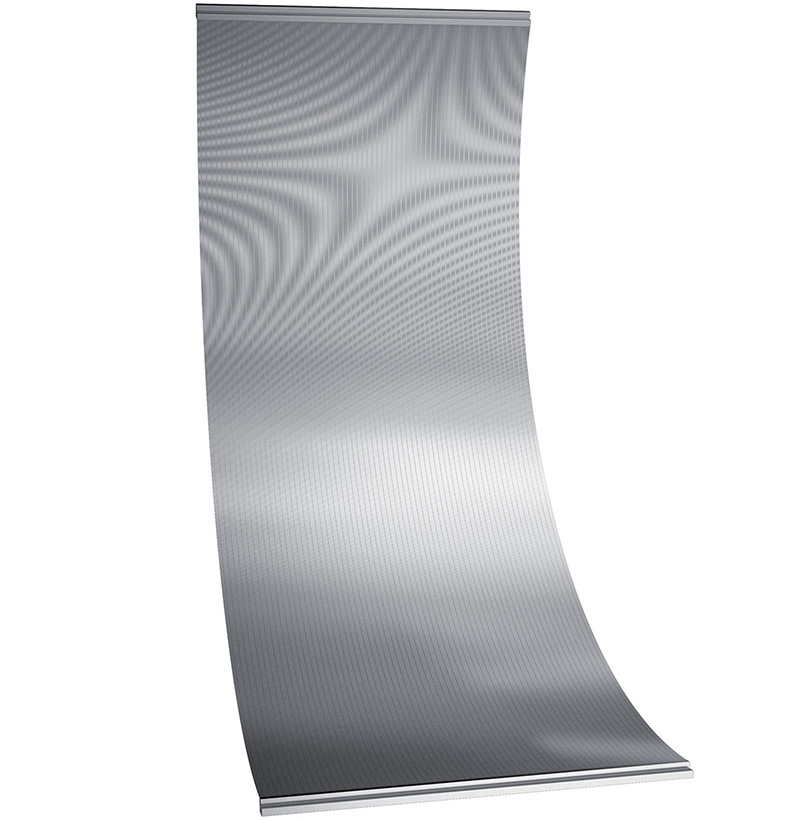
écran amidon
Le Wedge Wire Starch Curved Screen est un dispositif de criblage courbé spécialement conçu pour l'industrie de l'amidon. Il dispose d'une surface d'écran en forme d'arc faite de fils en acier inoxydable en profil V soudés avec précision, utilisant la force centrifuge ou la gravité pour réaliser une déshydratation rapide et la classification de la boue d'amidon. Sa structure courbe prolonge le temps de rétention des boues, améliorant l'efficacité de la séparation solide-liquide. Il convient pour l'extraction d'amidon, le raffinage et les processus de récupération de sous-produits pour les amidons tels que la pomme de terre, le maïs et le manioc. Caractérisé par un criblage efficace, une résistance à l'usure et à l'obstruction et une maintenance facile, cet équipement est un dispositif de séparation solide-liquide clé dans le traitement moderne de l'amidon.
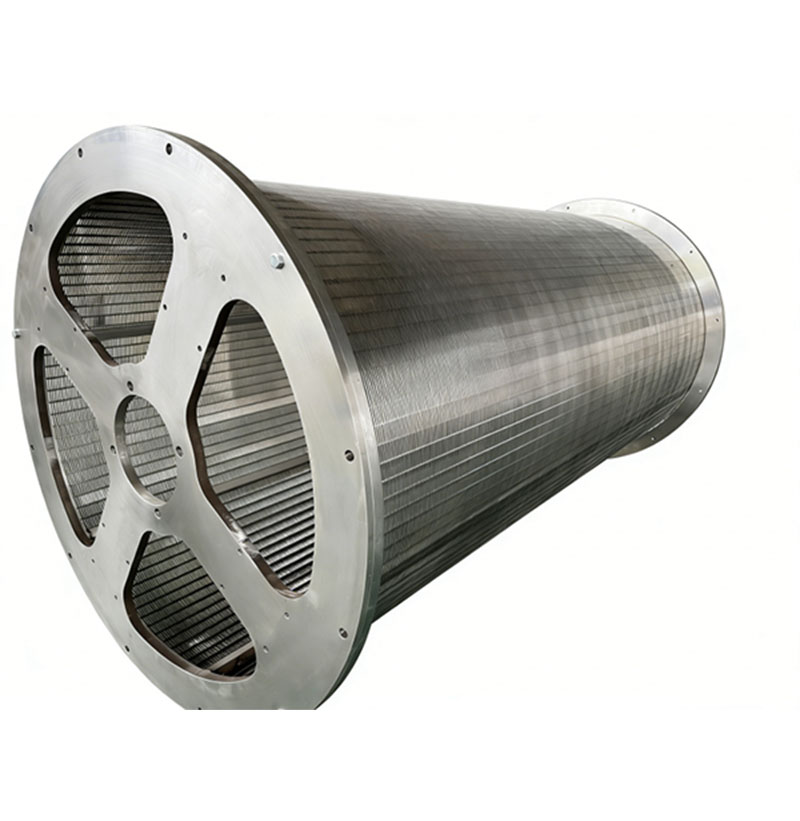
tambour rotatif
L'écran de tambour rotatif en acier inoxydable (également connu sous le nom de filtre de tambour rotatif ou micro-écran) est un dispositif de séparation solide-liquide frontal fonctionnant en continu et automatiquement. Son élément central est un grand tambour cylindrique installé horizontalement ou en légère inclinaison. Toute la surface circonférentielle du tambour est recouverte d'un écran en acier inoxydable (écran Johnson). Les eaux usées à traiter s'écoulent dans une extrémité du tambour. Sous la gravité, le filtrat passe à travers les fentes de fil de coin, tandis que la matière solide en suspension (telles que les fibres, les cheveux, les morceaux de plastique et les particules fines) est retenue sur la surface interne du tambour. Au fur et à mesure que le tambour tourne lentement, les débris retenus sont soulevés vers le haut, où ils sont rincés par l'eau pulvérisée dans un trou de collecte, permettant ainsi un processus continu de filtration automatique et d'élimination des résidus.
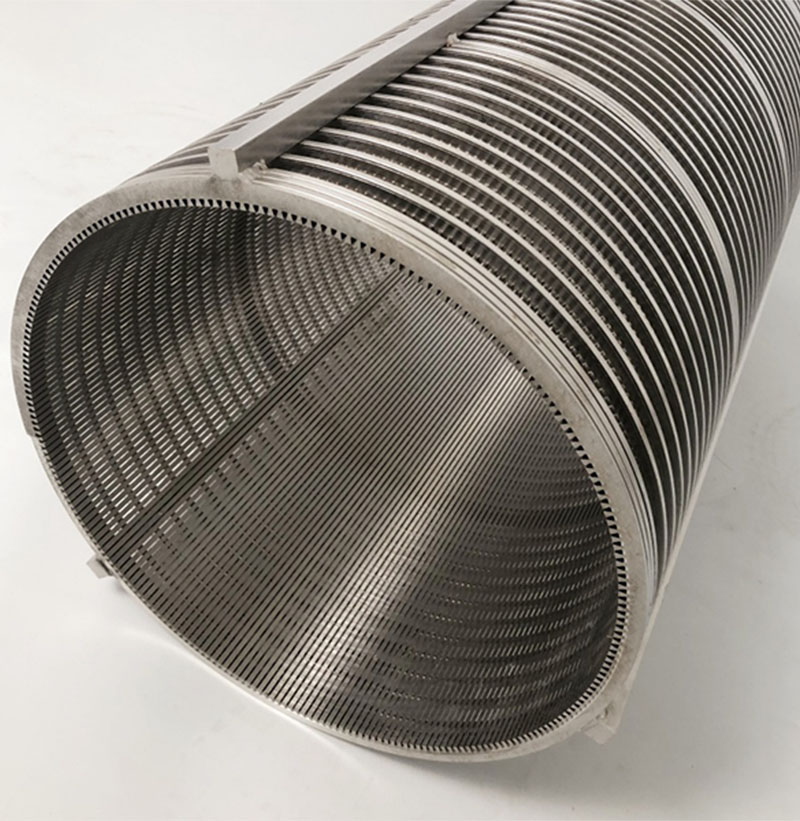
Panier d'écran pour séparateur de presse à vis
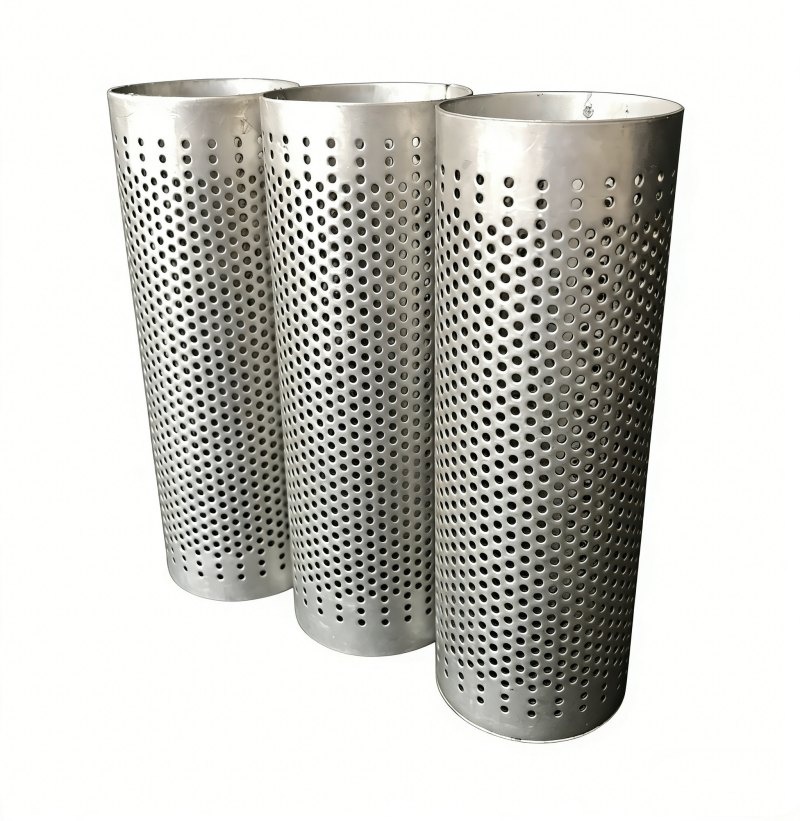
Le panier d'écran en fil de coin en acier inoxydable, communément connu sous le nom de "écran en V", "panier d'écran de presse" ou "cylindre d'écran", est un composant central des séparateurs solide-liquide de presse à vis. Il est installé à l'intérieur de la presse à spirale, encerclant l'arbre à vis rotatif. Le principe de fonctionnement est le suivant: la boue brute à forte teneur en humidité est poussée dans le panier d'écran par l'arbre à vis. Sous l'action de compression et de transport des vols en spirale, le liquide (filtrat) est forcé à travers les fentes précises et continues du panier d'écran, tandis que le matériau solide (gâteau de fumier) est retenu à l'intérieur et continue d'être comprimé et déshydraté au fur et à mesure qu'il avance. Enfin, les solides déshydratés sont déchargés de la sortie, permettant une séparation solide-liquide.
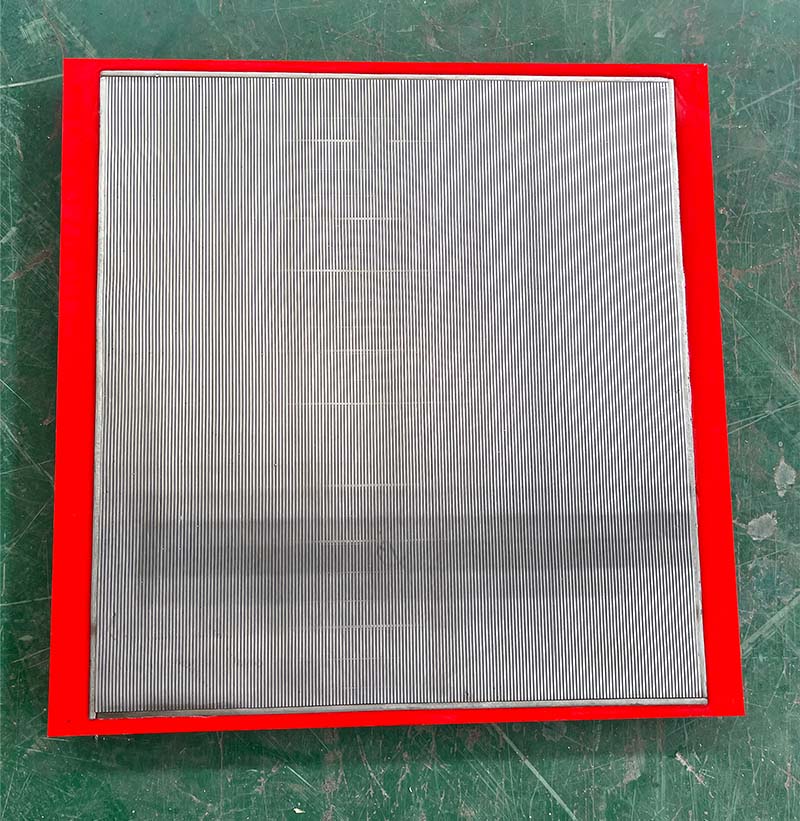
Ecran vibrant de fil de coin
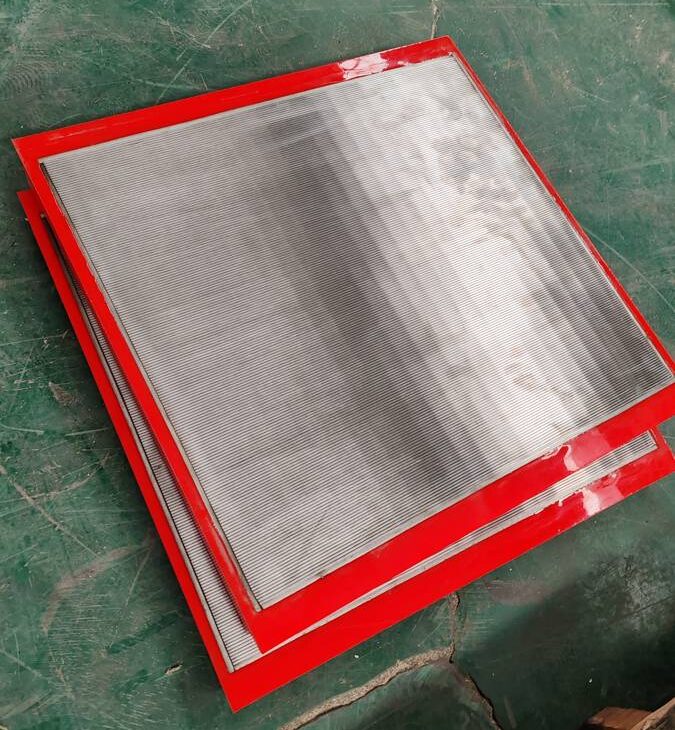
Un écran vibrant en fil de coin en acier inoxydable est un dispositif de séparation solide-liquide comportant une surface d'écran réalisée par soudage précis de fils en acier inoxydable en forme de V, intégré à un système de vibration haute fréquence. Avec des fentes uniformes, une résistance à l'usure et une résistance à la corrosion, il convient aux opérations de filtrage humide et de déshydratation. Le mécanisme de vibration permet une dispersion rapide du matériau et un tamissage efficace tout en empêchant efficacement l'obstruction de l'écran. Largement utilisé dans des industries telles que l'exploitation minière, la métallurgie, la transformation des aliments et la protection de l'environnement, il est particulièrement adapté pour manipuler des particules fines, des matériaux à haute viscosité ou facilement agglomérables, offrant des avantages tels que la précision de criblage élevée, une grande capacité de traitement et une longue durée de vie.
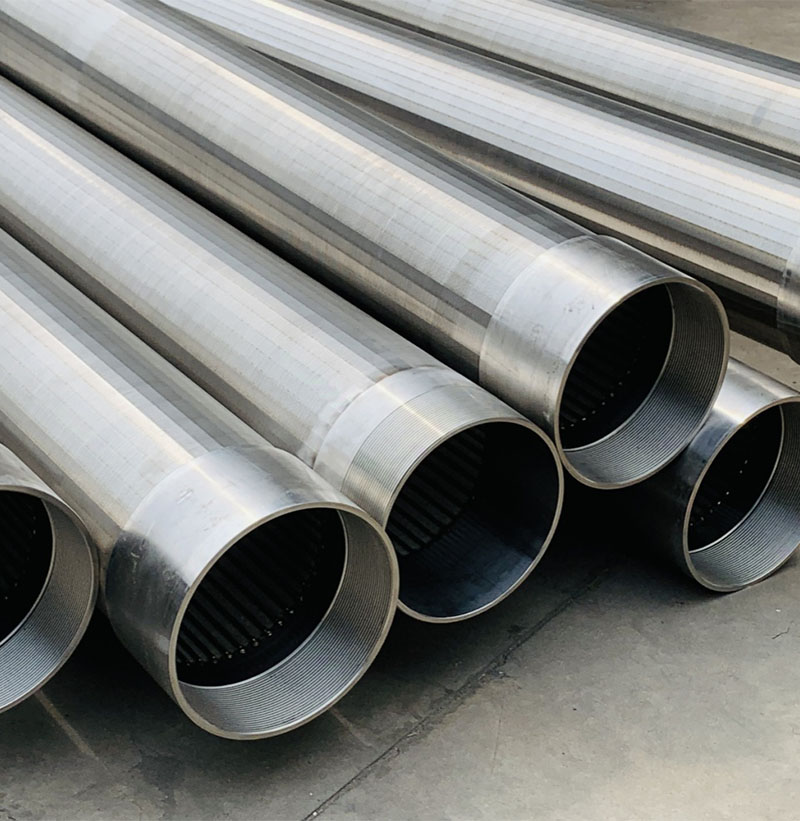
Écran de puits d'eau de fil de coin
Les écrans de puits d'eau profonde Johnson, également appelés écrans de fente continue ou écrans d'enveloppement de fil, ont été développés à l'origine pour résoudre les problèmes de contrôle du sable dans les formations de sable fine graine et uniforme. Ces conditions géologiques sont couramment rencontrées dans les aquifères souterrains profonds, où les tuyaux perforés conventionnels souffrent souvent d'obstruction, de production excessive de sable et de réduction de l'efficacité des puits.
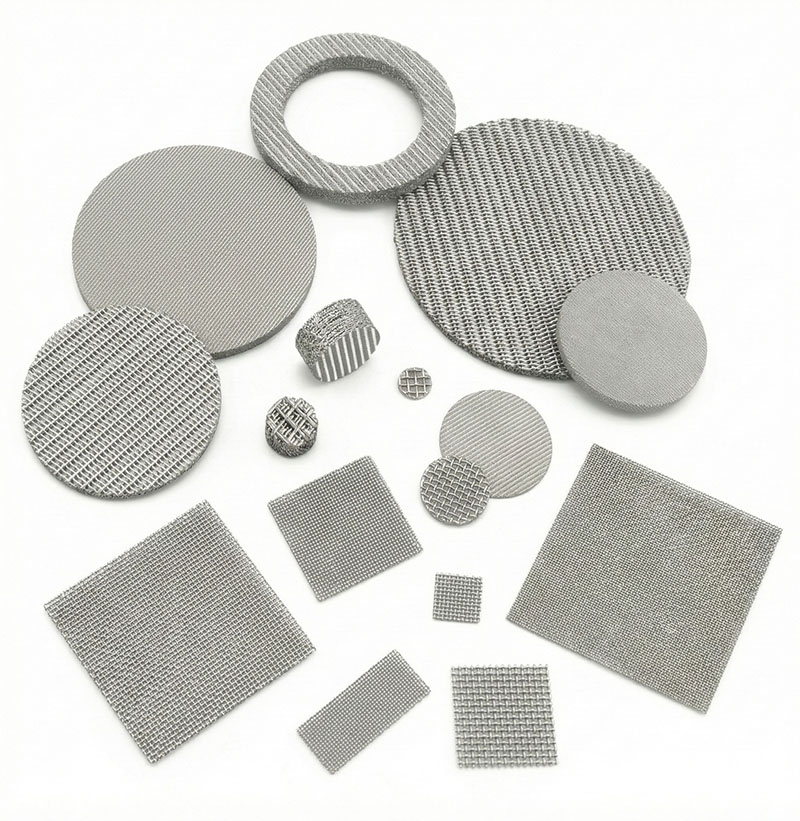
Plaque et disque en maille fritté
Les plaques et disques de maillage fritté sont des composants de filtration de haute précision fabriqués en liant plusieurs couches de maillage en acier inoxydable à travers un processus de frittage sous vide spécialisé. Contrairement au maillage traditionnel qui repose uniquement sur le tissage mécanique, ces plaques sont fusionnées à chaque point de contact, transformant des fils individuels en une tôle porouse rigide et intégrée.Ces plaques peuvent être personnalisées en différentes formes, le plus souvent des disques circulaires, pour s'adapter à des équipements industriels spécifiques. Ils offrent un équilibre idéal entre une perméabilité élevée, une intégrité structurelle extrême et des taux de filtration précis. Étant donné qu'ils sont entièrement en métal (généralement 304 ou 316L), ils fournissent une solution de filtration "permanente" qui peut résister aux températures élevées et aux produits chimiques corrosifs tout en restant entièrement nettoyables et réutilisables.