
À propos de nous
Votre fabricant expert d'écrans de fil de coin;
Votre partenaire fiable et source d’innovation
Obtenez un devis gratuit
-
Accueil

-
Blog
-
Blog de l'industrie
- Comment les solutions de criblage inter-étages industrielles augmentent-elles les taux de récupération des minéraux ?

Comment les solutions de criblage inter-étages industrielles augmentent-elles les taux de récupération des minéraux ?
-
 auteur
 - 15,juin
 auteur
Introduction
Dans les usines de traitement de l'or utilisant des circuits de lixiviation au charbon actif, un facteur souvent négligé, mais pourtant essentiel à la rentabilité, est la fuite de charbon actif dans les résidus. Chaque gramme de charbon qui s'échappe entraîne avec lui des métaux précieux. C'est là que des solutions de criblage inter-étages industrielles bien conçues prennent toute leur importance. Elles transforment la façon dont les mineurs séparent le charbon de la boue, tout en préservant la rentabilité globale.
Les méthodes de criblage traditionnelles, telles que les plaques perforées ou les toiles tissées, peinent à répondre aux exigences spécifiques de la séparation inter-étages, ce qui explique pourquoi les opérateurs se tournent de plus en plus vers des solutions spécialisées. fournisseurs de tamis à fil triangulaire Pour des solutions plus fiables, il existe des alternatives. La nature fibreuse des copeaux de bois dans la pâte à papier pose problème. La texture rugueuse du charbon actif granulaire aggrave encore la situation. Les variations de pression constantes rendent le fonctionnement des systèmes de filtration classiques encore plus difficile. Les opérateurs sont confrontés à des colmatages fréquents et à des pertes de charbon. Ils subissent également des arrêts imprévus qui perturbent la production.
Pourquoi la conception du fil biseauté est-elle supérieure pour la rétention du carbone ?
Le tamis à fentes biseautées se distingue des autres par sa forme. Les fentes à bords droits ont tendance à retenir les particules. Le profil en V, quant à lui, favorise un mouvement d'auto-libération. La fente se rétrécit à la surface de filtration et s'élargit vers l'intérieur. Les particules qui franchissent la surface ne rencontrent aucune contrainte supplémentaire. Ceci évite le phénomène de coincement qui pose problème aux tamis traditionnels.
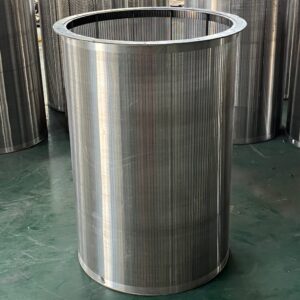
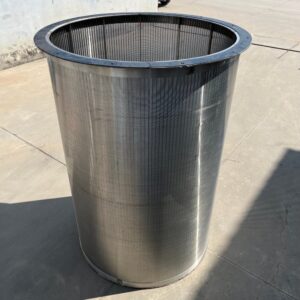
Pour les particules de charbon actif dont la taille varie de 1,0 à 3,35 millimètres, une fente correctement choisie entre 0,6 et 1,2 millimètre sur le écran métallique de précision Ce procédé assure une rétention quasi totale. La conception sur mesure d'un tamis de précision débute par une analyse approfondie de la granulométrie du carbone fourni par le client. Le carbone fin, inférieur à 0,6 millimètre, réagit d'une certaine manière, tandis que le carbone grossier se comporte différemment. Le choix des fentes doit donc correspondre aux caractéristiques exactes du matériau.
La robustesse de la structure est assurée par le soudage par résistance. Chaque fil profilé est fixé à des tiges de support sans apport de métal d'apport, formant ainsi un cylindre massif. Ce dernier supporte les contraintes mécaniques des agitateurs rotatifs et la pression hydraulique de la boue circulant entre les cuves. L'absence de soudures susceptibles de se fissurer et de treillis pouvant se desserrer rend ces tamis parfaitement adaptés à un fonctionnement continu 24h/24 et 7j/7.
Comment le processus de fabrication des écrans de précision affecte les performances
De nombreux problèmes de tamisage ne proviennent pas d'erreurs de conception, mais d'une fabrication irrégulière. Le processus de fabrication de tamis de précision exige un contrôle rigoureux à chaque étape. Des vérifications des matières premières confirment que l'acier inoxydable correspond à la nuance requise. Il peut s'agir d'acier inoxydable 304 pour une utilisation standard, ou d'acier inoxydable 316L lorsque la présence de chlorures dans l'eau de process augmente les risques de corrosion.
La tension d'enroulement doit rester parfaitement uniforme. Si la machine qui enroule les fils profilés autour des tiges de support modifie la tension, même légèrement, la largeur des fentes variera sur toute la longueur de l'écran. Un écran présentant une largeur de 0,8 millimètre en haut pourrait se rétrécir à 0,6 millimètre en bas, créant ainsi une chute de pression irrégulière.
L'étape de soudage exige des réglages électriques précis. Chaque point de soudure doit être parfaitement jointif, sans brûler le fil profilé ni laisser d'espace vide. Les fabricants de grilles de précision réputés effectuent des contrôles qualité continus pendant la production. Ils utilisent des systèmes de mesure optiques pour vérifier les dimensions des fentes tous les quelques centimètres.
Après soudage, les tamis subissent généralement une passivation. Cette étape chimique leur redonne leur résistance à la corrosion. Elle élimine les traces de fer en surface qui pourraient s'oxyder dans des conditions de boues agressives. Certaines applications nécessitent un électropolissage. Cette étape rend la surface encore plus lisse et réduit l'adhérence des matières collantes au tamis.
Quels avantages les performances des tamis interétages apportent-elles à la rentabilité de l'usine ?
Les avantages significatifs de l'écran de séparation inter-étages vont bien au-delà de la simple rétention des particules. Lorsque le carbone reste correctement positionné dans le circuit d'adsorption, la récupération de l'or augmente directement. Dans une installation de taille moyenne, une augmentation d'un seul point de pourcentage du taux de récupération se traduit par un revenu supplémentaire substantiel chaque année.
La réduction des temps d'arrêt pour maintenance constitue un autre avantage clé. Les tamis traditionnels qui se bouchent avec des fines particules de carbone ou des fibres de bois nécessitent un démontage régulier pour nettoyage ou remplacement. écran inter-étages à fil en forme de coin Il résiste à ce blocage. Ses fentes en forme de V se nettoient automatiquement en fonctionnement normal. La surface intérieure lisse permet aux racleurs ou aux systèmes de lavage à contre-courant d'éliminer efficacement les dépôts accumulés.
L'usure du carbone diminue nettement grâce au choix d'une grille adaptée. Lorsque les particules de carbone frottent contre des arêtes vives ou se coincent dans des fentes de tailles variables, elles se transforment en fines particules. Ces fines particules entraînent l'or et contaminent les étapes suivantes du processus. La surface lisse du fil réduit ce contact abrasif et préserve le carbone en bon état, même après de nombreux cycles d'adsorption.
Une durée de vie plus longue influe directement sur les budgets d'exploitation. Un tamis à plaques perforées peut nécessiter un remplacement tous les quelques mois. Un tamis à fentes de qualité dure souvent des années. Sa construction entièrement soudée élimine les risques de présence de fils métalliques susceptibles de pénétrer dans le flux de production et d'endommager les pompes ou les vannes.
Pourquoi le choix des emplacements et des matériaux ne doit pas être compromis
Le choix de la taille de fente appropriée nécessite une connaissance précise du charbon utilisé. La plupart des installations utilisent du charbon ayant subi plusieurs cycles d'élution et de régénération. De ce fait, les particules ne sont ni parfaitement rondes ni homogènes. Un tamis de précision conçu sur mesure tient compte de cette variabilité. Il définit des fentes qui retiennent les plus petites particules susceptibles d'apparaître, tout en assurant un débit de suspension suffisant.
Le débit influe également sur le choix de la taille des fentes. Un tamis à fentes très étroites engendre une perte de charge plus importante, ce qui peut réduire le débit global. La conception optimale offre un compromis entre l'efficacité de rétention et la capacité hydraulique. Les ingénieurs calculent le pourcentage de surface ouverte et la perte de charge attendue, en se basant sur la viscosité de la suspension, la concentration en solides et la hauteur manométrique disponible de la pompe.
Le choix des matériaux devient crucial lorsque les conditions de production sont extrêmes. Les chlorures présents dans l'eau attaquent l'acier inoxydable standard, notamment dans les mines côtières ou celles utilisant de l'eau salée. Les aciers duplex, comme le 2205 ou le super duplex, offrent une meilleure résistance à la fissuration par corrosion sous contrainte due aux chlorures. Pour les environnements très corrosifs, les alliages à haute teneur en nickel, tels que l'Hastelloy, offrent la meilleure protection, malgré un coût initial plus élevé.
BTOSLOT a fourni des tamis à fentes à des sites confrontés à ces mêmes problématiques. Sur une installation traitant un minerai à haute teneur en chlorures, le passage de l'acier inoxydable 304 à l'acier inoxydable 316L a permis d'allonger la durée de vie des tamis de trois mois à plus de deux ans. Cette évolution a éliminé les arrêts imprévus et a considérablement réduit les coûts de remplacement.
Comment évaluer les capacités des fournisseurs de composants de filtration critiques
Collaborer avec un fabricant maîtrisant à la fois la technologie de criblage et l'application spécifique de traitement des minéraux est un véritable atout. Renseignez-vous sur ses certifications de qualité. La norme ISO 9001 atteste d'une gestion de la qualité rigoureuse. Demandez les certificats d'essais des matériaux. Ces documents confirment la composition de l'alliage pour chaque lot de production.
Parlez-nous de leurs méthodes de contrôle. Examinent-ils chaque écran avant expédition ? Quelles tolérances appliquent-ils aux dimensions des fentes ? Les fournisseurs de confiance fournissent des rapports d’inspection. Ils peuvent également proposer des solutions de contrôle non destructif pour les applications critiques.
Considérez leurs compétences en matière de support technique. Les meilleures solutions de tamisage industriel proviennent de fournisseurs qui prennent le temps d'étudier vos conditions de production précises. Ils recommandent des spécifications adaptées au lieu de se contenter de commandes de tailles standard. Cette approche collaborative évite les incompatibilités qui nuisent à la qualité du produit.
Conclusion
Le crible interétage à fentes est une technologie éprouvée. Il s'attaque directement aux principales difficultés liées à la rétention du carbone lors du traitement de l'or. Une géométrie de fente optimale, associée à une fabrication de précision, garantit un choix judicieux des matériaux, adapté aux conditions du procédé. Ensemble, ces éléments permettent aux mineurs d'atteindre des taux de récupération plus élevés, tout en réduisant les temps d'arrêt et les coûts d'exploitation. La teneur en minerai ne cesse de baisser partout dans le monde. Chaque gain d'efficacité compte. Investir dans des solutions de criblage performantes et adaptées génère des retours sur investissement directement visibles dans les rapports de production.
FAQ
Quelle garantie BTOSLOT offre-t-il sur ses solutions de criblage inter-étages industrielles ?
BTOSLOT offre une garantie complète. Celle-ci couvre les défauts de fabrication et de matériaux pendant douze mois à compter de l'expédition. Cette garantie ne couvre pas l'usure normale due à des conditions d'utilisation abrasives ou corrosives. L'entreprise fournit néanmoins des indications sur la durée de vie prévue, basées sur son expérience d'applications similaires.
Comment puis-je obtenir un devis pour la conception d'un écran de précision sur mesure pour mon circuit CIP ?
Pour obtenir un devis, il vous suffit de nous communiquer les détails de votre procédé : dimensions de la cuve, débit souhaité, type et granulométrie du charbon actif, caractéristiques de la suspension et tout problème de corrosion. Les ingénieurs de BTOSLOT analysent ces données et vous fournissent généralement un devis et un délai de livraison sous deux à trois jours ouvrés.
Quelle taille de fente dois-je spécifier pour retenir du carbone de 1,0 millimètre ?
Pour des particules de charbon actif de 1,0 millimètre de diamètre nominal, une largeur de fente comprise entre 0,4 et 0,6 millimètre assure généralement une rétention fiable et évite une chute de pression excessive. Le choix final dépend de l'homogénéité de votre approvisionnement en charbon et de la présence éventuelle de bris de particules lors de la régénération.
Les services de fabrication de tamis de précision peuvent-ils produire des tamis pour des dimensions de réservoirs non standard ?
Oui. Le processus de fabrication permet de réaliser des diamètres sur mesure de 800 à 2 000 millimètres. Il prend également en charge les longueurs sur mesure. Les configurations de brides, les méthodes de raccordement et les positions des anneaux de renfort peuvent être adaptées à la configuration existante des réservoirs. Aucune modification de votre équipement n'est nécessaire.
Comment nettoyer un tamis à fentes recouvert de tartre calcaire ?
Le tartre ou les dépôts minéraux réagissent à un lavage à l'acide doux. Utilisez des solutions compatibles avec l'acier inoxydable. L'acide citrique ou phosphorique à concentration modérée suffit généralement. N'utilisez pas d'acide chlorhydrique, car il risque d'endommager la couche passive. Après le nettoyage, rincez abondamment, puis neutralisez le produit. L'écran retrouvera ainsi toutes ses propriétés.
Article récent
Produits connexes
Produits les plus vendus
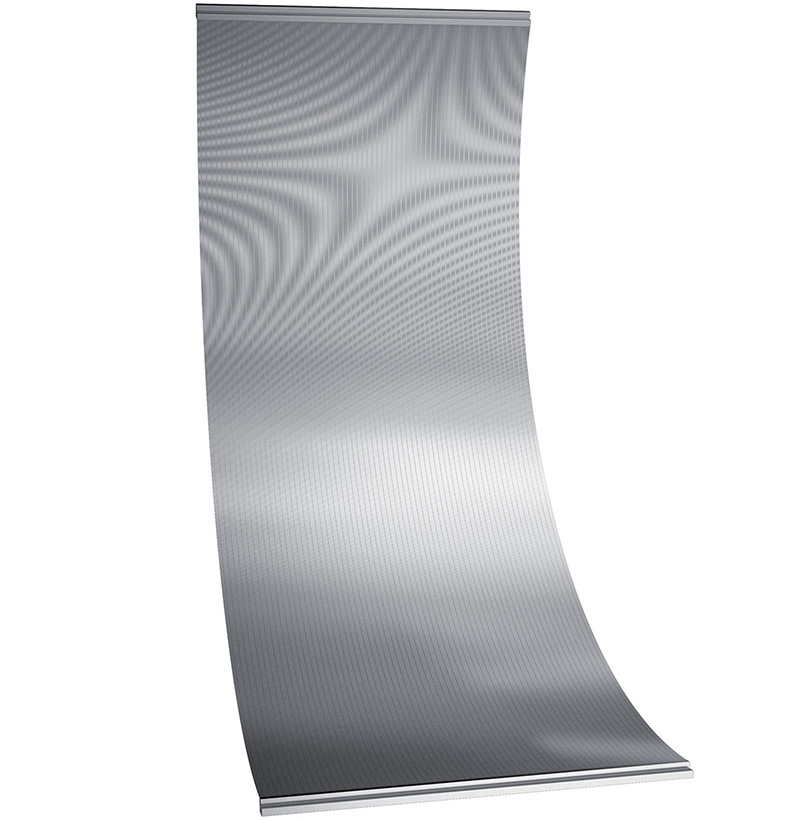
écran amidon
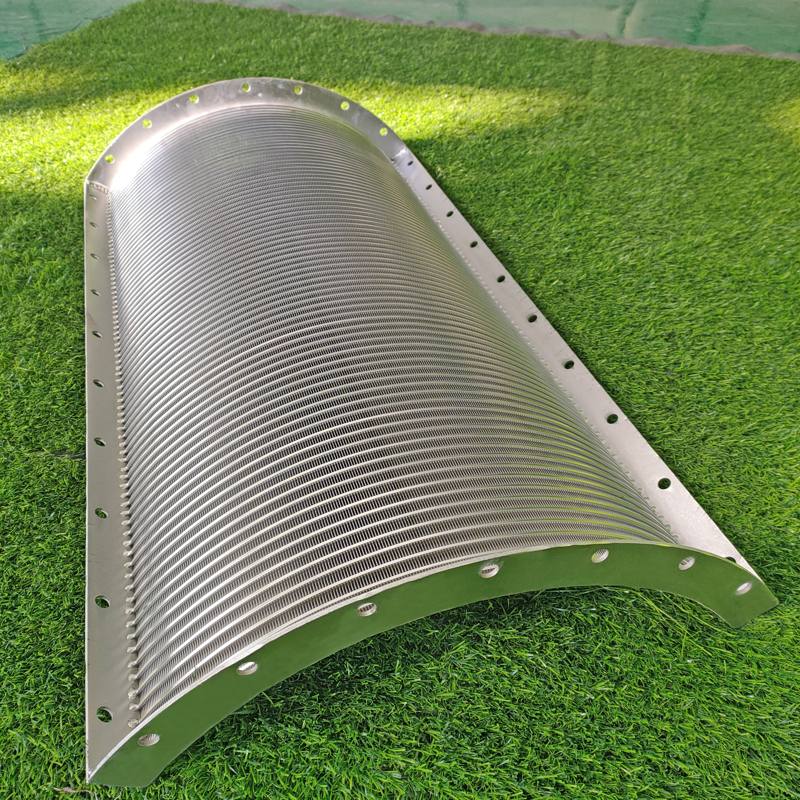
Le Wedge Wire Starch Curved Screen est un dispositif de criblage courbé spécialement conçu pour l'industrie de l'amidon. Il dispose d'une surface d'écran en forme d'arc faite de fils en acier inoxydable en profil V soudés avec précision, utilisant la force centrifuge ou la gravité pour réaliser une déshydratation rapide et la classification de la boue d'amidon. Sa structure courbe prolonge le temps de rétention des boues, améliorant l'efficacité de la séparation solide-liquide. Il convient pour l'extraction d'amidon, le raffinage et les processus de récupération de sous-produits pour les amidons tels que la pomme de terre, le maïs et le manioc. Caractérisé par un criblage efficace, une résistance à l'usure et à l'obstruction et une maintenance facile, cet équipement est un dispositif de séparation solide-liquide clé dans le traitement moderne de l'amidon.
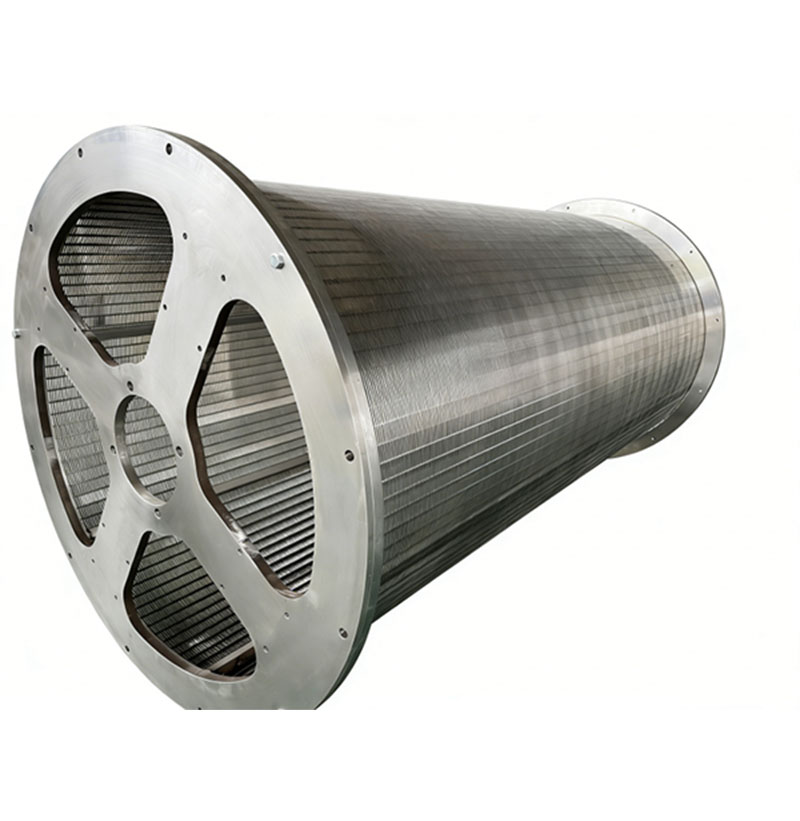
tambour rotatif
L'écran de tambour rotatif en acier inoxydable (également connu sous le nom de filtre de tambour rotatif ou micro-écran) est un dispositif de séparation solide-liquide frontal fonctionnant en continu et automatiquement. Son élément central est un grand tambour cylindrique installé horizontalement ou en légère inclinaison. Toute la surface circonférentielle du tambour est recouverte d'un écran en acier inoxydable (écran Johnson). Les eaux usées à traiter s'écoulent dans une extrémité du tambour. Sous la gravité, le filtrat passe à travers les fentes de fil de coin, tandis que la matière solide en suspension (telles que les fibres, les cheveux, les morceaux de plastique et les particules fines) est retenue sur la surface interne du tambour. Au fur et à mesure que le tambour tourne lentement, les débris retenus sont soulevés vers le haut, où ils sont rincés par l'eau pulvérisée dans un trou de collecte, permettant ainsi un processus continu de filtration automatique et d'élimination des résidus.
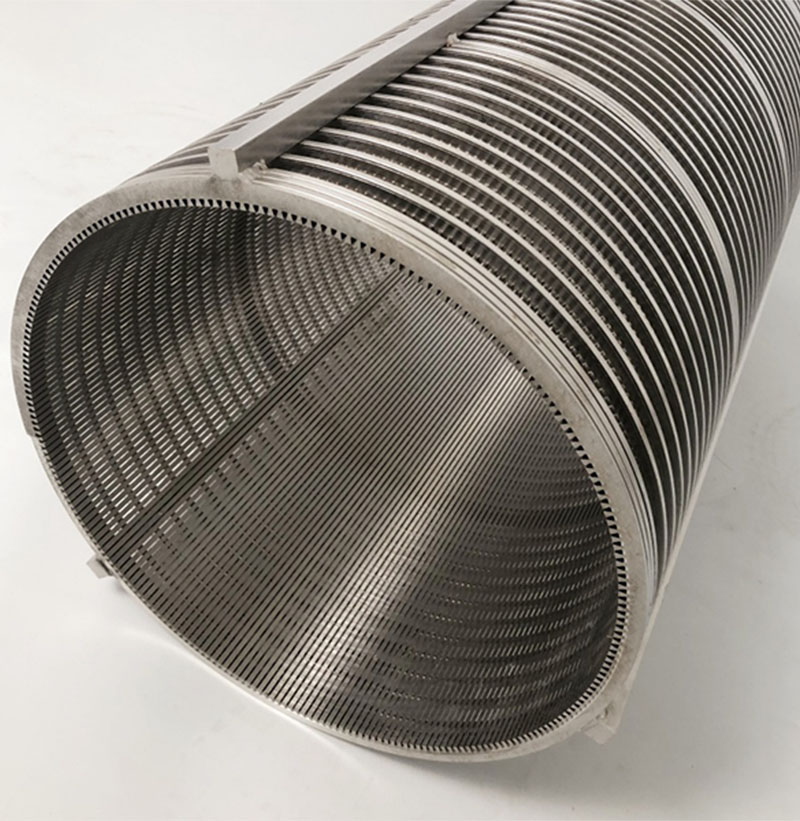
Panier d'écran pour séparateur de presse à vis
Le panier d'écran en fil de coin en acier inoxydable, communément connu sous le nom de "écran en V", "panier d'écran de presse" ou "cylindre d'écran", est un composant central des séparateurs solide-liquide de presse à vis. Il est installé à l'intérieur de la presse à spirale, encerclant l'arbre à vis rotatif. Le principe de fonctionnement est le suivant: la boue brute à forte teneur en humidité est poussée dans le panier d'écran par l'arbre à vis. Sous l'action de compression et de transport des vols en spirale, le liquide (filtrat) est forcé à travers les fentes précises et continues du panier d'écran, tandis que le matériau solide (gâteau de fumier) est retenu à l'intérieur et continue d'être comprimé et déshydraté au fur et à mesure qu'il avance. Enfin, les solides déshydratés sont déchargés de la sortie, permettant une séparation solide-liquide.
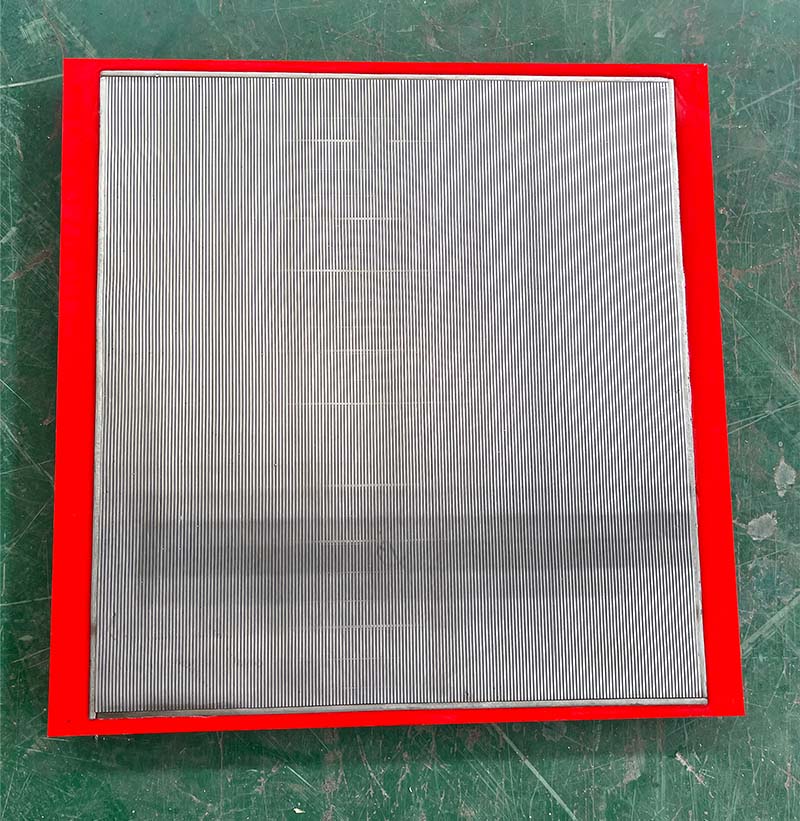
Ecran vibrant de fil de coin
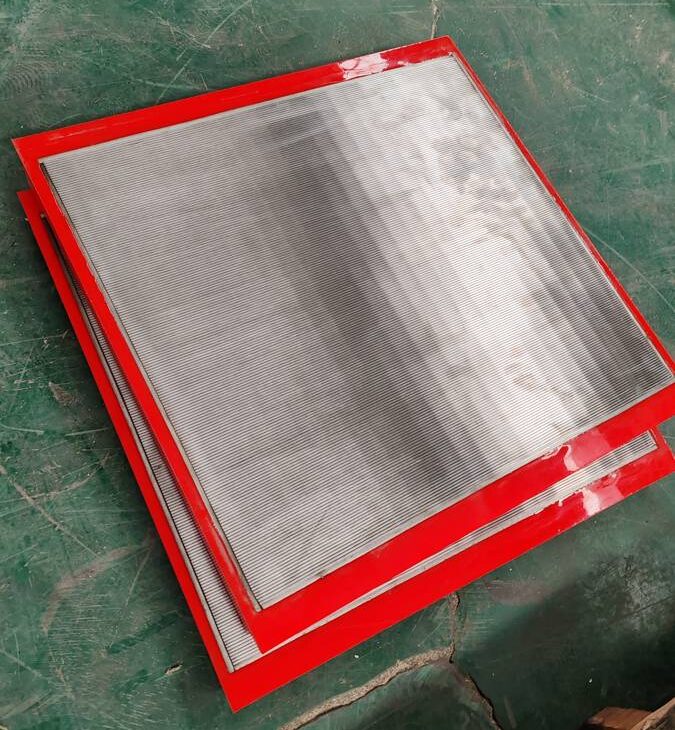
Un écran vibrant en fil de coin en acier inoxydable est un dispositif de séparation solide-liquide comportant une surface d'écran réalisée par soudage précis de fils en acier inoxydable en forme de V, intégré à un système de vibration haute fréquence. Avec des fentes uniformes, une résistance à l'usure et une résistance à la corrosion, il convient aux opérations de filtrage humide et de déshydratation. Le mécanisme de vibration permet une dispersion rapide du matériau et un tamissage efficace tout en empêchant efficacement l'obstruction de l'écran. Largement utilisé dans des industries telles que l'exploitation minière, la métallurgie, la transformation des aliments et la protection de l'environnement, il est particulièrement adapté pour manipuler des particules fines, des matériaux à haute viscosité ou facilement agglomérables, offrant des avantages tels que la précision de criblage élevée, une grande capacité de traitement et une longue durée de vie.
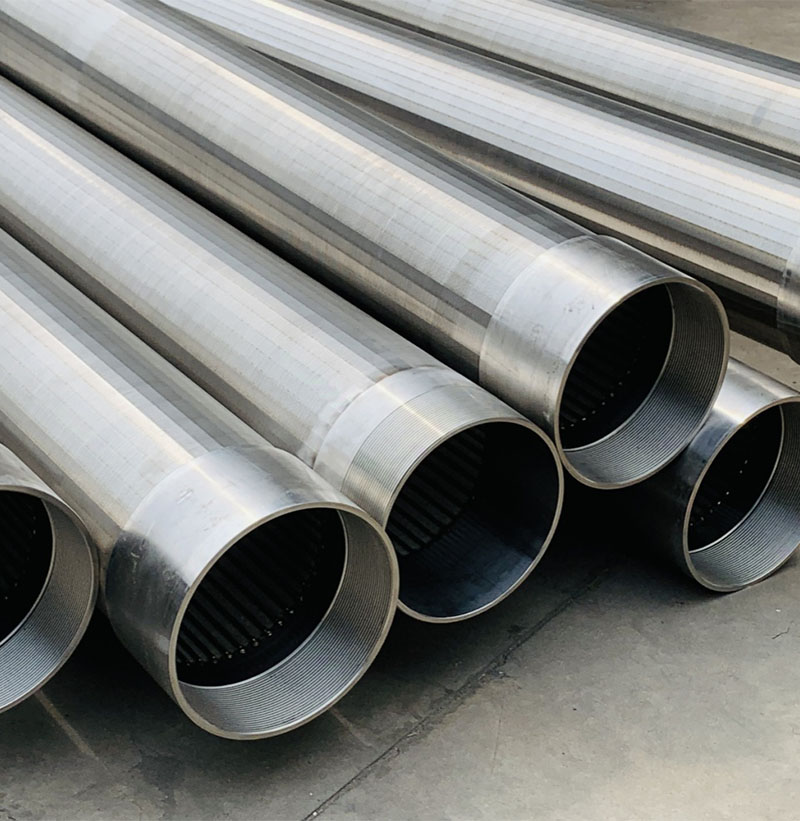
Écran de puits d'eau de fil de coin
Les écrans de puits d'eau profonde Johnson, également appelés écrans de fente continue ou écrans d'enveloppement de fil, ont été développés à l'origine pour résoudre les problèmes de contrôle du sable dans les formations de sable fine graine et uniforme. Ces conditions géologiques sont couramment rencontrées dans les aquifères souterrains profonds, où les tuyaux perforés conventionnels souffrent souvent d'obstruction, de production excessive de sable et de réduction de l'efficacité des puits.
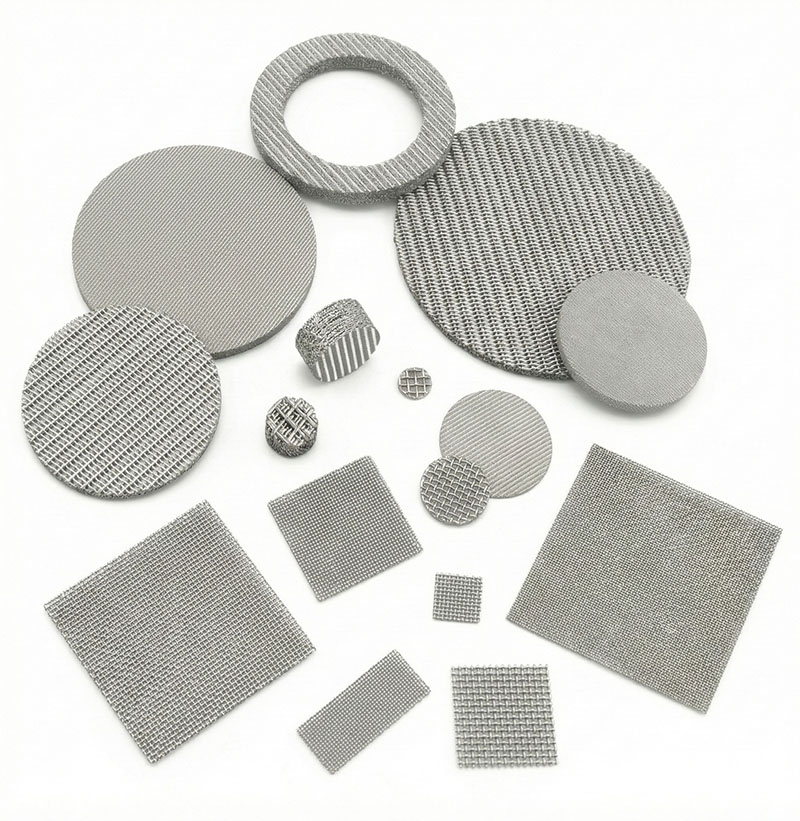
Plaque et disque en maille fritté
Les plaques et disques de maillage fritté sont des composants de filtration de haute précision fabriqués en liant plusieurs couches de maillage en acier inoxydable à travers un processus de frittage sous vide spécialisé. Contrairement au maillage traditionnel qui repose uniquement sur le tissage mécanique, ces plaques sont fusionnées à chaque point de contact, transformant des fils individuels en une tôle porouse rigide et intégrée.Ces plaques peuvent être personnalisées en différentes formes, le plus souvent des disques circulaires, pour s'adapter à des équipements industriels spécifiques. Ils offrent un équilibre idéal entre une perméabilité élevée, une intégrité structurelle extrême et des taux de filtration précis. Étant donné qu'ils sont entièrement en métal (généralement 304 ou 316L), ils fournissent une solution de filtration "permanente" qui peut résister aux températures élevées et aux produits chimiques corrosifs tout en restant entièrement nettoyables et réutilisables.